Indian Hoop Earrings Buying Guide: Metals, Fit & Styles
Discover how to choose authentic Indian hoop earrings. Learn about metal grades, wire gauges, weight limits, and Kundan authenticity.

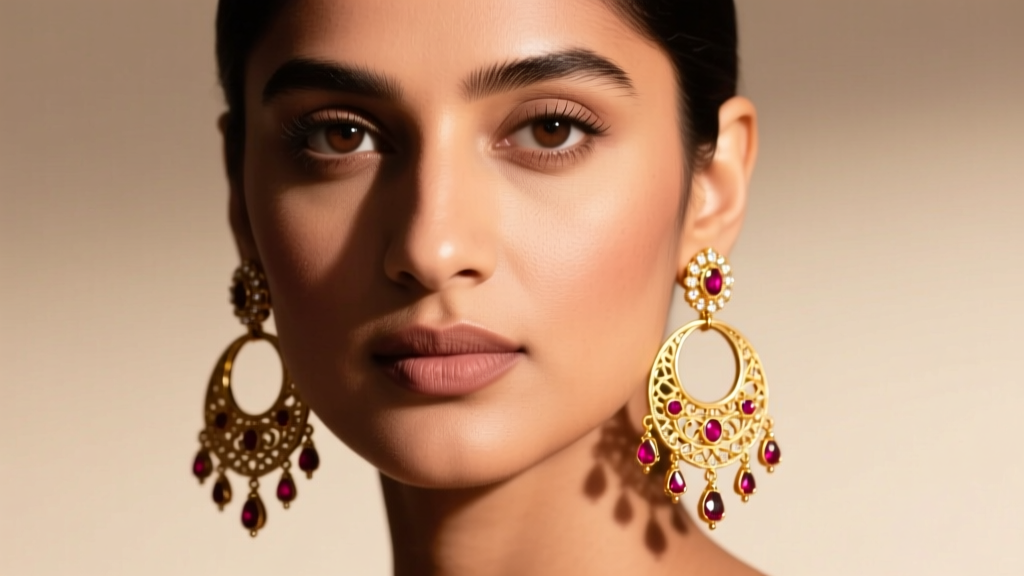
The Evolution of Indian Hoop Earrings
Indian hoop earrings represent a stunning intersection of traditional South Asian craftsmanship and contemporary wearable silhouettes. Unlike standard Western hoops that rely on minimalist geometry, Indian hoops frequently incorporate centuries-old techniques like Meenakari (enameling), Kundan (gemstone setting), and intricate filigree. As we navigate the jewelry market in 2026, the demand for heritage-inspired pieces has surged, but so has the influx of mass-produced, low-quality imitations. Whether you are looking for oxidized tribal hoops for everyday bohemian styling or heavy 22-karat gold Jhumka-hoops for bridal wear, understanding the structural and material nuances is critical for both aesthetic satisfaction and earlobe health.
Defining the Core Styles
Before evaluating materials, you must identify the specific sub-category of Indian hoops you are purchasing, as this dictates the weight and required hardware.
- Jhumka-Hoops: A hybrid design featuring a standard hoop base with a suspended bell-shaped Jhumka drop. These are inherently front-heavy and require specialized backing.
- Temple Hoops: Adorned with motifs of deities, peacocks, or lotus flowers, typically crafted in solid gold or heavy gold vermeil. They are rigid and distribute weight evenly along the hoop's curve.
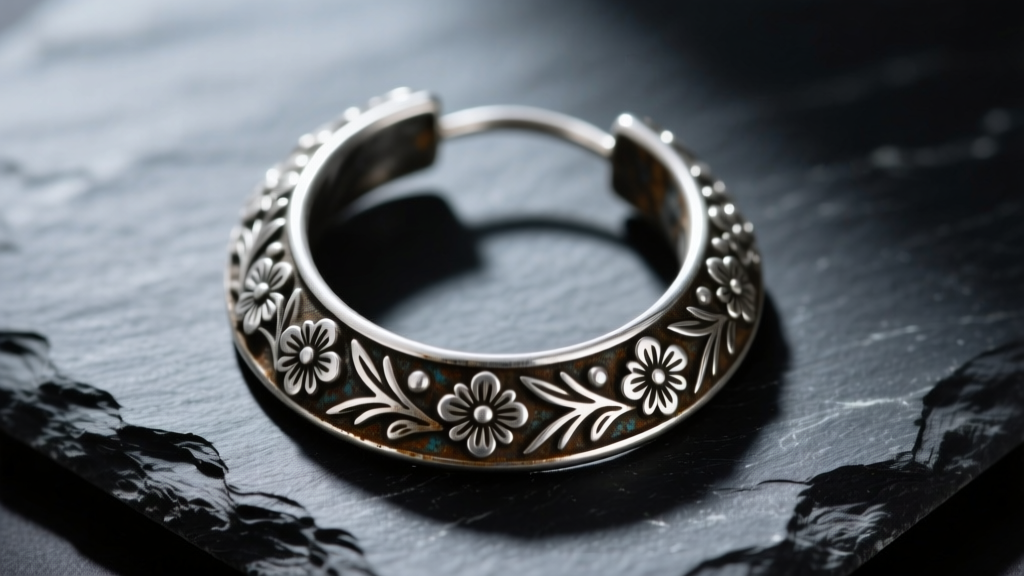
- Tribal Oxidized Hoops: Inspired by Rabari and Banjara nomadic jewelry. These are characterized by darkened silver, oxidized finishes, and dangling mirror-work or ghungroo (bells).
Material Grades & Metal Purity: What to Actually Buy
The base metal and plating thickness will determine the longevity, skin safety, and price of your Indian hoop earrings. According to the World Gold Council, traditional Indian jewelry heavily favors 22-karat gold (91.6% purity) for its rich, buttery yellow hue and cultural significance. However, 22k gold is exceptionally soft, meaning the structural wire of the hoop must often be alloyed or reinforced to prevent bending.
| Material | Composition | Price Range | Durability & Notes |
|---|---|---|---|
| Solid 22k Gold | 91.6% Gold, 8.4% Alloy | $800 - $3,000+ | Heirloom quality. Soft metal; avoid thin wire gauges. |
| Gold Vermeil | 925 Silver base, 2.5µm+ Gold | $120 - $350 | Excellent for daily wear. Must be stamped '925'. |
| Oxidized 925 Silver | 925 Silver treated with Sulfur | $60 - $180 | Highly durable. Patina deepens over time. |
| Brass / 'German Silver' | Copper/Zinc or Copper/Nickel | $15 - $45 | Avoid. High risk of contact dermatitis and green skin. |
Expert Warning: The American Academy of Dermatology frequently warns against base metals like 'German Silver' or nickel-heavy brass, which are common in cheap tourist-market Indian hoops. These cause severe allergic contact dermatitis. Always demand a '925' stamp for silver or a vermeil certification.
Gauge Sizes & Lobe Health: Preventing the 'Cheese-Cutter' Effect
The most overlooked aspect of buying heavy Indian hoop earrings is the wire gauge (thickness). Traditional Jhumka-hoops and Kundan hoops can easily weigh between 15 to 35 grams per earring. If this weight is suspended on a standard 20-gauge (0.81mm) or 22-gauge (0.64mm) wire, gravity will force the thin metal to slice through the earlobe tissue—a painful phenomenon known in the piercing community as the 'cheese-cutter effect.'
The Gauge-to-Weight Framework
- Under 10 grams: 18-gauge (1.0mm) or 20-gauge (0.81mm) wire is perfectly safe for standard pierced lobes.
- 10 to 20 grams: Require a minimum of 16-gauge (1.29mm) wire. Look for hoops that feature a flattened wire profile to increase surface area against the ear.
- Over 20 grams: You must seek out 14-gauge (1.63mm) wires, or alternatively, hoops designed with an integrated ear cuff support. Modern 2026 designs often include a hidden chain or a clip-on cuff that attaches to the upper cartilage, transferring 60% of the weight away from the fragile lower lobe.
Authenticity Checks: Kundan, Polki, and Meenakari
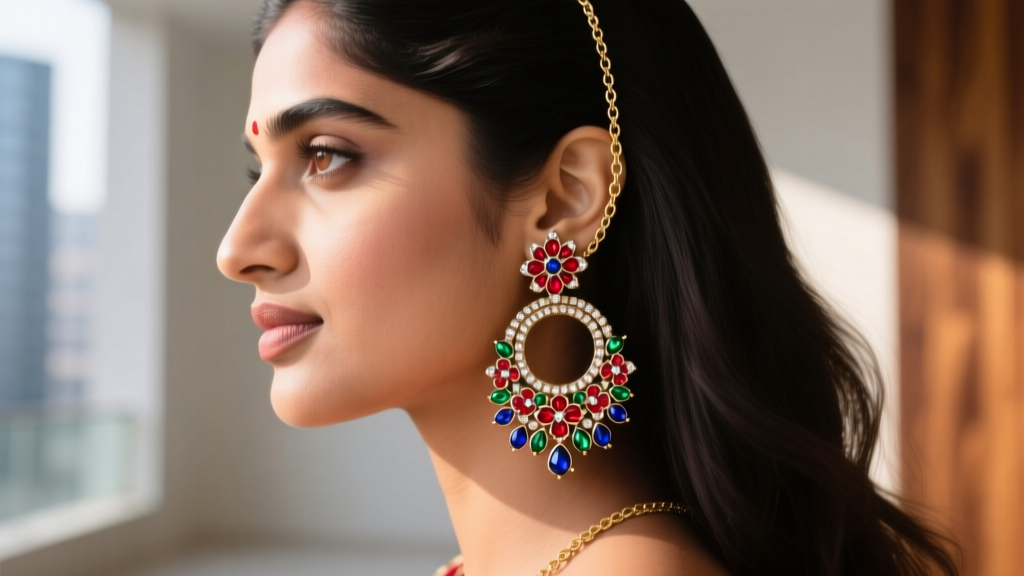
When investing in premium Indian hoops, you are often paying for the stone-setting and enameling techniques. The Gemological Institute of America (GIA) notes that authentic Kundan setting involves using highly refined 24k gold foil to secure uncut gems or glass into a lac (resin) base. Mass-market fakes simply glue shiny metallic foil behind synthetic stones.
How to Spot Authentic Craftsmanship
- The Foil Test (Kundan): Real 24k gold foil has a soft, matte, slightly irregular finish. If the backing of the stone looks like a perfectly smooth, highly reflective mirror, it is likely modern metallic paint or synthetic Mylar.
- The Enamel Test (Meenakari): Authentic Meenakari is vitreous enamel (fused glass). It should feel completely smooth, hard, and cold to the touch. 'Cold enamel' fakes are made of epoxy resin, which feels slightly warm, soft, and may show microscopic scratching or bubbling under a jeweler's loupe.
- The Oxidation Test (Silver): Real oxidized silver has a dark, gunmetal-grey patina that sits deep within the crevices of the engraving. Fake oxidation is often just black paint that rubs off evenly on the high points and smells like chemicals.
Clasp Mechanisms for Heavy Hoops
Standard hinged snap-backs or thin French wires frequently fail under the pendulum motion of heavy Indian hoops. When shopping, prioritize screw-back clasps with wide, bell-shaped friction backs. The wide backing plate distributes the downward pull across a broader area of the earlobe. For vintage or solid gold pieces, look for a locking lever-back with a secondary safety chain that hooks onto the earlobe or hair to prevent catastrophic loss if the primary hinge snaps.
Care & Maintenance for Intricate Hoops
Never place Kundan, Polki, or Meenakari Indian hoops in an ultrasonic cleaner. The high-frequency vibrations will shatter the lac base and dislodge the gold foil, ruining the piece instantly. Instead, clean the metal components using a soft-bristled baby toothbrush dipped in a mild, phosphate-free dish soap solution. Dry immediately with a microfiber cloth, and store the hoops flat in a tarnish-proof pouch to prevent the silver base from reacting with ambient humidity.


