Preventing a Cyst From Earring Metals: Material Guide
Discover why a cyst from earring metals forms. Compare implant-grade titanium, niobium, and gold to prevent piercing bumps and epidermoid cysts.

The Pathology: What Exactly is a Piercing Cyst?
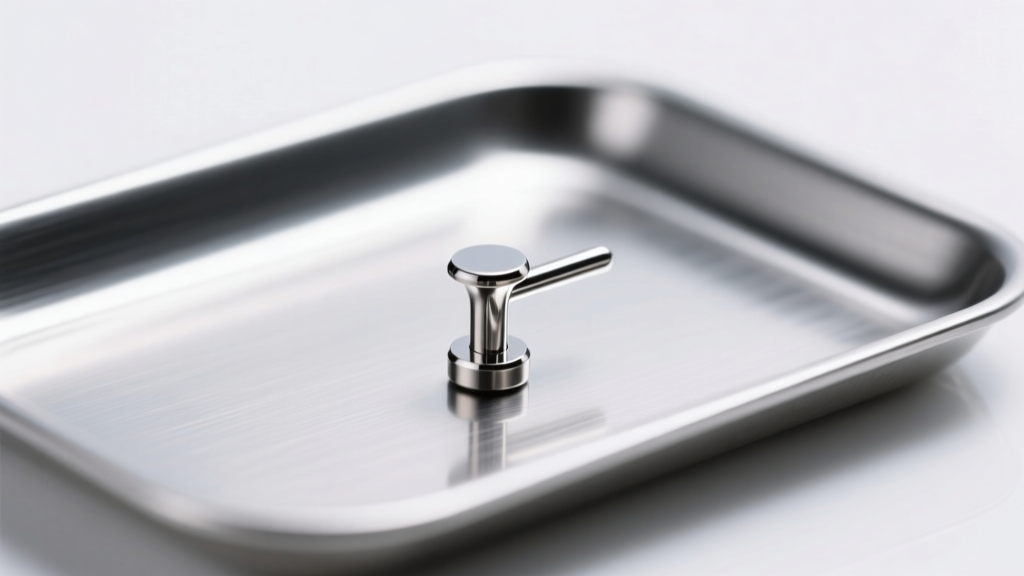
When enthusiasts and professionals discuss a "cyst from earring" hardware, they are typically referring to an epidermoid cyst, a localized granuloma, or an abscess masquerading as a bump. True epidermoid cysts occur when surface skin cells (keratinocytes) are driven deep into the dermal layer during the initial piercing trauma or through chronic micro-tearing caused by poor-quality jewelry. Instead of shedding naturally, these trapped cells multiply and form a sac filled with keratin—a thick, cheese-like protein. According to the Mayo Clinic, while these cysts are generally benign, they become highly problematic in a piercing fistula because the jewelry acts as a foreign body, preventing the sac from draining or resolving on its own.
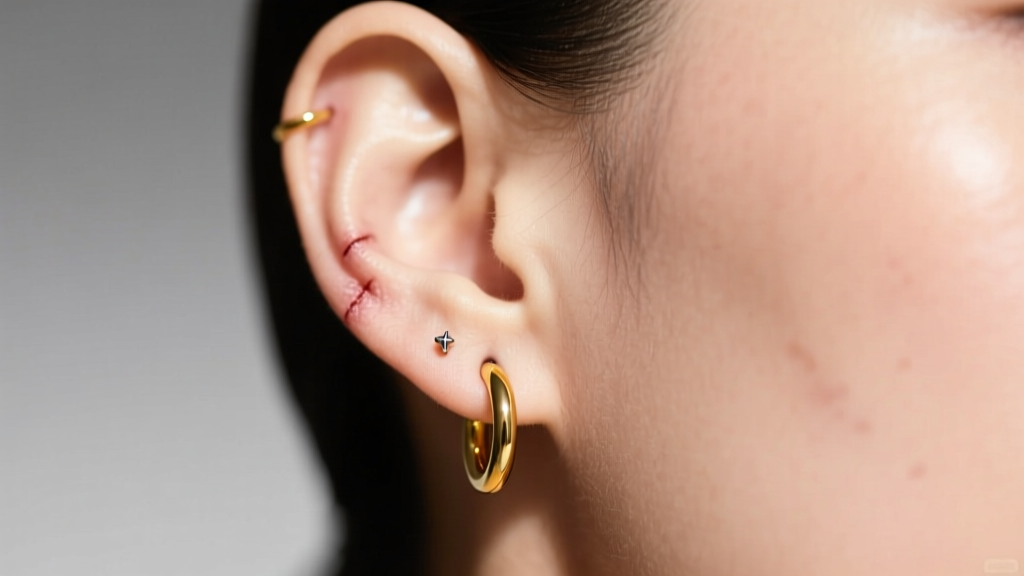
However, not every bump is a true cyst. Hypertrophic scarring and contact dermatitis are frequently misdiagnosed by consumers as cysts. The distinguishing factor often lies in the metallurgical properties of the jewelry you are wearing. As of 2026, advanced metallurgical testing has proven that porous, low-grade alloys harbor bacterial biofilms and shed microscopic metal ions, triggering chronic inflammation that forces the body to wall off the piercing channel, resulting in cystic pockets. Understanding material biocompatibility is the only definitive way to prevent and treat these complications.
Material Porosity and the Nickel Trap
The primary catalyst for inflammatory bumps and secondary cyst formation is the presence of nickel and the microscopic porosity of the metal. When a metal is porous, it acts like a sponge for sebum, dead skin cells, and bacteria. This creates a localized infection that the body attempts to encapsulate, forming a cyst-like nodule. Furthermore, nickel allergies (Type IV delayed hypersensitivity) cause the tissue to weep and crust. This dried lymph and keratin can block the piercing channel, trapping debris inside and forming an epidermoid cyst.
To avoid developing a cyst from earring materials, you must strictly adhere to implant-grade standards. The Association of Professional Piercers (APP) outlines rigorous jewelry material guidelines that prioritize mirror-finish, highly inert metals. Below is a comparative analysis of common earring materials and their cyst-inducing risk factors.
| Material | Industry Standard | Nickel Content | Surface Porosity | Cyst & Bump Risk |
|---|---|---|---|---|
| Implant-Grade Titanium | ASTM F136 / F67 | 0% (Trace max) | Ultra-Low (Mirror Polish) | Very Low |
| Niobium | 99.9% Pure Elemental | 0% | Low (Anodized Layer) | Low |
| 14k/18k Solid Gold | Palladium/Silver Alloy | 0% (If properly alloyed) | Low (If high polish) | Low to Moderate |
| Surgical Steel (316L) | ASTM F138 | 8% - 14% | Moderate to High | High |
| Acrylic / Silicone | None | 0% | Extremely High | Extreme |
Expert Insight: Never use 316L "surgical steel" for a healing or irritated piercing. Despite the "surgical" moniker, 316L steel contains up to 14% nickel bound in the alloy. When exposed to the saline environment of a weeping fistula, the steel corrodes microscopically, releasing nickel ions that trigger severe contact dermatitis, paving the way for cystic encapsulation.
The Role of Threading and Gauge Sizing in Cyst Formation
Material composition is only half the battle; the physical architecture of the earring post plays a massive role in tissue trauma. If you are repeatedly suffering from a cyst from earring posts, you must evaluate the threading and gauge thickness.
Externally Threaded vs. Threadless Jewelry
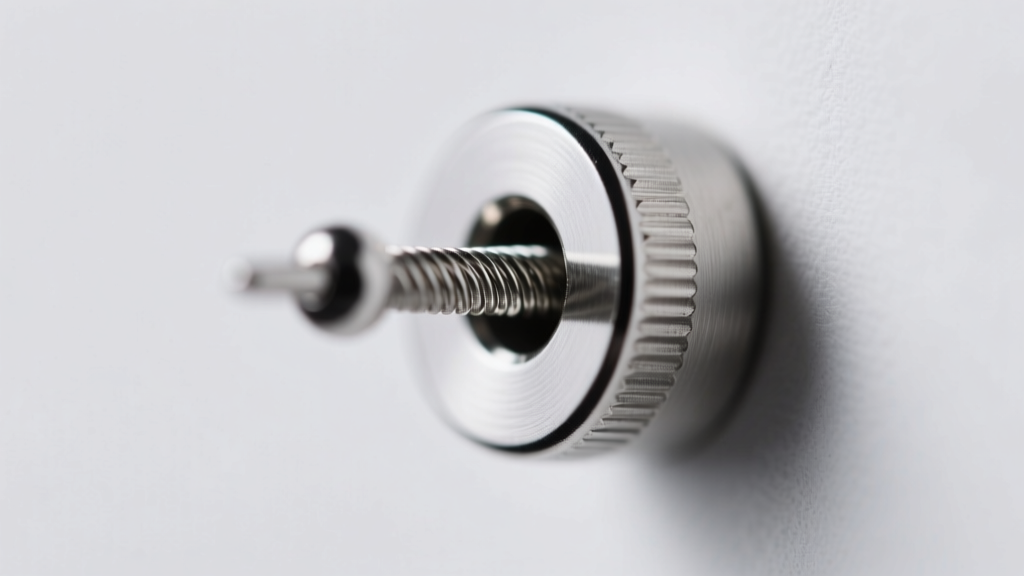
Externally threaded jewelry features screw threads on the post itself. When pushed through a piercing, these sharp, jagged threads act like a cheese grater on the delicate epithelial lining of the fistula. This micro-trauma literally shreds the healing tissue, pushing epidermal cells deep into the dermis—the exact mechanism that seeds an epidermoid cyst. In contrast, internally threaded or threadless (press-fit) jewelry features a smooth, mirror-polished post that glides through the tissue without causing microscopic lacerations.
Gauge Thickness and the Cheese Cutter Effect
Wearing jewelry that is too thin for the specific piercing location creates mechanical stress. A standard earlobe piercing should be 18-gauge (1.0mm) or 16-gauge (1.2mm), while cartilage piercings require a minimum of 16-gauge. If you wear a flimsy 20-gauge (0.8mm) wire hoop in a cartilage piercing, the thin metal will migrate through the tissue under the weight of the jewelry or pressure from sleeping. This "cheese cutter effect" causes chronic internal tearing, leading to granulomas and cystic scar tissue as the body desperately tries to repair the continuously damaged fistula.
Step-by-Step Material Swapping Protocol
If you suspect a bump or cyst is forming due to material incompatibility, immediate intervention is required. Follow this clinical-grade protocol to halt the inflammatory response:
- Identify the Bump: True cysts feel like hard, subcutaneous peas beneath the skin and may have a central punctum (pore). If it is hot, throbbing, and leaking foul-smelling pus, it is an abscess, not a cyst, and requires immediate medical antibiotics.
- Source Implant-Grade Titanium: Purchase an ASTM F136 certified titanium flat-back labret stud from a reputable brand like BVLA, Anatometal, or Neometal. Ensure it is threadless or internally threaded.
- Professional Upsizing/Downsizing: Visit an APP-certified piercer. If your fistula is swollen, a longer post is needed to accommodate the edema without compressing the tissue. Compression restricts blood flow and traps keratin, worsening the cyst.
- Sterile Saline Soaks: Apply a sterile 0.9% sodium chloride solution twice daily. Avoid tea tree oil, aspirin pastes, and alcohol, which cause chemical burns and exacerbate tissue encapsulation.
Clinical Intervention: When Home Care Fails
While swapping to biocompatible titanium resolves inflammatory hypertrophic scarring and contact dermatitis within a few weeks, a true epidermoid cyst will not disappear simply by changing your jewelry. Because the cyst is a fully formed sac lined with epithelial cells, it will continue to produce keratin indefinitely.
"Attempting to pop, squeeze, or needle a piercing cyst at home introduces aggressive pathogens like Staphylococcus aureus into a highly vascular area, risking severe perichondritis in cartilage piercings or systemic infection in lobes." — Guidelines derived from the Cleveland Clinic dermatological standards.
If the nodule persists for more than 8 weeks after upgrading to implant-grade titanium and optimizing your aftercare, you must consult a board-certified dermatologist. The standard medical treatment involves a minor in-office excision where the dermatologist uses a sterile scalpel to remove the entire cystic sac. If the sac is left behind, the cyst will inevitably refill. In some cases, a dermatologist may administer a localized corticosteroid injection to reduce the fibrous capsule, though surgical removal remains the gold standard for permanent resolution.
Final Thoughts on Biocompatibility
Preventing a cyst from earring metals requires a paradigm shift from viewing jewelry as mere decoration to treating it as an implantable medical device. By insisting on ASTM F136 titanium, avoiding porous alloys, and respecting the physical geometry of your piercings through proper gauge sizing and threadless mechanisms, you create an environment where the fistula can mature peacefully. Your body will only tolerate what you introduce to it; give it the highest grade of biocompatible metal, and it will reward you with a healthy, bump-free piercing that lasts a lifetime.


