How to Style and Safely Wear Statement Giraffe Earrings
Learn how to style, support, and care for statement giraffe earrings. Our step-by-step guide covers lobe support, material grades, and face shapes.


The Evolution of Novelty Jewelry: Elevating the Giraffe Motif
In the 2026 jewelry landscape, novelty and animal-inspired motifs have transcended their childhood associations to become staples of high-fashion and artisanal jewelry design. Giraffe earrings, in particular, offer a unique blend of whimsical charm and striking verticality. However, wearing statement animal earrings requires more than just a playful outfit; it demands a strategic approach to metallurgy, ergonomic support, and facial proportion. Because giraffe silhouettes are inherently elongated and often feature mixed media like enamel or gemstone accents, they present specific biomechanical challenges for the earlobe. This step-by-step guide will teach you how to select, style, and safely wear giraffe earrings without compromising your ear health or your sophisticated aesthetic.
Step 1: Selecting the Right Material Grades and Post Gauges
The most common failure mode with novelty dangle earrings is the 'cheese-cutter effect,' where a thin, heavy post slowly slices through the earlobe tissue over time. When purchasing giraffe earrings, you must scrutinize both the body material and the post gauge.
Understanding Post Gauge and Biomechanical Stress
Standard fashion earrings typically use a 20-gauge (0.81mm) or 18-gauge (1.02mm) post. For a solid brass or silver giraffe dangle that exceeds 1.5 inches in length, an 18-gauge post is the absolute minimum. Ideally, seek out artisan pieces that utilize a 16-gauge (1.29mm) post or a thick French wire hook to distribute the weight across a wider surface area of the piercing fistula. According to the Association of Professional Piercers, implant-grade titanium (ASTM F136) is the gold standard for earring posts, as it is completely nickel-free and highly resistant to corrosion from skin oils.
Navigating Enamel and Metal Alloys
Giraffe earrings frequently utilize enamel to create the animal's iconic spotted pattern. You must distinguish between cold enamel and vitreous enamel. Cold enamel is essentially an epoxy resin; it is prone to micro-fractures, yellowing from UV exposure, and chipping upon impact. Vitreous enamel, however, is glass powder fused to metal at high temperatures. It is highly durable, scratch-resistant, and maintains its vibrant color indefinitely. Always opt for vitreous enamel on high-end giraffe studs and dangles to ensure longevity.
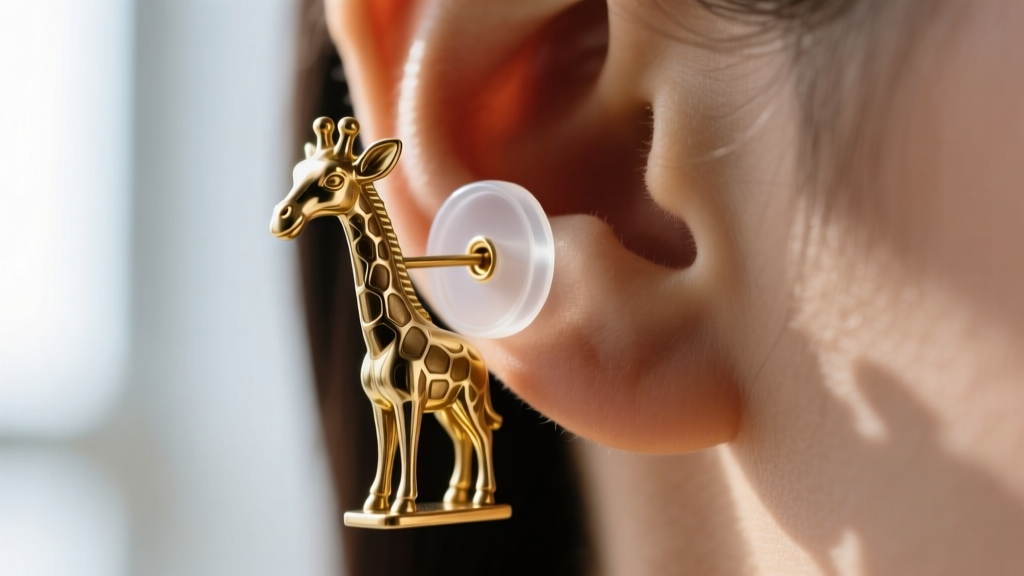
Step 2: Matching the Giraffe Silhouette to Your Face Shape
The vertical geometry of giraffe earrings makes them a powerful tool for facial contouring, but they are not universally flattering in every style. Here is how to match the earring profile to your underlying bone structure:
- Round and Square Faces: Elongated giraffe dangle earrings are your best ally. The strong vertical lines draw the eye downward, creating the illusion of a longer, more oval face shape. Avoid wide, chunky giraffe studs, which can emphasize facial width.
- Oblong and Rectangular Faces: Long dangles will over-elongate your features. Instead, opt for giraffe huggies, ear cuffs that wrap around the helix, or compact giraffe studs that sit snugly on the lobe. These add width and interest without dragging the face down.
- Heart-Shaped Faces: Look for giraffe earrings that feature a wider base or a teardrop-shaped gemstone accent at the bottom of the design. This adds visual weight to the jawline, balancing a narrower chin.
Step 3: Securing Heavy Dangle Giraffe Earrings
Even with the correct gauge, gravity is the enemy of heavy statement earrings. If your giraffe earrings droop forward, they not only look awkward but also place uneven stress on the piercing. Implementing proper support mechanisms is crucial for all-day wear.
| Support Method | Best For | Pros | Cons |
|---|---|---|---|
| Silicone O-Rings | Standard post & butterfly backs | Invisible, cheap, provides slight friction grip | Does not support heavy weight, can trap moisture |
| Earlobe Support Patches | Heavy dangles & large studs | Distributes weight across the back of the lobe, prevents tearing | Visible if hair is tied up, requires daily replacement |
| French Wire Converters | Stud-style giraffes you want to hang | Shifts weight to the curve of the ear, very secure | Adds extra length to an already long earring |
| Leverback Closures | Artisan dangles | Locks securely, thick wire gauge supports weight well | Hard to find on mass-produced novelty jewelry |
For heavy brass or silver giraffe dangles, adhesive earlobe support patches are the most effective solution. These invisible, medical-grade tape patches feature a pre-punched hole that reinforces the fistula, preventing the earring from pulling the lobe downward.
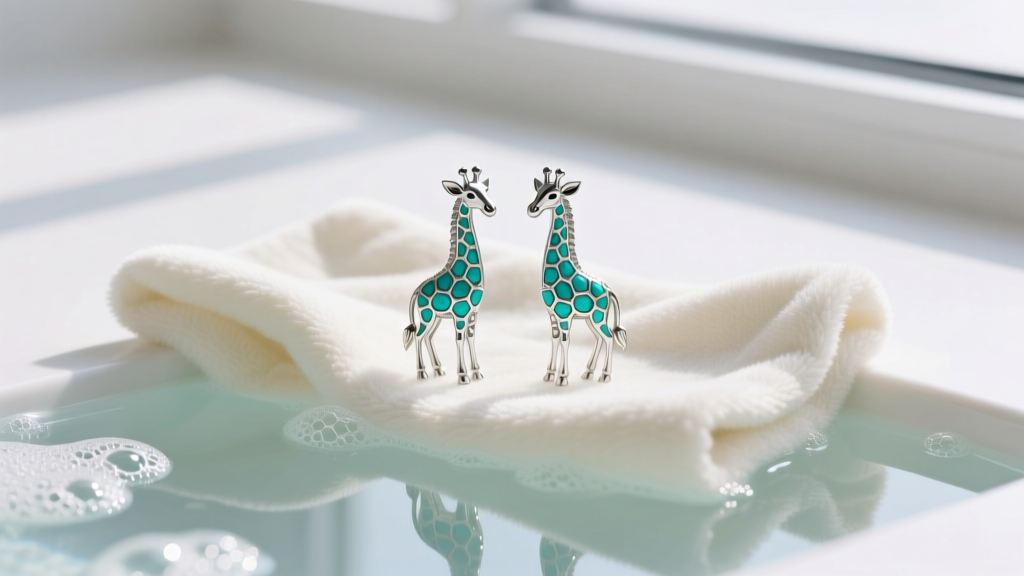
Step 4: Cleaning and Maintaining Mixed-Media Giraffes
Because giraffe earrings often combine metals (like sterling silver or gold-plated brass) with enamel, turquoise, or mother-of-pearl accents, standard jewelry dips and ultrasonic cleaners are strictly prohibited. Ultrasonic vibrations will shatter vitreous enamel and fracture porous stones like turquoise, while chemical dips will strip gold plating and dull natural inlays.
The Safe Cleaning Protocol:
- Dry Dusting: Use a clean, soft-bristled makeup brush to gently sweep away dead skin cells, hair product residue, and dust from the crevices of the giraffe's neck and legs.
- Targeted Metal Polishing: Dampen a microfiber cloth with a drop of mild, phosphate-free dish soap and warm water. Wring it out until it is barely damp. Gently wipe the metal portions of the earring.
- Enamel and Stone Care: Avoid getting porous stones wet. If the enamel spots need cleaning, use a dry cotton swab to gently buff the surface.
- Drying: Immediately dry the earrings with a separate, lint-free cloth to prevent water spots on the metal and moisture trapping behind the post.
For detailed information on caring for specific gemstone accents often found in artisan animal jewelry, the GIA Gem Encyclopedia is an invaluable resource for understanding stone-specific porosity and hardness levels.
Expert Troubleshooting: Common Giraffe Earring Failure Modes
Even with meticulous care, novelty earrings can present unique challenges. Here is how to troubleshoot the most common issues:
- Green Skin Discoloration: If the skin behind your earlobe turns green, your giraffe earrings are likely made of a copper-heavy brass alloy reacting to your skin's acidity and sweat. Fix: Coat the post and back of the earring with a thin layer of clear nail polish, or have a local jeweler swap the post for an implant-grade titanium alternative.
- Enamel Micro-Fractures: If you notice tiny cracks in the black or brown spots of your giraffe, the piece has likely suffered thermal shock (e.g., being left in a hot car or exposed to freezing temperatures). Fix: Stop wearing them immediately. Moisture will seep into the cracks and cause the underlying metal to oxidize and lift the enamel entirely. Take them to a professional enamelist for re-firing.
- Bent Posts: A bent post on a heavy giraffe earring usually indicates the metal is too soft (like pure 24k gold or low-karat alloys) or the gauge is too thin. Fix: Do not repeatedly bend it back, as this will cause metal fatigue and snap the post. Have a jeweler solder on a thicker, 16-gauge stainless steel or titanium post.
By treating your giraffe earrings as serious pieces of structural jewelry rather than mere novelties, you ensure they remain a sophisticated, safe, and striking component of your wardrobe for years to come. Prioritize thick gauges, vitreous enamel, and proper lobe support to master this playful yet elegant trend.


