Huge Earrings on a Budget: 2026 Value & Material Guide
Discover how to evaluate huge earrings for true value in 2026. We compare material grades, weight limits, and pricing to help you buy bold styles wisely.


The True Cost of Oversized Statement Pieces
Maximalist jewelry continues to dominate the style landscape in 2026, with huge earrings serving as the focal point of everything from editorial runway looks to everyday street style. However, scaling up your earrings introduces a complex set of physical and financial challenges. When you buy a three-inch drop earring or a massive sculptural hoop, you are no longer just paying for aesthetics; you are paying for structural engineering, material density, and biomechanical safety.
For budget-conscious shoppers, the market is flooded with oversized pieces priced between $15 and $40 that look incredible on a screen but become unwearable nightmares in reality. Heavy base metals cause lobe fatigue, thin wires slice through tissue, and cheap plating degrades within weeks of contact with skin oils. True value in large-scale jewelry is not about finding the lowest price tag; it is about optimizing the weight-to-size ratio, ensuring metallurgical integrity, and securing reliable hardware. This guide breaks down the exact metrics you need to assess the real value of huge earrings before you checkout.
Material Grades: What Justifies the Price Tag?
The base metal of an oversized earring dictates its weight, its lifespan, and how your body reacts to it. When evaluating budget versus premium options, you must look past the surface finish and identify the core alloy.
The $15–$35 Trap: Brass and Zinc Alloys
Most fast-fashion huge earrings are cast from brass or zinc alloys. While these metals are inexpensive and easy to mold into dramatic, gravity-defying shapes, they are incredibly dense. A solid brass hoop measuring two inches in diameter can easily exceed 20 grams per ear. Furthermore, these alloys are highly porous and frequently contain nickel or lead. When plated with a microscopic layer of gold (flash plating), the sweat and friction from a heavy earring will wear through the finish in a matter of weeks, leaving you with a tarnished, skin-irritating paperweight.
The $45–$85 Middle Ground: 316L Surgical Steel
Surgical stainless steel offers excellent durability and a high polish that resists tarnishing. However, steel is heavy. If you are buying huge earrings made of solid steel, ensure the design incorporates strategic cut-outs or hollow sections to reduce the overall gram weight. Steel is generally safe for healed lobes, but it is not entirely nickel-free, making it a risky choice for those with severe contact dermatitis.
The $90–$160+ Investment: Grade 23 Titanium
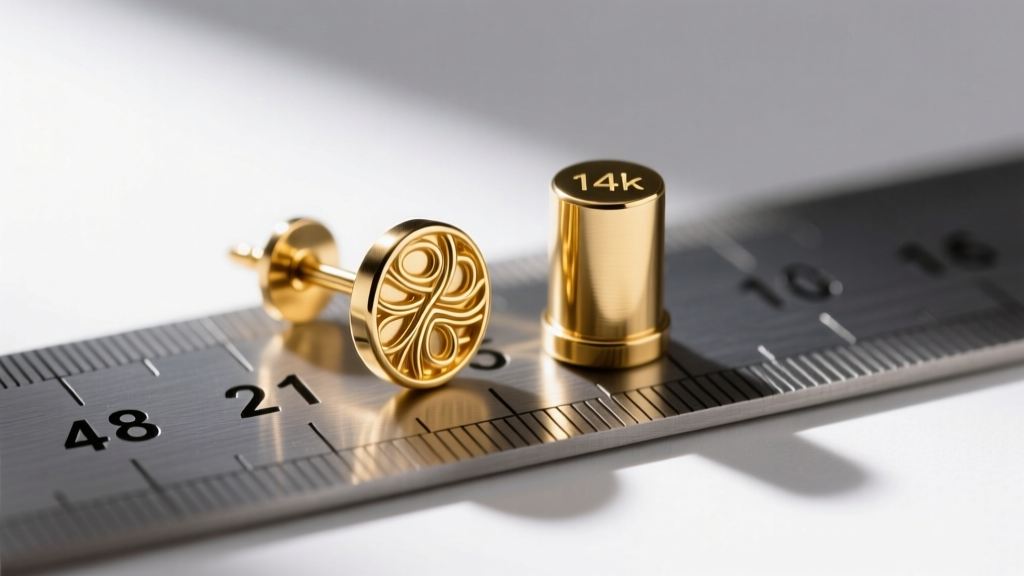
If you want massive scale without the neck strain or lobe damage, Grade 23 Titanium (Ti-6Al-4V ELI) is the undisputed champion. Titanium weighs roughly 45% less than stainless steel while offering superior tensile strength. It is also 100% biocompatible and nickel-free. According to the Association of Professional Piercers (APP), implant-grade titanium is the gold standard for body jewelry, drastically reducing the risk of allergic reactions and migration. Paying $120 for a pair of large titanium hoops is a vastly superior long-term value than spending $30 on brass hoops that will stretch your piercings and turn your skin green.
Gold Vermeil vs. Gold Plated: Know the Difference
When shopping for gold-toned huge earrings, the terminology matters immensely. The Gemological Institute of America (GIA) and FTC guidelines note that true gold vermeil must feature a .925 sterling silver base coated with at least 2.5 microns of solid gold. Anything less is simply gold-plated, often over cheap brass. For large surface-area earrings, always demand vermeil or solid gold; the larger the earring, the faster cheap plating will rub off against your hair and clothing.
Construction Methods: Hollow vs. Solid
How a large earring is manufactured drastically affects its price and wearability. There are two primary methods used for huge earrings:
- Solid Casting: The metal is poured into a mold. This creates a heavy, durable piece that can withstand drops and impacts. However, the weight makes it unsuitable for standard earlobe piercings if the design is oversized.
- Electroforming (Hollow Construction): A wax or resin model is coated in a conductive paint and submerged in an electroplating bath. The metal builds up around the model, which is later melted or dissolved away. This results in a massive, voluminous earring that is incredibly lightweight and budget-friendly. The trade-off? Hollow earrings dent easily if dropped and cannot be easily resized or soldered if broken.
Pro-Tip: If you are buying huge earrings for daily wear, prioritize hollow electroformed sterling silver or titanium. If you are buying them for occasional evening wear where durability in a crowded room is a concern, opt for solid cast pieces but ensure they have reinforced, heavy-duty hardware.
The Weight Factor: Gauge Sizing and Lobe Health
The most overlooked aspect of buying huge earrings on a budget is the thickness of the post or wire. Standard fashion earrings are typically 20-gauge (0.81mm) or even 22-gauge (0.64mm). When you hang a 15-gram statement piece from a 20-gauge wire, you create a severe biomechanical hazard known as the "cheese cutter effect."
The downward force of a heavy earring concentrates entirely on the tiny surface area of a thin wire, causing it to slowly slice through the bottom of your earlobe piercing. Over time, this causes irreversible stretching, micro-tears, and eventual blowouts. To protect your tissue, you must enforce strict gauge minimums based on the earring's weight.
| Earring Weight | Minimum Safe Gauge | Wire Thickness (mm) | Risk Level on 20g Wire |
|---|---|---|---|
| Under 8 grams | 20-Gauge | 0.81mm | Low |
| 8 to 14 grams | 18-Gauge | 1.02mm | Moderate (Fatigue) |
| 15 to 25 grams | 16-Gauge | 1.29mm | High (Cheese Cutter) |
| Over 25 grams | 14-Gauge / Harness | 1.60mm+ | Severe (Tearing) |
When evaluating a budget earring, check the product specifications for the post gauge. If a brand is selling a massive, heavy brass drop earring with a flimsy 20-gauge hook, it is a structural failure waiting to happen, regardless of how cheap the price is.
Assessing Craftsmanship in Large-Scale Jewelry
Large earrings act as levers. Every time your hair catches on a three-inch hoop, or you pull a sweater over your head, immense torque is applied to the earring's connection points. Budget manufacturers often cut corners on soldering and backings, leading to catastrophic failure modes.
Solder Joints and Leverage
On large hoops and drops, the post is usually soldered to the main body of the earring. In cheap manufacturing, this is done with a quick, weak spot-solder that will snap under the leverage of a heavy swing. High-value brands use laser welding or cast the post directly into the body of the earring (cast-in-place), eliminating the weak point entirely. Inspect the connection point closely in product macro photos; if you see a messy, uneven blob of solder, walk away.
Hardware: The Necessity of Locking Backs
Standard friction backs (butterfly clutches) rely on tension to stay in place. They are entirely inadequate for huge earrings. The sheer weight and momentum of a large earring will easily pull a friction back off your ear, resulting in the loss of the jewelry. For any oversized piece, you must look for secure hardware alternatives:
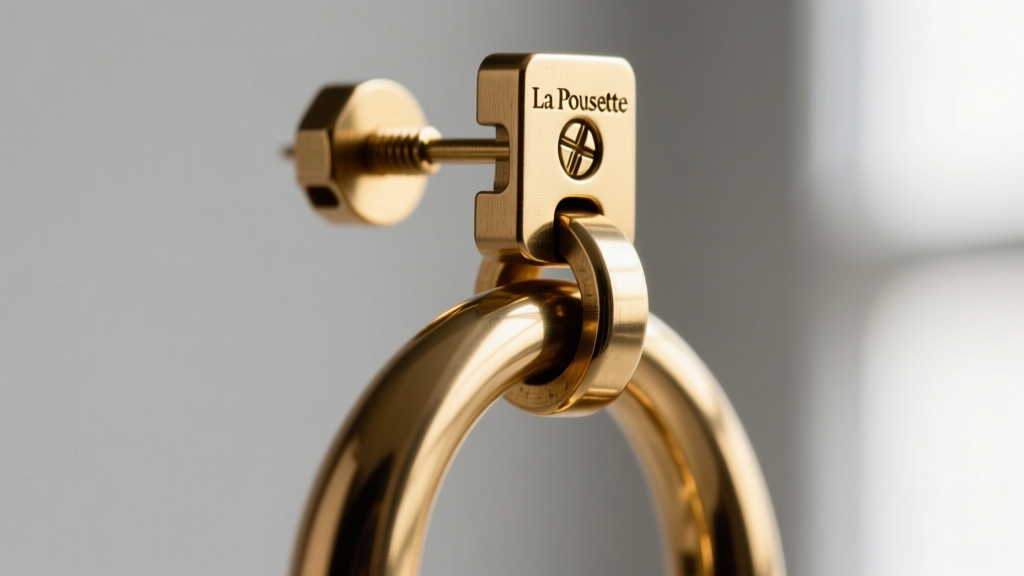
- La Pousette Clutches: These feature a locking mechanism with tiny tabs that snap securely into a grooved post. They are the industry standard for high-value, heavy earrings.
- Omega Clips: Often used on clip-ons or heavy button earrings, these feature a hinged, curved wire that snaps firmly against the earlobe, distributing the weight across a wider area.
- Screw-Backs: The post is threaded, and the backing screws on. While secure, they can be tedious to put on and may strip if cross-threaded.
Cost-Per-Wear Framework for Bold Earrings
To truly assess the budget value of huge earrings, you must calculate the Cost-Per-Wear (CPW). A $25 pair of fast-fashion hoops that tarnishes, stretches your lobes, and breaks after three wears costs you $8.33 per wear. A $140 pair of hollow electroformed, 18-gauge sterling silver hoops with La Pousette backs that you wear twice a week for three years costs you $0.44 per wear.
When building a budget for statement jewelry, allocate your funds using this hierarchy of importance:
- Post/Wire Gauge and Material: Never compromise on the metal that actually touches your piercing. If the budget is tight, buy a smaller earring made of titanium or solid 14k gold rather than a massive earring made of plated brass.
- Hardware Security: Losing a heavy earring because of a cheap friction back negates any initial savings.
- Aesthetic Design: Only after safety and longevity are secured should you evaluate the visual design and brand markup.
Final Verdict: Where to Invest vs. Where to Save
Huge earrings are an investment in your personal style, but they do not require a luxury designer markup to be valuable. You can easily find incredible, budget-friendly oversized pieces if you know where to look and what to demand. Save your money on trend-driven, hyper-specific novelty shapes that you will only wear for one season. Instead, invest your budget in large-scale, geometric, or sculptural hoops made from lightweight Grade 23 Titanium, hollow Sterling Silver, or true Gold Vermeil. By prioritizing 18-gauge or 16-gauge posts, locking backings, and intelligent weight distribution, you can rock massive, head-turning earrings in 2026 without sacrificing your earlobe health or your wallet.


