Best Metals for Infinity Earrings Hoops: A Material Durability Guide
Discover the best metals for infinity earrings hoops. Compare titanium, gold, and silver for tensile strength, hypoallergenic properties, and wear.

The Structural Challenge of Infinity Earrings Hoops
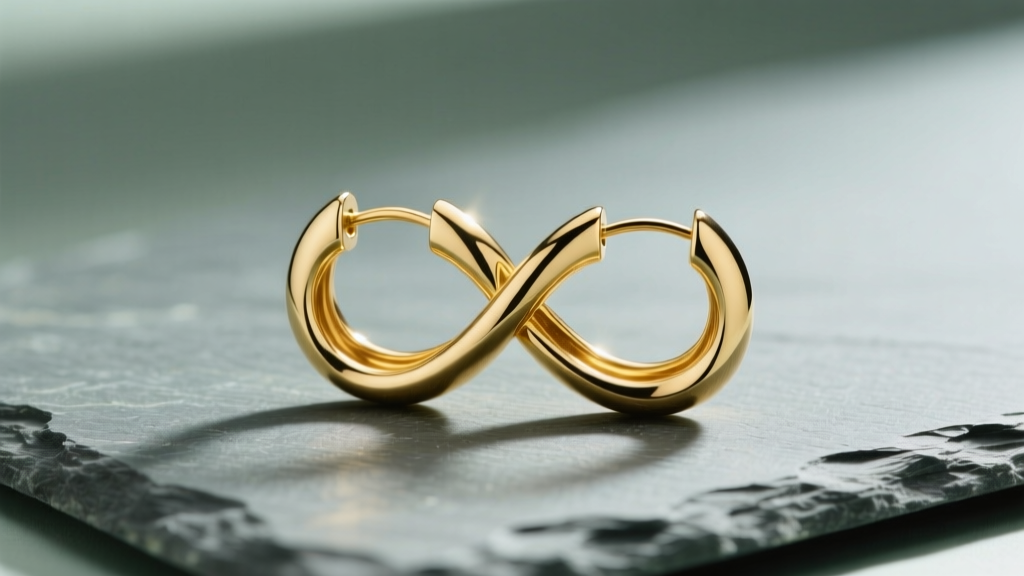
Infinity earrings hoops—characterized by their elegant figure-eight or twisted loop silhouettes—are a staple in both minimalist and statement jewelry collections. However, from a metallurgical and structural engineering perspective, the infinity design introduces a unique vulnerability: the crossover joint. Unlike a standard continuous hoop that distributes kinetic stress evenly across a single plane, the infinity twist creates a localized stress concentration point where the wire intersects itself.
When you insert, remove, or even sleep in infinity earrings hoops, the torsional force applied to the earwire is transferred directly to this crossover intersection. If the material lacks adequate tensile strength, or if the joint is poorly soldered, the metal will warp, fatigue, or eventually snap. Choosing the right metal is not merely an aesthetic decision; it is a structural necessity. In this guide, we break down the exact material properties, wire gauge requirements, and failure modes associated with the most common metals used for infinity hoops.
Material Breakdown: Tensile Strength and Wearability
The longevity of your infinity earrings hoops depends heavily on the base metal's yield strength and its response to work hardening. Below, we analyze the four most prevalent materials used in fine and fashion jewelry.
Implant-Grade Titanium (ASTM F136)
Titanium, specifically the Ti-6Al-4V ELI alloy designated as ASTM F136, is the gold standard for biocompatibility and structural integrity. With a yield strength of approximately 830 MPa, titanium is exceptionally resistant to bending and warping. For infinity earrings hoops, this means the figure-eight crossover will maintain its precise geometry even when subjected to the daily friction of hair, clothing, and sleeping. Because titanium cannot be easily soldered with a traditional jeweler's torch without introducing oxygen embrittlement, high-quality titanium infinity hoops are either CNC-milled from a single block or joined using precision laser welding. According to the Association of Professional Piercers (APP), ASTM F136 titanium is completely nickel-free, making it the ultimate choice for highly reactive earlobes and cartilage piercings.
14k vs. 18k Solid Gold
Gold purity drastically alters the structural viability of infinity hoops. Pure 24k gold is far too soft for jewelry, so it is alloyed with metals like copper, silver, and zinc. As noted by the Gemological Institute of America (GIA), the specific alloy ratios dictate the metal's hardness.
- 14k Gold (58.5% pure): The higher concentration of copper and zinc gives 14k gold a yield strength of roughly 350-400 MPa. This makes it highly resilient and ideal for delicate 18-gauge infinity hoops, as the alloy can withstand the torsional stress of the crossover twist without permanently deforming.
- 18k Gold (75% pure): With a lower yield strength (around 200-250 MPa), 18k gold is noticeably softer. If crafted into a thin wire, an 18k infinity hoop will quickly warp at the intersection. To use 18k gold safely in this design, the wire must be significantly thicker to compensate for the metal's inherent malleability.
Surgical Stainless Steel (316L)
316L stainless steel is a workhorse material in fashion jewelry, boasting a yield strength of about 290 MPa. It is highly resistant to tarnish and corrosion due to its chromium and molybdenum content. However, 316L steel contains between 10% and 14% nickel. While the nickel is largely bound within the alloy matrix, prolonged exposure to sweat and skin acids can cause localized leaching, triggering contact dermatitis in sensitive individuals. Structurally, steel infinity hoops are excellent and hold their shape well, but they are best reserved for fully healed, non-reactive earlobes.
Sterling Silver (925)
Sterling silver (92.5% silver, 7.5% copper) is notoriously soft, with a yield strength of just 150 MPa. More problematically, silver is highly susceptible to "work hardening." If a wearer repeatedly bends the infinity crossover to open and close the hoop, the metal's crystalline structure will stiffen and eventually become brittle, leading to a catastrophic snap at the joint. Sterling silver infinity earrings hoops must utilize a hinged clicker mechanism or a sturdy post-and-clutch backing rather than relying on the tension of the wire itself to stay in the ear.
Comparative Data: Yield Strength and Pricing
To help you make an informed purchasing decision, the table below synthesizes the mechanical properties and market positioning of these metals specifically for infinity hoop designs.
| Material | Yield Strength (approx.) | Hypoallergenic Rating | Avg. Price Range (USD) | Best Joint Method |
|---|---|---|---|---|
| ASTM F136 Titanium | 830 MPa | Excellent (Nickel-Free) | $40 - $120 | Laser Welding / CNC Milling |
| 14k Solid Gold | 350 - 400 MPa | Very Good | $150 - $450 | Torch Soldering / Laser |
| 18k Solid Gold | 200 - 250 MPa | Good | $250 - $800+ | Laser Welding (Requires thick gauge) |
| 316L Stainless Steel | 290 MPa | Poor (Contains Nickel) | $15 - $45 | TIG / Laser Welding |
| 925 Sterling Silver | 150 MPa | Moderate (Copper Allergies) | $30 - $90 | Soldering (Avoid bending) |
Wire Gauge and Thickness Considerations
The material you choose must be paired with the correct wire gauge (thickness) to ensure the infinity earrings hoops do not collapse under their own structural demands. Gauge sizing operates on an inverse scale; a lower number indicates a thicker wire.
- 20-Gauge (0.81mm): Generally too thin for infinity hoops regardless of the material. The crossover point will easily warp when inserting the earring through the piercing fistula.
- 18-Gauge (1.02mm): The standard for high-strength metals like ASTM F136 titanium and 14k gold. At this thickness, these materials provide enough rigidity to maintain the figure-eight shape while remaining lightweight enough for comfortable all-day wear.
- 16-Gauge (1.29mm): Highly recommended for 18k gold and 316L stainless steel. The extra thickness compensates for the softer yield strength of 18k gold and adds necessary visual weight to steel designs.
- 14-Gauge (1.62mm): Essential for 925 sterling silver infinity hoops. Because silver is prone to work hardening and bending, a 14-gauge wire provides the necessary bulk to resist deformation at the crossover joint.
Maintenance and Failure Modes at the Crossover Joint
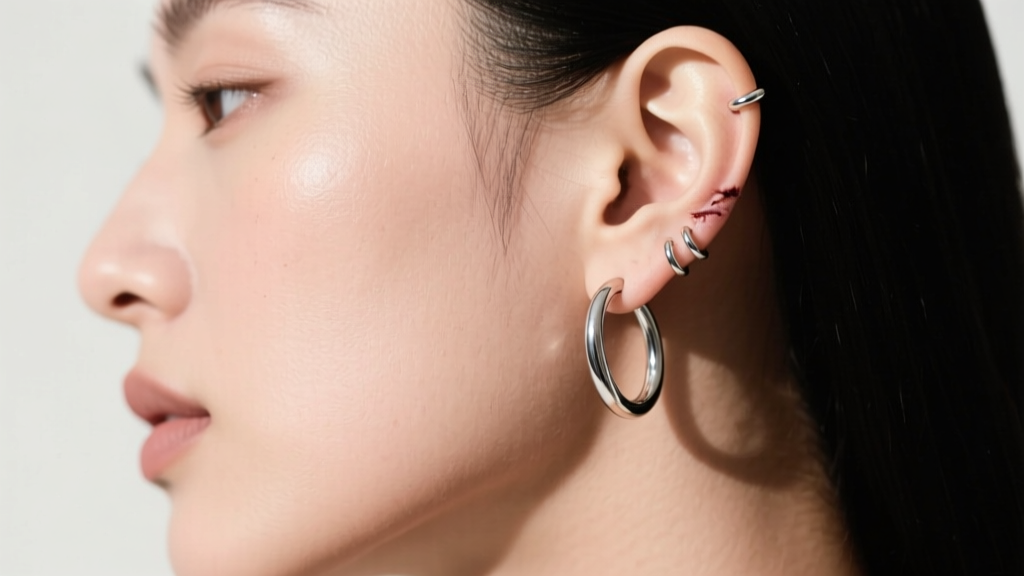
Even with the correct metal and gauge, infinity earrings hoops require specific maintenance due to their unique geometry. The primary failure mode for these earrings is not the metal snapping, but rather the degradation of the joint or the accumulation of debris.
Soldering vs. Laser Welding
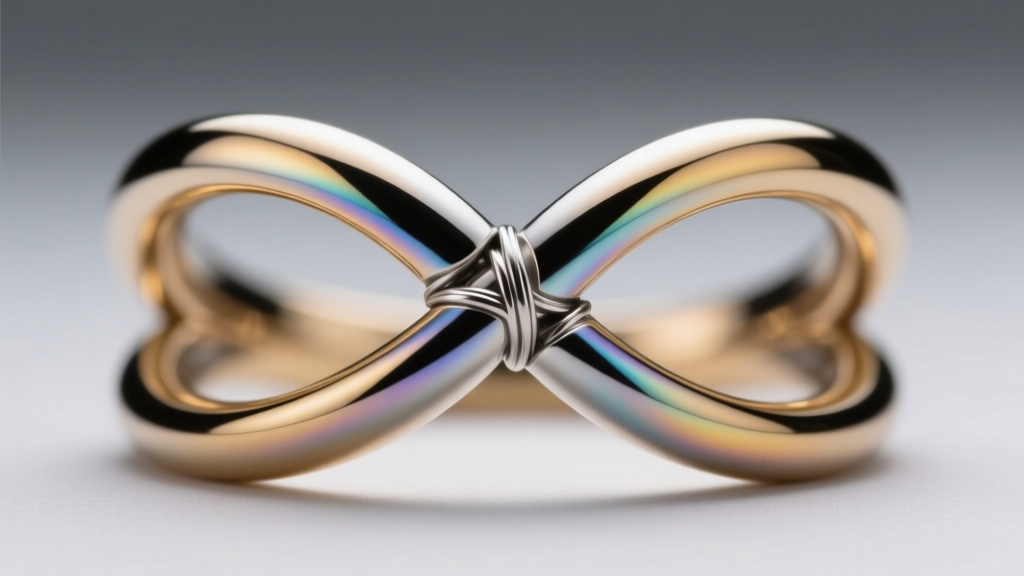
In traditional jewelry making, the crossover point of an infinity hoop is joined using a torch and silver or gold solder. Over time, the heat-affected zone around a torch solder can become brittle, especially if the earring is frequently bent. Modern, high-end manufacturers utilize laser welding, which focuses a highly concentrated beam of light to fuse the metal without heating the surrounding wire. Laser-welded infinity joints are significantly less prone to fatigue cracking. When shopping, look for product descriptions that specify "laser-welded" or "seamless CNC" construction.
Tarnish and Debris Trapping
The tight crevice where the wire crosses itself acts as a trap for sebum, dead skin cells, and cosmetic products. In metals like sterling silver and lower-karat gold alloys, this trapped moisture accelerates localized tarnishing and oxidation. To prevent this, infinity earrings hoops should be cleaned weekly using an ultrasonic jewelry cleaner or a soft-bristled brush with mild dish soap. Avoid harsh chemical dips, which can degrade the solder or laser weld at the intersection.
Final Verdict: Choosing Your Ideal Metal
When selecting infinity earrings hoops, your primary consideration should be the intersection of biocompatibility and structural rigidity. For those with sensitive skin or those seeking a lightweight, virtually indestructible daily wearer, ASTM F136 Titanium is the undisputed champion. Its high yield strength allows for elegant, thinner 18-gauge designs that will never warp at the crossover.
If you prefer the warmth and prestige of fine jewelry, 14k solid gold offers the best balance of luxury and tensile strength, ensuring the figure-eight silhouette remains pristine for decades. Avoid thin sterling silver or 18k gold hoops unless they are crafted in a heavy 14-gauge wire or utilize a hinged clicker mechanism that bypasses the need to bend the crossover joint. By matching the right metallurgical properties with the appropriate wire gauge, your infinity hoops will remain a flawless, enduring symbol of continuity in your jewelry collection.


