Ivory Rose Earrings: Material Science, Ethics & Carving Guide
Explore the technical craftsmanship, ethical material alternatives, and structural grading of carved ivory rose earrings for fine jewelry collectors.

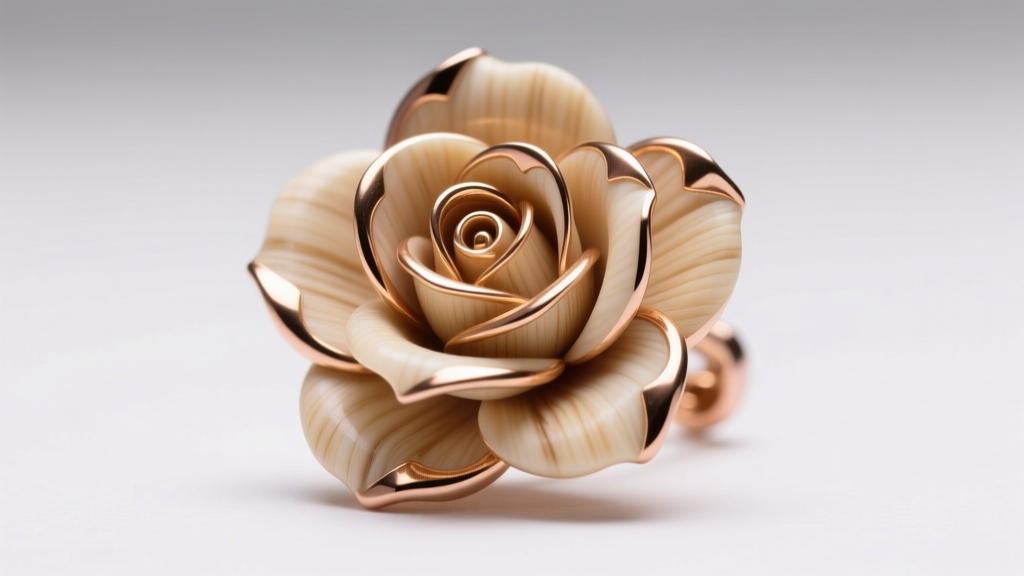
The Evolution of the Ivory Rose Motif in Fine Jewelry
The pursuit of ivory rose earrings represents a fascinating intersection of organic gemology, micro-sculpting, and modern ethical compliance. Historically, the carved rose motif was a staple of Victorian and Art Nouveau mourning and romantic jewelry, utilizing elephant ivory for its creamy luster and workability. However, the contemporary 2026 fine jewelry market has completely pivoted. Due to stringent global regulations outlined by the CITES appendices and domestic bans enforced by the U.S. Fish and Wildlife Service, the trade of modern elephant ivory is strictly prohibited. Today, master lapidaries and bench jewelers achieve the coveted ivory rose aesthetic through highly regulated, ethically sourced alternative substrates, paired with advanced metallurgical settings that ensure longevity and structural integrity.
Material Substrates: Grading Modern Ethical Alternatives
To create premium ivory rose earrings, artisans rely on three primary substrates. Each material possesses distinct physical properties that dictate the carving approach, the final polish, and the long-term stability of the rose petals.
1. Fossilized Mammoth Ivory (The Premium Standard)
Excavated from the permafrost of Siberia and Alaska, fossilized woolly mammoth ivory is the only legally traded true ivory in most jurisdictions. It has been buried for 10,000 to 40,000 years, resulting in a material that is denser and more mineralized than modern ivory. The presence of distinct Schreger lines (cross-hatch patterns) allows gemologists to verify its origin.
2. Tagua Nut (The Botanical Ivory)
Derived from the Phytelephas palm, tagua nut is a dense cellulose structure that mimics the haptic feedback and visual warmth of ivory. While excellent for smaller stud earrings, its organic cellulose composition makes it highly sensitive to rapid humidity fluctuations, requiring specialized sealing techniques.
3. Advanced Casein Bio-Resins
For fashion-tier ivory rose earrings, modern casein-based bio-resins (derived from milk proteins) offer a uniform, flawless canvas. Unlike vintage celluloid, which is highly flammable and prone to acidic degradation, modern bio-resins are chemically stable, though they lack the microscopic grain structure that master carvers exploit for petal definition.
| Material | Density (g/cm³) | Mohs Hardness | Hygroscopic Index | Avg. Market Price (Per Pair) |
|---|---|---|---|---|
| Fossil Mammoth | 1.75 - 1.90 | 2.5 - 2.75 | Low (Mineralized) | $450 - $1,200+ |
| Tagua Nut | 1.20 - 1.40 | 1.5 - 2.0 | High (Cellulose) | $85 - $250 |
| Casein Bio-Resin | 1.30 - 1.35 | 2.0 | Moderate | $40 - $120 |
The Mechanics of Micro-Carving the Rose Motif
Carving a three-dimensional rose from a solid cabochon of mammoth ivory or tagua requires an intimate understanding of the material's grain and fracture toughness. The GIA Gem Encyclopedia notes that organic gems require specialized lapidary techniques to prevent thermal shock and micro-fracturing during the cutting process.
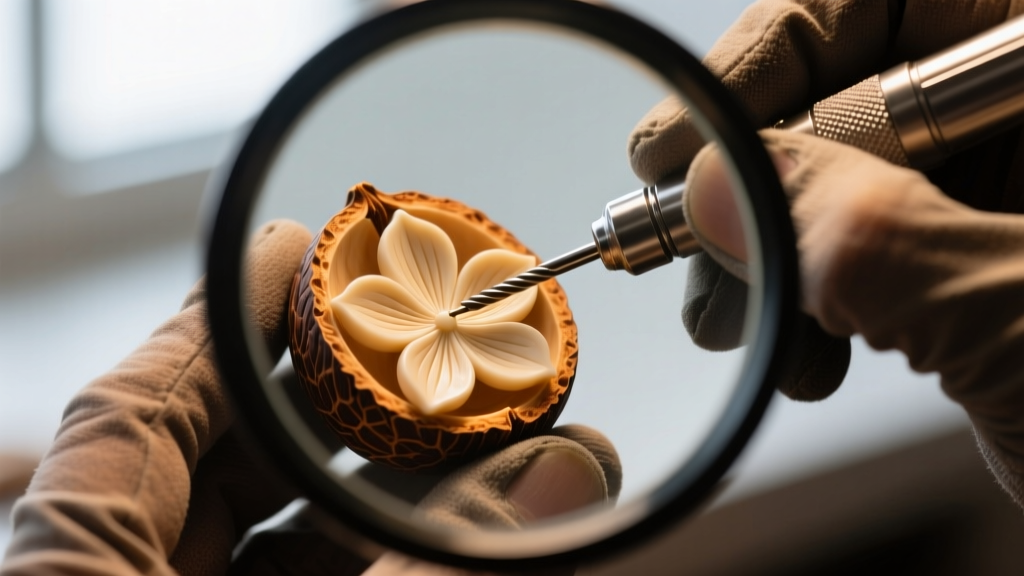
- Initial Roughing: Artisans use 120-grit diamond sintered burs to establish the primary dome and separate the outer petal layers from the central bud.
- Undercutting: The defining feature of a high-end ivory rose earring is the deep undercut between the overlapping petals. Carvers use 0.5mm tungsten carbide scorpers to achieve petal thicknesses between 0.6mm and 0.9mm. If the petal is carved thinner than 0.5mm, the hygroscopic expansion of the material will cause delamination and snapping over time.
- Thermal Management: Friction from high-speed rotary tools can scorch organic materials, leaving permanent brown burn marks. Carvers must operate at low RPMs (under 5,000) and use continuous misting or frequent pauses to dissipate heat.
- Final Polish: Instead of standard cerium oxide used for quartz, ivory alternatives are polished using a soft muslin wheel charged with a mild tin oxide or specialized organic wax compound to achieve a soft, satiny luster rather than a glassy shine.
Metallurgy and Hardware Integration
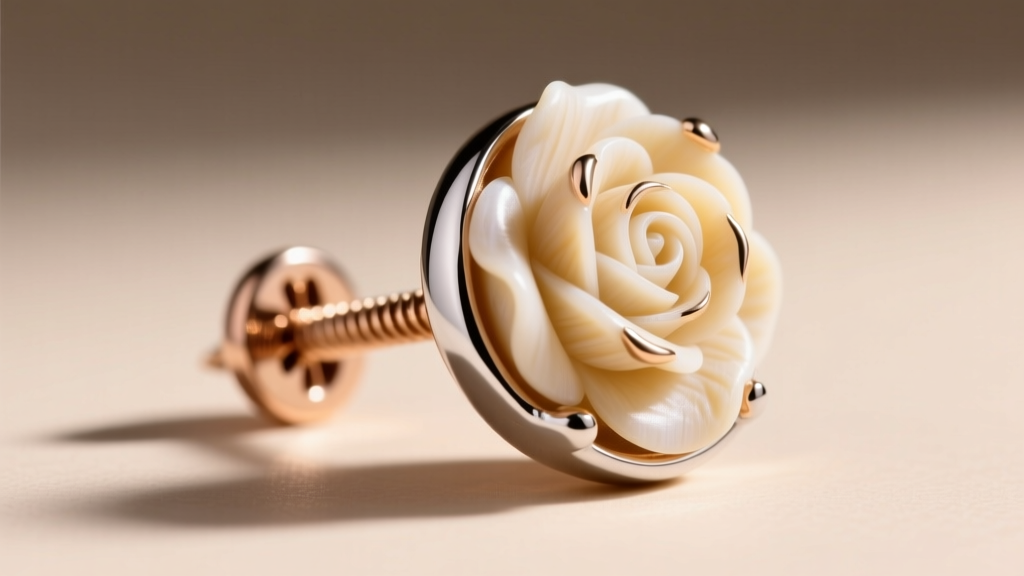
The visual pairing of creamy ivory with warm rose gold is a hallmark of luxury ivory rose earrings. However, integrating these two materials requires strict metallurgical safeguards.
The Copper Oxidation Problem
Standard 18k rose gold consists of 75% pure gold, 22.25% copper, and 2.75% silver. The high copper content provides the signature pink hue but introduces a significant risk: copper oxidation. When acidic perspiration interacts with the copper alloy, it can create copper salts that migrate into the porous structure of the ivory or tagua, causing irreversible green or black staining at the bezel line.
The Platinum Barrier Solution
To prevent this, expert bench jewelers employ a barrier plating technique. The interior of the bezel cup and the earring post are flash-plated with a microscopic layer of rhodium or platinum. This creates an inert, non-reactive barrier between the organic carving and the copper-rich rose gold setting, preserving the pristine ivory hue indefinitely.
Gauge and Structural Support
A fully carved, 12mm mammoth ivory rose can weigh between 4 to 7 grams. Standard 20-gauge (0.81mm) earring posts will bend under this weight, causing the earring to droop and potentially tearing the earlobe. Premium ivory rose earrings must utilize 18-gauge (1.02mm) or 16-gauge (1.29mm) posts. Furthermore, heavy carvings require threaded screw-back clutches or locking silicone ear nuts to prevent loss due to the pendulum effect of walking.
Identifying Authenticity: Schreger Lines vs. Synthetics
For collectors investing in high-ticket fossilized mammoth ivory rose earrings, authentication is critical. Under 10x magnification, genuine mammoth ivory will reveal Schreger lines—a cross-hatch pattern resulting from the microscopic tubular structure of the dentin.
Expert Authentication Rule: Measure the angle of the Schreger lines where they intersect. In modern elephant ivory (which is illegal to trade), the angles are typically less than 90 degrees. In fossilized mammoth ivory, the angles are consistently greater than 90 degrees, often approaching 110 to 120 degrees. Synthetic resins will lack this pattern entirely, instead showing microscopic flow lines, gas bubbles, or a completely uniform, grain-less matrix.
Preservation, Humidity, and Care Protocols
Organic earrings are not inert stones; they are dynamic materials that interact with their environment. Improper storage is the leading cause of catastrophic failure in carved ivory rose earrings.
Hygroscopic Management
Both mammoth ivory and tagua nut are hygroscopic, meaning they absorb and release moisture from the air. If stored in a dry environment (below 30% Relative Humidity), the outer petals will lose moisture faster than the dense inner core, creating differential tension that results in radial cracking. Conversely, prolonged exposure to high humidity (above 70% RH) can promote mold growth within the deep undercuts of the rose carving.
Optimal Storage and Cleaning
- Climate Control: Store earrings in a sealed micro-environment with a calibrated silica gel packet maintaining a 45% to 55% RH level.
- Ultrasonic Warning: Never place organic gem earrings in an ultrasonic cleaner. The high-frequency cavitation will shatter the delicate 0.6mm petal edges.
- Surface Cleaning: Use a soft, dry sable-hair brush to remove dust from the petal undercuts. If degreasing is necessary, lightly dampen a microfiber cloth with distilled water and a pH-neutral soap, wiping gently without saturating the material.
Conclusion
The modern iteration of ivory rose earrings stands as a testament to the jewelry industry's ability to adapt to ethical mandates without sacrificing artistic excellence. By leveraging fossilized mammoth ivory, advanced bio-resins, and precision micro-carving techniques, today's artisans produce botanically accurate, structurally sound masterpieces. For the discerning collector, understanding the material science, the necessity of platinum barrier platings, and the strict humidity requirements ensures that these wearable sculptures remain pristine for generations to come.


