2026 Trends in Jewelry Making Earrings: Artisan Guide
Analyze 2026 trends in jewelry making earrings, covering artisan materials, gauge specs, kinetic styles, and pricing strategies for makers.

The 2026 Paradigm Shift in Artisan Ear Adornments
The landscape of independent jewelry design has undergone a radical transformation as we move through 2026. For artisans and bench jewelers, the specialized craft of jewelry making earrings has evolved from simple wire-wrapping and basic bead stringing into a highly technical, micro-engineered discipline. Today's consumers are rejecting mass-produced, cast-in-place catalog jewelry in favor of hyper-personalized, structurally innovative ear adornments. This shift is driven by a demand for hypoallergenic integrity, sustainable metallurgy, and modular aesthetics that adapt to the wearer's evolving ear curation. In this comprehensive trend analysis, we dissect the materials, structural engineering, and market dynamics defining the handmade earring sector this year.
Dominant Aesthetic Movements in Handcrafted Earrings
Modular and Kinetic Dangles
Static dangle earrings are being rapidly replaced by kinetic and modular designs. Makers are incorporating micro-hinges, flush rivets, and interlocking jump rings to create earrings that move fluidly with the wearer. The engineering challenge here lies in tolerance management; a 0.5mm deviation in a flush rivet can cause the kinetic component to bind or detach. Artisans are increasingly utilizing laser welders to achieve pinpoint accuracy without the thermal shock associated with traditional torch soldering, preserving the temper of the surrounding wire.
Asymmetrical Ear Curation
The "curated ear" trend has matured into asymmetrical storytelling. Rather than selling identical pairs, makers are designing complementary but distinct left and right pieces. This requires a deep understanding of visual weight and balance. A heavy, 14k gold geometric stud on the lobe might be paired with an 18-gauge titanium threadless end featuring a single lab-grown melee diamond in the forward helix. According to recent market data analyzed by the Gemological Institute of America (GIA), the integration of lab-grown melee (under 0.10 carats) has surged in handmade pieces, allowing artisans to offer diamond accents without inflating the retail price beyond the reach of their core demographic.

Metallurgy and Material Innovations for the Maker
When it comes to jewelry making earrings, material selection is no longer just about color and cost; it is about biocompatibility and workability. The 2026 bench standard demands strict adherence to implant-grade and highly reactive metals.
The Rise of Anodized Niobium
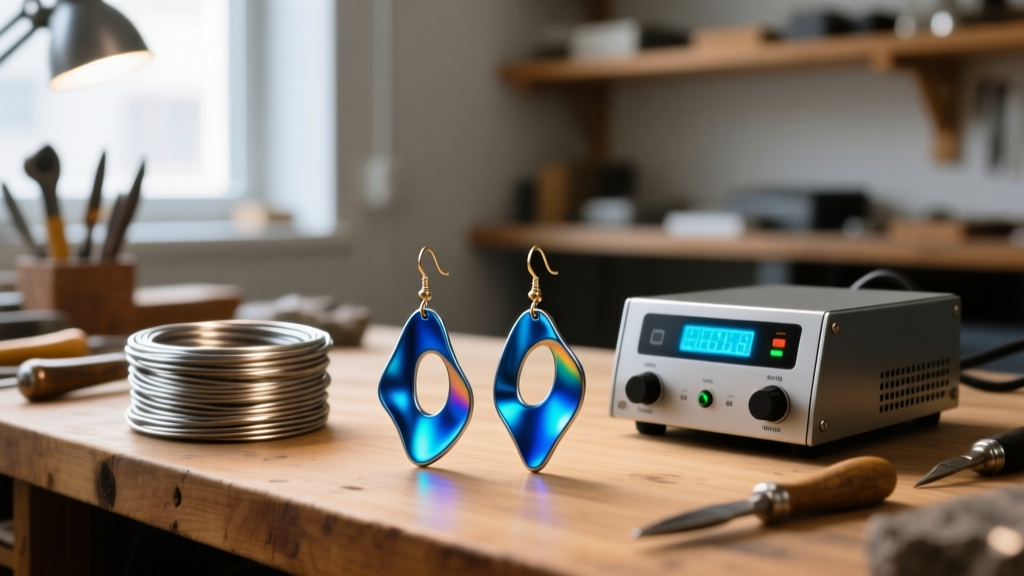
Niobium has become a staple for makers focusing on vibrant, hypoallergenic designs. Unlike plated metals, which eventually wear off and expose base alloys, niobium is anodized using electrolysis. By adjusting the voltage of the power supply, makers can permanently alter the oxide layer on the metal's surface to produce vivid hues—15 volts yields a deep purple, while 90 volts produces a vibrant green. Because it is entirely nickel-free, it is the premier choice for fresh piercing jewelry and sensitive lobes.
Argentium 935 vs. Traditional Sterling
Traditional 925 sterling silver is notorious for firescale during soldering and rapid tarnishing on the shelf. In 2026, serious makers have pivoted to Argentium 935 silver. The addition of germanium creates a transparent oxide layer that prevents tarnish and eliminates firescale, drastically reducing finishing time at the bench. For detailed insights on alloy behaviors, Rio Grande's metallurgical guides remain the industry benchmark for sourcing and handling these advanced metals.
| Material | Alloy/Grade | Standard Gauge | Biocompatibility | Maker Cost (Approx.) |
|---|---|---|---|---|
| Titanium | ASTM F136 ELI | 18g (1.02mm) | Implant-Grade (Nickel-Free) | $45 / ft (wire) |
| Niobium | 99.9% Pure | 20g (0.81mm) | Highly Reactive (Safe) | $28 / ft (wire) |
| Argentium | 935 Silver | 20g (0.81mm) | Hypoallergenic (Copper alloy) | $32 / oz |
| White Gold | 14k Palladium | 20g (0.81mm) | Excellent (No Rhodium needed) | $115 / dwt |
Technical Bench Standards and Failure Modes
The most common point of failure in handmade earrings is not the design, but the structural hardware. Understanding wire temper and solder grades is non-negotiable for professional jewelry making earrings that last.
Wire Temper and Gauge Selection
Using dead-soft wire for French ear wires or ear posts is a critical error that leads to immediate deformation upon insertion. Makers must use half-hard or full-hard wire for any component that requires structural rigidity. For standard lobe posts, 20-gauge (0.81mm) is the universal standard, while 18-gauge (1.02mm) is increasingly preferred for cartilage and helix studs to prevent the "cheese-cutter effect" in thinner tissue. Work-hardening dead-soft wire via a rolling mill or draw plate is a necessary bench skill to achieve the correct tensile strength without making the metal brittle.
Soldering and Post Integrity
When soldering a post to a backplate, using easy solder is a frequent beginner mistake. Easy solder has a lower melting point and a weaker structural bond. Makers must use hard or medium solder for earring posts to withstand the lateral torque applied during daily wear. Furthermore, overheating the post during soldering will anneal it, turning a rigid half-hard post into a bendable, useless wire. Utilizing a heat sink (like tweezers or a specialized soldering block) on the post itself preserves its temper.
Pricing Frameworks for the Independent Maker
The romanticization of the starving artist is a failed business model. In 2026, successful artisans rely on rigid pricing algorithms to ensure sustainability. The standard formula for jewelry making earrings is: (Materials + Labor + Overhead) x 2.5 = Wholesale Price, and Wholesale x 2 = Retail Price.
"Makers who fail to account for bench time—specifically finishing, polishing, and quality control—will inevitably underprice their work and burn out. A complex kinetic earring pair might require three hours of bench time; at a conservative $35/hour, labor alone dictates a high retail ceiling." — Halstead Bead's business resources
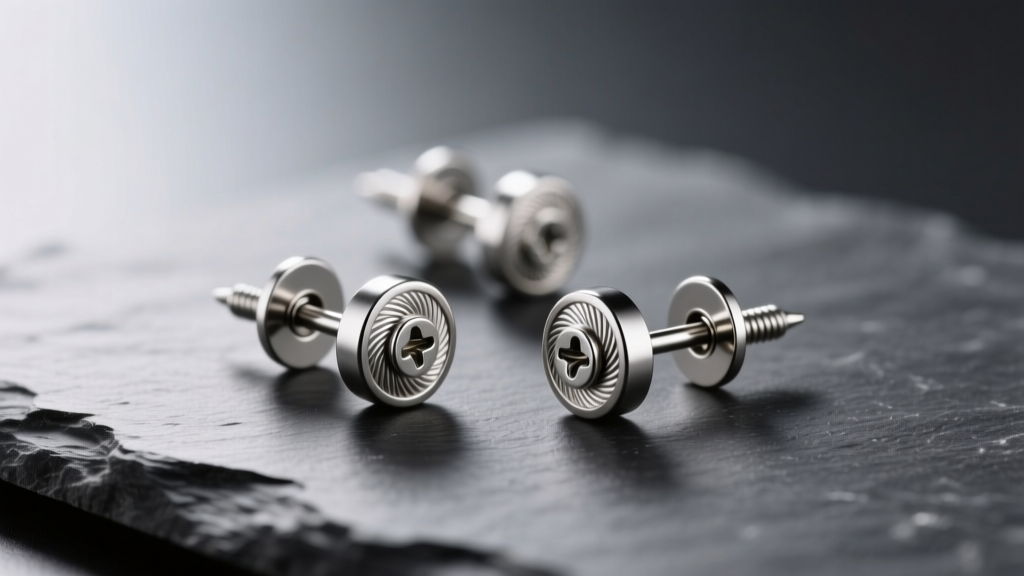
Furthermore, makers must factor in the cost of premium findings. Upgrading from standard friction-back "butterfly" clutches to secure silicone O-rings or precision-machined screw-backs (like La Poussière backs) adds $4 to $12 to the material cost per pair, but drastically reduces lost earrings and increases customer trust.
Conclusion: The Future of the Maker's Bench
The art of jewelry making earrings in 2026 is a synthesis of ancient metallurgy and modern micro-engineering. By embracing advanced materials like ASTM F136 titanium and anodized niobium, mastering kinetic structural tolerances, and implementing rigorous pricing models, independent artisans are not just competing with mass-market brands—they are redefining the standard of luxury ear adornment. The makers who thrive will be those who treat their bench not just as an art studio, but as a precision laboratory.


