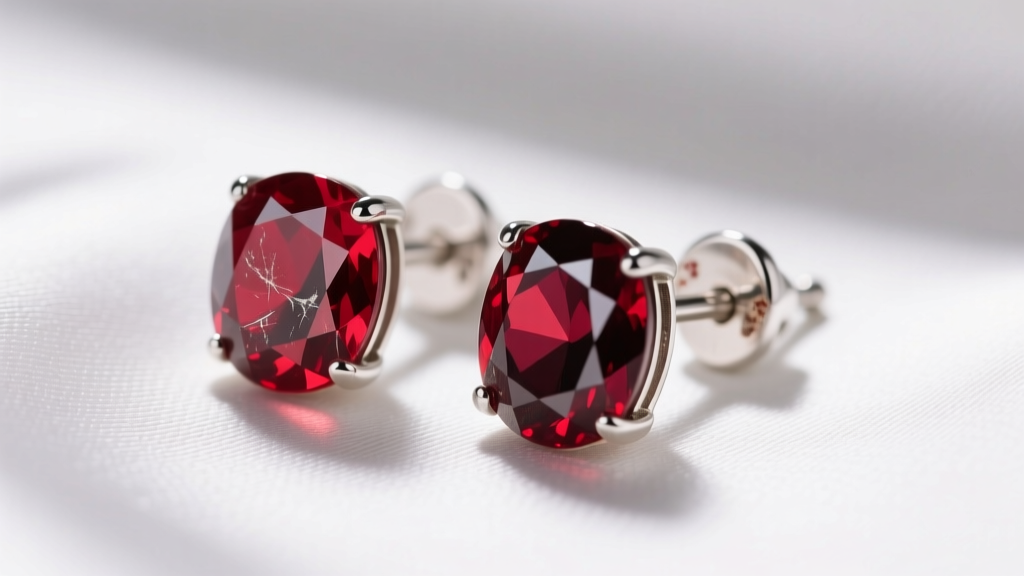
Jungkook Earrings: Technical Guide to His Iconic 2026 Ear Stack
Decode the Jungkook earrings trend with our 2026 technical guide. Explore exact gauge sizes, ASTM titanium grades, and piercing placement biomechanics.

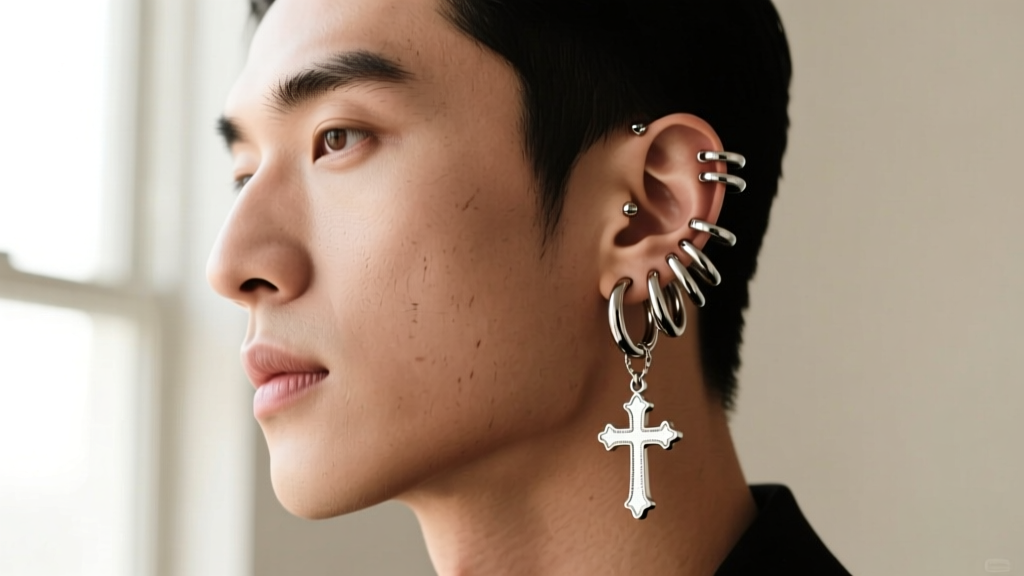
The global fascination with Jungkook earrings extends far beyond simple fandom. As we move through 2026, the BTS vocalist’s signature ear curation has evolved from a fleeting pop-culture trend into a definitive masterclass in multi-piercing architecture. While fashion blogs often focus on the aesthetic appeal of his stacked lobes, helixes, and tragus placements, true jewelry enthusiasts and professional piercers recognize a much deeper technical narrative. Achieving and maintaining a high-volume ear stack requires a rigorous understanding of gauge dynamics, metallurgical biocompatibility, and the biomechanics of weight distribution on healing fistulas.
This expert deep dive bypasses the superficial style guides to examine the exact technical specifications, material grades, and structural frameworks required to safely replicate and maintain the iconic Jungkook ear stack without compromising your cartilage integrity or lobe health.
The Architecture of the Stack: Placement and Spacing
The most common failure mode in attempting a multi-piercing K-pop aesthetic is improper spatial planning. The Jungkook stack relies on precise millimeter spacing to accommodate specific jewelry types—particularly huggies and seamless hoops—without causing overlapping friction or jewelry migration.
Lobe vs. Cartilage Gauge Dynamics
Standard commercial earrings are typically 20-gauge (0.81mm) or 18-gauge (1.02mm). However, a structural ear stack requires thicker posts to prevent the "cheese-cutter effect," where thin wire slowly slices through the tissue under the weight of stacked jewelry. For the lower lobes, which often bear the brunt of heavier pendant styles, an 18-gauge or 16-gauge (1.29mm) baseline is recommended. Cartilage placements, such as the helix and tragus, should strictly adhere to 16-gauge or 14-gauge (1.63mm) specifications to ensure the fistula remains stable during the 6-to-12-month healing window.
"When curating a dense ear stack, the distance between piercing centers must be at least 8mm to 10mm. This allows for the outer diameter of standard 6mm huggies to sit flush against the tissue without compressing adjacent piercings, which can lead to localized contact dermatitis and delayed healing." — Master Piercer Guidelines, Association of Professional Piercers
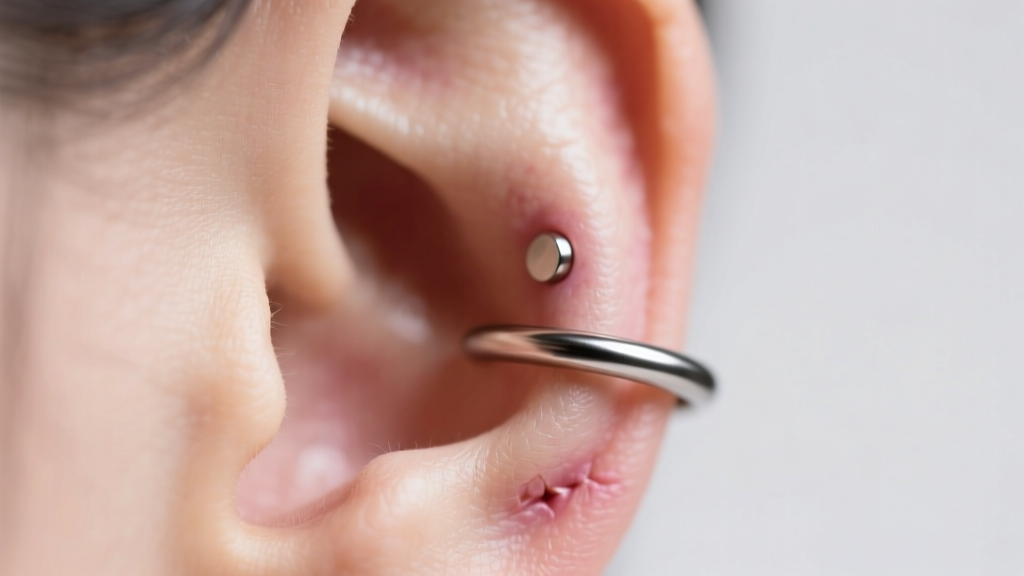
Metallurgy: Decoding the Dark Metal Aesthetic
A defining characteristic of the Jungkook earrings aesthetic is the frequent use of dark, gunmetal, and oxidized silver tones, contrasting sharply with minimalist silver and gold pieces. From a materials science perspective, achieving this dark aesthetic safely requires advanced metallurgical processes, as cheap alternatives pose severe biological risks.
Many fast-fashion replicas use brass or copper alloys flash-plated with nickel or rhodium, which rapidly degrades when exposed to the acidic pH of human sweat and sebum. For long-term wear, especially in cartilage piercings that are highly susceptible to hypertrophic scarring, the jewelry must meet strict biocompatibility standards.
| Material Grade | Biocompatibility | Dark Aesthetic Method | Longevity in Fistula |
|---|---|---|---|
| ASTM F-136 Titanium | Excellent (Nickel-Free) | PVD (Physical Vapor Deposition) Black Coating | Permanent / Lifetime |
| 316L Surgical Steel | Moderate (Contains Trace Nickel) | Oxidation / Chemical Blackening | Medium (Risk of irritation) |
| Oxidized Sterling Silver (925) | Poor for fresh/healing piercings | Sulfur-induced tarnish (Oxidation) | Low (Causes argyria in tissue) |
| Niobium (Anodized) | Excellent (Hypoallergenic) | Electrolytic Anodization (Dark Grey/Black) | Permanent / Lifetime |
For the dark metal look, PVD-coated implant-grade titanium is the gold standard. PVD (Physical Vapor Deposition) bonds the color at a molecular level in a vacuum chamber, meaning it will not flake, peel, or leach heavy metals into the piercing tract, unlike traditional electroplating. According to the Association of Professional Piercers (APP), implant-grade titanium and niobium are the only universally recommended materials for initial piercings and long-term sensitive stacks.
Biomechanics of the Iconic Cross Pendant
No analysis of Jungkook earrings is complete without addressing the iconic cross pendant earring. While visually striking, dangling pendulum-style earrings introduce complex kinetic forces to the earlobe. When a heavy cross pendant swings during movement, it generates lateral torque on the fistula. If the jewelry is a standard 20-gauge wire, this repetitive torque will inevitably cause the piercing channel to migrate southward, eventually leading to a lobe tear or blowout.
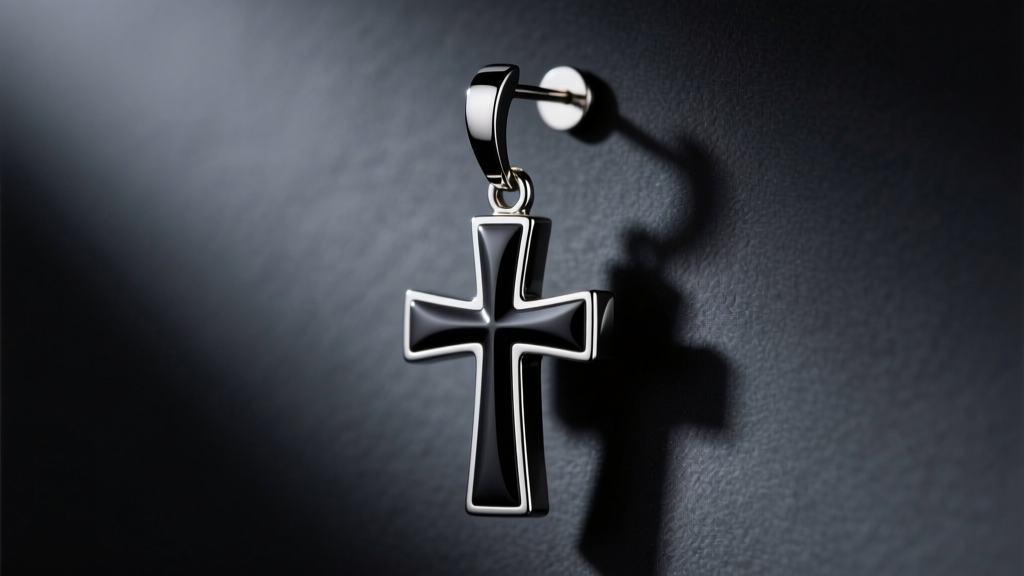
To safely wear heavy dangles, the structural integrity of the jewelry must be upgraded. Professional jewelers recommend utilizing threadless (push-pin) jewelry or internally threaded posts for pendant attachments. Externally threaded jewelry—where the screw grooves are on the post itself—acts like a file, tearing the delicate epithelial lining of the fistula every time it is inserted or removed. Furthermore, the post diameter for a heavy cross pendant should be upgraded to 14-gauge (1.6mm) to distribute the pendulum weight across a wider surface area of tissue, drastically reducing the risk of migration.
Fistula Maintenance and High-Volume Stack Hygiene
Maintaining a stack of four to six piercings per ear exponentially increases the surface area for bacterial colonization and sebum buildup. The spaces between huggies and the ear tissue create micro-environments where dead skin cells and sweat accumulate, leading to localized contact dermatitis or fungal infections.
According to dermatological research published in the National Library of Medicine regarding contact dermatitis, the combination of trapped moisture and reactive metals is the primary catalyst for piercing irritation bumps. To combat this, a strict maintenance protocol is required:
- Daily Saline Flushing: Use a sterile 0.9% sodium chloride solution to flush the micro-gaps between huggies and the earlobe.
- Avoid Tea Tree Oil: Despite popular internet myths, tea tree oil is a known contact allergen and can cause severe chemical burns on delicate fistula tissue.
- Friction Back Elimination: Discard all butterfly (friction) backs immediately. Their design harbors bacteria and applies uneven pressure to the back of the lobe, causing pressure necrosis. Upgrade to flat-back labret posts or secure silicone O-rings.
Sourcing Authentic Specs: A 2026 Buyer's Framework
When sourcing pieces to build your own Jungkook-inspired ear stack, bypass generic fashion retailers and seek out specialized body jewelry brands that publish their metallurgical certifications. Look for explicit mentions of ASTM F-136 (the standard specification for titanium alloys used in surgical implants) or ASTM F-138 (for implant-grade stainless steel).
By prioritizing structural gauge thickness, molecular-level PVD coatings, and precise spatial planning, you can achieve the striking visual impact of the Jungkook earrings trend while respecting the complex biology of your ear's anatomy. True style in 2026 is not just about the silhouette; it is about the engineering beneath the surface.