Kays Gold Hoop Earrings: 2026 Budget & Value Review
Are Kays gold hoop earrings worth the mall markup? We break down 10k vs 14k pricing, hollow vs solid construction, and 2026 value hacks.

The Mall Jeweler Dilemma: Assessing the True Cost
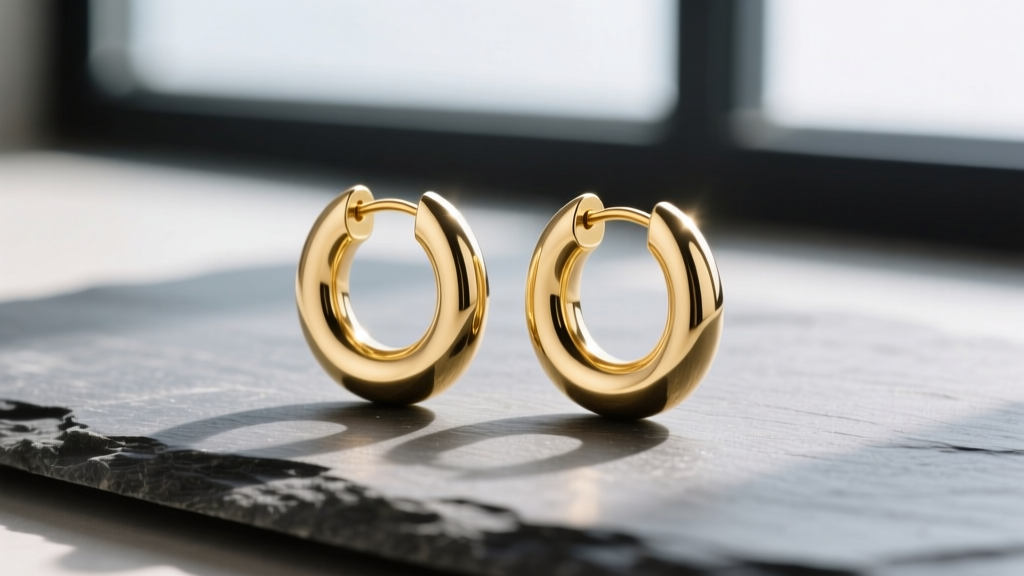
When shopping for classic gold hoops, the search for 'kays gold hoop earrings' inevitably leads to one of the most recognizable names in American mall jewelry. Kay Jewelers, a flagship brand under the Signet Jewelers umbrella, offers immense convenience, physical try-on locations, and aggressive promotional calendars. However, from a strict budget and value assessment perspective, buying gold at a mall jeweler requires a nuanced understanding of retail markups, gold commoditization, and manufacturing techniques. In 2026, with gold spot prices remaining historically volatile and generally high, the gap between the intrinsic melt value of gold and the retail price of finished jewelry has widened. This guide strips away the marketing veneer to evaluate whether Kay's gold hoops represent a sound financial purchase or if your budget is better allocated elsewhere.
The Economics of Mall Jewelry: Understanding the Markup
To assess value, we must first understand the pricing architecture of mall jewelers. Signet Jewelers operates with massive overhead: prime retail real estate, extensive staffing, and national advertising campaigns. Consequently, the markup on gold fashion and fine jewelry at Kay typically ranges from 3x to 5x the intrinsic metal value, compared to the 1.5x to 2x markup seen at independent online casters or wholesale diamond districts.
For example, consider a standard pair of 14-karat gold hoop earrings weighing 3.5 grams. The pure gold content is roughly 2.04 grams (58.3% of 3.5g). If the spot price of gold is hovering around $75 per gram in 2026, the melt value of the gold alone is approximately $153. At Kay, a 3.5-gram pair of 14k solid hoops will typically retail between $450 and $650 before taxes. While you are paying for the labor, the clasp mechanism, the brand warranty, and the retail experience, the 'Price Per Gram' (PPG) is substantially higher than market averages. According to the FTC Jewelry Guides, retailers must accurately stamp and disclose karat purity, but they are not bound by any price-to-weight ratio regulations, leaving the value assessment entirely in the hands of the consumer.
Material Breakdown: 10K vs. 14K Gold at Kay
Kay Jewelers segments its gold hoop inventory primarily into 10-karat and 14-karat options, with 18-karat reserved for high-end diamond-accented pieces. Understanding the metallurgical differences is critical for long-term value.
- 10K Gold (41.7% Pure Gold): Kay frequently uses 10k gold for its budget-friendly 'under $150' hoop collections. The remaining 58.3% consists of alloy metals like copper, zinc, and sometimes nickel. Value Verdict: 10k is highly durable and resistant to scratching, making it practical for everyday wear. However, it lacks the rich, warm luster of higher karats and carries a high risk of causing contact dermatitis for those with nickel sensitivities. From a resale or intrinsic value standpoint, 10k is considered scrap by most precious metal dealers.
- 14K Gold (58.3% Pure Gold): The industry standard for fine jewelry in the United States. The Gemological Institute of America (GIA) notes that 14k provides the optimal balance between pure gold's rich color and the structural integrity provided by alloy metals. Value Verdict: This is the sweet spot for Kay shoppers. It retains intrinsic value, resists tarnishing far better than 10k, and offers the classic yellow gold hue consumers expect.
Construction & Clasp Mechanics: Where Value is Won or Lost
The most critical factor in assessing the value of kays gold hoop earrings is the manufacturing method. Kay sells both 'solid' and 'hollow' (electroformed or tubular) hoops.
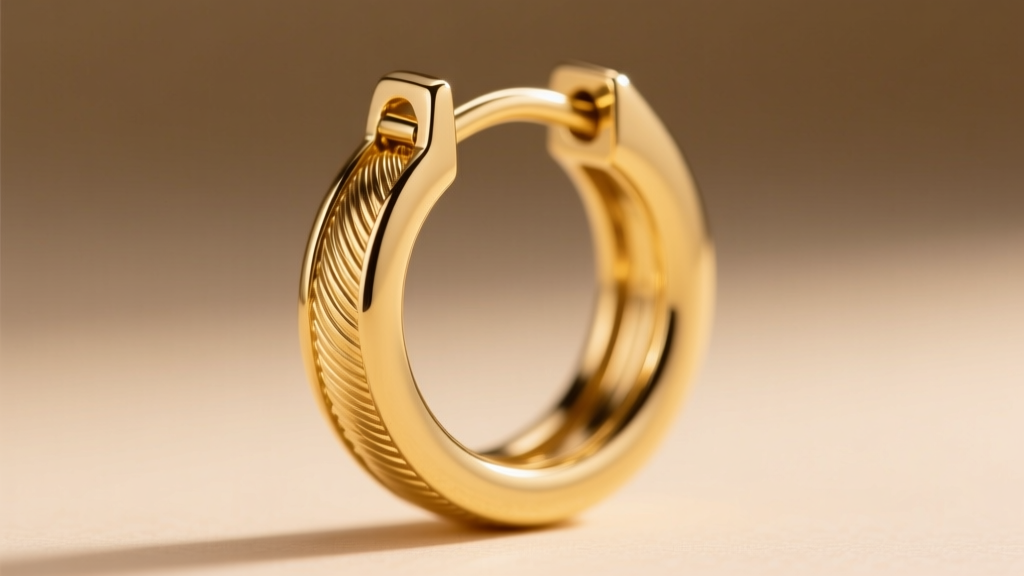
Hollow hoops are created by electroplating gold over a wax or resin core, which is later melted or dissolved. This allows Kay to sell large, 30mm to 50mm diameter hoops that look substantial but weigh under 2 grams, keeping the retail price under $300. The fatal flaw of hollow construction is durability. If a hollow hoop is dropped, slept on, or squeezed, it will dent. Because there is no internal structure, denting is virtually impossible to repair without replacing the entire earring.
Furthermore, pay close attention to the clasp. Kay's medium-to-large hoops predominantly use the hinged snap-back clasp. While easy to insert, the tiny latch mechanism is a known failure point. If the micro-groove wears down or the hinge bends, the earring will fall out and be lost. Solid wire hoops with a traditional latch-back or continuous hoop design offer vastly superior longevity, though they are heavier and more expensive upfront.
2026 Price Comparison: Kay vs. The Market
To contextualize the value, we compared a standard 20mm medium-thickness hoop earring across different retail channels in 2026.
| Retailer | Karat | Weight (g) | Construction | Avg. Price | Value Score |
|---|---|---|---|---|---|
| Kay Jewelers | 14K | 2.8g | Solid Tube | $499 | 5/10 |
| Blue Nile | 14K | 3.1g | Solid Wire | $385 | 8/10 |
| Local Custom Caster | 14K | 3.5g | Solid Cast | $320 | 10/10 |
| Kay Jewelers (Budget) | 10K | 1.2g | Hollow | $175 | 4/10 |
As the data illustrates, purchasing 14k solid gold from online specialists or local casters yields a lower Price Per Gram and generally superior structural integrity. Kay's primary advantage remains the ability to physically inspect the size and the immediate gratification of walking out of the store with the product.
The Extended Service Plan (ESP): Insurance or Upsell?
At checkout, Kay associates will heavily promote their Extended Service Plan (ESP), typically costing between $35 and $60 for gold earrings. From a value assessment perspective, the ESP is a mixed bag that depends entirely on the construction of the hoop you are buying.
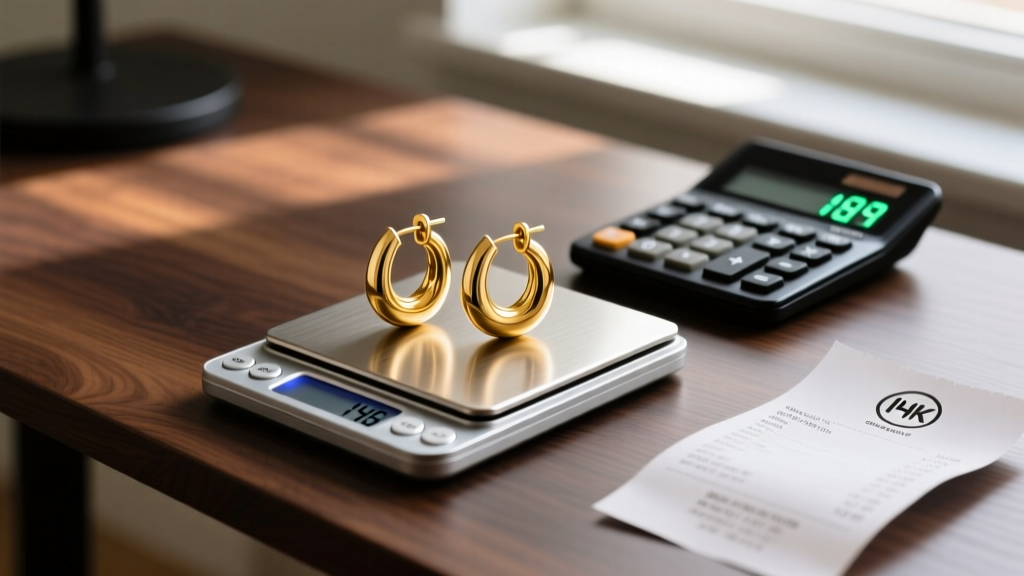
If you are purchasing hollow hoops or hoops with hinged snap clasps, the ESP is highly recommended. The plan covers clasp tightening, hinge replacement, and minor reshaping—services you will almost certainly need within the first three years of daily wear. However, the ESP explicitly does not cover loss, theft, or 'gross negligence' (which they may interpret as a crushed hollow hoop). If you are buying solid, continuous wire hoops, the ESP is largely a waste of money, as solid gold wire rarely requires structural maintenance and can be easily bent back into shape by any local bench jeweler for a fraction of the ESP cost.
The Verdict: How to Maximize Value at Kay
Kays gold hoop earrings are not inherently a bad purchase, but they are a premium-priced convenience. To make them a mathematically sound decision in 2026, you must manipulate the retail environment to your advantage. Never buy gold hoops at Kay at full MSRP. Wait for their semi-annual sales, Black Friday events, or clearance liquidations where 14k gold items are frequently marked down by 30% to 50%. Additionally, if you possess the Kay Jewelers credit card, stacking the cardholder exclusive 20% off discount with a store-wide promotion can bring the retail price down to a level that closely rivals online competitors.
Ultimately, if you prioritize physical try-ons, immediate availability, and the safety net of a nationwide warranty network, Kay offers reliable, FTC-compliant gold jewelry. But if your primary goal is maximizing gold weight per dollar and securing heirloom-level durability, you will find vastly superior value in the independent and online fine jewelry market.


