The Kim Kardashian Lost Earring Incident: A Material Failure Guide
Analyze the famous Kim Kardashian lost earring incident through material science. Learn which metals and clasps prevent high-value jewelry loss.

The Anatomy of a High-Value Jewelry Failure
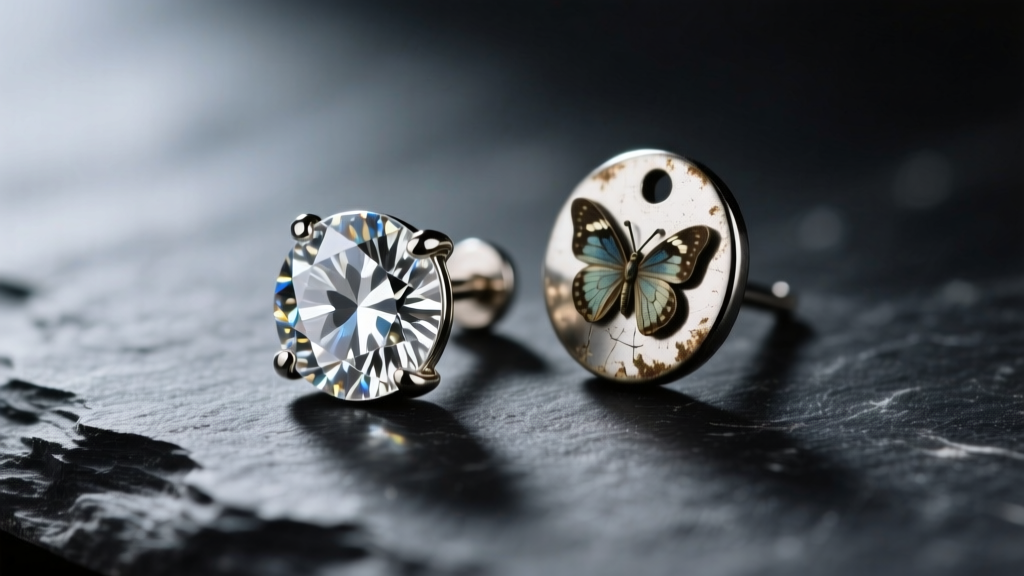
When the infamous Kim Kardashian lost earring incident occurred in Bora Bora, the global media fixated on the $75,000 price tag and the dramatic oceanic search. However, within the jewelry industry, the conversation was entirely different. Master jewelers and metallurgists immediately recognized a classic case of material fatigue and mechanical failure. Losing a high-carat diamond stud is rarely a matter of bad luck; it is almost always a failure of material science, specifically regarding the tensile strength and elastic memory of the earring's post and backing.
As of 2026, with high-value jewelry investments reaching new peaks, understanding the metallurgical properties of your earring components is no longer optional. This guide deconstructs the physics of earring security, comparing precious metal alloys, post gauges, and clasp engineering to ensure your investments remain exactly where they belong.
"A friction backing is essentially a microscopic spring. When the metal loses its elastic memory due to work hardening, the spring fails, and the earring falls." — Master Bench Jeweler Guidelines
Material Properties: Why Gold Fails and Titanium Prevails
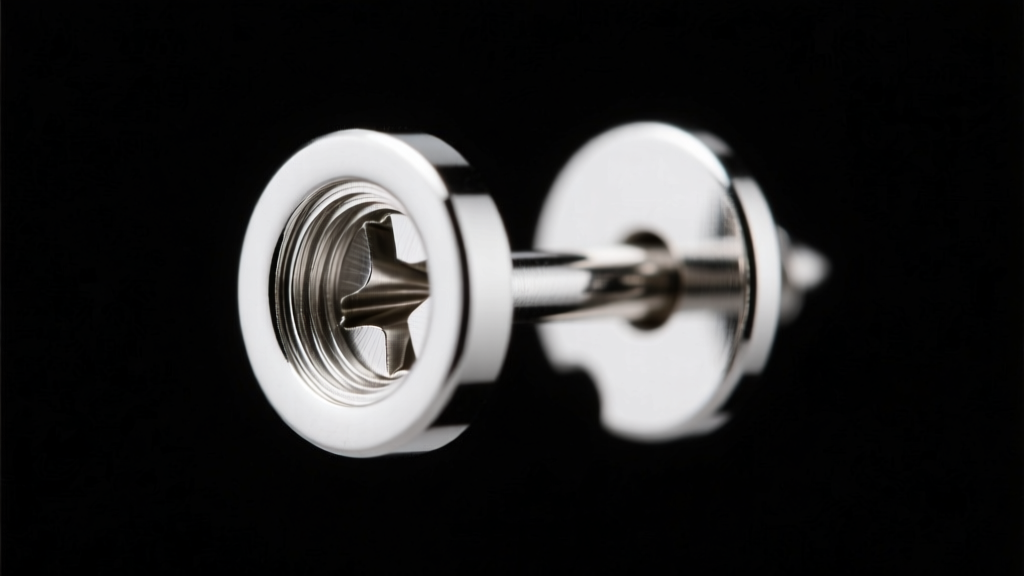
The primary culprit in most lost earring scenarios is the butterfly friction back. These clasps rely on the tension of two metal scrolls gripping a notched post. The material used for these scrolls dictates their lifespan and security.
The Malleability Problem in 18k and 14k Gold
Gold is inherently soft. Pure 24k gold has a Vickers Hardness (HV) of roughly 25, making it useless for structural jewelry. To increase durability, it is alloyed with copper, silver, and zinc. According to the Gemological Institute of America (GIA), standard 18k yellow gold achieves an HV of approximately 125, while 14k gold reaches about 150 HV. While sufficient for the decorative bezel holding a diamond, these alloys lack the "spring-back" or elastic memory required for friction backs. Every time you push and pull a gold friction back over a post groove, the metal undergoes work hardening. Over time, the gold becomes brittle, the scrolls spread apart, and the tension drops to zero.
Platinum: The Heavyweight Champion of Security
Platinum (specifically Pt950/Ru or Pt900/Ir alloys) behaves differently under stress. With an HV ranging from 110 to 135, it might seem softer than 14k gold on paper. However, platinum's crystalline structure allows it to deform malleably rather than work-harden and become brittle. A platinum friction back or screw-back will maintain its structural integrity and tension far longer than gold, making it the superior choice for heavy diamond drops and high-carat studs.
Grade 23 Titanium: The Modern Engineering Standard
For the post itself, the industry is rapidly shifting toward ASTM International certified Grade 23 Titanium (Ti-6Al-4V ELI). Originally developed for aerospace and medical implants, this alloy offers a tensile strength of 827 MPa (megapascals) while remaining incredibly lightweight. A 20-gauge titanium post will not bend, warp, or suffer from metal fatigue under the weight of a 3-carat diamond, providing a rigid track for the backing to grip.
Post Gauge and Groove Engineering
The thickness of the earring post and the geometry of its retention groove are critical failure points. Standard fashion earrings utilize 22-gauge (0.64mm) or 20-gauge (0.81mm) posts. For high-value stones exceeding 1.5 carats, these gauges are dangerously thin and prone to bending, which ruins the friction fit.
| Post Gauge | Diameter (mm) | Recommended Max Carat Weight | Best Material Pairing |
|---|---|---|---|
| 22-Gauge | 0.64mm | 0.50 ct | 14k Gold (Lightweight Studs) |
| 20-Gauge | 0.81mm | 1.50 ct | 18k Gold or Platinum |
| 18-Gauge | 1.02mm | 3.00 ct | Platinum or Grade 23 Titanium |
| 16-Gauge | 1.29mm | 5.00+ ct | Platinum (Screw-back only) |
Furthermore, the shape of the post groove matters. Traditional "V-notches" cut deeply into the metal, creating a stress concentrator where the post can snap under lateral pressure. Modern high-security posts utilize a shallow "U-groove" or a continuous threaded shaft (screw-backs) that distributes mechanical stress evenly across the entire post diameter.
Clasp Hierarchy: Upgrading from Friction to Locking
If the Kim Kardashian lost earring incident teaches us anything, it is that friction backs are insufficient for heirloom-grade jewelry. To secure high-value pieces, you must upgrade the mechanical interface.
1. The Standard Butterfly (Friction) Back
- Security Level: Low to Medium
- Failure Mode: Loss of scroll tension, post groove wear.
- Best For: Lightweight, everyday fashion jewelry under $1,000.
2. The Screw-Back
- Security Level: High
- Failure Mode: Thread stripping if cross-threaded or forced.
- Best For: Medium to heavy diamond studs. Requires an 18k gold or platinum threaded post.
3. The La Pousette (Locking) Back
- Security Level: Maximum
- Mechanism: Utilizes an internal spring-loaded trigger that snaps securely into a U-groove. It requires a deliberate two-handed pinch to release.
- Best For: High-carat diamonds, active lifestyles, and irreplaceable heirlooms.
Actionable Framework: The 2026 Security Protocol
To prevent a catastrophic loss, implement this bi-annual maintenance framework for all high-value earrings:
- The Pull Test: Hold the earring post firmly and gently pull the backing. You should feel distinct, firm resistance. If the backing slides off with minimal pressure, the scrolls have lost their elastic memory and must be replaced immediately.
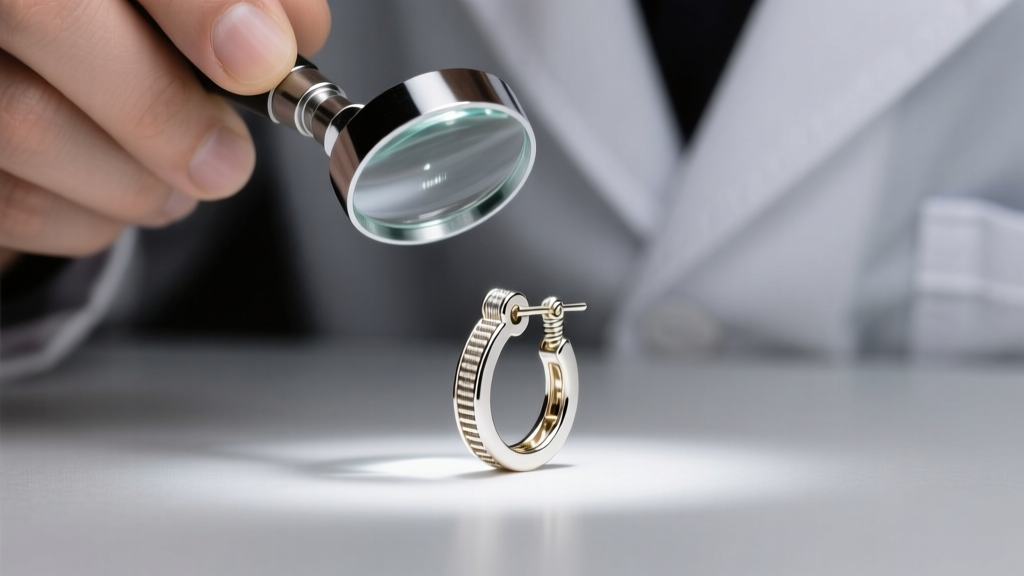
- Microscopic Groove Inspection: Use a 10x jeweler's loupe to inspect the post groove. If the edges of the groove appear rounded or smoothed out, the post is no longer capable of retaining a friction back and requires re-notching or replacement by a bench jeweler.
- Ultrasonic Caution: Never clean locking backs or screw-backs in an ultrasonic cleaner without securing them first. The high-frequency vibrations can easily shake loose a slightly unscrewed backing, sending it to the bottom of the cleaning tank drain.
Conclusion
The drama of a lost diamond in the ocean makes for captivating reality television, but in the real world, it represents a preventable metallurgical failure. By prioritizing the tensile strength of your posts, understanding the work-hardening limits of gold alloys, and investing in mechanical locking clasps like the La Pousette, you can ensure your most precious earrings remain securely in place. Do not let a microscopic material failure cost you a macroscopic fortune.


