Buying Guide: Choosing Kinds of Earrings for Every Piercing
Discover how to choose the right kinds of earrings for your piercings. Learn gauge sizes, implant-grade materials, and threading types in our expert guide.

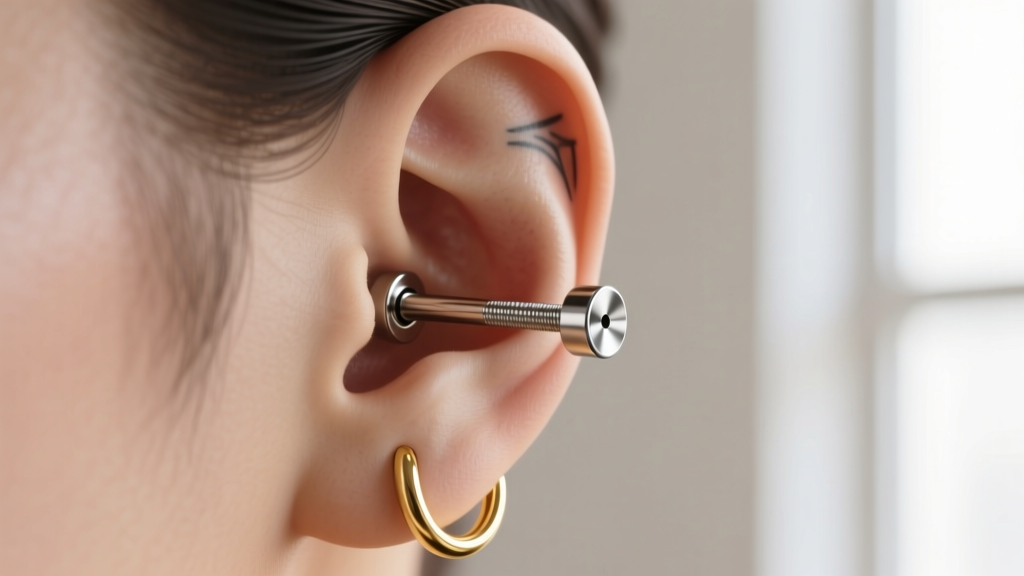
The Anatomy of a Perfect Fit: Gauge and Post Length
When navigating the vast market of body jewelry, understanding that not all kinds of earrings are created equal is the first step toward a healthy, aesthetically pleasing piercing. The most common mistake consumers make is purchasing jewelry based solely on the decorative end, completely ignoring the structural dimensions of the post or hoop. Every piercing has a specific fistula (the healed tissue channel) diameter and depth, dictated by its anatomical placement.
Gauge refers to the thickness of the jewelry post. In the body jewelry industry, the lower the gauge number, the thicker the metal. A standard earlobe piercing is typically done at 20g (0.8mm) or 18g (1.0mm), while cartilage piercings like the helix or tragus are usually pierced at 16g (1.2mm) or 14g (1.6mm). Inserting a 20g earring into a healed 16g helix piercing will cause the thin metal to act like a wire cheese-cutter, migrating through the tissue and causing permanent scarring. Conversely, forcing a 14g post into a 16g hole will cause micro-tears, leading to hypertrophic scarring and irritation bumps.
| Piercing Placement | Standard Gauge | Typical Post Length / Hoop Diameter | Best Jewelry Styles |
|---|---|---|---|
| Standard Lobe | 20g - 18g | 6mm - 8mm posts / 8mm+ hoops | Studs, Huggies, Drop Earrings |
| Upper Lobe / Flat | 18g - 16g | 5mm - 6mm posts / 6mm-8mm hoops | Threadless Ends, Small Clickers |
| Helix | 16g | 5mm - 6.5mm posts / 8mm-10mm hoops | Labret Studs, Seamless Rings |
| Tragus | 16g | 6mm - 8mm posts | Flat-back Labrets, Threadless Ends |
| Daith / Rook | 16g | N/A (Hoops only) / 6mm-8mm curved | Clickers, Captive Bead Rings (CBRs) |
Material Science: What to Look For in Sensitive Piercings
The material composition of your earrings is arguably the most critical factor in long-term tissue health. According to the Association of Professional Piercers (APP), the only materials recommended for long-term wear in unhealed or sensitive piercings are implant-grade titanium, niobium, and specific karats of solid gold.
The Titanium Standard (ASTM F-136)
Implant-grade titanium (specifically ASTM F-136) is the gold standard for body jewelry. Unlike commercial "surgical steel" (316L), which contains up to 10% nickel that can leach into the skin, ASTM F-136 titanium is entirely nickel-free and biocompatible. It develops a passive oxide layer that prevents corrosion and tissue rejection. If you suffer from contact dermatitis—a condition extensively documented by the Mayo Clinic as being heavily triggered by nickel exposure—titanium is your safest baseline.
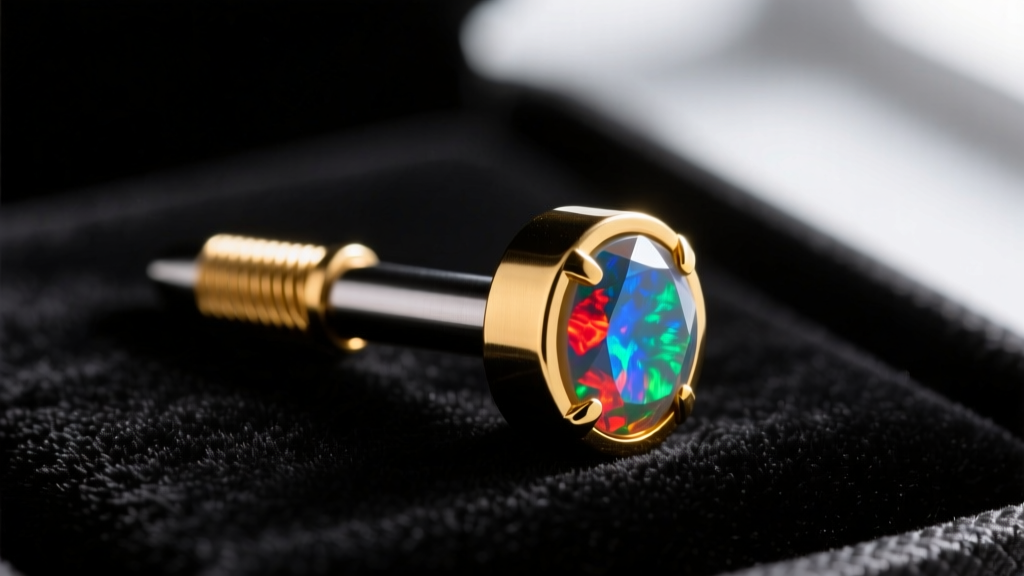
Solid Gold vs. Plated Gold
When exploring luxury kinds of earrings, you will frequently encounter gold-plated or gold-vermeil options. While acceptable for standard, fully healed earlobe piercings, plated jewelry should never be worn in cartilage piercings or worn 24/7. The plating inevitably wears down, exposing base metals like brass or copper to the fistula, which can cause severe allergic reactions and greenish skin discoloration. Always look for 14k or 18k solid gold that is nickel-free and alloyed for biocompatibility (often using palladium or silver instead of nickel as a hardening agent).
Threading Mechanics: Internally Threaded vs. Threadless
The way the decorative end attaches to the post is a hallmark of jewelry quality. Understanding threading types will immediately help you filter out low-quality mass-produced earrings from professional-grade options.
- Externally Threaded (Avoid): The screw threads are on the post itself. When inserted, these sharp threads scrape and tear the delicate fistula lining. This is a hallmark of cheap mall-kiosk jewelry.
- Internally Threaded (Excellent): The post is perfectly smooth, and the screw threads are located inside the decorative gem end. This allows for seamless, damage-free insertion.
- Threadless / Push-Pin (Industry Favorite): Pioneered by brands like Neometal, threadless jewelry uses a small bent pin on the decorative end that creates tension inside the smooth post. This offers the most secure fit, preventing gems from falling out in your sleep or while brushing your hair.
Matching Specific Kinds of Earrings to Piercing Placements
Different anatomical placements require specific jewelry structures to accommodate swelling, sleeping positions, and tissue curvature.
Lobe and Upper Lobe
For standard lobes, the tissue is soft and pliable, allowing for a wide variety of earrings including heavy drop earrings, large hoops, and dangles. However, for upper lobes and the "flat" (the fleshy basin of the inner ear), space is limited. Huggies and small threadless studs are ideal here. Avoid long dangles in upper lobes, as they will catch on hair and cause migration.
Helix and Forward Helix
The helix is highly prone to irritation bumps due to its exposed location on the outer rim of the ear. Flat-back labret studs are the absolute best choice for daily wear because the flat disc rests flush against the back of the ear, preventing pressure when sleeping. Hoops should be avoided in newly healed helixes, as the curvature of the ring puts uneven pressure on the fistula, forcing the piercing to heal at an angle.
Tragus and Daith
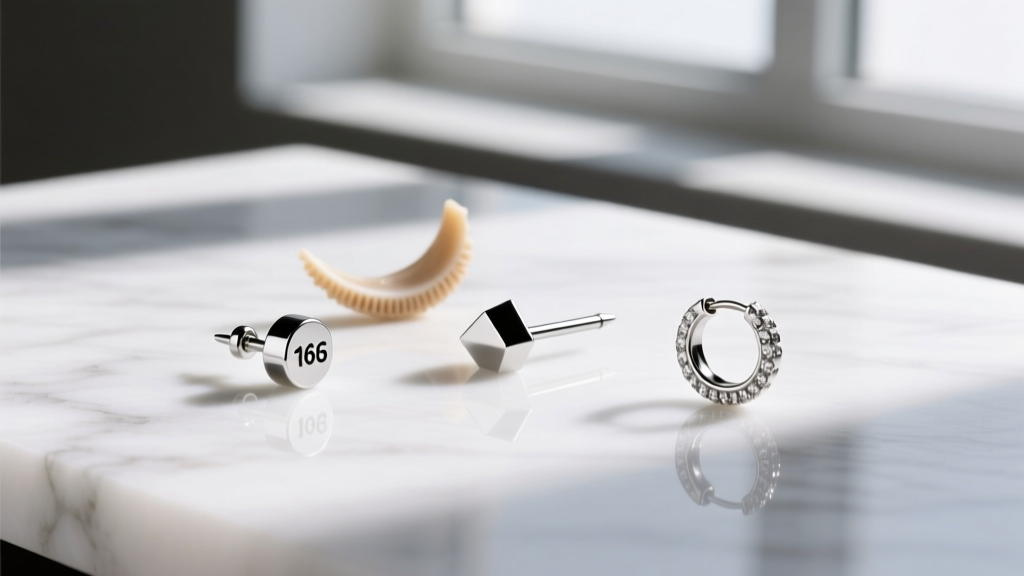
The tragus (the small flap of cartilage over the ear canal) requires longer posts (8mm) during the initial healing phase to accommodate significant swelling, later downsized to 6mm. Threadless ends are highly recommended here because the back of the tragus is difficult to reach, making screw-in backs frustrating to manage. For the daith (the innermost crus of the helix), captive bead rings or hinged segment rings (clickers) are the only viable options due to the tight, curved anatomy of the fold.
Pricing Tiers and Brand Benchmarks
Investing in high-quality body jewelry is an investment in your anatomical health. Here is what you can expect to pay for professional-grade pieces in 2026:
- Budget / Entry Professional ($20 - $45): Brands like Junipurr Jewelry and Level offer excellent implant-grade titanium and 14k gold threadless ends at accessible price points.
- Mid-Tier ($45 - $90): Buddha Jewelry Organics and Anatometal provide precision-machined, internally threaded and threadless options with high-quality synthetic and natural gemstones.
- High-End / Luxury ($90 - $300+): Body Vision Los Angeles (BVLA) and Maria Tash represent the pinnacle of fine body jewelry, featuring precision-set natural diamonds, rare gemstones, and proprietary prong settings that prevent snagging.
Final Pre-Purchase Checklist
Before adding any new earrings to your cart, run them through this professional checklist:
- Verify the Gauge: Does the post thickness match your piercing's exact millimeter requirement?
- Check the Material: Is it explicitly listed as ASTM F-136 Titanium, Niobium, or 14k/18k Solid Gold? (Beware of vague terms like "surgical steel" or "hypoallergenic alloy").
- Inspect the Threading: Is it internally threaded or threadless? Reject anything externally threaded.
- Measure the Wearable Length: Will the post be too long (causing snagging) or too short (embedding into the tissue)?
- Consider the Backing: For cartilage, does it use a flat-back disc to ensure comfortable sleeping?
"The right jewelry doesn't just sit in the piercing; it works in harmony with your anatomy. A perfect fit means the jewelry is virtually unnoticeable to your nervous system, allowing the tissue to remain calm, flush, and healthy." — APP Certified Piercer Consensus
By prioritizing anatomical precision and material purity over fast-fashion trends, you ensure that your curated ear remains a healthy, lifelong canvas for self-expression.


