La Pousette Earring Back Buying Guide: Secure Your Studs
Discover why the La Pousette earring back is the gold standard for securing diamond studs. Learn about sizing, materials, and pricing in our guide.

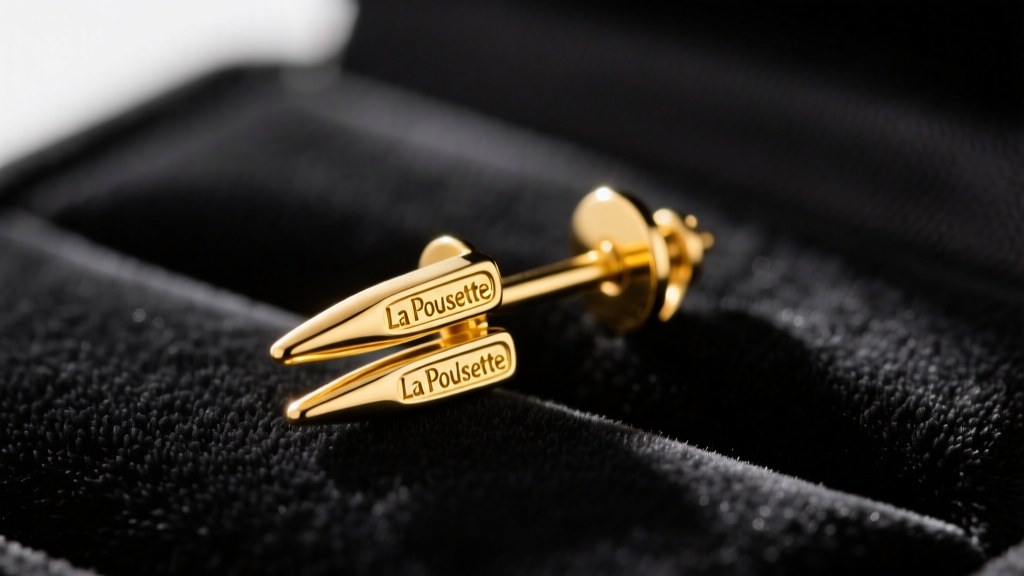
The Gold Standard in Earring Security
Losing a high-carat diamond stud or a sentimental heirloom earring is a devastating experience that no jewelry lover wants to face. While standard friction backs and screw backs have served the industry for decades, they come with inherent failure modes: friction backs loosen over time, and screw backs can strip or cross-thread. Enter the La Pousette earring back, a patented, precision-engineered locking mechanism that has become the undisputed gold standard for securing high-value studs. In this comprehensive buying guide, we will break down the mechanics, gauge compatibilities, material grades, and maintenance requirements you need to know before investing in this premium jewelry finding.
What Exactly is a La Pousette Earring Back?
Originally designed in France and patented for its unique push-pull action, the La Pousette back operates on a completely different mechanical principle than traditional earring clutches. Instead of relying on the outward tension of bent metal wings (like a butterfly back) or a threaded barrel (like a screw back), the La Pousette utilizes a spring-loaded internal twin-prong clutch housed inside a smooth, cylindrical outer sleeve.
When you push the La Pousette back onto the earring post, the internal prongs automatically grip the metal. To remove the earring, you must deliberately pinch and pull the outer sleeve backward, which retracts the internal prongs and releases the post. This dual-action requirement makes it virtually impossible for the earring to be pulled off accidentally by snagging on a sweater, brushing your hair, or sleeping. According to findings experts at Stuller, precision-machined locking clutches like the La Pousette reduce accidental earring loss by over 90% compared to standard friction backs.
La Pousette vs. Screw Backs vs. Friction Backs
Understanding how the La Pousette compares to other common earring backs is crucial for making an informed purchasing decision. Below is a structural and functional comparison to help you weigh your options.
| Backing Type | Security Level | Mechanism | Average Price (Pair) | Best Use Case |
|---|---|---|---|---|
| La Pousette | Exceptional | Spring-loaded twin-prong clutch | $90 - $250+ | High-carat diamonds, heirloom studs |
| Screw Back | High | Threaded barrel and post | $40 - $120 | Everyday fine jewelry, children's earrings |
| Friction (Butterfly) | Low to Moderate | Tension-based metal wings | $5 - $25 | Lightweight, inexpensive fashion studs |
| Locking Clutch (Generic) | Moderate to High | Single-prong snap lock | $20 - $60 | Medium-value everyday studs |
While screw backs offer excellent security, they require tedious threading every time you put your earrings in, and the threads can wear down or accumulate debris that prevents a tight closure. The La Pousette offers the security of a screw back with the swift, smooth application of a push-on friction back.
Critical Sizing and Gauge Compatibility
The most common mistake buyers make when ordering La Pousette backs is assuming they are universally compatible with all earring posts. Because the internal spring mechanism is precision-machined to exact tolerances, gauge size and post length are non-negotiable factors.
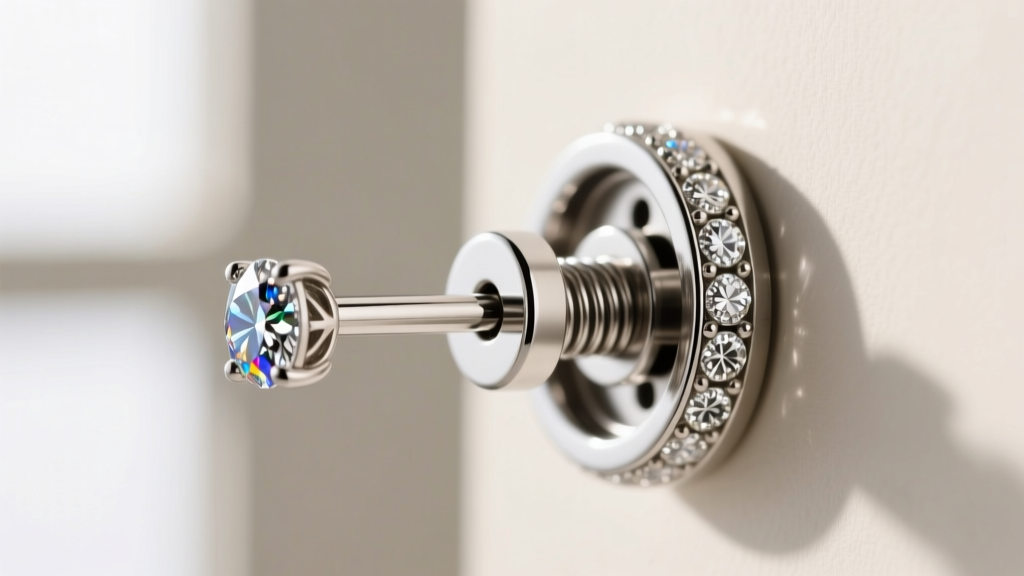
Gauge Thickness
La Pousette backs are typically manufactured to fit two specific post gauges:
- 18-Gauge (1.02mm): The standard for most high-end diamond studs and fine jewelry. If your post is slightly worn down from years of friction, an 18G La Pousette may not grip it tightly enough.
- 16-Gauge (1.29mm): Used for heavier gemstones, larger pearl studs, or cartilage piercings that require a thicker post for structural integrity.
Attempting to force a 14-gauge post into a 16-gauge La Pousette back will permanently damage the internal spring, while using a 20-gauge post will result in the earring sliding right out.
Post Length and the 'Notch' Requirement
For the internal clutch to engage fully, your earring post must be at least 10mm to 12mm in length. Furthermore, authentic La Pousette systems often require a microscopic groove or 'notch' near the end of the earring post. When the internal prongs snap into this notch, it creates a mechanical lock that prevents the back from sliding off, even if the spring tension were to fail. If you are buying La Pousette backs for existing earrings, you may need a jeweler to laser-weld or file a compatible notch into your current posts.
Material Grades and Pricing Expectations
Because the La Pousette mechanism relies on spring tension, the metallurgy of the finding is just as important as the design. You will generally find these backs in three primary materials:
- Platinum (950 Pt): The absolute best choice for locking mechanisms. Platinum is highly durable and resistant to metal fatigue. The internal spring will maintain its tension for decades without warping. Expect to pay between $150 and $300 per pair.
- 18-Karat Gold: Offers a beautiful rich color but is slightly softer. Over many years of heavy use, the internal prongs in 18k gold may lose a fraction of their tension and require professional re-tightening. Prices range from $100 to $180 per pair.
- 14-Karat Gold: More affordable ($80 to $130) and slightly harder than 18k, making it a good budget option for secure findings, though it lacks the prestige and hypoallergenic purity of higher karats or platinum.
When purchasing, always verify the metal stamp on the outer sleeve. Reputable jewelers will stamp 'PT950', '18K', or '14K' directly on the finding.
Maintenance and Troubleshooting the Spring Mechanism
Even the finest mechanical jewelry findings require proper care. The most common failure mode for a La Pousette back is not mechanical breakage, but rather the accumulation of skin oils, lotions, and microscopic lint inside the spring housing, which causes the clutch to stick.
How to Clean Your La Pousette Backs
While the Gemological Institute of America (GIA) recommends ultrasonic cleaners for many diamond settings, you should avoid putting your La Pousette backs in an ultrasonic machine. The high-frequency vibrations can actually drive microscopic debris deeper into the spring housing. Instead, follow this manual cleaning protocol:
- Soak the backs in a bowl of warm water with a few drops of mild, ammonia-free dish soap for 15 minutes.
- Use a baby toothbrush with ultra-soft bristles to gently scrub the opening where the post enters.
- While submerged, push and pull the outer sleeve repeatedly to flush out any trapped oils.
- Rinse with distilled water and blow dry with compressed air or a hairdryer on a cool setting.
Troubleshooting a Stuck Back
If your La Pousette back becomes stuck on the post and the sleeve will not pull back, do not yank the earring. Yanking can bend the post or tear the earlobe. Instead, push the outer sleeve towards the earlobe slightly. This relieves the lateral tension on the internal prongs. Once the pressure is released, gently pull the sleeve back. If it remains stuck, apply a single drop of mineral oil to the seam and let it sit for an hour before trying again.
Where to Buy Authentic La Pousette Backs
Because the La Pousette design is patented and highly sought after, the market is unfortunately flooded with cheap, counterfeit 'locking clutches' that mimic the exterior look but use inferior, single-prong springs that fail within months. To ensure you are getting the genuine article, only purchase from authorized fine jewelry suppliers, established estate jewelers, or directly from high-end jewelry houses that use La Pousette as their standard finding (such as Tiffany & Co. or Harry Winston for their premium collections). When buying online, look for listings that explicitly state 'Authentic La Pousette' and provide macro photography of the twin-prong internal mechanism. Investing $150 in genuine platinum La Pousette backs is a fractional insurance premium that guarantees your $10,000 diamond studs stay exactly where they belong: on your ears.


