Largest Hoop Earrings: A 2026 Budget & Value Guide
Discover how to evaluate the largest hoop earrings for true value. We break down material grades, weight limits, and pricing tiers for oversized hoops.

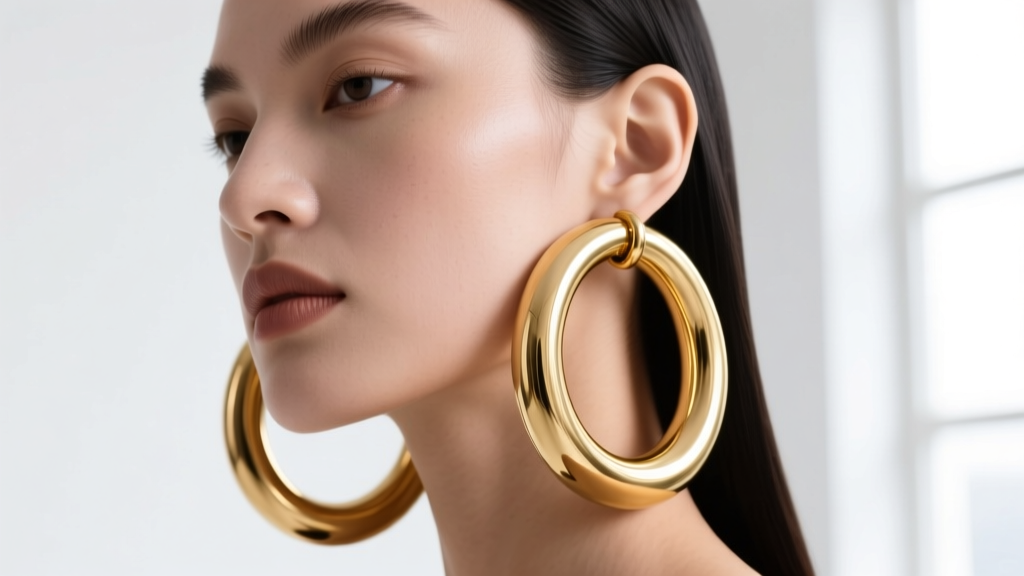
The Physics of Oversized Hoops: Why Size Dictates Material
When consumers begin searching for the largest hoop earrings on the market, they are typically looking at diameters ranging from 80mm (3.1 inches) to a staggering 150mm (6 inches). While these statement pieces dominate editorial runways and street style, evaluating their true value requires an understanding of basic physics and metallurgy. A hoop earring acts as a pendulum. As the diameter increases, the leverage placed on the earlobe piercing increases exponentially.
If a 100mm hoop were crafted from solid 14k gold wire at a standard 2.5mm thickness, it would weigh approximately 18 grams per ear. According to dermatological guidelines regarding traction alopecia and earlobe clefting, sustained wear of jewelry exceeding 10-12 grams per lobe drastically accelerates tissue stretching and eventual tearing. Therefore, the true value of oversized hoops is not found in heavy, solid metals, but in advanced structural engineering.
The Hollow Tubing Standard
For hoops exceeding 70mm, high-end jewelers utilize electroformed hollow tubing. This process creates a seamless tube with an outer diameter of 2.5mm but a wall thickness of just 0.3mm. This reduces the weight of a 120mm 14k gold hoop to a highly wearable 4.2 grams. When assessing budget versus value, a hollow 14k gold hoop will always outperform a solid brass or stainless steel hoop of the same size, simply because the steel hoop will inevitably cause lobe fatigue due to its density.
Budget vs. Value: 2026 Pricing Tiers for Massive Hoops
The market for oversized earrings is flooded with deceptive pricing. A massive price tag does not always equate to structural longevity, and a bargain bin find might cost you your piercing. Below is our 2026 value assessment matrix for hoops ranging from 80mm to 120mm.
| Material Tier | Average Price Range | Estimated Lifespan | Value Verdict |
|---|---|---|---|
| Plated Brass / Alloy | $25 - $65 | 6 - 18 Months | Low Value: High risk of green skin oxidation and heavy weight. |
| Surgical Steel / Titanium | $40 - $90 | 5+ Years | Medium Value: Hypoallergenic and durable, but heavy on the lobes at 100mm+. |
| Heavy Gold Vermeil (Sterling Base) | $120 - $220 | 2 - 4 Years | Good Value: Excellent for trend-driven shapes, but plating wears off at high-friction hinge points. |
| Hollow 10k / 14k Gold (Electroformed) | $350 - $850 | Lifetime | Highest Value: Featherlight, non-tarnishing, and structurally sound for daily wear. |
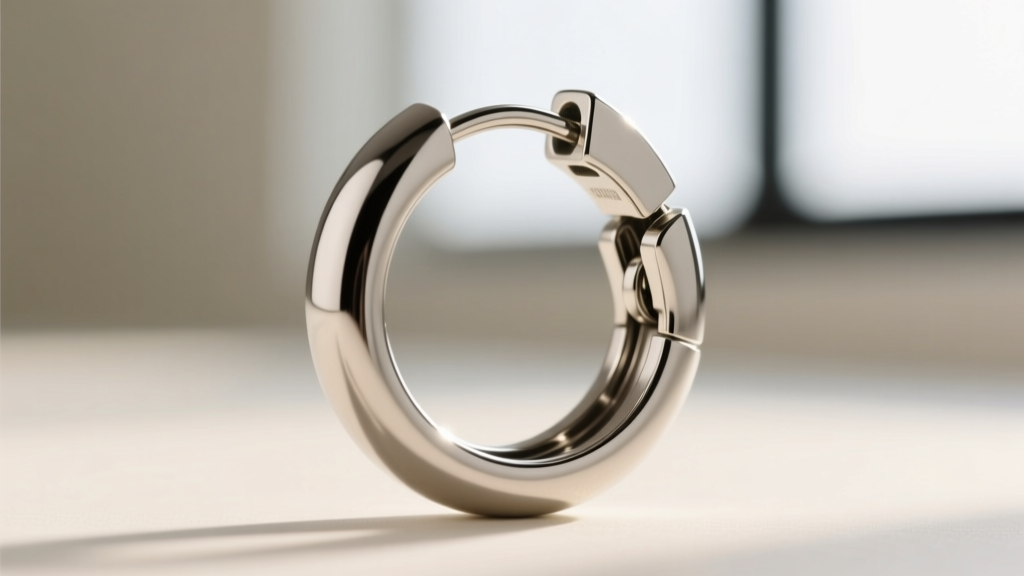
Structural Failure Points: What to Inspect Before Buying
The biggest mistake buyers make when investing in the largest hoop earrings is focusing entirely on the metal purity while ignoring the hardware. A 100mm hoop catches on hair, scarves, and coat collars with significant force. This torque is transferred directly to the earring's weakest link: the closure mechanism.
The Hinge and Snap-Battle
Cheap oversized hoops often use simple friction-fit wire closures (where a thin wire clicks into a hollow tube). On a 6-inch hoop, the leverage of a snag will easily bend the thin wire, rendering the earring useless. For maximum value, you must look for hinged snap-back closures with a reinforced saddle hinge. The hinge should be laser-welded, not soldered with traditional lead-free jeweler's solder, which can become brittle and snap under sudden tension.
Tubing Kinks and Denting
Because high-value large hoops use thin-walled hollow tubing to save weight, they are susceptible to denting. If you drop a hollow 14k gold 100mm hoop onto a tile floor, the impact can kink the tube. When assessing value, look for brands that offer a re-rolling or polishing service. According to the Gemological Institute of America (GIA), gold alloys like 10k and 14k offer superior tensile strength and dent resistance compared to 18k or 24k gold, making 14k the absolute sweet spot for oversized structural jewelry.
The Smart-Shopper Framework: Where to Spend and Save
Not every oversized hoop requires a lifetime investment. Use this decision framework to allocate your jewelry budget effectively in 2026.
The Golden Rule of Scale: The more perfectly circular and timeless the hoop, the more you should invest in solid/hollow gold. The more experimental the shape (e.g., flattened ovals, asymmetrical teardrops, or sculptural knots), the more you should save by opting for vermeil or titanium.
- Save on Trend Shapes: If you want a massive 120mm flattened oval hoop for a specific season or event, buy sterling silver with thick rhodium plating ($80-$140). The structural stress on non-circular shapes is uneven, meaning they are more likely to warp over time anyway.
- Spend on Perfect Circles: A classic 90mm or 100mm perfect circle is a permanent wardrobe staple. Invest $400+ in hollow 14k yellow gold. The cost-per-wear over a decade drops to pennies, and the lightweight nature will save your earlobes from irreversible stretching.
- Save on Surface Textures: Hammered or deeply engraved large hoops hide scratches and dents beautifully. You can safely buy gold vermeil for textured oversized hoops because the wear and tear will blend into the design, unlike on high-polish mirror finishes which show every micro-abrasion.
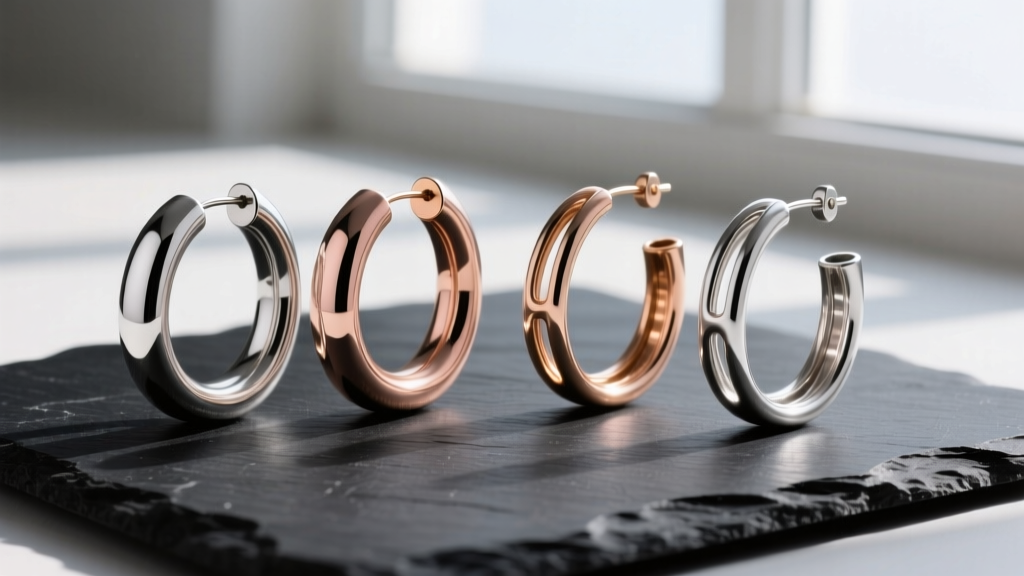
Cartilage vs. Lobe Placement for Massive Hoops
A common question in the piercing community is whether the largest hoop earrings can be worn in cartilage piercings, such as the conch or helix. From a value and safety perspective, the answer is a resounding no.
Cartilage piercings are typically done at 16-gauge (1.2mm) or 14-gauge (1.6mm). A hoop with a 100mm diameter hanging from a conch piercing will swing outward at a severe angle, pulling the jewelry aggressively against the rigid cartilage tissue. This causes chronic irritation bumps and migration. Furthermore, the thickness of the wire required to support a large hoop (usually 2.0mm to 3.0mm) is too thick to comfortably pass through a standard cartilage fistula. Restrict your massive, high-value hoops strictly to standard lobe piercings, and ensure your lobe piercings are fully healed and at least 18-gauge to 14-gauge in thickness to handle the wire gauge of statement hoops.
Final Verdict on Oversized Hoop Value
Ultimately, the value of the largest hoop earrings is defined by the intersection of weight, material integrity, and closure engineering. Do not be seduced by the heavy, solid feel of cheap brass or steel; your earlobes will pay the price. Conversely, do not overpay for 18k gold in massive diameters, as the softness of the alloy invites denting. By targeting hollow electroformed 14k gold with laser-welded saddle hinges, you secure a piece of jewelry that delivers maximum visual impact, lifetime durability, and uncompromised physical comfort.


