Decoding the Latest Earring Trend: 2026 Constellation Curation
Explore the latest earring trend of 2026: constellation curations. Our expert guide covers threadless flat-backs, titanium grades, and gauge sizing.

The Architecture of the Latest Earring Trend
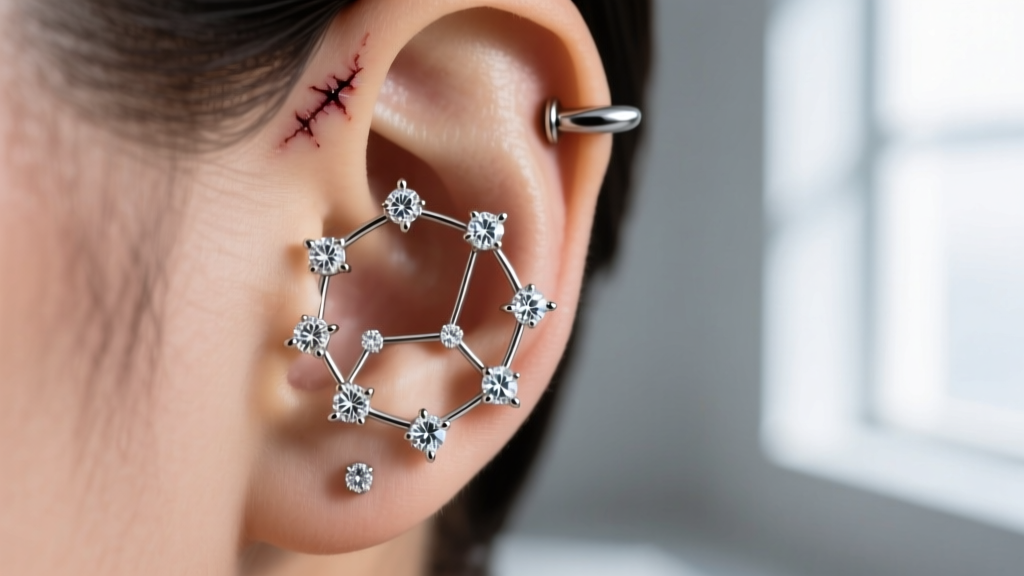
As we navigate through 2026, the jewelry industry has witnessed a definitive shift away from isolated, single-piercing statements toward highly calculated, multi-point anatomical mapping. The latest earring trend is no longer defined by a single oversized hoop or a heavy dangle; rather, it is defined by the 'Constellation Curation.' This approach treats the auricle as a three-dimensional canvas, requiring a sophisticated understanding of spatial geometry, tissue healing phases, and advanced metallurgy. Unlike the haphazard 'ear projects' of the early 2010s, today's curated ear demands precision-engineered components that minimize trauma while maximizing aesthetic cohesion.
At the core of this movement is the transition from traditional externally threaded or push-pin friction jewelry to high-tolerance, threadless flat-back labrets. To truly understand and execute the latest earring trend, one must look past the decorative gemstones and examine the structural engineering of the jewelry itself. This guide provides a technical deep dive into the mechanics, materials, and clinical considerations required to master the modern constellation curation.
Threadless Mechanics: The Press-Fit Revolution
The foundation of any high-end ear curation in 2026 is the threadless (or press-fit) jewelry system. Traditional internally threaded jewelry, while an improvement over external threading, still suffers from microscopic wear and tear on the threading mechanism, which can harbor bacteria and degrade over time. Threadless systems eliminate this entirely by relying on radial tension.
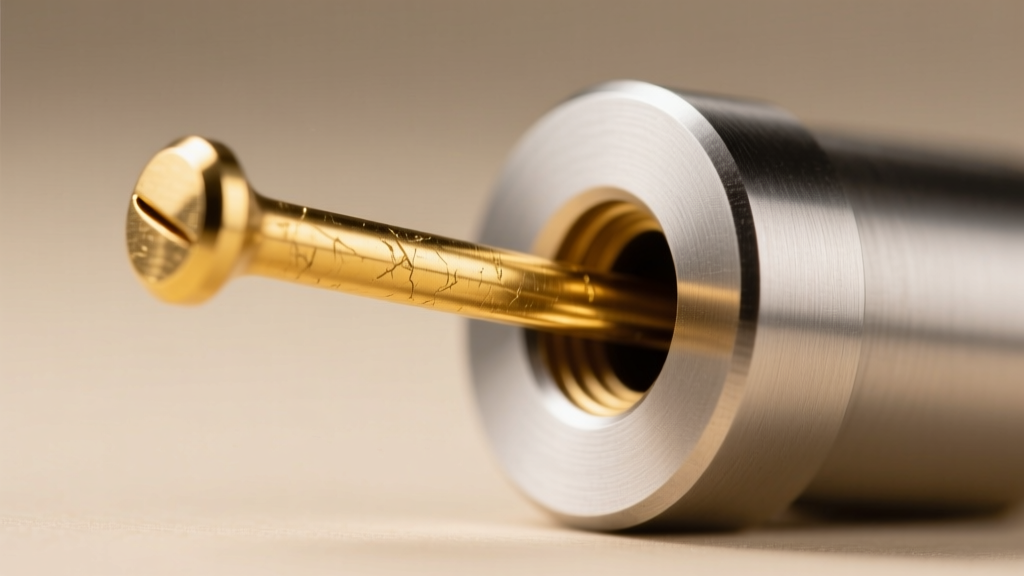
A threadless setup consists of two components: a hollow, flat-back titanium post and a decorative end featuring a solid metal pin. The pin, typically measuring between 0.9mm and 1.2mm in diameter, is inserted into the hollow post. To secure the jewelry, the piercer or wearer bends the pin at a precise 15-degree angle before pushing it completely into the shaft. The natural spring tension of the bent metal against the inner wall of the post creates a secure, friction-based lock that is entirely immune to the rotational loosening that plagues threaded jewelry.
The 15-Degree Bend Rule
Mastering the latest earring trend requires understanding the physics of the pin bend. A bend of less than 10 degrees will fail to generate sufficient radial friction, leading to spontaneous jewelry loss during sleep or hair brushing. Conversely, a bend exceeding 25 degrees will cause the pin to scrape the inner wall of the post during insertion, generating microscopic titanium or gold shavings that can irritate the fistula (the piercing channel). The optimal 15-degree bend ensures maximum tensile hold—often requiring specialized removal pliers to extract—while preserving the mirror-polished interior of the post.
Metallurgy and Surface Finish: ASTM F-136 Titanium
The aesthetic success of a constellation piercing relies heavily on biocompatibility. If the tissue is inflamed, the jewelry will sit at awkward angles, ruining the visual geometry. The undisputed standard for the latest earring trend is ASTM F-136 implant-grade titanium (Ti-6Al-4V ELI). The 'ELI' designation stands for Extra Low Interstitial, meaning the alloy is strictly controlled for oxygen, nitrogen, carbon, hydrogen, and iron content. This results in a metal that is highly ductile, corrosion-resistant, and entirely nickel-free.
Equally critical is the surface finish. The Association of Professional Piercers (APP) mandates that body jewelry intended for healing or long-term wear must have a mirror polish with a Roughness Average (Ra) of less than 0.8 micrometers. Commercial-grade jewelry often features an Ra of 1.5 to 2.0 µm, leaving microscopic valleys where dead skin cells and sebum accumulate, leading to chronic contact dermatitis and hypertrophic scarring.
Voltage-Based Anodizing Matrix
One of the most exciting technical aspects of modern titanium jewelry is anodizing. By submerging the titanium in an electrolytic bath and applying a specific voltage, a controlled oxide layer is formed on the surface, refracting light to produce vibrant colors without the use of toxic dyes or platings. Below is the standard voltage matrix used by master jewelers to color-match constellation setups:
| Voltage (V) | Oxide Thickness (nm) | Resulting Color | Best Use Case |
|---|---|---|---|
| 18V - 20V | ~30 nm | Bronze / Copper | Warm skin undertones |
| 30V - 35V | ~50 nm | Deep Ocean Blue | High-contrast helix placements |
| 45V - 50V | ~70 nm | Teal / Peacock | Conch centerpieces |
| 60V - 65V | ~90 nm | Champagne Gold | Lobe constellation bases |
| 90V - 95V | ~130 nm | Yellow-Green | Accent tragus placements |
| 110V+ | ~150+ nm | Magenta / Pink | Daith or rook statement pieces |
Spatial Mapping: Gauge and Post Length Matrix
Executing the latest earring trend requires rigorous spatial planning. A common failure in amateur curations is the 'cheese-cutter effect,' where a heavy 18-gauge or 20-gauge ring slowly migrates through thin helical tissue due to concentrated kinetic pressure. To counteract this, modern curations utilize thicker gauges to distribute weight, paired with precise post lengths to accommodate varying cartilage densities.
| Anatomical Placement | Standard Gauge | Initial Post Length (Swelling) | Healed Post Length |
|---|---|---|---|
| Standard Lobe | 18g (1.0mm) or 16g (1.2mm) | 8.0mm - 10.0mm | 6.0mm - 8.0mm |
| Upper Lobe | 16g (1.2mm) | 8.0mm | 6.0mm |
| Helix / Mid-Helix | 16g (1.2mm) | 8.0mm - 10.0mm | 6.0mm - 7.0mm |
| Conch | 14g (1.6mm) or 16g (1.2mm) | 12.0mm - 14.0mm | 8.0mm - 10.0mm |
| Tragus | 16g (1.2mm) | 8.0mm | 5.0mm - 6.0mm |
| Flat | 14g (1.6mm) | 10.0mm - 12.0mm | 7.0mm - 8.0mm |
Brands like Body Vision Los Angeles (BVLA) and Anatometal offer posts in 0.5mm increments, allowing piercers to achieve a flush, 'second-skin' fit that is critical for the sleek profile demanded by the latest earring trend.
Clinical Failure Modes in Multi-Piercing Setups
When executing a constellation project involving three or more piercings in a single session, the biological load on the auricle is immense. Understanding clinical failure modes is essential for long-term success:
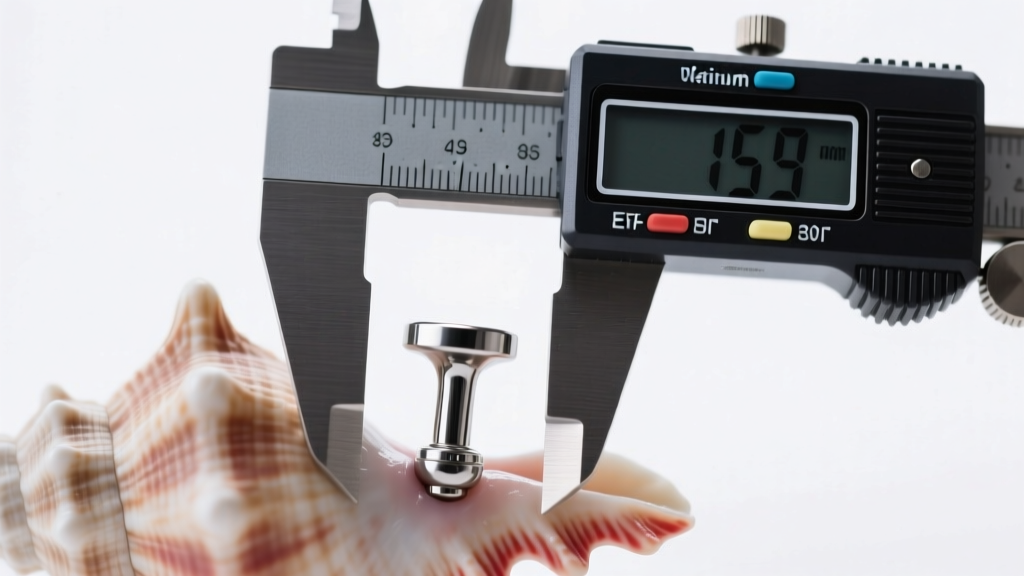
- Moisture Trapping and Maceration: If a healed post is left too long (e.g., using an 8mm post on a 5mm healed helix), the flat-back disc will sit away from the skin. Water from showers becomes trapped between the disc and the tissue, leading to maceration and localized fungal or bacterial overgrowth. Downsizing to a flush-fitting post is mandatory.
- Angle Divergence: If the needle trajectory during piercing does not perfectly match the intended angle of the decorative end, the jewelry will sit crookedly. In a constellation setup, a 10-degree angle divergence on a single helix piercing will visually shatter the symmetry of the entire curation.
- Embedding from Rebound Swelling: Cartilage exhibits biphasic swelling. Initial swelling peaks at 48 hours, subsides around day 10, and often rebounds at week 4 due to collagen remodeling. Failure to monitor the jewelry during the week-4 rebound phase can result in the flat-back disc embedding into the tissue, requiring surgical removal.
Investment Breakdown: Premium vs. Commercial Grade
The financial commitment to the latest earring trend reflects the engineering and material science involved. Commercial mall-kiosk jewelry typically utilizes 316L surgical steel with glued-in cubic zirconia, costing $15 to $30 per piece. However, these pieces suffer from rapid prong degradation, nickel leaching, and poor thread tolerances.
In contrast, a true 2026 constellation curation relies on premium, machined-to-tolerance jewelry. A single 16-gauge ASTM F-136 titanium flat-back post from a top-tier manufacturer retails for approximately $35 to $45. The decorative ends, featuring bezel-set or precision-prong-set lab-grown diamonds, sapphires, or high-grade opals, range from $60 for simple 2mm studs to over $450 for intricate, multi-gem cluster designs crafted in solid 14k or 18k gold. A full ear curation, encompassing a lobe stack, mid-helix, and conch centerpiece, represents an investment of $600 to $1,500 in jewelry alone, excluding the professional piercing fees. This investment guarantees biocompatibility, structural longevity, and the flawless aesthetic that defines the modern curated ear.


