Can You Shower With Earrings? A Metallurgist's Guide to Water Damage
Wondering if you can shower with earrings? We break down the metallurgy, chemical reactions, and mechanical risks of water exposure on jewelry.

The Short Answer: Material Science vs. Shower Chemistry
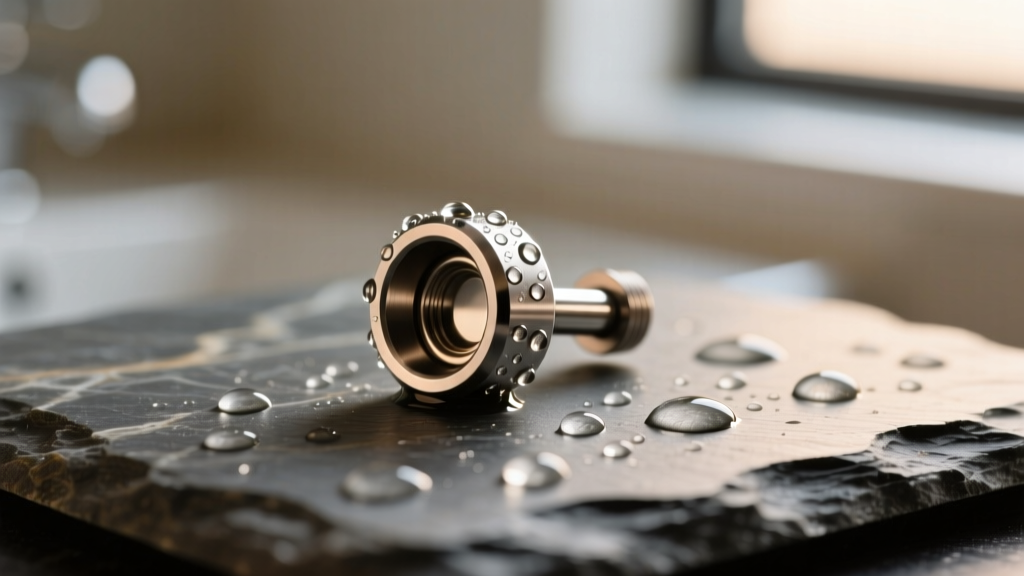
The question "can you shower with earrings" is one of the most frequently debated topics in body jewelry and fine accessory care. The superficial answer provided by many retail jewelers is a blanket "no." However, from a metallurgical and gemological perspective, the reality is far more nuanced. Whether your earrings will survive the shower depends entirely on three variables: the alloy composition, the mechanical engineering of the backing, and the chemical profile of your local water supply.
As of 2026, the jewelry industry has seen a massive shift toward biocompatible materials and advanced PVD (Physical Vapor Deposition) coatings. Yet, consumers still routinely expose complex mechanical joints and reactive base metals to harsh surfactants and mineral-heavy water. To understand the true risk, we must look past basic "water damage" and examine the microscopic interactions between shower chemistry and jewelry alloys.
The Chemical Breakdown: What Shower Water Actually Does
Municipal shower water is not just pure H2O; it is a complex, heated chemical cocktail. When you step into the shower, your earrings are subjected to thermal expansion, chemical solvents, and abrasive particulates.
Surfactants and pH Shifts
Shampoos, conditioners, and body washes rely on surfactants like Sodium Lauryl Sulfate (SLS) to strip oils and dirt from your skin. These same surfactants lower the surface tension of water, allowing it to penetrate microscopic fissures in gemstone settings and alloy grain boundaries. Over time, SLS can degrade the protective oxide layers on certain metals and strip the natural oils that keep organic gems (like pearls or opals) from desiccating and cracking.
Hard Water & Mineral Deposits
If you live in an area with hard water, your showerhead is spraying dissolved calcium and magnesium carbonate onto your jewelry. When the water evaporates, these minerals leave behind a microscopic scale. On high-polish finishes, this scale acts as a mild abrasive, gradually dulling the metal. More critically, mineral deposits can accumulate inside the moving parts of hinged hoops or clicker closures, increasing friction and eventually causing mechanical seizure.
Chloramines and Oxidation
Most municipal water systems use chloramines (a combination of chlorine and ammonia) for disinfection. While safe for human skin, chloramines are highly reactive with copper and silver alloys. This exposure accelerates tarnishing and can lead to micro-pitting in lower-grade metals.
Metal-by-Metal Degradation Analysis
Not all metals react to shower environments equally. Below is a technical breakdown of how common earring materials withstand daily water exposure, based on their passivation layers and alloy composition.
| Material Grade | Shower Safety | Primary Failure Mode in Wet Environments | Estimated Lifespan (Daily Showering) |
|---|---|---|---|
| ASTM F136 Titanium (ELI) | Excellent | None. The TiO2 passivation layer is impervious to water and SLS. | Indefinite |
| 14k / 18k Solid Gold | Very Good | Mechanical wear from thermal expansion; soap film buildup dulling gems. | Decades (requires periodic ultrasonic cleaning) |
| 316L Surgical Steel | Fair to Poor | Chloramines breach the chromium oxide layer, causing nickel leaching and pitting. | 1-3 Years (before dermatitis risk increases) |
| Gold Vermeil / Plated | Poor | Galvanic corrosion and thermal delamination of the micron-thin gold layer. | 3-6 Months |
| Brass / Copper Base | Very Poor | Rapid oxidation, verdigris formation, and severe skin discoloration. | Weeks |
According to the Association of Professional Piercers (APP), implant-grade titanium (ASTM F136) remains the absolute gold standard for any jewelry meant to be worn continuously in wet environments. Its biocompatibility and resistance to chloride-induced corrosion make it virtually indestructible in a standard shower.
Mechanical Failure Modes in the Shower
Beyond chemical degradation, the physical design of the earring plays a massive role in its shower survivability. The shower is a high-risk zone for mechanical failure and bacterial trapping.
Thread Stripping and Friction Backs
Standard friction backs (commonly known as butterfly clutches) are notoriously poor for showering. The tight space between the clutch and the earlobe traps moisture, dead skin cells, sebum, and shampoo residue. This creates an anaerobic environment perfect for bacterial growth, often resulting in the foul-smelling buildup colloquially known as "ear cheese." Furthermore, if the post is externally threaded, the sharp threads can harbor bacteria and scrape the fistula (piercing channel) when wet and swollen.
Hinges, Clickers, and Clasp Vulnerability
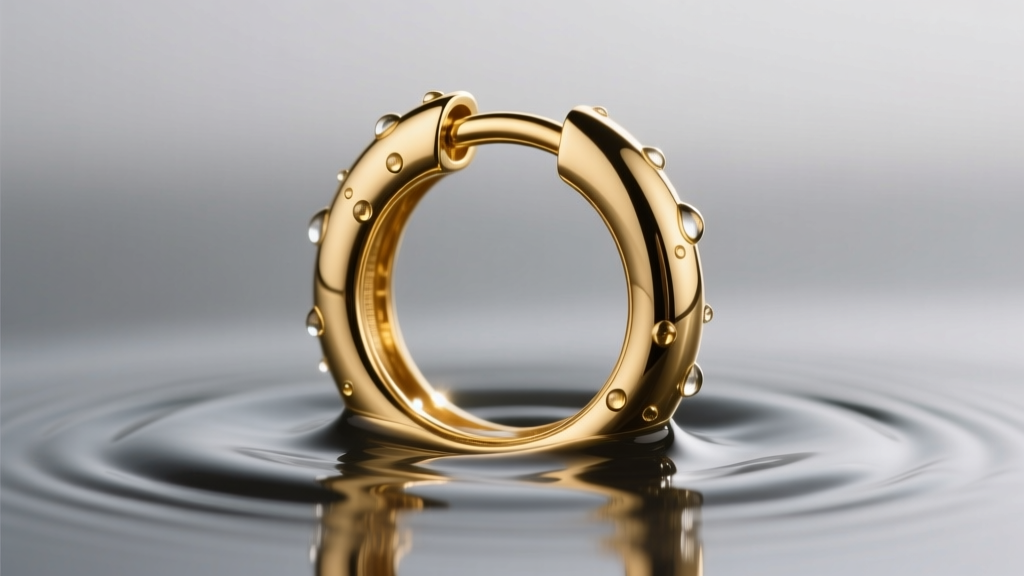
Huggie hoops and segment rings rely on microscopic hinges and tension-based clicker mechanisms. Hot water causes the metal to expand slightly. While this thermal expansion is minute, repeated cycles of heating (in the shower) and cooling (in the ambient air) can eventually fatigue the metal at the hinge joint. Additionally, as mentioned earlier, hard water scale can infiltrate the hinge pin, turning a smooth "click" into a gritty, resistant closure that eventually snaps under pressure.
The Threadless (Push-Pin) Advantage
Threadless jewelry, which relies on the spring tension of a slightly bent pin inserted into a hollow post, fares exceptionally well in the shower. Without threads to trap debris or strip, and with a seamless exterior surface, water simply glides off. However, users must ensure the pin is bent at the correct angle (usually between 10 to 15 degrees) to prevent the water pressure of a high-PSI showerhead from dislodging the decorative end.
Cartilage vs. Lobe: Healing Complications
If you are asking "can you shower with earrings" because you have a new piercing, the rules change entirely. In fact, showering is a critical part of the aftercare process for healing piercings, provided you are wearing the correct jewelry.
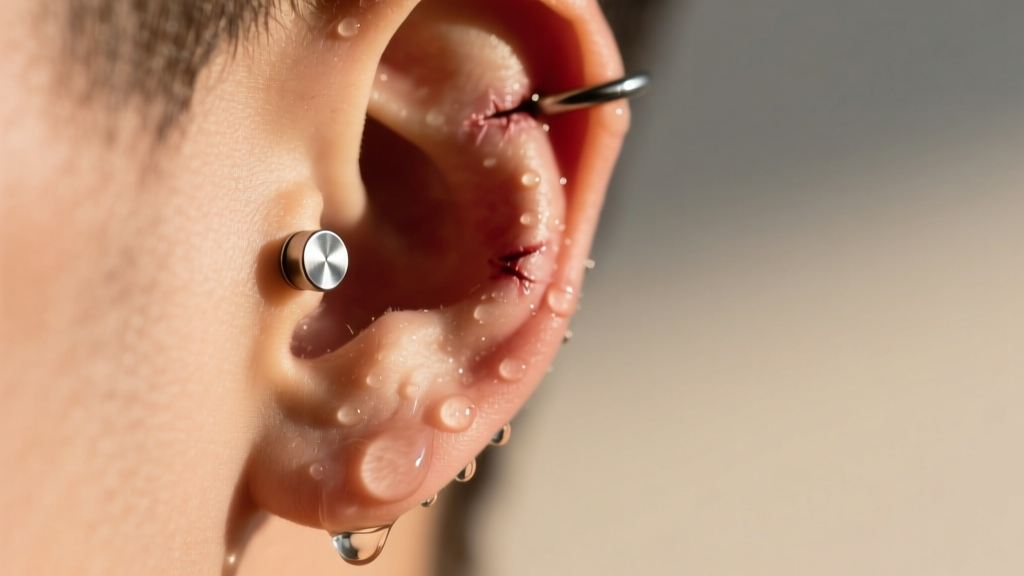
The Mayo Clinic notes that prolonged exposure to moisture and reactive metals is a primary trigger for contact dermatitis and nickel allergies. In a healing cartilage piercing (like a helix or conch), the fistula is essentially an open wound. Showering helps gently rinse away lymphatic fluid and crusties. However, if you are wearing 316L surgical steel or silver, the hot water and steam will accelerate the leaching of nickel and copper ions directly into the bloodstream, triggering severe localized inflammation, hypertrophic scarring, or piercing rejection.
Expert Rule of Thumb: You must shower with new piercings to keep them clean, but you must only do so wearing ASTM F136 titanium or solid 14k/18k nickel-free gold. Never introduce plated or base metals to an unhealed fistula.
Expert Maintenance: How to Salvage Water-Exposed Jewelry
If you regularly shower with your solid gold or titanium earrings, they will eventually accumulate a film of soap scum and hard water minerals, dulling their brilliance. You do not need to stop showering with them; you simply need to implement a proper maintenance protocol.
- Weekly Degreasing: Soak your earrings in a small bowl of warm water mixed with a few drops of mild, lotion-free dish soap (like Dawn). The dish soap is specifically formulated to break down the lipid bonds of shampoo and sebum buildup without attacking the metal.
- Mechanical Agitation: Use an extra-soft baby toothbrush to gently agitate the backs of the settings and the inside of the post. Never use stiff bristles, as they can induce micro-scratches on high-polish gold.
- Ultrasonic Cleaning (Solid Metals Only): For solid gold and titanium pieces without fracture-filled or porous gemstones (avoid ultrasonics for emeralds, opals, and pearls), a 3-minute cycle in an ultrasonic cleaner using a specialized jewelry solution will dislodge hard water scale from microscopic crevices.
- Thorough Drying: Never put wet earrings back into a closed jewelry box. Use a lint-free microfiber cloth to dry them, or use a hair dryer on the "cool" setting to blow moisture out of hinged mechanisms and threadless posts.
The Final Verdict
So, can you shower with earrings? Yes, but only if you treat your jewelry as a piece of engineered material science rather than a disposable accessory. If your earrings are crafted from implant-grade titanium, niobium, or high-karat solid gold, and utilize threadless or internally threaded mechanisms, the shower poses virtually no threat. Conversely, if you are wearing gold-plated brass, silver alloys, or jewelry with friction backs, the combination of heat, surfactants, and chloramines will rapidly degrade both the metal and your skin health. Invest in biocompatible materials, and your earrings will easily survive a lifetime of daily showers.


