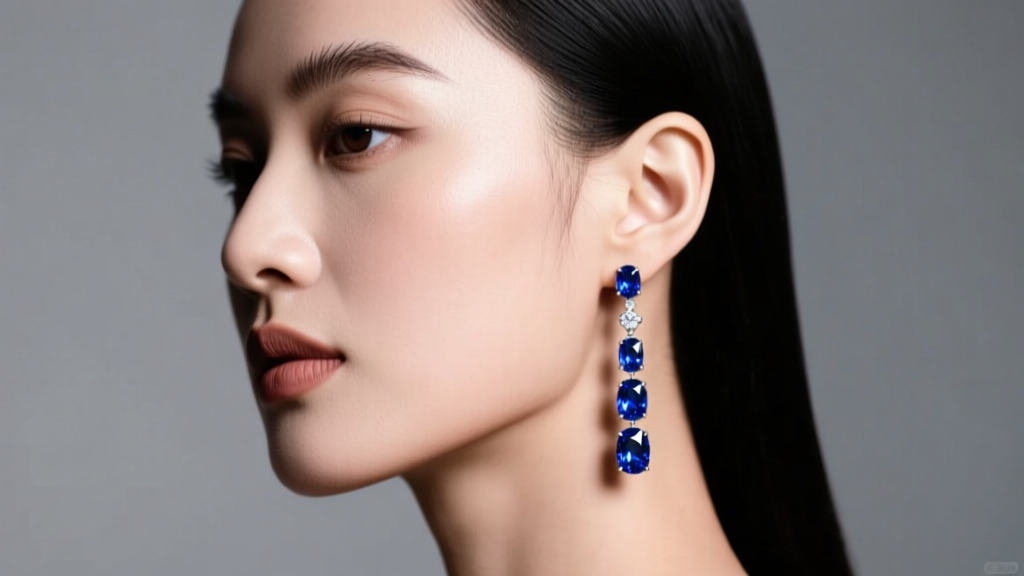
Sapphire Diamond Earrings: 2026 Style & Trend Analysis
Discover the top 2026 trends for sapphire diamond earrings. Explore cuts, settings, and style guides for blue, pink, and yellow sapphire pairings.

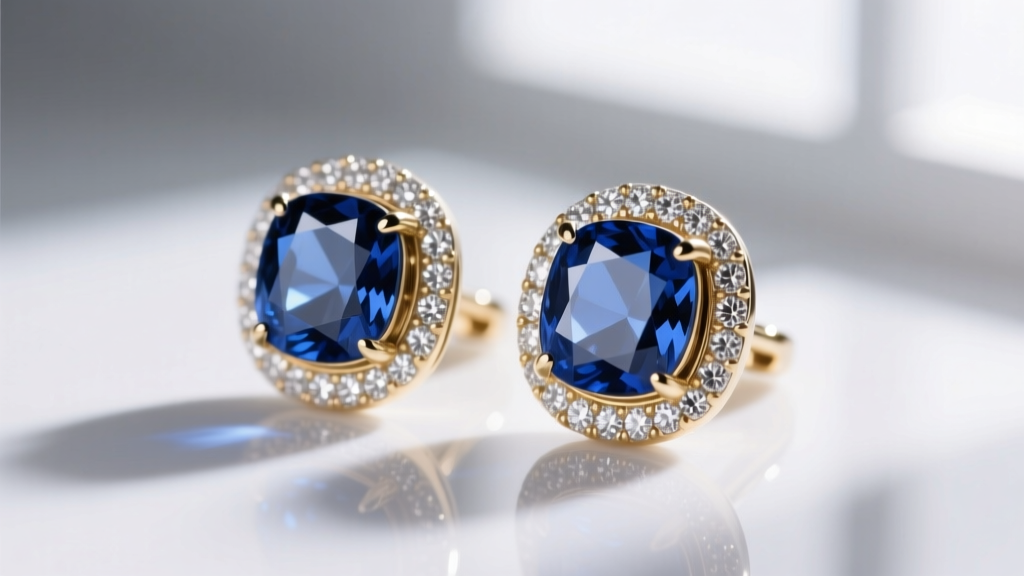
The 2026 Shift: Beyond the Traditional White Diamond
The landscape of fine jewelry is experiencing a definitive shift as collectors and everyday wearers alike move away from ubiquitous white diamond solitaires toward high-contrast, colored gemstone pairings. At the forefront of this movement are sapphire diamond earrings, which have evolved from vintage heirlooms into modern, architectural statements. According to recent market analyses by Bain & Company, consumer demand for colored gemstones in bridal and luxury daily-wear categories has surged, driven by a desire for personalization and rarity.
In 2026, the trend is not merely about wearing blue; it is about the interplay of light between the deep pleochroism of corundum and the scintillation of precision-cut diamond melee. Designers are moving away from heavy, opaque settings and embracing negative space, tension elements, and mixed-metal frameworks that allow the sapphire’s natural rutile silk to interact dynamically with ambient light.
Gemological Breakdown: Sapphire Origins and Diamond Accents
To understand the current market, one must look past the generic label of "blue" and examine the gemological specifics that dictate both value and aesthetic. The Gemological Institute of America (GIA) emphasizes that a sapphire's origin and treatment history fundamentally alter its optical performance and market tier. When pairing these stones with diamonds, the color grade of the diamond melee must be meticulously calibrated so as not to wash out the sapphire's saturation.
The Color and Clarity Matrix
For sapphire diamond earrings, the most sought-after hues in 2026 are Cornflower Blue (lighter, highly brilliant) and Royal Blue (deeper, velvety). However, teal and bi-color sapphires from Australia and Montana are capturing the avant-garde market. The diamonds used in halos or drop accents are typically G-H color and VS1-VS2 clarity. Using D-F colorless diamonds in a halo can sometimes create a harsh visual boundary that detracts from the sapphire's velvety glow, making near-colorless diamonds the preferred choice for seamless integration.
| Origin | Color Profile | Treatment Status | Avg. Price per Carat (1.50ct+) |
|---|---|---|---|
| Kashmir | Cornflower / Velvety | Unheated | $15,000 - $50,000+ |
| Ceylon (Sri Lanka) | Royal to Cornflower | Unheated | $3,000 - $8,000 |
| Madagascar | Deep Blue | Standard Heated | $800 - $2,500 |
| Montana (USA) | Teal / Bi-Color | Unheated | $1,200 - $3,500 |
Structural Engineering: Settings and Earring Backs
A critical failure point in luxury jewelry is ignoring the physics of the wear. Sapphires are a 9 on the Mohs hardness scale, making them exceptionally durable for daily wear. However, the density of a 3-carat sapphire paired with a diamond halo creates significant gravitational drag on the earlobe.
Prong vs. Bezel: A Structural Analysis
While traditional 4-prong and 6-prong settings maximize light return, they are prone to snagging on knitwear and can wear down over 5 to 7 years of daily use. The 2026 trend heavily favors the bezel setting for the primary sapphire, surrounded by an outer halo of micro-pave diamonds. A platinum bezel provides a continuous 0.5mm rim of metal that secures the girdle of the sapphire, eliminating the risk of prong failure while offering a sleek, modern silhouette.
"When designing sapphire diamond drops exceeding 4 grams per ear, the choice of earring back is as critical as the gemstone cut. Standard butterfly friction backs will inevitably fail, causing the earring to droop and the post to bend. We exclusively mandate 18-gauge or 16-gauge posts paired with hinged Omega backs or jumbo silicone tension discs to maintain the structural integrity of the earlobe."
— Master Bench Jeweler & CAD Designer
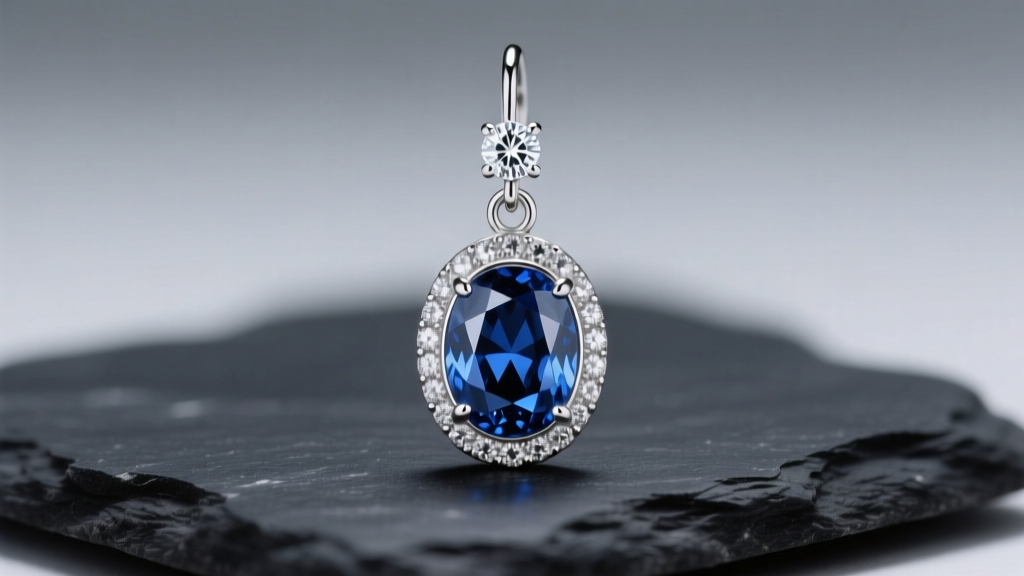
Styling Frameworks: Face Shape and Metal Pairings
The visual weight of sapphire diamond earrings must be balanced against the wearer's facial geometry and skin undertones. The interplay of metal color—specifically the shift from yellow gold to platinum and rose gold—drastically alters the perceived temperature of the sapphire.
The Face Shape Matching Guide
- Round Faces: Opt for elongated drop earrings or linear dangles featuring a top diamond stud that transitions into a pear-cut sapphire. This creates a vertical line that visually lengthens the face. Avoid large, circular diamond halos around round sapphires, as they emphasize facial width.
- Square Faces: Soften strong jawlines with curved silhouettes. Oval or cushion-cut sapphires set in 18k rose gold with a fluid, asymmetrical diamond wrap provide organic movement that contrasts beautifully with angular features.
- Heart-Shaped Faces: Balance a narrower chin with bottom-heavy chandelier styles or teardrop sapphires that draw the eye downward, adding visual weight to the lower half of the face.
- Oval Faces: The universal canvas. Geometric Art Deco styles featuring emerald-cut sapphires flanked by baguette diamonds are currently dominating the red carpet and editorial spaces in 2026.
Investment Value and Future-Proofing Your Collection
Purchasing sapphire diamond earrings is no longer just an aesthetic choice; it is an exercise in asset allocation. As mines in Kashmir and traditional Ceylon sources face depletion and geopolitical export restrictions, unheated, certified sapphires are appreciating at an annualized rate that outpaces many traditional white diamond categories.
To future-proof your acquisition, always insist on a gemological report from a top-tier laboratory (GIA, Gübelin, or SSEF) that explicitly states the absence of heat treatment and lattice diffusion. Furthermore, ensure the diamond melee is sourced with verifiable provenance, aligning with the 2026 industry standards for blockchain-tracked gemstone supply chains. By prioritizing structural integrity, optical precision, and verifiable origins, your sapphire diamond earrings will remain both a sartorial triumph and a resilient store of value for decades to come.