Golden Earring Trending: Why It's the 2026 Staple and How to Style It
Discover why the golden earring is trending in 2026. This step-by-step guide covers karats, gauges, alloys, and styling tips for every piercing.

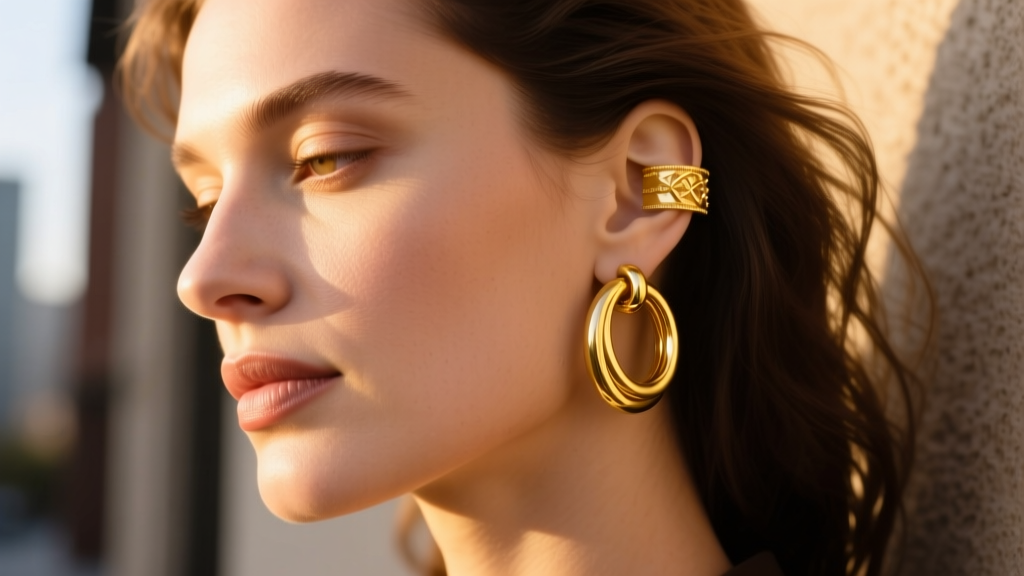
If you have scrolled through any fashion editorial or street-style feed this year, you have likely noticed a massive shift in jewelry aesthetics. The query golden earring trending why has dominated search engines as consumers pivot away from fleeting, disposable fashion jewelry toward enduring, high-quality metals. But what is actually driving this massive resurgence of gold in 2026, and more importantly, how do you navigate the complex world of karats, alloys, and gauges to find your perfect pair?
This step-by-step guide breaks down the metallurgical science, market trends, and practical styling frameworks you need to curate a timeless, skin-safe gold earring collection.
The 'Golden Earring Trending: Why' Breakdown
To understand the current gold rush, we have to look at both economics and aesthetics. In 2026, the 'quiet luxury' movement has fully matured into a demand for 'investment dressing.' Consumers are no longer buying ten pairs of $20 plated earrings that turn their skin green; they are buying one pair of $300 solid 14k gold hoops.
Furthermore, warm-toned metals have overtaken the cool, clinical look of silver and platinum. Gold complements the diverse range of global skin undertones and pairs seamlessly with the rich, earthy color palettes dominating contemporary fashion. According to the Gemological Institute of America (GIA), gold remains the most culturally significant and universally cherished jewelry metal, but modern buyers are far more educated about what they are actually purchasing.
Step 1: Decoding Gold Karats for Piercing Longevity
The most critical mistake buyers make is assuming 'more gold' always means 'better jewelry.' Pure 24k gold is incredibly soft. If you use 24k gold for a thin 20-gauge hoop, the metal will warp, bend, and eventually snap under the tension of daily wear. Here is how to choose the right purity based on your piercing type.
| Karat | Purity | Alloy Mix | Best Piercing Application | 2026 Price Range (Huggies) |
|---|---|---|---|---|
| 10k Gold | 41.7% | High copper/zinc/nickel | Standard lobe (budget-friendly) | $80 - $150 |
| 14k Gold | 58.3% | Balanced copper/silver/zinc | All healed piercings (ideal durability) | $180 - $350 |
| 18k Gold | 75.0% | Higher copper/silver | Healed lobes & cartilage (premium) | $400 - $800+ |
| 22k/24k Gold | 91.6% - 99.9% | Minimal to no alloy | Thick gauge lobe studs only | $600 - $1,200+ |
Expert Rule: For fresh, unhealed piercings, the Association of Professional Piercers (APP) strongly recommends implant-grade titanium due to the risk of alloy sensitization. Once fully healed, 14k or 18k nickel-free gold is the gold standard for long-term wear.
Step 2: Matching Alloys to Skin Undertones
Gold in its natural state is yellow. The color variations we see are entirely dependent on the alloy metals mixed in. Choosing the right tone is a step-by-step process of identifying your skin's undertone.
Yellow Gold (Copper + Zinc + Silver)
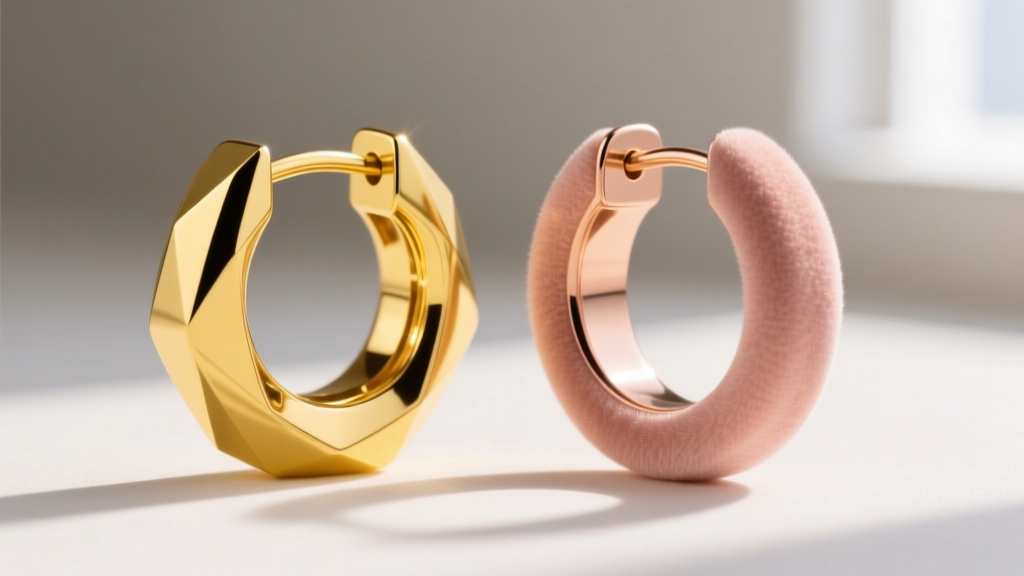
The classic choice. Yellow gold provides a striking contrast against cool (pink/blue) undertones and harmonizes beautifully with warm (peach/yellow) undertones. It is the most hypoallergenic of the colored golds, provided the manufacturer uses silver and zinc rather than nickel as the primary hardening agents.
Rose Gold (High Copper Content)
The pinkish hue comes from a higher ratio of copper. While beautiful, copper can cause contact dermatitis in a small percentage of the population. If you have highly reactive skin, test a rose gold piece on your standard lobe before committing to a cartilage cluster.
White Gold (Palladium or Nickel + Rhodium Plating)
Warning: Traditional white gold is alloyed with nickel, which is a notorious allergen. In 2026, premium jewelers are shifting toward palladium-based white gold. Regardless of the alloy, white gold is plated with rhodium to achieve a bright, silvery finish. Failure mode: Rhodium plating wears off after 1 to 3 years, revealing the slightly yellowish underlying metal. You must budget for re-plating maintenance.
Step 3: Selecting the Right Gauge and Closure
A beautiful gold earring will fail if the structural mechanics are flawed. Gauge (the thickness of the wire) and closure type dictate both comfort and security.
The 'Cheese Cutter' Effect
Many luxury brands sell ultra-delicate 22-gauge or 24-gauge gold hoop earrings. While they look dainty, wearing a thin 24g wire in a standard 18g lobe piercing creates a 'cheese cutter' effect. The thin wire applies concentrated pressure to the bottom of the piercing fistula, which can slowly slice through the tissue over time, causing permanent migration or tearing. Always opt for 18-gauge or 16-gauge wire for hoops and huggies.
Closure Mechanisms Ranked
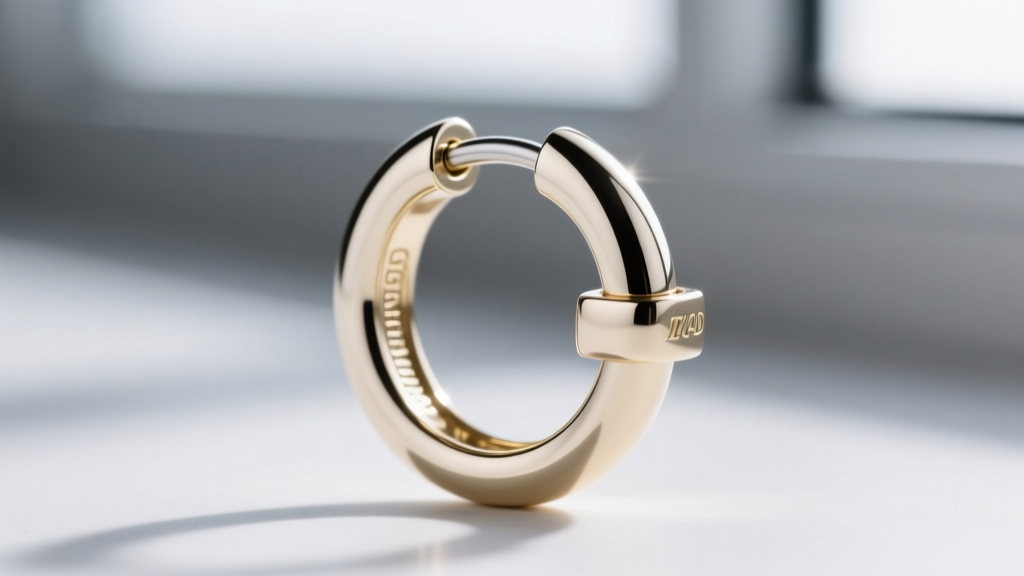
- Hinged Clickers (Best for Cartilage/Helix): Features a seamless snap closure. The 16g thickness provides stability, and the click mechanism ensures it won't snag on hair or clothing.
- Latch-Back (Best for Standard Lobes): The classic hoop closure. Ensure the post is at least 1mm thick to prevent bending.
- Screw-Back Studs (Best for Sleep/Security): The post is threaded, and the backing screws on. This eliminates the risk of losing a gold diamond stud in your bedsheets, though it requires more dexterity to fasten.
Step 4: A Step-by-Step Routine for Gold Maintenance
Gold does not tarnish or rust, but the alloys inside it can react to environmental factors, and sebum (skin oils) will dull the shine. Follow this bi-weekly protocol to maintain your investment:
- The Soak: Mix three drops of mild, phosphate-free dish soap into a bowl of warm (not hot) distilled water.
- The Agitation: Drop your gold earrings in for 5 minutes. Use a brand-new, ultra-soft baby toothbrush to gently sweep the crevices, especially around the hinge of a clicker or the setting of a gemstone.
- The Rinse: Rinse thoroughly under lukewarm tap water. Ensure the drain is plugged!
- The Dry: Pat dry with a lint-free microfiber cloth. Never use paper towels, as the wood fibers can cause micro-scratches on high-polish 18k gold.
Pro-Tip: Never wear solid gold earrings in chlorinated pools or hot tubs. Chlorine reacts violently with the copper and zinc alloys in 14k and 18k gold, causing a phenomenon called 'stress corrosion cracking,' which can permanently weaken the metal and cause prongs to snap.
Final Styling Framework for 2026
The modern approach to gold earrings is all about curated asymmetry and mixed textures. Instead of matching sets, try this step-by-step styling formula for a multi-pierced ear:
- Lobe 1 (Bottom): A substantial 14k yellow gold chunky hoop or textured huggie to anchor the look.
- Lobe 2 (Upper): A delicate 18k gold chain drop or a small bezel-set diamond stud.
- Helix/Cartilage: A 16-gauge gold clicker hoop with a single, subtle opal or sapphire accent.
- Conch/Flat: A threaded gold labret stud featuring a geometric or floral end.
Understanding the 'golden earring trending why' phenomenon is about recognizing a shift toward mindful consumption. By prioritizing 14k or 18k purities, respecting gauge thicknesses, and maintaining your pieces properly, your gold earrings will transcend seasonal trends and become lifelong staples in your wardrobe.


