How to Style and Care for Gold Link Earrings: Expert Guide
Master the art of styling and maintaining gold link earrings. Learn step-by-step cleaning, repair tips, and face-shape matching in our expert guide.


The Anatomy of Gold Link Earrings: What You Need to Know
Gold link earrings have transcended fleeting trends to become a permanent staple in fine jewelry collections. As we navigate the 2026 jewelry landscape, the demand for architectural, oversized chain links and delicate, interlocking huggies continues to surge. However, owning these statement pieces requires a deep understanding of their metallurgical properties and structural vulnerabilities. Unlike solid cast studs or simple wire hoops, link earrings are composed of multiple interconnected components, each presenting unique stress points.
When selecting your pieces, the karat weight is a critical factor that dictates both the color and the tensile strength of the metal. According to the Gemological Institute of America (GIA), pure 24-karat gold is far too malleable for structural chain links; it will stretch, warp, and eventually snap under the weight of its own design. For everyday wear, 14-karat gold (58.5% pure gold alloyed with metals like copper, silver, and zinc) offers the optimal balance of rich color and structural rigidity. While 18-karat gold provides a deeper, more luxurious yellow hue, its softer nature makes it better suited for smaller, lighter link designs or occasional wear. Furthermore, buyers must distinguish between solid links and hollow (tubular) links. Hollow links offer a bold, high-impact look at a fraction of the gold weight and cost, but they are notoriously difficult to repair if dented or crushed.
Step-by-Step Guide: Matching Link Styles to Face Shapes
Styling gold link earrings is not merely about matching metals; it is an exercise in balancing proportions and enhancing your natural facial architecture. The visual weight of a chain link can dramatically alter the perceived shape of your jawline and cheekbones. Here is a step-by-step framework for selecting the ideal link profile based on your facial structure.
Oval and Heart Face Shapes
If you have an oval or heart-shaped face, your goal is to maintain the natural balance of your features without adding excessive width to the cheekbones. Opt for elongated, vertical drop links or linear chain designs that draw the eye downward. Elongated oval links or rectangular curb chains that fall just below the jawline create a beautiful, lengthening effect. Avoid wide, chunky circular hoops or massive spherical links that sit directly at the cheekbone, as these can exaggerate the width of the upper face and disrupt your natural symmetry.
Round and Square Face Shapes
For round and square face shapes, the objective is to introduce softness and create the illusion of length. Square jawlines benefit immensely from the fluid, organic curves of rounded interlocking links, such as rope chains or smooth, polished figaro styles. These curved gold link earrings soften sharp angles and add a touch of movement. Conversely, round faces are best complemented by structured, geometric link designs—think sharp, angular curb links or square-cut tubular chains that drop well below the earlobe. The sharp lines of the metal provide a striking contrast to the softness of the face, adding definition and a modern, editorial edge to your overall look.
How to Clean and Polish Chain-Link Earrings at Home
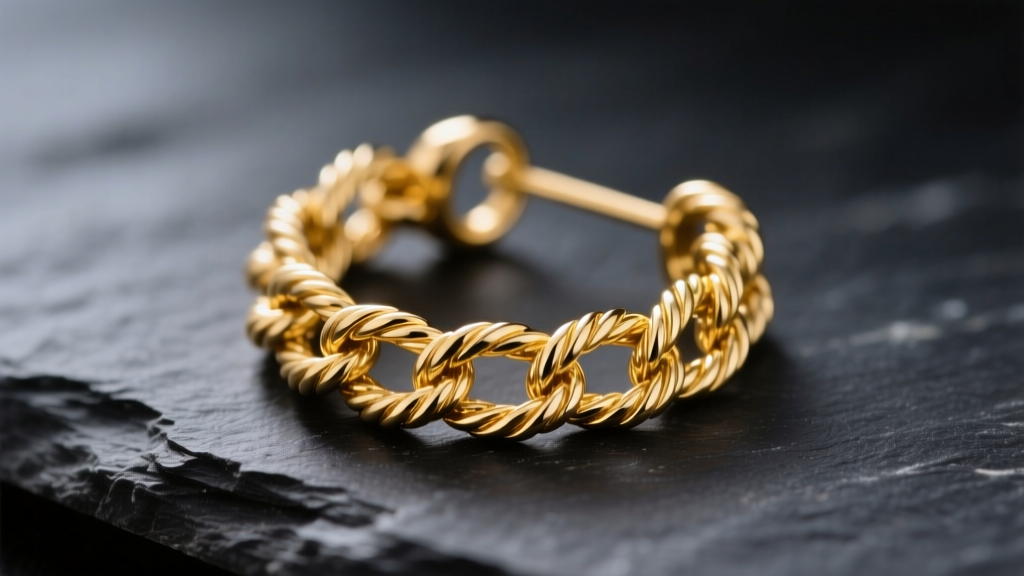
Because of their intricate geometry, link earrings are notorious traps for sebum, dead skin cells, hairspray, and environmental dust. Over time, this buildup creates a dull, grayish film that robs the gold of its natural luster. While professional ultrasonic cleaning is an option for solid pieces, it can be catastrophic for hollow links or friction-backed clasps. For routine maintenance, experts at Blue Nile recommend a gentle, manual cleaning approach that effectively removes grime without risking structural damage.
Step 1: Prepare the Cleaning Solution
Begin by filling a small, non-metallic bowl with warm (not hot) distilled water. Hot water can cause thermal shock to certain gemstone accents if your links feature pavé diamonds or enamel detailing. Add three to four drops of a mild, degreasing liquid dish soap—avoid harsh detergents, bleach, or ammonia-based cleaners, which can degrade the alloy metals and cause permanent discoloration. Swirl the water gently to create a mild lather.
Step 2: The Soak and Agitation
Submerge your gold link earrings in the solution and allow them to soak for exactly 15 to 20 minutes. This dwell time is crucial; it softens the hardened sebum and cosmetic buildup trapped within the microscopic gaps of the soldering points. After soaking, take a soft-bristled baby toothbrush and gently agitate the links. Brush in the direction of the chain pattern, paying special attention to the interior of the links and the clasp mechanism. Never use a stiff-bristled brush, as even 14k gold can accumulate micro-scratches that dull the polish over time.
Step 3: Rinsing and Drying
Rinse the earrings thoroughly under a gentle stream of lukewarm running water. To prevent losing a piece down the drain, always perform this step over a plugged sink or a fine-mesh strainer. Pat the earrings dry with a lint-free microfiber cloth. Avoid paper towels or tissue paper, as the wood fibers can leave microscopic scratches on the gold surface and leave behind lint that clings to the links. For hard-to-reach moisture trapped inside tubular links, use a hairdryer on the lowest, coolest setting to evaporate the remaining water.
Troubleshooting Common Link Earring Failures
Even the most meticulously crafted gold link earrings are subject to mechanical stress. The constant friction of interlocking metal, combined with the tension of putting on and taking off the jewelry, leads to specific, predictable failure modes. Understanding these issues allows you to catch them early before a beloved piece is lost forever.
| Failure Mode | Primary Cause | DIY Fix vs. Professional Repair |
|---|---|---|
| Clasp Slipping / Opening | Loss of tension in the fishhook or leverback wire due to repeated bending. | DIY: Gently squeeze the wire with nylon-jaw pliers to restore tension. Do not use bare metal pliers. |
| Link Stretching | Excessive weight pulling on 18k or 22k gold, or catching the earring on clothing. | Professional: A jeweler must reshape the link and potentially re-solder the seam if the gap has opened. |
| Micro-Fractures at Solder Points | Manufacturing defects or metal fatigue from constant movement and friction. | Professional: Requires laser welding. Standard torch soldering may melt the surrounding delicate links. |
| Denting in Hollow Links | Impact damage or crushing during storage or sleep. | Professional: Often unrepairable. The link must be replaced or the earring redesigned. |
One of the most critical preventative measures you can take is to inspect the soldering points—the tiny seams where each individual link is closed—every few months. Run your fingernail lightly over the seams; if you feel a catch or notice a visible gap, stop wearing the earring immediately and take it to a bench jeweler. Catching a failing solder point early is a minor, inexpensive repair, whereas a broken link usually results in the loss of the entire drop section.
Sourcing and Verifying Gold Quality in 2026
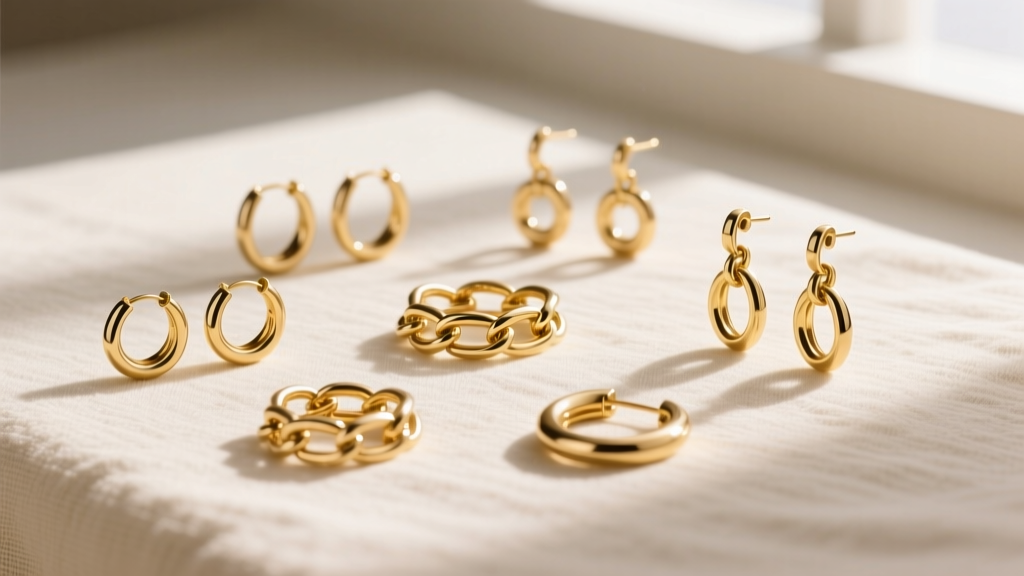
As the secondary market and direct-to-consumer jewelry brands continue to expand, verifying the authenticity and quality of gold link earrings is more important than ever. Always look for the quality hallmark stamped discreetly on the clasp, the jump ring, or the interior of the first link. In the United States, you should see '14K' or '585' for 14-karat gold, and '18K' or '750' for 18-karat gold. However, hallmarks can be faked or worn away on vintage pieces.
When investing in high-end chain links, pay close attention to the weight and the finishing. High-quality links will feel substantial and will not kink or collapse when laid flat on a table. The interior of the links should be just as polished as the exterior, and the soldering seams should be virtually invisible to the naked eye. If a piece feels suspiciously light for its massive visual footprint, it is likely hollow or heavily gold-plated over a base metal core. Always request a solid gold guarantee from the retailer and ensure the return policy allows for independent appraisal.
Final Thoughts
Gold link earrings are a masterclass in kinetic jewelry design, offering movement, light reflection, and undeniable sophistication. By understanding the metallurgical realities of gold alloys, matching the architectural lines of the links to your facial structure, and committing to a rigorous, safe cleaning regimen, you can ensure your collection remains pristine for decades. Treat your links with the mechanical respect they deserve, and they will serve as a timeless anchor in your evolving personal style.


