Opal Cluster Earrings: 2026 Budget & Value Assessment
Discover if opal cluster earrings are worth your budget. Our 2026 value guide breaks down pricing, opal grades, and metal settings for smart buyers.

The True Cost of Opal Cluster Earrings in 2026
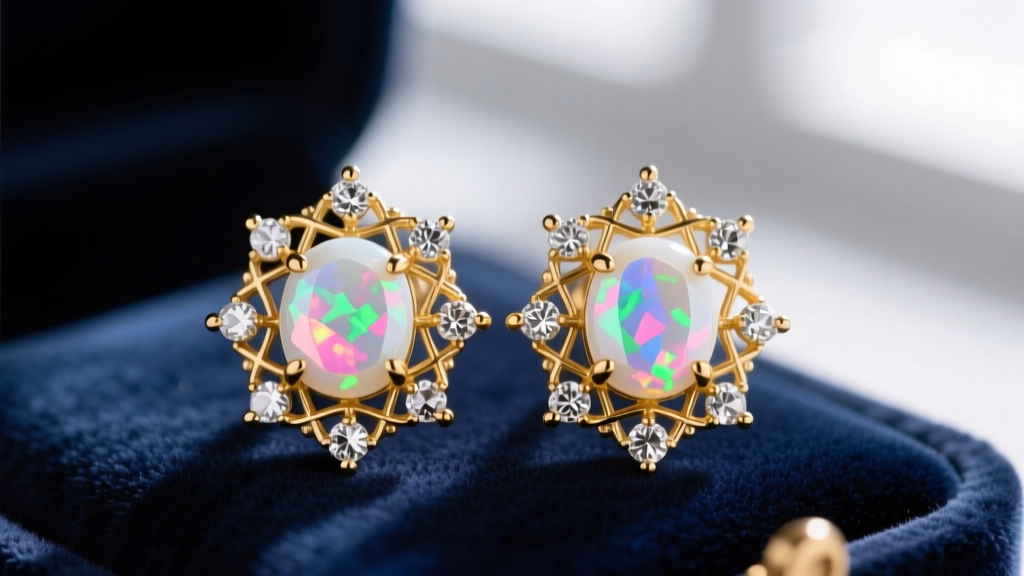
When evaluating fine jewelry, few pieces present as complex a pricing puzzle as opal cluster earrings. The market is currently flooded with options ranging from $25 gas-station impulse buys to $5,000 bespoke heirloom pieces. As a buyer in 2026, navigating this vast price spectrum requires more than just a superficial glance at the carat weight or metal stamp. You must understand the interplay between opal body tone, composite layering, cluster architecture, and structural integrity. This comprehensive value assessment will deconstruct the pricing tiers of opal cluster earrings, helping you determine exactly where your budget yields the highest return in beauty, durability, and long-term wearability.
Deconstructing the Cluster: Halo vs. Floral Designs
Before assessing the gemstones, we must define the anatomy of the setting. The term 'cluster' in jewelry design generally refers to two distinct architectural styles, each carrying different manufacturing costs and value propositions. The first is the Halo Cluster, featuring a single, larger central opal (usually 6mm to 10mm) encircled by a tight pavé or micro-prong border of accent stones. This design maximizes the visual footprint of the earring while keeping the central opal cost manageable. The second is the Floral or Multi-Stone Cluster, which groups five to nine smaller, uniformly matched opals (typically 2mm to 4mm each) into a cohesive geometric or organic shape. Floral clusters demand significantly higher labor costs for stone matching and setting, meaning a multi-stone opal cluster will inherently command a premium over a halo design of the same overall diameter. Understanding which style you are looking at is the first step in contextualizing the price tag.
The Opal Grading Matrix: What Are You Actually Paying For?
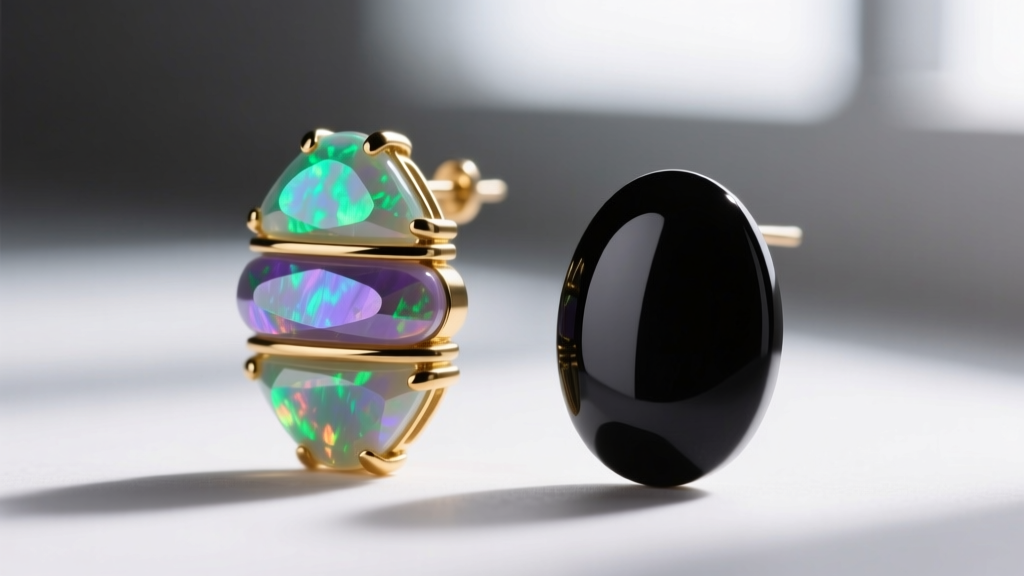
The primary driver of value in any opal jewel is the stone itself. According to the Gemological Institute of America (GIA), opal quality is judged by color, pattern, and clarity, with the 'play-of-color' being the most critical factor. However, in the commercial earring market, the body tone and structural composition dictate the baseline price tier. Opals are graded on an N-scale from N1 (Black) to N9 (White). Black opals (N1-N4) from Lightning Ridge possess a dark body tone that makes their spectral fire appear neon and highly saturated, making them the most expensive. White opals (N7-N9) from Coober Pedy offer a softer, pastel play-of-color and are significantly more abundant, placing them in the mid-tier price bracket.
Solid vs. Composite vs. Synthetic
- Solid Opals: Cut from a single piece of rough. These are the only opals that retain intrinsic resale value and are required for luxury-tier cluster earrings. They are susceptible to 'crazing' (cracking from moisture loss) if exposed to extreme heat or harsh chemicals.
- Doublets: A thin slice of light opal glued to a black backing (often ironstone or black glass) to simulate the look of a black opal. While visually striking, they are worth a fraction of a solid stone and can delaminate if submerged in water.
- Triplets: A doublet topped with a clear dome of quartz or glass to protect the soft opal slice. These dominate the sub-$50 budget market. They offer high visual impact but zero heirloom value.
- Synthetic (Lab-Grown): Gilson opals are the industry standard for lab-created stones. They offer spectacular, uniform play-of-color without the risk of crazing. The American Gem Trade Association (AGTA) requires these to be clearly disclosed, yet many online retailers blur the lines between 'genuine' and 'lab-created'.
2026 Price Tier Breakdown & Value Assessment
To help you benchmark your purchases, we have categorized the current market offerings into three distinct tiers. This matrix reveals what you should expect regarding materials and craftsmanship at each price point.
| Tier | Price Range | Opal Type | Metal Base | Cluster Accent | Value Rating |
|---|---|---|---|---|---|
| Budget | $30 - $85 | Triplet / Synthetic | 925 Silver (Rhodium Plated) | CZ Melee | Poor (High failure rate) |
| Mid-Range | $120 - $350 | Solid White (N8-N9) / Gilson | 14k Gold Vermeil (2.5μm) | Lab Diamonds | Good (Best for everyday) |
| Luxury | $600 - $2,500+ | Solid Black (N1-N4) / Boulder | Solid 14k/18k Gold | Natural Diamonds | Excellent (Heirloom) |
The mid-range tier represents the 'sweet spot' for most buyers. A $250 pair of 14k gold vermeil earrings featuring high-grade Gilson synthetic opals and lab-grown diamond halos will outlast a $250 pair featuring low-grade, heavily included solid white opals set in tarnishing sterling silver. In the budget tier, you are paying primarily for the labor and the metal, as the composite stones hold virtually no intrinsic gemological value.
Metal Settings: Where Budget Brands Cut Corners
The structural integrity of opal cluster earrings is just as critical as the stones. Because cluster settings are inherently heavy—often weighing between 3.5 and 6 grams per earring—the metal post and backing must be engineered to support the load. Standard earring posts are 20-gauge (0.8mm). However, a heavy opal cluster on a 20-gauge wire will inevitably droop, causing the earring to sit awkwardly on the earlobe and potentially stretching the piercing over time. High-value mid-range and luxury brands will utilize 18-gauge (1.0mm) or even 16-gauge (1.2mm) posts, paired with heavy-duty friction backs or screw-backs to ensure the cluster sits flush and upright against the ear.
Furthermore, be highly skeptical of 'gold-plated' base metals like brass or copper. The acidic nature of human sweat will quickly corrode these bases, leading to skin irritation and structural failure. Always insist on a minimum of 925 Sterling Silver as a base. If you desire the look of gold without the solid gold price tag, look for 'Gold Vermeil' (pronounced ver-may), which legally requires a minimum of 2.5 microns of 10k, 14k, or 18k gold plated over a sterling silver core. Standard 'gold plated' jewelry often features less than 0.5 microns of gold over cheap brass, which will wear off within months of daily wear.
Red Flags: How to Avoid Overpaying
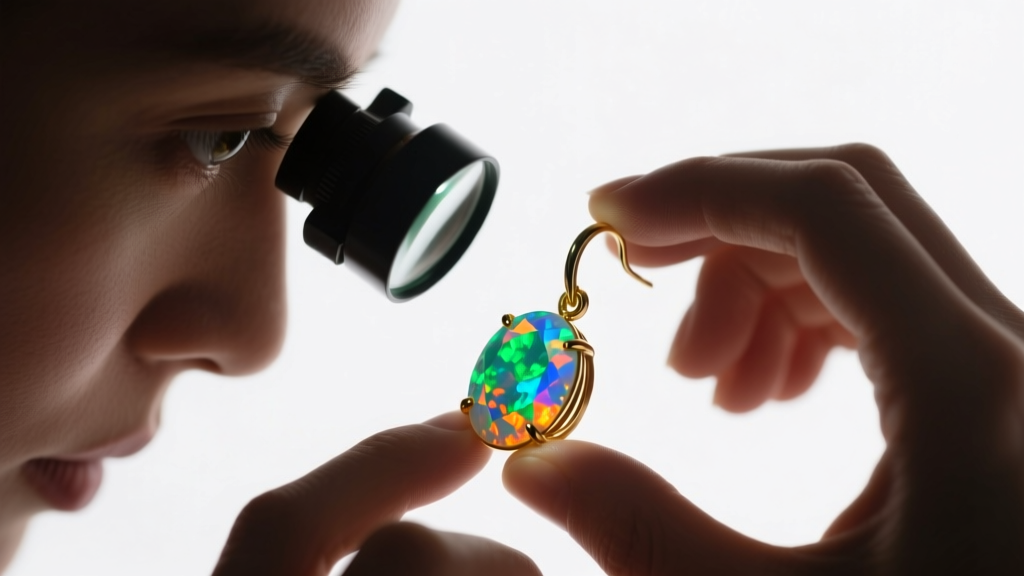
The most common value trap in the opal market is the misrepresentation of composite stones as solid. The Federal Trade Commission (FTC) Jewelry Guides mandate that sellers disclose if a stone is a doublet, triplet, or lab-created. However, fast-fashion and drop-shipped jewelry brands frequently use ambiguous terms like 'Genuine Earth-Mined Opal' to sell triplets. While the thin slice of opal in a triplet may technically be earth-mined, the stone as a whole is a manufactured composite. Always examine the side profile of the earring. If you see a perfectly flat, glassy dome on top and a stark, unnatural black line separating the color layer from the backing, you are looking at a triplet. Paying luxury prices for a triplet cluster is a critical financial error.
Another red flag is the use of overly aggressive prong settings on solid opals. Opal ranks between 5.5 and 6.5 on the Mohs hardness scale, making it relatively soft and brittle. If a jeweler uses tight, sharp prongs that dig into the girdle of the opal to secure it within the cluster, the stone is at a high risk of chipping or cracking under minor pressure. High-quality cluster settings will use smooth, rounded bezels or carefully filed micro-prongs that cradle the stone without inducing stress fractures.
Final Verdict: Where is the Value Sweet Spot?
If your goal is to acquire a visually stunning pair of opal cluster earrings for daily wear without treating them like fragile museum pieces, the mid-range synthetic or solid white opal tier offers the highest functional value. Investing $150 to $300 in a pair featuring lab-grown Gilson opals set in 14k gold vermeil with 18-gauge posts and lab-grown diamond accents provides a luxurious aesthetic, exceptional durability, and peace of mind. Reserve the luxury tier ($1,000+) strictly for solid Australian black or boulder opals set in solid 18k gold, purchased from reputable dealers who provide gemological certificates detailing the exact body tone (N-scale) and origin of the stones. By prioritizing structural engineering and honest material disclosures over deceptive marketing buzzwords, you can build a jewelry collection that retains both its beauty and its value.


