Troubleshooting Smiley Earrings: Fix Tarnish, Pain & Breakage
Fix common smiley earrings problems. Learn how to repair chipped enamel, prevent allergic reactions, and adjust loose clasps on smiley huggies and studs.

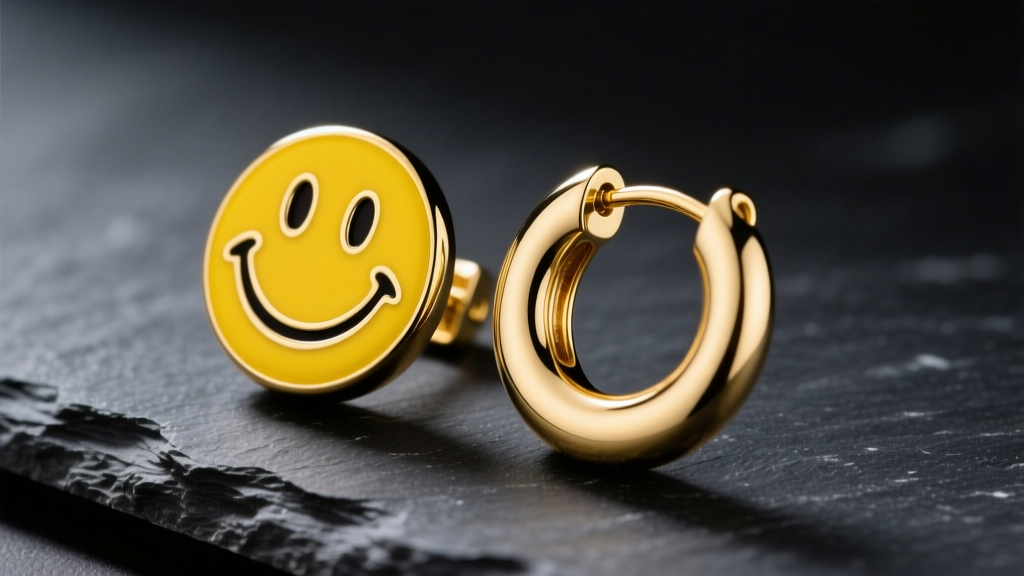
Smiley earrings have cemented their place as a staple of both Y2K nostalgia and modern minimalist jewelry boxes. Whether you prefer a subtle enamel smiley stud or a chunky gold smiley huggie, these playful motifs offer instant personality. However, the mass-market production of novelty jewelry often leads to a host of wearable frustrations. From chipped enamel and severe contact dermatitis to the infamous 'upside-down' huggie rotation, smiley earrings require specific troubleshooting techniques to remain comfortable and visually appealing.
In this comprehensive guide, we will dissect the most common structural and material failures found in smiley earrings and provide actionable, expert-level solutions to fix them.
The Enamel Chipping Crisis: Cold vs. Vitreous
The most frequent complaint regarding smiley face earrings is the degradation of the yellow or black enamel detailing. To troubleshoot this, you must first understand the manufacturing process used for your specific pair.
- Cold Enamel (Epoxy Resin): 90% of commercial smiley studs use cold enamel. This is essentially a pigmented epoxy resin poured into metal recesses and cured at room temperature. It is highly susceptible to UV yellowing, shrinking, and chipping upon impact.
- Vitreous Enamel (Fired Glass): High-end or artisan smiley earrings use vitreous enamel, which is powdered glass fused to metal in a kiln at approximately 1,400°F (760°C). It is incredibly durable but can shatter if crushed.
How to Repair Chipped Cold Enamel
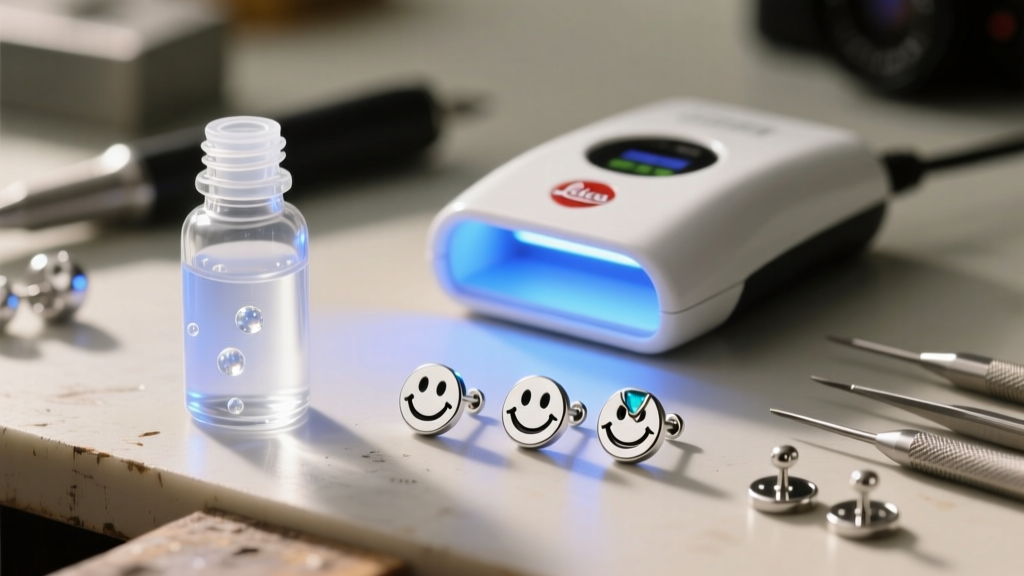
If your smiley stud has lost a fleck of its yellow 'face' or black 'eyes,' do not attempt to use nail polish, which will peel and trap moisture against the base metal, accelerating tarnish. Instead, use a jewelry-grade UV resin.
- Clean the earring with isopropyl alcohol to remove skin oils.
- Using a fine-tipped needle or toothpick, apply a microscopic drop of clear or color-matched UV resin into the chipped recess.
- Level the resin so it sits flush with the surrounding metal bezel.
- Cure under a 36W UV lamp for 60 seconds.
Pro Tip: If the underlying base metal has turned green or black due to oxidation, gently polish the recess with a fiberglass scratch pen before applying the resin to ensure proper adhesion.
Contact Dermatitis: Surviving 'Mystery Metal' Smiley Studs
Because smiley earrings are often produced as high-volume novelty items, they are frequently stamped from brass or zinc alloys and plated with a microscopically thin layer of gold or silver. As this plating wears away, the underlying nickel is exposed to the skin, triggering allergic contact dermatitis.
According to the Mayo Clinic, nickel allergy is one of the most common causes of allergic contact dermatitis, affecting up to 36% of women. Symptoms include intense itching, redness, and weeping skin directly behind the earlobe.
Testing and Troubleshooting Nickel Exposure
If your earlobes itch after wearing smiley studs for more than four hours, you need to verify the metal composition. Purchase a Dimethylglyoxime (DMG) spot test kit. Swab the earring post and the smiley face backing with the test solution; if the cotton swab turns pink, the jewelry is leaching unsafe levels of nickel.
Immediate Fixes:
- Nickel Barrier Coatings: Apply a specialized jewelry shield (like Nickel Guard) to the post and backing. This creates a temporary polymer barrier that lasts for several wears.
- The Clear Polish Hack: In a pinch, coating the post in clear nail polish works, but it degrades rapidly against the friction of the piercing channel and must be reapplied every 3-4 days.
The Permanent Solution: Upgrade to implant-grade materials. Look for smiley earrings crafted from ASTM F136 Titanium (Ti-6Al-4V ELI). The Association of Professional Piercers (APP) recognizes ASTM F136 as the gold standard for biocompatibility. Many independent jewelers now offer laser-etched smiley faces on solid titanium studs, entirely eliminating the need for toxic alloys and chipping enamel.
The Upside-Down Smiley: Fixing Huggie Rotation
Smiley huggie earrings feature a hinged hoop that 'hugs' the earlobe, with a smiley face charm dangling or integrated into the front. A universal frustration is the 'upside-down smiley'—where the weight of the charm causes the hoop to rotate backward, hiding the face behind the earlobe.
The Physics of Huggie Rotation
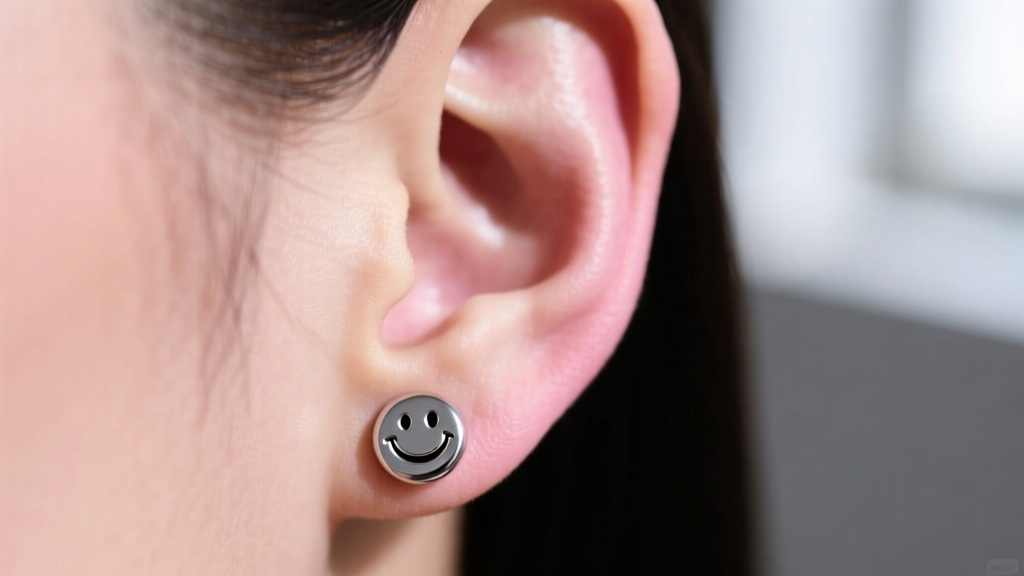
Rotation occurs when the Inner Diameter (ID) of the huggie is too large for the earlobe's thickness, creating a gap that allows the center of gravity to shift. If your earlobe is 8mm thick and you wear a 12mm ID huggie, the earring will inevitably rotate.
Troubleshooting the Fit
- Downsize the ID: Measure your earlobe thickness with digital calipers. If your lobe is 9mm, purchase a huggie with an 8mm or 9mm ID. The slight tension will grip the lobe and keep the smiley facing forward.
- Add Friction with O-Rings: If you already own a pair that rotates, slide a 1mm silicone O-ring (available at bead stores) onto the huggie wire before clicking it shut. The silicone grips the skin, acting as an anti-rotation anchor.
- Check the Hinge Tension: Over time, the tiny hinge on huggies loosens. Use a pair of nylon-jaw pliers to *very gently* squeeze the hinge barrel, increasing the friction of the clasp closure.
Crucial Clarification: Smiley Piercings vs. Earrings
A frequent point of confusion in jewelry forums is the conflation of 'smiley earrings' with 'smiley piercing jewelry.' In body modification terminology, a smiley piercing is a piercing of the upper lip frenulum (the thin web of tissue connecting your upper lip to your gums).
WARNING: Never attempt to use standard smiley earrings in a frenulum piercing. Standard earring posts are typically 20-gauge (0.8mm) or 22-gauge (0.6mm) and feature sharp, tapered tips or butterfly backings that will cause severe gum recession, enamel damage to your teeth, and tissue tearing. A healed smiley piercing requires a 16-gauge (1.2mm) or 14-gauge (1.6mm) seamless segment ring or a curved barbell with internally threaded, polished ends. Always consult a professional piercer for oral jewelry.
Troubleshooting Quick-Reference Matrix
Keep this diagnostic table handy to quickly identify and resolve the most common smiley earring failures.
| Symptom | Root Cause | Immediate DIY Fix | Permanent Solution |
|---|---|---|---|
| Yellow enamel chipping or peeling | Cold enamel (epoxy) degradation from UV/oils | Fill chip with clear UV resin and cure | Replace with vitreous (fired glass) enamel or laser-etched metal |
| Itchy, red, weeping earlobes | Nickel leaching from brass/zinc base metals | Apply Nickel Guard polymer coating to post | Upgrade to ASTM F136 implant-grade titanium studs |
| Smiley face rotates behind the ear | Huggie Inner Diameter (ID) is too large for lobe | Add a 1mm silicone O-ring for friction | Purchase huggies with an ID matching lobe thickness (e.g., 8mm) |
| Black tarnish on the smiley eyes | Silver sulfide buildup on sterling silver details | Polish gently with a dry microfiber cloth | Store in anti-tarnish zip bags with silica gel packets |
Final Thoughts on Maintenance
Smiley earrings are meant to be fun, but they shouldn't come at the cost of your skin health or comfort. By understanding the material limitations of cold enamel, respecting the biology of nickel allergies, and paying close attention to the physical dimensions of your huggie hoops, you can curate a collection that stays bright, comfortable, and perfectly oriented. When in doubt, always prioritize solid metals and precise measurements over fast-fashion novelty.