Light Blue Flower Earrings: 2026 Budget & Value Guide
Discover the true value of light blue flower earrings. We compare enamel, gemstone, and metal options across budget tiers to help you buy smart.

The Anatomy of Light Blue Flower Earrings: What Are You Paying For?
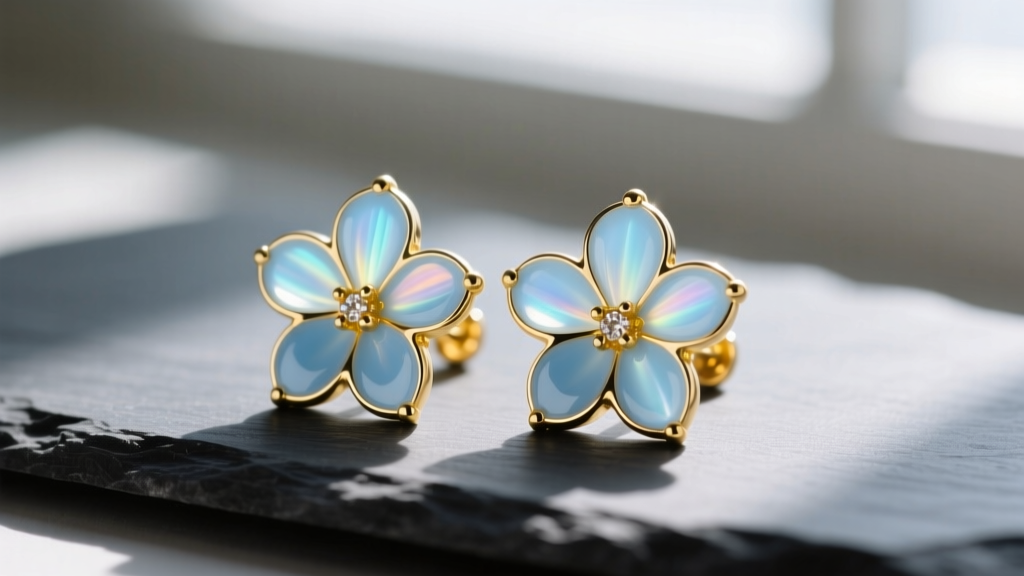
Floral motifs are a perennial staple in jewelry design, but when you narrow your search to light blue flower earrings, you enter a highly specific intersection of color theory, material science, and structural engineering. The 'light blue' spectrum in jewelry is notoriously difficult to achieve with longevity. It requires either specialized gemstones (like aquamarine or treated topaz) or advanced enameling techniques. In 2026, the market is flooded with visually similar floral earrings ranging from $12 to $2,500, making budget and value assessment critical for the informed buyer.
To determine the true return on investment (ROI), we must deconstruct these earrings into three core components: the metal armature, the method of floral construction, and the source of the blue coloration. A cheap pair might look identical to a demi-fine pair on a screen, but their failure modes, hypoallergenic properties, and structural integrity diverge drastically after just a few weeks of wear.
Construction Methods: Die-Struck vs. Cast vs. Hand-Fabricated
Before assessing the materials, you must understand how the flower shape is formed. This dictates the earring's weight, durability, and baseline cost.
- Die-Struck (Budget): Metal is stamped under immense pressure. This creates a lightweight, hollow, and crisp floral design. However, hollow petals are prone to denting and cannot be easily resized or repaired if crushed.
- Cast (Demi-Fine): Molten metal is poured into a mold. Cast flowers are solid, heavier, and more durable, but they require extensive polishing to remove porosity. This is the standard for most mid-tier floral earrings.
- Hand-Fabricated (Fine): Petals are individually cut, shaped, and soldered from metal sheet and wire. This allows for dynamic, asymmetrical, and highly detailed botanical designs that command premium prices.
Tier 1: Costume & Fast Fashion ($15 - $45)
In the lowest budget tier, light blue flower earrings are typically constructed from brass or zinc alloys. The floral shape is usually die-struck to save on metal weight and costs.
The 'Blue' Factor: Cold Enamel & Glass
At this price point, the light blue color is achieved using cold enamel (an epoxy resin mixed with blue pigment) or faceted glass. Cold enamel is applied by hand or syringe and air-dried. While it provides a vibrant, opaque light blue, it is highly susceptible to UV yellowing, chemical degradation from perfumes, and chipping upon impact.
Failure Modes & Longevity
The primary failure mode in Tier 1 is contact dermatitis. Base metals are often flash-plated with a microscopic layer of silver or gold (less than 0.1 microns) over a nickel barrier layer. Once the plating wears off—usually within 2 to 4 months of daily wear—the exposed nickel causes severe lobe irritation. Furthermore, the friction posts are often a thin 22-gauge (0.64mm), which bends easily under the weight of a multi-petal floral drop design.
Tier 2: Demi-Fine & Vermeil ($60 - $180)
This tier offers the highest value-to-cost ratio for the modern consumer. The base metal is solid 925 sterling silver, which is inherently hypoallergenic and structurally sound. The floral components are usually cast, providing a satisfying, solid weight without the fragility of hollow stamped metal.
The 'Blue' Factor: Vitreous Enamel & Genuine Gemstones
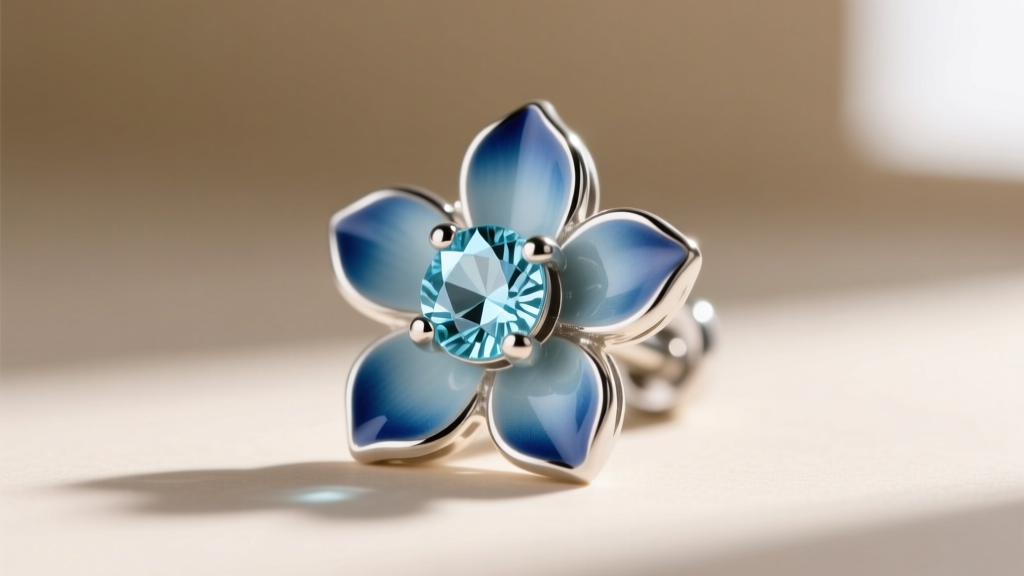
Demi-fine brands utilize vitreous enamel, which is finely ground glass fused to the metal in a kiln at approximately 1,400°F. As noted by the experts at Lang Antiques University, vitreous enamel is permanent, will not yellow, and possesses a luminous depth that cold enamel cannot replicate. For the center of the flower, brands in this tier use genuine Swiss Blue Topaz (irradiated and heated to achieve a stable, vivid light blue) or light Aquamarine. According to the Gemological Institute of America (GIA), aquamarine is a durable beryl (7.5-8 on the Mohs scale), making it an excellent, scratch-resistant choice for daily-wear floral studs.
Plating Standards & Post Gauges
Look for 'Gold Vermeil' rather than simple 'gold plated.' By FTC guidelines, vermeil must consist of a sterling silver base plated with at least 2.5 microns of 10k, 14k, or 18k gold. This thickness ensures the gold layer survives years of friction. Posts in this tier are typically a robust 20-gauge (0.81mm) or 18-gauge (1.02mm), paired with secure silicone or la pousette (click-back) clasps to support the weight of the floral casting.
Tier 3: Fine Jewelry & Heirloom Pieces ($400 - $2,500+)
Fine jewelry light blue flower earrings are hand-fabricated from solid 14k or 18k gold or platinum. The value here lies in the artisan labor, the rarity of the materials, and the generational longevity of the piece.
The 'Blue' Factor: Plique-à-Jour & Sapphires
At the highest tier, jewelers employ plique-à-jour, an advanced enameling technique where vitreous enamel is suspended within a metal framework without a backing, creating a stained-glass effect that lets light pass through the translucent light blue petals. The floral centers are typically set with unheated Ceylon or Montana Sapphires. The GIA's Sapphire guide highlights that light blue sapphires (often referred to as pastel or icy blue) are exceptionally rare and command high premiums due to their natural color saturation and high refractive index.
Material & Pricing Comparison Matrix
| Feature | Tier 1: Costume ($15-$45) | Tier 2: Demi-Fine ($60-$180) | Tier 3: Fine ($400+) |
|---|---|---|---|
| Base Metal | Brass / Zinc Alloy | 925 Sterling Silver | Solid 14k/18k Gold |
| Blue Material | Cold Enamel / Glass | Vitreous Enamel / Topaz / Aquamarine | Plique-à-jour / Sapphire |
| Post Gauge | 22g (Flimsy, bends) | 20g - 18g (Sturdy) | 18g - 16g (Heavy duty) |
| Hypoallergenic | No (High nickel risk) | Yes (If nickel-free solder) | Yes (Inert metals) |
| Expected Lifespan | 3 - 6 Months | 3 - 10 Years | Generational |
How to Assess Value: The 4-Point Buyer Checklist
When evaluating light blue flower earrings online or in-store, use this actionable framework to ensure you are paying a fair price for the actual materials used.
- Interrogate the 'Blue': If the description simply says 'blue stone' or 'blue crystal,' assume it is glass or dyed quartz. True value requires explicit disclosure: 'Swiss Blue Topaz,' 'Aquamarine,' or 'Vitreous Enamel.'
- Verify the Plating Thickness: For gold floral earrings under $200, the seller must explicitly state 'Vermeil' or list the micron count (minimum 2.5μm). 'Gold dipped' or 'gold tone' indicates flash plating that will tarnish rapidly.
- Check the Solder Joints: Look closely at where the floral drop connects to the ear wire or post. High-value pieces use laser welding or high-karat solder. Cheap pieces use lead-based or low-temperature solders that appear as dull, bulky blobs at the connection point.
- Assess the Backing Mechanism: A multi-petal cast flower can easily weigh 4 to 6 grams. Standard butterfly friction backs will fail to hold this weight, causing the earring to droop forward. Look for jumbo silicone backs, screw-backs, or omega clips for heavy floral drops.
Care & Maintenance to Protect Your Investment
The longevity of your light blue flower earrings depends heavily on proper maintenance, particularly regarding the blue elements.
- Never use ultrasonic cleaners on vitreous enamel or fracture-filled blue topaz. The high-frequency vibrations will shatter the glass enamel and exacerbate internal stone fractures.
- Avoid harsh chemical dips. Silver polishing cloths are safe for the metal armature, but liquid silver dips will strip the glossy finish off cold enamel and can dull the polish on aquamarine.
- Clean with a mild surfactant. Use a few drops of phosphate-free dish soap, warm water, and a baby-hair brush to gently dislodge sebum and skin cells from the intricate crevices of the floral casting. Dry immediately with a microfiber cloth to prevent water spots on the gemstones.
Final Verdict: Which Tier Offers the Best ROI?
For the vast majority of buyers in 2026, Tier 2 (Demi-Fine) offers the undisputed best value for light blue flower earrings. By spending between $80 and $150, you bypass the inevitable skin irritation and rapid tarnishing of costume jewelry, securing solid sterling silver, permanent vitreous enamel, and genuine, durable gemstones like aquamarine. While Tier 3 fine jewelry offers unmatched artistry and heirloom potential, the exponential price jump is driven by the rarity of sapphires and artisan labor rather than a proportional increase in daily wearability. If you want a vibrant, durable, and hypoallergenic floral staple that will survive years of daily rotation, a vermeil and aquamarine demi-fine piece is the smartest allocation of your jewelry budget.


