Light Up Christmas Earrings: 2026 Tech & Safety Deep Dive
Explore the engineering, battery safety, and metallurgy behind light up Christmas earrings. A 2026 technical guide to illuminated holiday jewelry.

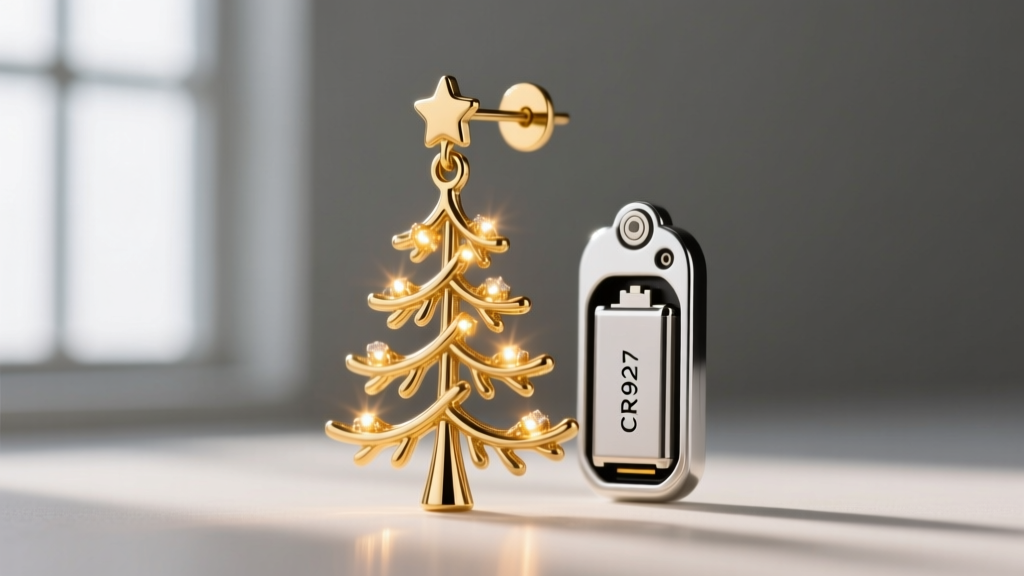
The Engineering Behind Illuminated Holiday Jewelry
The evolution of light up Christmas earrings has transitioned them from cheap, plastic novelty items into sophisticated pieces of wearable micro-electronics. In 2026, high-end jewelers and specialized tech-jewelry brands are integrating illumination directly into precious metal frameworks. This requires a deep understanding of surface-mount device (SMD) technology, micro-circuitry, and biocompatible metallurgy. Unlike standard stud or hoop earrings, illuminated jewelry must balance aesthetic brilliance with strict electrical safety and ergonomic weight distribution.
At the core of modern illuminated earrings are 0402 or 0603 package SMD LEDs. Measuring a mere 1.0mm x 0.5mm or 1.6mm x 0.8mm, these microscopic diodes can be embedded into the prongs of a gemstone setting or the branches of a gold vermeil Christmas tree motif without disrupting the jewelry's silhouette. To achieve the signature 'twinkle' effect associated with holiday jewelry, engineers utilize pulse-width modulation (PWM) microcontrollers that cycle the LEDs at varying frequencies, creating a dynamic, multi-phase illumination pattern that mimics natural candlelight or starlight.
Circuit Topology and Switch Mechanisms
One of the greatest design challenges in light up Christmas earrings is the switch mechanism. Traditional mechanical slide switches are too bulky and visually disruptive for fine jewelry. Instead, expert manufacturers employ magnetic reed switches. A micro-reed switch, encased in a protective glass capsule measuring just 2mm in length, is soldered into the circuit. The earring remains dormant until it is exposed to a magnetic field.
Jewelers achieve this by embedding a tiny N52 neodymium magnet into the silicone earring back or providing a magnetic 'wand' for activation. This eliminates the need for external buttons, preserving the waterproof integrity of the earring's resin or enamel coating and maintaining a seamless metallic exterior. When the magnet is removed, the reed switch instantly breaks the circuit, preventing parasitic battery drain during storage.
Power Systems: Micro-Batteries and LED Efficiency
The power source dictates the lifespan, weight, and overall profile of the earring. Lithium coin cells are the industry standard due to their high energy density and stable 3V discharge curve. However, selecting the correct cell is a balancing act between milliamp-hour (mAh) capacity and physical bulk.
| Battery Model | Dimensions | Capacity (mAh) | Weight | Best Application |
|---|---|---|---|---|
| CR927 | 9.5mm x 2.7mm | ~30 mAh | 0.75g | Ultra-lightweight studs, minimal bulk |
| CR1220 | 12.5mm x 2.0mm | ~35 mAh | 0.85g | Dangle earrings, wider surface area |
| CR1632 | 16.0mm x 3.2mm | ~130 mAh | 1.80g | Heavy statement pieces, continuous wear |
For most light up Christmas earrings, the CR927 is the optimal choice. Its 2.7mm thickness allows it to be housed in a discreet, domed bezel on the posterior of the earring. A standard 0402 white SMD LED draws approximately 20mA at peak brightness. By utilizing PWM dimming and a 50% duty cycle, the average current draw drops to 10mA, yielding a continuous runtime of roughly 3 hours on a single CR927 cell—more than enough for a holiday party or evening event.

Metallurgy and Thermodynamics: Protecting the Earlobe
Integrating electronics into jewelry introduces thermal and chemical risks. While SMD LEDs are highly efficient, they still generate localized heat. If the LED is mounted directly against a low-thermal-conductivity material like acrylic or standard resin, heat can pool, causing discomfort or even minor thermal burns to the earlobe after prolonged wear.
To mitigate this, premium light up Christmas earrings utilize 925 sterling silver or copper-alloy baseplates beneath the decorative enamel. Sterling silver boasts a thermal conductivity of approximately 165 W/m·K, effectively acting as a heat sink that dissipates the LED's thermal output across a wider surface area, keeping the skin-contact temperature well within safe limits.
Galvanic Corrosion and Post Materials
The earlobe environment is highly corrosive due to sweat, sebum, and varying pH levels. When dissimilar metals (like a silver decorative body and a brass post) are exposed to this electrolyte-rich environment, galvanic corrosion occurs. This is exacerbated by the presence of an electrical current. To prevent degradation and allergic contact dermatitis, the earring post must be isolated and biocompatible. According to the American Academy of Dermatology, nickel is the leading cause of metal allergies. Therefore, expert manufacturers laser-weld ASTM F136 grade titanium posts to the silver circuit housing. Titanium is entirely nickel-free, highly resistant to galvanic corrosion, and provides the necessary tensile strength to support the added weight of the battery housing.
Gauge Sizing and Weight Distribution
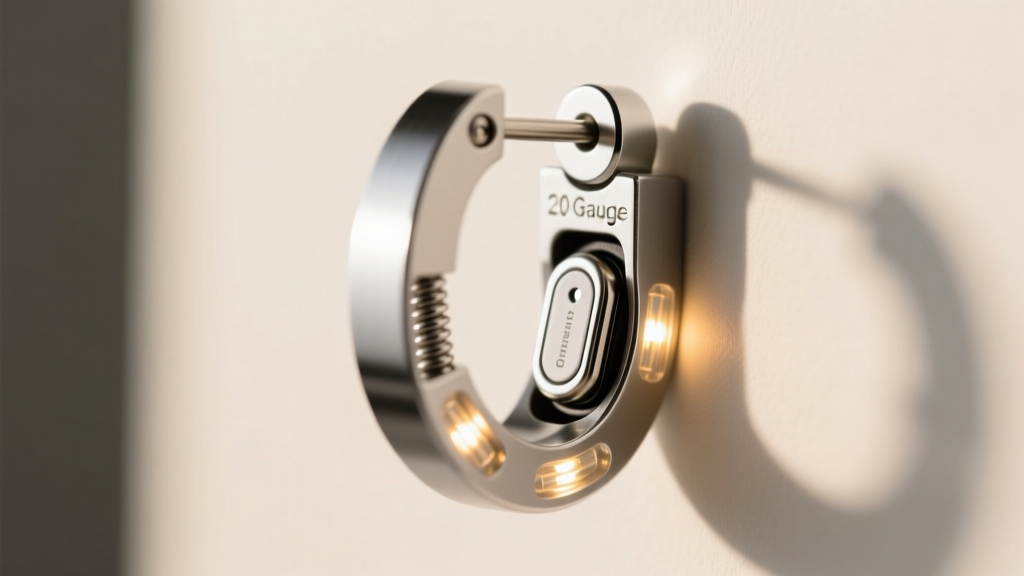
Standard earlobe piercings are typically 20-gauge (0.81mm) or 18-gauge (1.02mm). A standard gold stud weighs less than 2 grams. However, adding a CR927 battery, a micro-PCB, and a magnetic reed switch easily pushes the weight of a single light up Christmas earring to 6–9 grams.
This asymmetrical weight distribution causes the earring to droop, stretching the piercing and directing the LED's light downward rather than forward. To solve this, engineers employ a 'center-of-gravity' chassis design. The battery housing is positioned directly over the post's axis of insertion, rather than hanging below it. Additionally, consumers are advised to use specialized silicone O-ring backs or jumbo friction backs to provide a wider surface area against the earlobe, stabilizing the heavy earring and preventing the post from tearing through the tissue.
Safety Standards and Failure Modes
The most critical safety concern regarding illuminated jewelry is button battery ingestion and leakage. The U.S. Consumer Product Safety Commission (CPSC) strictly warns against the hazards of accessible coin cells, which can cause severe chemical burns if swallowed by children. High-quality light up Christmas earrings address this via a micro-screw backplate. Instead of a simple slide-door that can pop open upon impact, the battery compartment is secured with a 1.2mm Torx or flathead screw, requiring a tool for access.
Furthermore, electrical failure modes must be considered. If the earring is exposed to moisture (such as snow or rain), a poorly sealed circuit can short, leading to rapid battery discharge and thermal runaway. Premium designs encapsulate the micro-PCB in a transparent, medical-grade UV-cured epoxy resin. This not only provides an IP67-level water resistance but also acts as an optical diffuser, softening the harsh point-light of the bare LED into a warm, ambient glow.
Maintenance and Storage for Electronic Earrings
To ensure the longevity of light up Christmas earrings across multiple holiday seasons, proper maintenance of the electrical contacts is essential. Over time, the natural oils from fingers can create an insulating film on the battery terminals, resulting in intermittent flickering or total failure.
- Battery Removal: Always remove the CR927 or CR1220 battery if the earrings will not be worn for more than 48 hours to prevent deep discharge and potential acid leakage.
- Contact Cleaning: Use a cotton swab dipped in 99% isopropyl alcohol to gently clean the gold-plated battery contacts on the micro-PCB before inserting a fresh cell.
- Magnetic Storage: Store the earrings away from strong magnetic fields (like magnetic purse clasps or phone cases) to prevent accidental activation of the reed switch during storage.
"The intersection of fine jewelry and micro-electronics requires a compromise on neither. When a jeweler treats a circuit board with the same reverence as a gemstone setting, the result is a wearable technology that feels like magic." — Wearable Tech & Jewelry Design Journal, 2025
Final Verdict: Merging Novelty with Fine Jewelry Standards
The market for light up Christmas earrings has matured significantly. By leveraging 0402 SMD LEDs, magnetic reed switches, and biocompatible titanium posts, modern illuminated earrings offer a sophisticated alternative to traditional holiday accessories. For consumers and collectors, understanding the technical specifications—from battery capacity to thermal dissipation—ensures that you are investing in a piece of jewelry that is not only visually captivating but also structurally sound and safe for prolonged wear. As we move through 2026, the fusion of horology-level micro-engineering and fine metallurgy continues to redefine what holiday jewelry can achieve.


