How to Style Turquoise Color Earrings for Your Face Shape
Learn how to choose and style turquoise color earrings for your face shape and skin undertone, plus expert tips on identifying genuine stones.

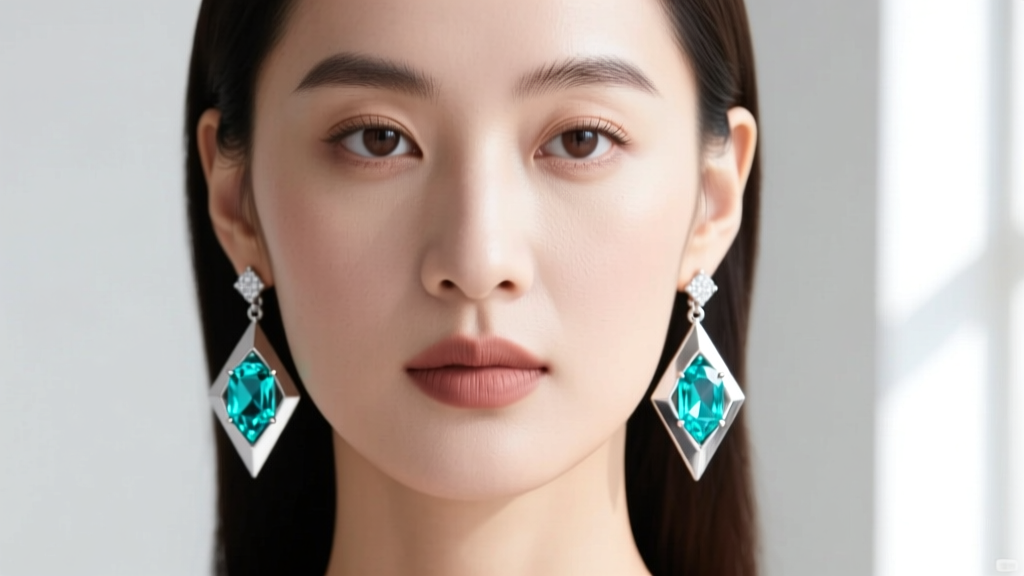
The Timeless Appeal of Turquoise in Modern Jewelry
Turquoise has captivated jewelry lovers for millennia, but as we navigate the style landscape of 2026, the way we wear this ancient stone has evolved. No longer confined to bohemian festivals or heavy Southwestern statement pieces, turquoise color earrings are now a staple in minimalist, avant-garde, and everyday fine jewelry collections. However, styling this striking gemstone requires more than just picking a pair off the rack. The vivid blues and greens of turquoise interact uniquely with different skin undertones, face shapes, and lighting conditions.
This comprehensive, step-by-step guide will teach you exactly how to select, style, and care for turquoise color earrings. We will cover everything from matching the stone's matrix to your complexion, to understanding the critical hardware gauge sizes needed to support heavier drop styles without damaging your earlobes.
Step 1: Determine Your Skin Undertone for the Right Hue
The most common mistake buyers make is selecting a turquoise shade that clashes with their natural skin undertone. Turquoise spans a wide color spectrum, from pale robin's egg blue to deep, matrix-heavy forest green. According to color theory principles utilized by the Gemological Institute of America (GIA), the presence of copper yields blue hues, while iron and zinc push the stone toward green. Matching these chemical variations to your skin is the first step in our styling process.
| Skin Undertone | Vein Color Test | Ideal Turquoise Shade | Best Metal Pairing |
|---|---|---|---|
| Cool | Blue / Purple | Robin's Egg Blue (e.g., Sleeping Beauty mine) | White Gold, Platinum, Silver |
| Warm | Green / Olive | Yellow-Green with heavy matrix (e.g., Kingman mine) | Yellow Gold (14k/18k), Rose Gold |
| Neutral | Blue-Green mix | Mid-tone Teal with moderate webbing | Mixed Metals, Champagne Gold |
How to execute: Look at the veins on the inside of your wrist in natural daylight. If they appear distinctly green, lean toward warmer, greener turquoise color earrings set in yellow gold. If they appear blue, opt for clear, matrix-free blue stones set in white metals to create a crisp, high-contrast look.
Step 2: Match the Earring Silhouette to Your Face Shape
Once you have identified your ideal color palette, the next step is selecting the physical silhouette of the earrings. Turquoise is a bold, opaque stone that naturally draws the eye. Therefore, the geometry of the earring will actively influence the perceived proportions of your face.
Round and Oval Faces
For round faces, the goal is to create the illusion of length and angles. Avoid large, circular turquoise hoops or oversized dome studs, which will only emphasize facial width. Instead, opt for elongated, angular drop earrings featuring rectangular or marquise-cut turquoise cabochons. Oval faces are the most versatile; almost any style works, but geometric Art Deco-inspired studs with crushed turquoise inlay offer a sophisticated, modern edge.
Square and Heart-Shaped Faces
Square faces benefit from softening the strong jawline. Teardrop or oval-shaped turquoise dangles are highly effective here. The curved bottom of the stone mirrors and softens angular features. For heart-shaped faces (wider forehead, narrow chin), you want to add visual weight to the lower half of the face. Chandelier earrings or bottom-heavy turquoise drops that sit just below the jawline will beautifully balance your proportions.
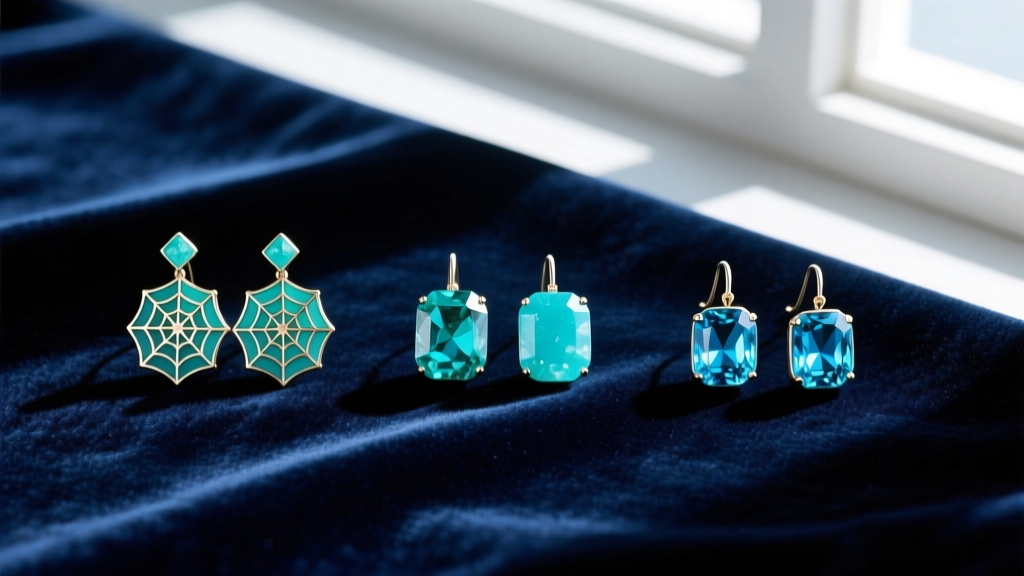
Step 3: Verify Authenticity and Material Grades
The market is currently flooded with synthetic and treated alternatives. When investing in high-end turquoise color earrings, you must know how to identify genuine stones versus dyed imitations. Genuine turquoise is a hydrous phosphate of copper and aluminum, ranking between 5 and 6 on the Mohs hardness scale. This relative softness means it requires specific treatments to survive daily wear in earrings.
Understanding Stabilization vs. Dyeing
- Stabilized Turquoise (Acceptable & Standard): Because natural turquoise is porous, up to 90% of the market is 'stabilized' using a clear epoxy or resin under pressure. This hardens the stone, prevents it from absorbing skin oils (which turns blue stones green over time), and allows for precise cabochon cutting. This is an industry-standard practice, not a deception.
- Reconstituted Turquoise (Low Tier): Chalk turquoise (too soft to cut) is ground into a powder, mixed with resin, and formed into blocks. While technically containing real turquoise, it lacks the structural integrity and value of solid stone.
- Dyed Howlite or Magnesite (Fake): Often sold as 'turquoise color earrings' in fast fashion. Howlite is a white stone with natural gray veining that is dyed blue to mimic turquoise matrix.
Expert Tip: To test for dyed howlite, apply a small drop of acetone (nail polish remover) to a cotton swab and rub an inconspicuous part of the stone. If the swab turns blue, the stone is dyed. Genuine stabilized turquoise will not bleed color.
Step 4: Proper Sizing and Gauge Considerations for Heavy Stones
Turquoise is a relatively dense material. A solid, 15mm turquoise teardrop cabochon set in sterling silver can easily weigh between 6 to 10 grams per earring. Wearing heavy stones on standard, thin wire hooks is a primary cause of earlobe stretching and tearing over time.
The Gauge Rule for Heavy Drops
Standard fashion earrings are typically crafted with 20-gauge (0.81mm) or 18-gauge (1.02mm) wires. While fine for lightweight studs or hollow hoops, these gauges are entirely insufficient for heavy turquoise drops. When shopping for statement turquoise color earrings, inspect the ear wire or post thickness.
- Under 4 grams: 20G or 18G wire is perfectly safe.
- 4 to 8 grams: Require a minimum of 16-gauge (1.29mm) wire to distribute the weight and prevent the 'cheese-cutter' effect on the piercing hole.
- Over 8 grams: Look for 14-gauge (1.6mm) French hooks, or opt for lever-back closures which provide a thicker, more secure base. Always pair heavy 16G or 14G earrings with silicone support discs behind the lobe to distribute the weight evenly across the skin.
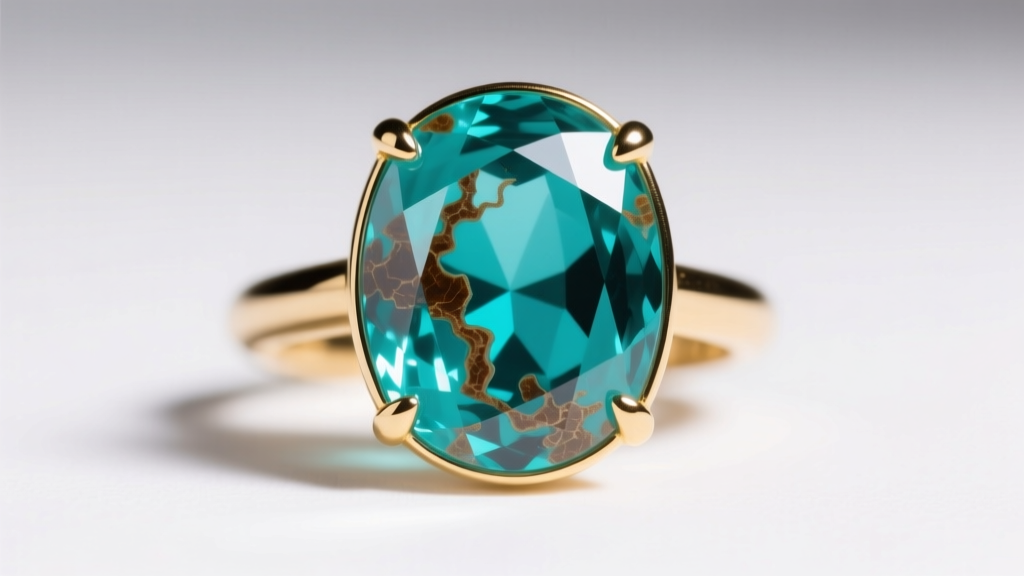
Step 5: Care and Maintenance Routine
Even stabilized turquoise requires careful maintenance to preserve its vibrant color and structural integrity. Because it is sensitive to thermal shock and harsh chemicals, the cleaning methods you use for diamonds or sapphires will destroy your turquoise jewelry.
What to Avoid
Never place turquoise color earrings in an ultrasonic cleaner. The high-frequency vibrations can fracture the stone, especially if it features natural matrix webbing, which acts as a structural fault line. Furthermore, avoid steam cleaners and commercial jewelry dips, as the chemicals can strip the stabilization resin, leaving the stone dull and brittle.
The Safe Cleaning Protocol
- After wearing, gently wipe the stones with a dry, lint-free microfiber cloth to remove skin oils and environmental pollutants.
- For deeper cleaning, use a slightly damp cloth with a drop of mild, phosphate-free dish soap. Wipe the stone gently, avoiding the metal prongs or bezel.
- Immediately dry the piece with a separate soft cloth. Do not let air-dry, as hard water spots can etch into the polish of the cabochon.
- Store your earrings in a soft pouch away from direct sunlight. Prolonged UV exposure can dehydrate the stone and cause the vibrant blues to fade into a chalky pale green.
Final Thoughts on Styling Turquoise
Mastering the art of wearing turquoise color earrings is about balancing the stone's natural, earthy origins with modern styling precision. By respecting your skin's undertones, choosing silhouettes that flatter your facial geometry, and insisting on proper hardware gauges, you can wear these striking pieces comfortably and confidently. Whether you are investing in rare Bisbee mine stones with chocolate brown matrix or sleek, modern Sleeping Beauty studs, the right pair of turquoise earrings will remain a cornerstone of your jewelry wardrobe for decades to come.


