The Ultimate Buying Guide to Double Hoop Gold Earrings
Discover how to choose the perfect double hoop gold earrings. Learn about karat grades, gauge sizes, clasp types, and pricing in our expert buying guide.

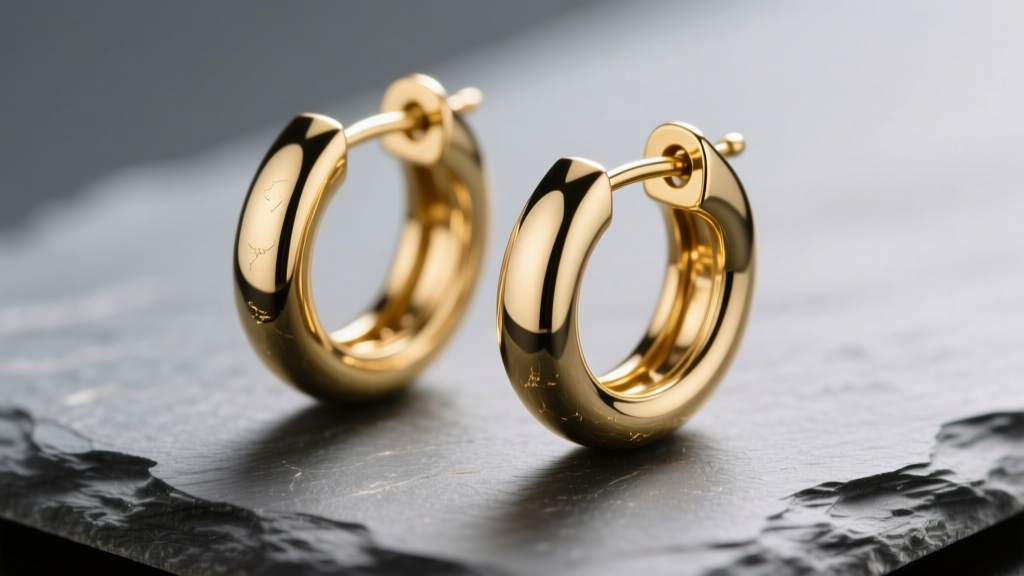
The Anatomy of Double Hoop Gold Earrings
As we navigate the 2026 jewelry market, double hoop gold earrings have solidified their position as a cornerstone of modern ear curation. Unlike standard single hoops, the double hoop design—typically featuring two concentric rings attached to a single post or a seamless clicker—creates an illusion of multiple piercings while requiring only one. This architectural brilliance offers maximum visual impact with minimal anatomical commitment. However, the structural complexity of nesting two hoops introduces unique mechanical stresses that buyers must understand before investing. In this comprehensive buying guide, we break down the metallurgy, gauge mechanics, and clasp engineering required to choose a pair that will last a lifetime.
Decoding Gold Purity: Solid vs. Vermeil vs. Plated
When shopping for double hoop gold earrings, the material grade dictates not only the color and price but also the structural integrity of the piece. The concentric design means the inner hoop bears significant torque, especially during insertion and removal.
The 14K vs. 18K Dilemma for Daily Wear
According to the Gemological Institute of America (GIA), pure 24K gold is too soft for jewelry. Therefore, it is alloyed with metals like copper, zinc, and silver. 18K gold (75% pure gold) offers a rich, buttery yellow hue but is inherently softer. For a double hoop earring, an 18K clicker mechanism is prone to metal fatigue and tension loss over time, leading to a clasp that refuses to stay shut. 14K gold (58.5% pure gold) is the industry standard for structural durability. The higher alloy content provides the necessary tensile strength to maintain the 'snap' of a clicker hinge and resist warping when the nested hoops are subjected to lateral pressure.
Vermeil vs. Standard Gold Plating
If solid gold is outside your budget, you will inevitably encounter gold-plated and vermeil options. It is critical to understand the difference. The Federal Trade Commission (FTC) Jewelry Guides strictly define Gold Vermeil as a base of sterling silver plated with a minimum of 2.5 microns of gold. Standard gold plating, conversely, often uses a brass or copper base with a microscopic flash plating of less than 0.5 microns. For double hoops, the friction point where the post meets the earlobe will quickly wear through standard plating, exposing base metals that can cause contact dermatitis. Always verify the micron thickness and base metal before purchasing vermeil.
Sizing, Gauge, and Proportion Mechanics
The visual weight of double hoop gold earrings is heavily dependent on the relationship between the inner diameter, outer diameter, and the wire gauge. A common failure mode in mass-produced jewelry is using a wire that is too thin to support the outer hoop, resulting in a flimsy, tangled mess.
Expert Rule of Thumb: The outer hoop should never exceed 2.5 times the diameter of the inner hoop. Beyond this ratio, the outer ring becomes highly susceptible to catching on hair and clothing, leading to irreversible bending.
Dimensional Specifications Chart
| Style Category | Inner Diameter | Outer Diameter | Required Gauge (Thickness) | Best Piercing Placement |
|---|---|---|---|---|
| Concentric Huggie | 10mm - 12mm | 15mm - 18mm | 18g (1.02mm) or 16g (1.29mm) | Standard Lobe / Helix |
| Medium Drop | 15mm - 20mm | 25mm - 35mm | 20g (0.81mm) or 18g (1.02mm) | Standard Lobe |
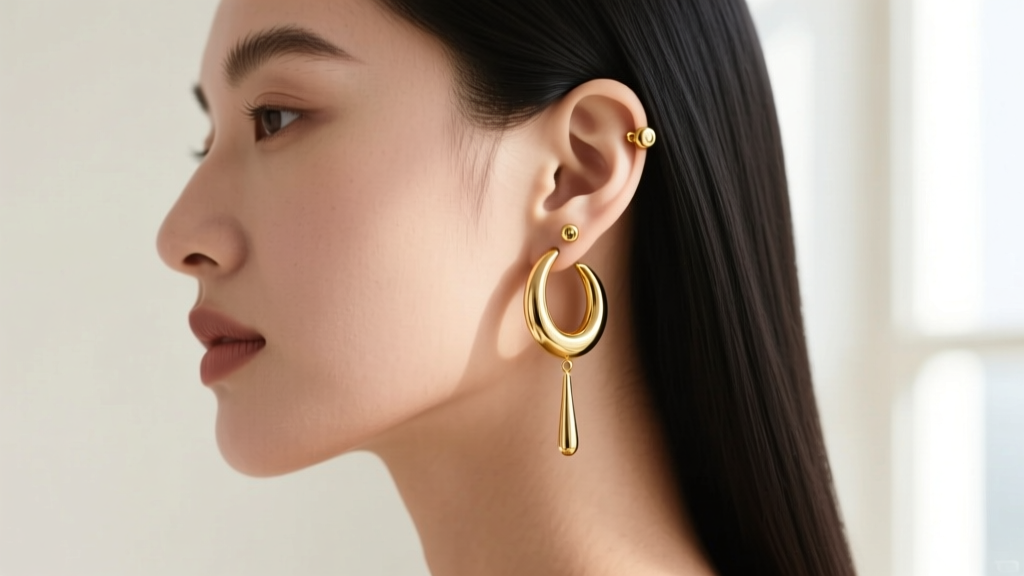
| Statement Elongated | 12mm (Top) | 40mm - 50mm (Bottom) | 18g (1.02mm) Post / 16g Hoops | Stretched Lobe / Lower Lobe |
For standard lobe piercings, a 20-gauge (0.81mm) post is the most comfortable and universally compatible. However, if the double hoop design is a continuous clicker that passes entirely through the ear, an 18-gauge (1.02mm) wire is vastly superior to prevent the earring from slicing through the tissue during accidental snags.
Clasp and Hinge Engineering: Avoiding Failure Modes
The clasp is the single most critical point of failure on any hinged earring. When dealing with the added weight and leverage of a secondary hoop, the clasp engineering must be flawless. Here are the three primary mechanisms you will encounter in 2026:
- Hinged Snap Clasp (Omega Back): The post hinges at the bottom and snaps into a grooved catch at the top. This is the most secure mechanism for heavier double drop earrings. Failure Mode: The catch groove can wear down over years of use, causing the post to pop open when pressed against a pillow.
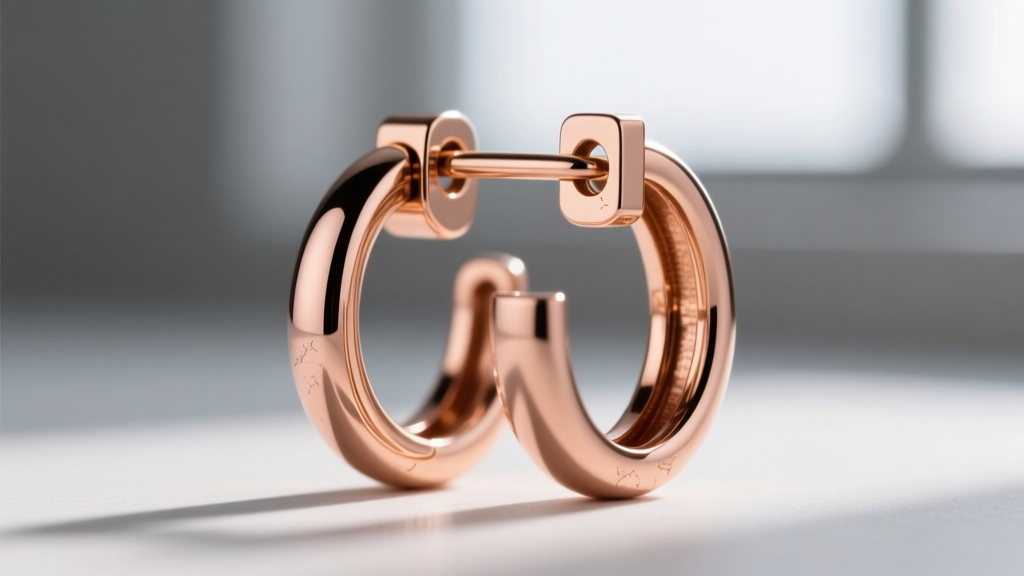
- Seamless Clicker: A continuous wire with a tension-based snap closure. Ideal for concentric huggies. Failure Mode: If manufactured in 18K gold or thin 20g wire, the tension arm will inevitably stretch, leaving a visible gap and risking loss.
- Friction Post and Butterfly Back: The traditional straight post secured by a push-back. Failure Mode: The butterfly back easily loosens due to the pendulum effect of the double hoops swinging, leading to lost earrings. If buying this style, always upgrade to silicone or locking screw-backs.
Pricing Tiers: What You Should Actually Pay
Understanding the fair market value of double hoop gold earrings prevents you from overpaying for plated metals masquerading as solid gold. Based on current precious metal markets and artisan labor costs, here is what you should expect to pay:
- Gold Vermeil (Sterling Silver Base): $45 – $95. Anything priced higher is likely relying on brand markup rather than material value. Anything lower likely uses flash-plating over brass.
- 14K Solid Gold (Mass Market / Cast): $180 – $350. This is the sweet spot for everyday durability and long-term value retention.
- 18K Solid Gold (Artisan / Hand-Forged): $400 – $850+. At this price point, you should expect hand-soldered hinges, diamond-cut facets for light reflection, and precise weight calibration.
Styling for Ear Anatomy and Face Shape
Because double hoop earrings introduce horizontal volume and vertical movement, they interact dynamically with your facial geometry. For individuals with round or soft jawlines, elongated double drop hoops (where the outer hoop is an oval or teardrop) create a lengthening effect that draws the eye downward. Conversely, those with angular or square face shapes should opt for concentric circular huggies; the continuous curves soften sharp features and add a touch of organic fluidity to the profile.
Furthermore, consider your hair texture and styling habits. The nested nature of double hoops creates tiny crevices that easily trap fine hair. If you frequently wear your hair down, opt for a seamless clicker design with no exposed hinge barrels or decorative charms that can act as snags. By prioritizing mechanical integrity, precise gauge sizing, and appropriate metallurgy, your double hoop gold earrings will transition from a fleeting purchase to a permanent fixture in your signature style.


