2026 Trends: Safe Little Girl Hoop Earrings & Styles
Discover 2026 trends for little girl hoop earrings. Learn about safe materials, ASTM titanium, secure clasps, and age-appropriate sizing.


The 2026 Shift: Redefining Children's Ear Jewelry
The landscape of children's jewelry has undergone a massive transformation over the last few years. Gone are the days when parents settled for flimsy, easily bent gold wires or heavy, oversized hoops that posed severe snag hazards on the playground. In 2026, the market for little girl hoop earrings is defined by a rigorous intersection of pediatric safety, advanced metallurgy, and minimalist aesthetics. As a leading authority on jewelry trends and biomechanics, Jewel Style Radar has analyzed the latest shifts in kids' ear styling. Today's parents demand pieces that transition seamlessly from the sandbox to formal events without requiring constant supervision or removal. This comprehensive guide breaks down the exact specifications, material grades, and design innovations that are redefining what it means to accessorize safely and stylishly.
Material Science: Moving Beyond the 'Surgical Steel' Myth
One of the most critical developments in the 2026 children's jewelry market is the widespread rejection of traditional 'surgical steel.' For decades, 316L stainless steel was marketed as a hypoallergenic standard. However, metallurgical analysis reveals that 316L steel contains between 8% and 12% nickel. While the alloying process binds the nickel, microscopic wear and tear from daily friction can expose the skin to nickel ions, triggering allergic contact dermatitis. According to the Mayo Clinic, nickel allergy is one of the most common causes of allergic contact dermatitis, affecting a growing demographic of children due to early exposure.
The New Standard: ASTM F136 Titanium and High-Karat Gold
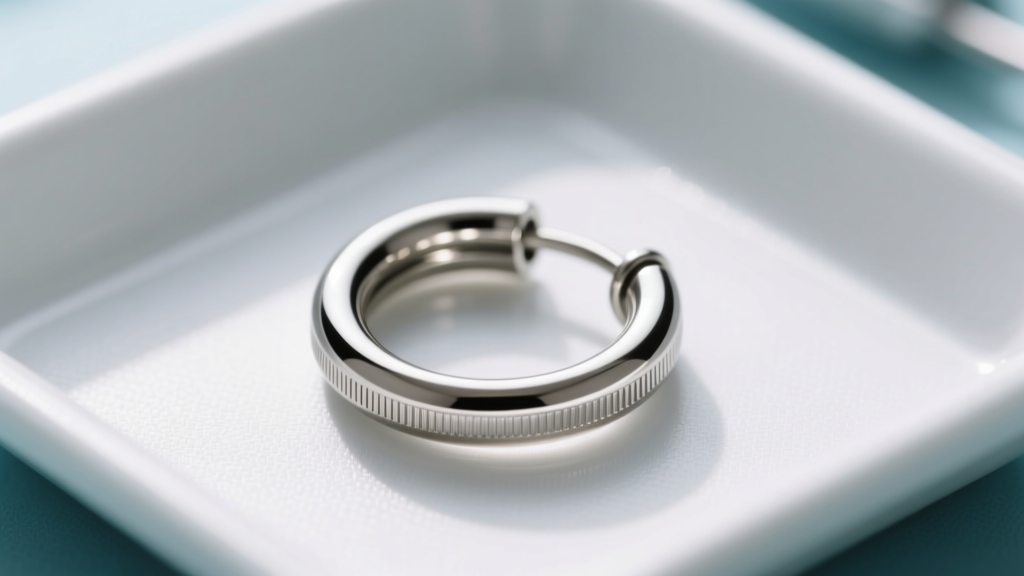
Leading pediatric piercers and high-end jewelers have universally adopted ASTM F136 implant-grade titanium (Ti 6Al-4V ELI) as the baseline for children's jewelry. This specific alloy contains zero nickel and is biocompatible, meaning the body does not recognize it as a foreign invader, drastically reducing the risk of rejection or chronic inflammation. For parents who prefer the warmth of precious metals, 2026 trends heavily favor 14k and 18k solid gold that is explicitly alloyed with palladium or silver rather than nickel or zinc. When shopping for little girl hoop earrings, always look for the 'nickel-free' stamp and request the exact alloy breakdown from the manufacturer. The American Academy of Pediatrics strongly recommends using only hypoallergenic, nickel-free materials like surgical-grade titanium or 14-karat gold for any jewelry that remains in a child's ear long-term.
Biomechanics & Sizing: The Millimeter Framework
Selecting the correct diameter is not just an aesthetic choice; it is a critical safety parameter. A hoop that is too large will catch on winter scarves, hairbrushes, and playground equipment, creating a lever effect that can easily tear a delicate earlobe. Conversely, a hoop that is too tight will restrict blood flow and cause the lobe to swell around the wire, making removal painful and difficult.
| Age Group | Recommended Diameter | Wire Gauge (Thickness) | Best Use Case |
|---|---|---|---|
| Toddlers (1-3 Years) | 8mm - 10mm | 18g (1.0mm) or 16g (1.2mm) | Everyday wear, sleeping (if hinged) |
| Little Girls (4-7 Years) | 10mm - 12mm | 16g (1.2mm) | Active play, school, sports |
| Older Girls (8-12 Years) | 12mm - 15mm | 16g (1.2mm) or 14g (1.4mm) | Fashion styling, modular charms |
Pro-Tip for Measuring: Do not guess the size. Use a digital caliper to measure the distance from the center of the piercing hole to the very edge of the earlobe. Add 2mm to that measurement to find the perfect 'huggie' fit that allows the lobe to move naturally without the metal pressing into the skin.
Closure Engineering: Eliminating the Snag Hazard
The closure mechanism is the single most common point of failure in kids' earrings. In 2026, the industry has largely abandoned the 'continuous hoop' (a single piece of wire that bends to open and close) for children. Continuous hoops lack structural integrity; if a child pulls on the earring, the wire bends, warping the circular shape and creating sharp, jagged edges that can slice the piercing channel.
Hinged Segment Rings vs. Flat-Back Screws
The undisputed champion for active little girls is the hinged segment ring with a locking click-closure. This design features a microscopic hinge on one side and a precision-machined clasp on the other. When closed, it emits an audible 'click' and forms a perfectly flush seam. This flush seam is vital—it prevents the earring from snagging on fine knits and stops soap, shampoo, and dead skin cells from accumulating inside the joint, which is a common cause of localized piercing infections. While flat-back screw-in labrets are incredibly safe for sleeping, they are notoriously difficult for parents to thread onto a wiggly three-year-old's ear, making hinged hoops the superior choice for daily independence and safety.
2026 Aesthetic Forecast: Modularity and Micro-Enamel
From a style perspective, the 'more is more' approach has been replaced by 'micro-luxury.' The biggest trend for little girl hoop earrings this year is modularity. Jewelers are designing 16g titanium base hoops that feature a hidden silicone O-ring stopper, allowing parents and children to slide on interchangeable charms—such as tiny enamel stars, birthstone beads, or miniature animals—without removing the base hoop from the ear. This satisfies a child's desire for novelty and color while maintaining the safety of a permanent, secure base.
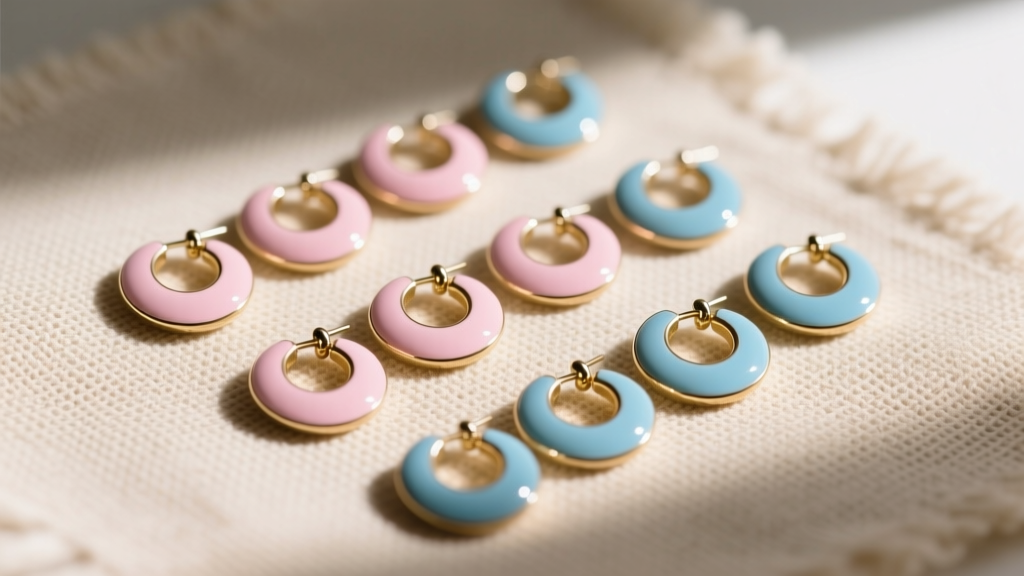
'The integration of kiln-fired enamel directly into the titanium or gold micro-hoops is a game-changer. Unlike cheap epoxy paints that chip and harbor bacteria, vitreous enamel is essentially glass—it is non-porous, hypoallergenic, and completely impervious to the harsh chemicals found in kids' tear-free shampoos and chlorinated pool water.'
— Senior Metallurgist & Jewelry Safety Consultant, Jewel Style Radar
Troubleshooting and Long-Term Lobe Health
Even with the highest quality little girl hoop earrings, minor issues can arise. If a hinged clasp becomes difficult to close, do not force it, as this will misalign the microscopic pin. Instead, soak the earring in a cup of warm distilled water with a drop of mild, fragrance-free castile soap for ten minutes to dissolve any invisible calcium or soap buildup. Use a soft-bristled baby toothbrush to gently clean the seam.
Furthermore, monitor the angle of the piercing channel. If a child consistently sleeps on one side with a rigid hoop, the pressure can cause the piercing channel to migrate or heal at an awkward angle. For heavy sleepers, consider swapping to flexible silicone retainers or flat-back titanium studs at night, reserving the hoops for daytime wear. By prioritizing biomechanical safety, precise millimeter sizing, and verified ASTM F136 materials, you can ensure that your child's jewelry experience is both beautiful and entirely risk-free in 2026 and beyond.


