Tortoise Shell Hoop Earrings: The 2026 Buying Guide
Discover how to buy the best tortoise shell hoop earrings in 2026. Learn about acetate grades, hypoallergenic hardware, weight limits, and care tips.

The Material Reality: Why Real Tortoiseshell is Banned
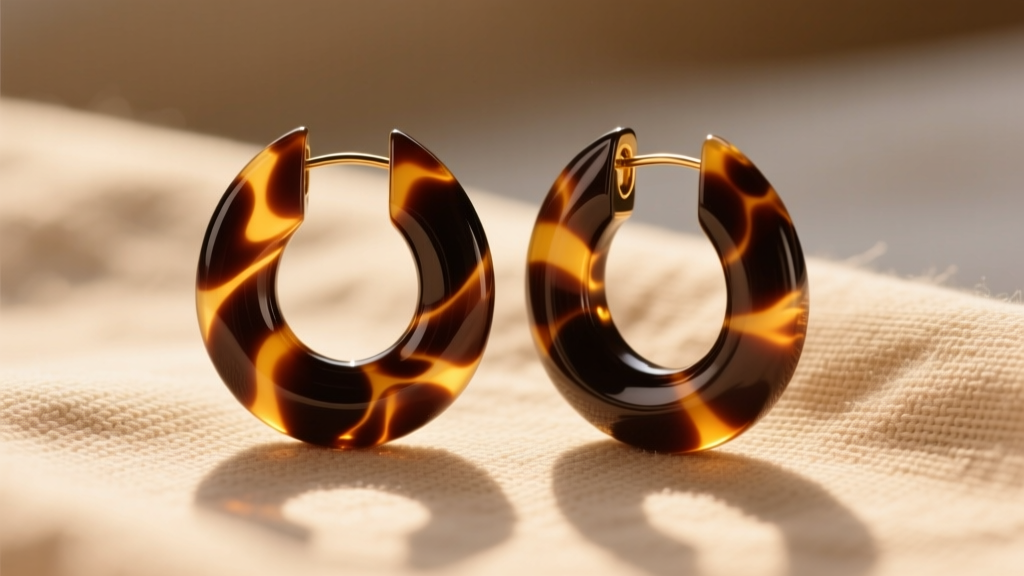
Before diving into sizing and styling, we must address the most critical aspect of buying tortoise shell hoop earrings in 2026: the material itself. Genuine tortoiseshell, harvested from the critically endangered hawksbill turtle (Eretmochelys imbricata), has been strictly banned under international law for decades. According to the CITES Appendix I listings, the trade of authentic turtle shell is illegal globally. Therefore, every pair of tortoiseshell earrings on the legal market today is a faux alternative.
However, not all faux materials are created equal. The market is currently split between two primary materials: premium cellulose acetate and mass-market injection-molded acrylics or resins. Understanding the difference is the first step in making a smart purchase.
Cellulose Acetate vs. Cast Resin
High-end tortoise shell hoop earrings are crafted from cellulose acetate, a plant-based plastic derived from wood pulp and cotton fibers. The gold standard in this industry is Mazzucchelli 1849, an Italian manufacturer renowned for its deep, multi-dimensional marbling. Because acetate sheets are layered, carved, and polished by hand, the tortoiseshell pattern runs completely through the material. If you scratch it, the color remains consistent.
Conversely, cheap alternatives use cast resin or acrylic. These are often injection-molded, meaning the 'tortoiseshell' pattern is merely a painted or foil-stamped surface layer. Over time, resin becomes brittle, the painted pattern chips away to reveal milky white plastic underneath, and the material lacks the warm, translucent glow of genuine acetate. When shopping, always check the product description for 'cellulose acetate' or 'bio-acetate' to ensure longevity.
Hardware & Hinge Mechanics: What Touches Your Skin
While the hoop body is acetate, the post, wire, or hinge that actually pierces your ear must be metal. This is where contact dermatitis and heavy-metal sensitivities come into play. The American Academy of Dermatology notes that nickel allergy is the most common cause of allergic contact dermatitis, frequently triggered by cheap jewelry hardware.
The Gauge and Metal Checklist
- Metal Grade: Insist on 14k or 18k gold-filled, solid gold, or implant-grade titanium (ASTM F-136). Avoid 'gold-plated' brass or surgical steel if you have known sensitivities, as 'surgical steel' is an unregulated marketing term that often contains nickel.
- Wire Gauge: For standard lobe piercings, look for an 18-gauge (1.0mm) or 20-gauge (0.8mm) post. Thicker 16-gauge wires can cause discomfort in older, tighter piercings, while ultra-thin 22-gauge wires can bend and warp under the weight of thick acetate hoops.
- Hinge Type: For medium to large hoops, a clicker hinge with a secure snap closure is vastly superior to a friction post and butterfly back. Clickers distribute the weight of the acetate evenly and prevent the earring from slipping out of the lobe during daily activities.
Proportion & Weight: The Sizing Matrix
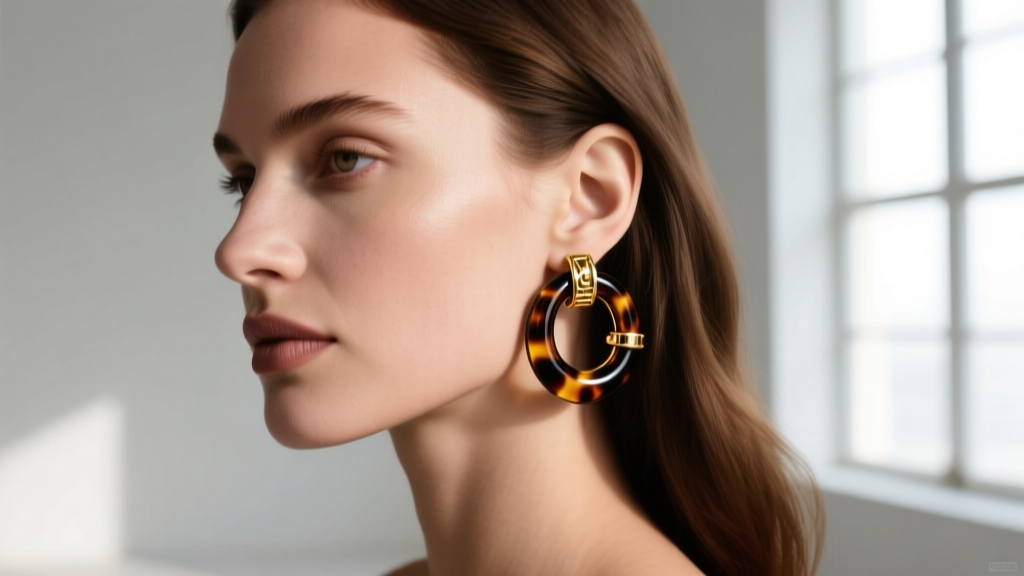
Acetate is remarkably lightweight compared to glass or stone, but it is denser than hollow sheet metal. A thick, chunky acetate hoop can cause lobe fatigue if the diameter and thickness are not balanced. Use the matrix below to find the right proportion for your comfort level.
| Diameter | Thickness | Est. Weight (per earring) | Best Use Case |
|---|---|---|---|
| 15mm - 20mm (Huggie) | 3mm - 5mm | 1.5g - 3g | Everyday wear, cartilage/helix piercings, active lifestyles |
| 30mm - 40mm (Medium) | 4mm - 6mm | 4g - 7g | Office wear, casual outings, standard lobe piercings |
| 50mm - 70mm (Statement) | 6mm - 10mm | 9g - 15g+ | Evening wear, editorial styling, stretched lobes (requires strong clicker hinges) |
Expert Tip: If you are buying statement hoops (50mm+), look for brands that hollow out the inner core of the acetate or use a thinner 3mm profile for the larger diameters. This preserves the bold visual footprint while cutting the physical weight by up to 40%.
Matching Hoop Proportions to Your Face Shape
Tortoiseshell is a visually 'heavy' pattern due to its high contrast between amber, honey, and deep espresso tones. Because of this visual weight, sizing the hoop to your face shape is crucial to avoid overwhelming your features.
Round Faces
Avoid small, perfectly circular huggies, which can emphasize facial roundness. Instead, opt for elongated oval hoops or medium-sized circular hoops (40mm) with a thinner profile. The vertical drop helps create the illusion of length.
Square Faces
Angular jawlines are beautifully softened by medium-to-large circular hoops (45mm - 60mm). The continuous curve of a thick tortoise shell hoop contrasts nicely with sharp bone structure. Avoid geometric or square-shaped tortoiseshell drops.
Oval Faces
You have the most versatility. From chunky 15mm huggies to dramatic 70mm statement hoops, oval face shapes can carry the visual weight of thick, dark tortoiseshell patterns without looking overpowered.
Heart Faces
To balance a narrower chin and wider forehead, choose teardrop-shaped tortoiseshell hoops or bottom-heavy oval hoops. This draws the eye downward and adds visual volume to the lower half of the face.
Care and Maintenance: Preventing the 'White Haze'
The most common complaint with cellulose acetate jewelry is the development of a cloudy, white haze over time. This is not a defect; it is the material drying out and reacting to environmental factors. Acetate is porous and highly sensitive to chemicals.
The Golden Rules of Acetate Care
- Never use acetone, alcohol, or hand sanitizer: These solvents will instantly strip the polish from cellulose acetate, leaving a permanent, cloudy matte finish. Always remove your hoops before applying skincare or sanitizing your hands.
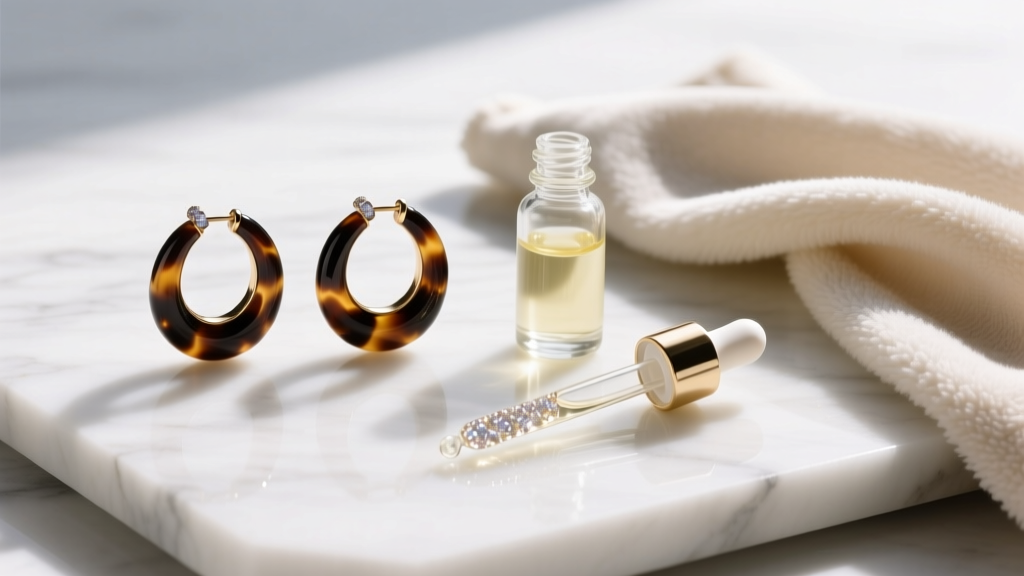
- The Mineral Oil Revival: To restore the deep, glossy marbling of your tortoise shell hoop earrings, apply a single drop of food-grade mineral oil or jojoba oil to a microfiber cloth. Gently buff the acetate in circular motions. This rehydrates the plant-based fibers and restores the optical clarity of the tortoiseshell pattern.
- Storage: Store acetate in a breathable cotton pouch. Sealing it in an airtight plastic bag can trap moisture and cause the metal hinges to tarnish, while leaving it exposed to direct, hot sunlight for prolonged periods can cause the amber tones to fade and the material to warp.
2026 Pricing Tiers: What Should You Pay?
When shopping for tortoise shell hoop earrings, price is a strong indicator of material quality and hardware integrity. Here is what you should expect to pay in the current market:
- Budget ($15 - $35): Typically mass-produced cast resin or acrylic with gold-plated brass wires. The tortoiseshell pattern will look flat or repetitive. Expect the hardware to tarnish within a few months of daily wear.
- Mid-Range ($45 - $95): The sweet spot for quality. You will find hand-polished cellulose acetate (often sourced from reputable Italian manufacturers) paired with 14k gold-filled or sterling silver clicker hinges. These offer excellent durability and rich, multi-dimensional color.
- Luxury / Designer ($120 - $300+): Features premium bio-acetates, solid 14k or 18k gold hardware, and bespoke, hand-carved geometric shapes. Brands in this tier often offer lifetime hardware warranties and bespoke hinge repairs.
Final Verdict: What to Look For Before Checkout
To ensure you are investing in a pair of tortoise shell hoop earrings that will last for years, verify three things before purchasing: confirm the material is cellulose acetate (not painted resin), ensure the post or hinge is nickel-free gold-filled or titanium, and check that the weight-to-diameter ratio suits your specific piercing gauge and lobe strength. By prioritizing material integrity over fast-fashion trends, you secure a timeless, versatile staple that elevates any wardrobe.


