Safety Pin Earrings Meaning: Symbolism & Metal Guide
Discover the safety pin earrings meaning, from punk origins to modern symbolism, plus a metallurgical guide to safe, hypoallergenic materials.

The Cultural Roots: What is the Safety Pin Earrings Meaning?
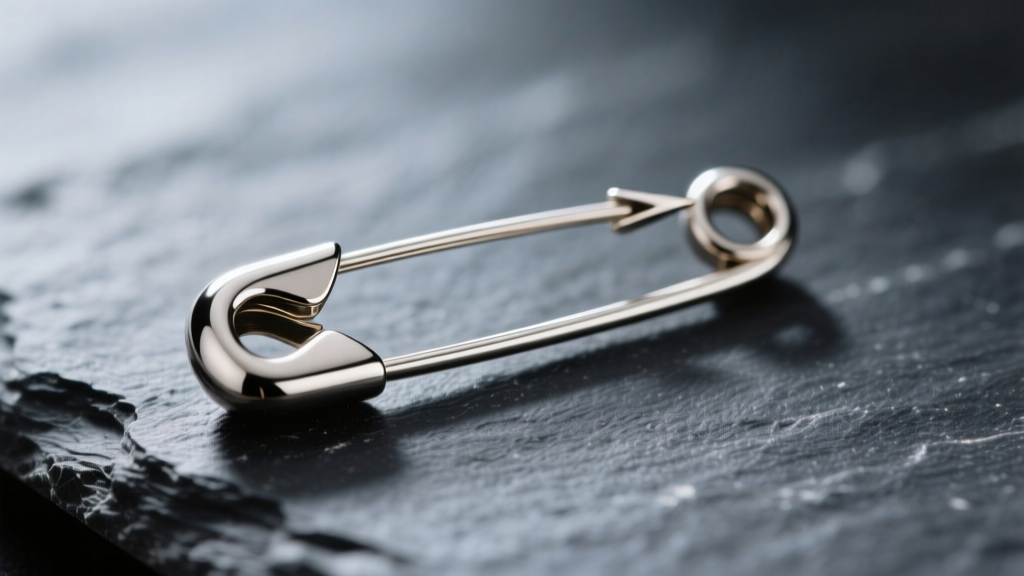
When exploring the safety pin earrings meaning, you are diving into one of the most recognizable symbols of anti-establishment fashion. Originating in the 1970s punk rock movement in London, the safety pin was popularized by icons like the Sex Pistols and designers like Vivienne Westwood and Malcolm McLaren. It was a deliberate rejection of traditional, expensive jewelry—a utilitarian, working-class hardware item repurposed as a shocking facial adornment. According to the Victoria and Albert Museum, this DIY aesthetic was a visual manifesto against the socio-economic norms of the era.
Today, the safety pin earrings meaning has evolved. While it still retains its edgy, punk-rock heritage, it has also been adopted as a symbol of solidarity, resilience, and safe spaces in various modern social movements. In 2026, high-end jewelers and body artists have elevated the safety pin from a piece of hardware to a staple of fine body jewelry, merging rebellion with luxury. However, this transition from hardware store to piercing studio introduces critical material challenges that every wearer must understand.
The Metallurgical Reality: Hardware Store vs. Body Jewelry
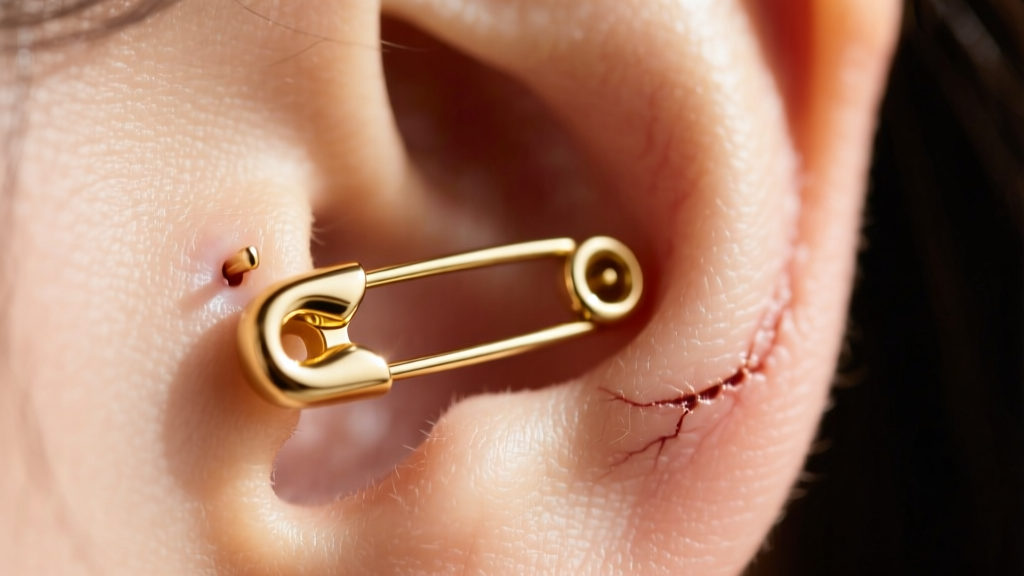
The most dangerous mistake a beginner can make is assuming that a standard sewing or hardware safety pin is safe for a piercing. The human fistula (the healed tunnel of skin in a piercing) is highly sensitive to micro-abrasions and chemical reactions. Standard hardware pins are typically stamped from low-grade steel, brass, or nickel-plated alloys. They feature microscopic burrs along the seam where the metal was bent, and the clasp mechanism relies on simple tension, which can easily snap open inside the ear.
The Hidden Dangers of Industrial Alloys
- Nickel Leaching: Cheap pins often contain high levels of nickel. When exposed to the saline environment of a healing or even healed piercing, they can trigger severe contact dermatitis.
- Micro-Tears: The unpolished seams of a mass-produced pin act like a microscopic saw, tearing the delicate epithelial tissue inside the ear lobe or cartilage.
- Tension Failure: Traditional clasps are designed to hold fabric, not to withstand the rotational friction of an ear. If the pin slips out of the clasp, the sharp point can embed itself in the neck or tear through the lobe.
To safely wear this iconic style, you must invest in jewelry specifically engineered for human anatomy. The Association of Professional Piercers (APP) strictly outlines which metals are biocompatible for long-term wear.
Material Comparison: Choosing the Right Metal for Safety Pin Earrings
If you want the aesthetic of the safety pin without the biological risks, you need to select the correct metal grade. Below is a comprehensive comparison of the materials used in modern, fine-jewelry safety pin earrings.
| Material Grade | Biocompatibility | Durability & Weight | Price Range (2026) | Best Use Case |
|---|---|---|---|---|
| ASTM F136 Implant-Grade Titanium | Excellent (Nickel-Free) | High strength, ultra-lightweight | $45 - $120 | Fresh piercings, highly sensitive ears, cartilage |
| 316LVM Surgical Steel | Good (Contains trace nickel) | Heavy, highly scratch-resistant | $25 - $60 | Healed lobes, wearers without nickel allergies |
| 14k / 18k Solid Gold | Excellent (If nickel-free alloy) | Heavy, prone to scratching if high karat | $150 - $450+ | Luxury statements, fully healed lobes |
| Sterling Silver (925) | Poor (Tarnishes, contains copper) | Soft, bends easily under pressure | $30 - $80 | Occasional wear in fully healed lobes only |
For the ultimate combination of safety and longevity, ASTM F136 Titanium is the undisputed champion. It is the exact same metal used in surgical bone screws and pacemakers. It will not oxidize, rust, or react with your body's chemistry, making it the perfect metal for a piece of jewelry that mimics a sharp, industrial tool.
Gauge Sizes, Anatomy, and the Clasp Mechanism
Beyond the metal alloy, the physical dimensions of the earring dictate its comfort and safety. A standard hardware safety pin varies wildly in thickness, usually hovering around 0.9mm to 1.2mm. In body jewelry terms, this translates to roughly 18-gauge or 16-gauge. However, body jewelry requires precise, standardized sizing to prevent the 'cheese-cutter effect,' where a wire that is too thin slowly migrates and slices through the earlobe.
Standardizing the Gauge
High-quality safety pin earrings are typically manufactured in 16-gauge (1.2mm) or 14-gauge (1.6mm). This thickness provides the structural rigidity needed to support the weight of the pin's loop without bending, while also providing enough surface area to rest comfortably in a standard lobe piercing without causing migration. If you are wearing a safety pin style in a cartilage piercing (like a helix or flat), a 16-gauge titanium piece is mandatory to accommodate cartilage swelling and prevent rejection.
The Engineering of the Modern Clasp
The most significant innovation in the safety pin earrings meaning and design is the complete re-engineering of the clasp. Fine jewelry brands like Maria Tash and BVLA have abandoned the traditional tension-hook clasp. Instead, modern safety pin earrings utilize one of two secure mechanisms:
- Threaded Caps: The sharp point of the pin is actually a blunt post that screws into a threaded, decorative cap that mimics the look of a safety pin clasp.
- Click-Lock Hinges: The pin features a specialized hinge with a micro-locking pin that snaps securely into a recessed groove, requiring a specific tool or firm pressure to release.
'The traditional safety pin clasp is a liability in body jewelry. Transitioning to threaded or click-lock mechanisms preserves the iconic silhouette while eliminating the risk of the jewelry unlatching during sleep or physical activity.' — Advanced Body Jewelry Design Standards, 2025
Maintenance and Care for Safety Pin Styles
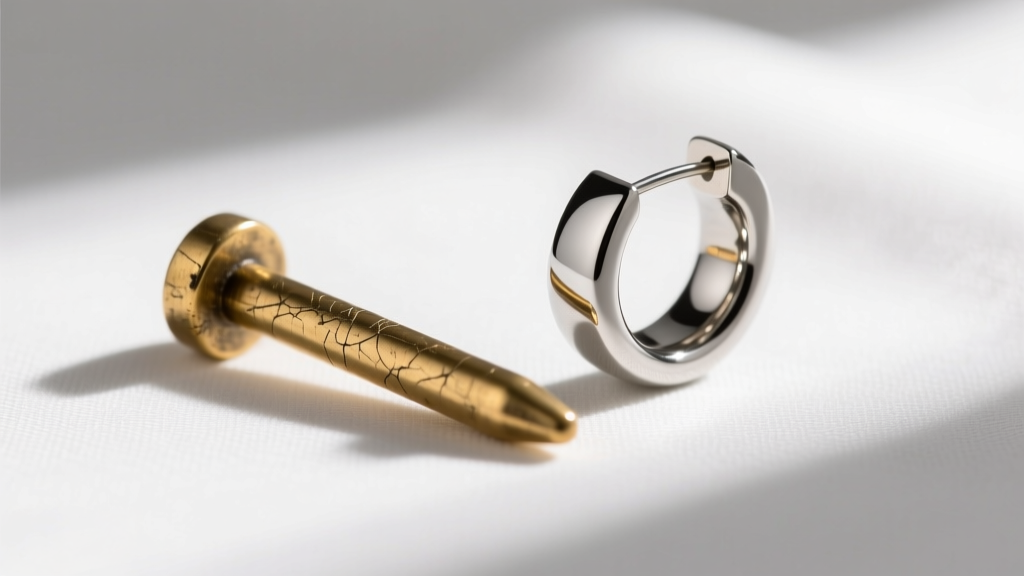
Because of the elongated, asymmetrical shape of safety pin earrings, they are uniquely prone to snagging on hair, sweaters, and towels. Snagging doesn't just hurt; it can introduce bacteria into the fistula or cause the metal to bend, compromising the structural integrity of the locking mechanism.
Daily Care Protocol
- Cleaning the Crevice: The area where the pin meets the 'clasp' cap can trap sebum, dead skin cells, and hair products. Use a soft-bristled interdental brush and a sterile saline wound wash to gently clean this junction twice a week.
- Polishing Gold and Steel: If you opt for 14k gold or 316LVM steel, micro-scratches are inevitable. Use a specialized, non-abrasive jewelry polishing cloth to restore the mirror finish. Never use chemical dips, as they can degrade the threading on the clasp.
- Sleeping Precautions: Due to the protruding nature of the pin loop, sleeping on your side can drive the metal into your neck or pillow. For side sleepers, a silk-lined piercing pillow with a central cutout is highly recommended to protect both the ear and the jewelry.
Conclusion: Honoring the Meaning with Safe Materials
Understanding the safety pin earrings meaning is about more than just appreciating its punk-rock history or its modern symbolic weight; it is about respecting the intersection of fashion and human anatomy. By upgrading from dangerous, nickel-laden hardware to precision-machined, implant-grade titanium or solid gold, you honor the rebellious spirit of the design without compromising your bodily health. Whether you are making a statement of solidarity or simply embracing the edgy, industrial-chic aesthetic of 2026, always let material science guide your jewelry choices.


