What Does the Bible Say About Earrings? A Faith-Based Buying Guide
Discover what the Bible says about earrings and explore our faith-based buying guide for modest, ethical, and historically inspired jewelry.

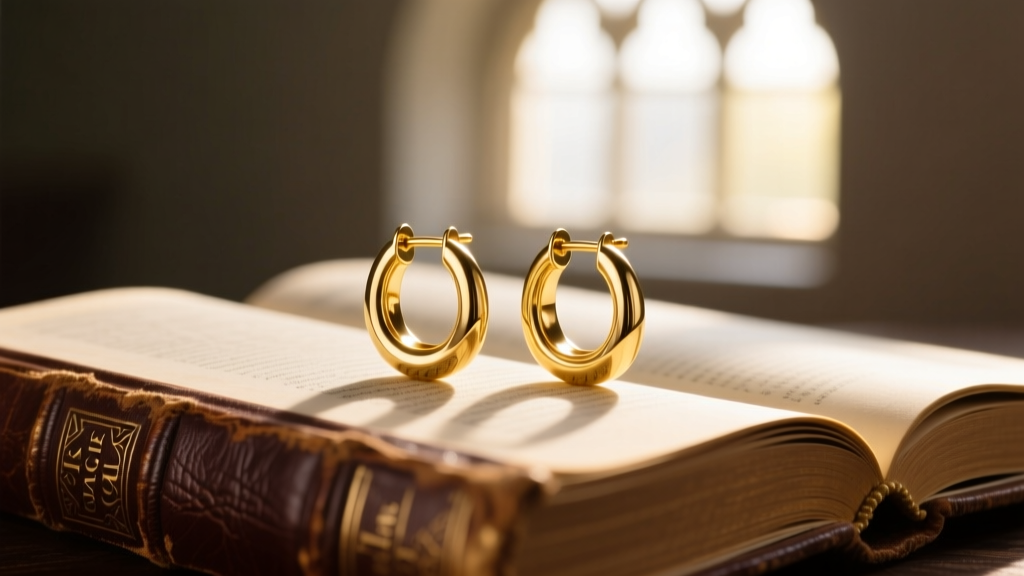
For many Christian shoppers and jewelry enthusiasts, faith and personal style intersect in deeply meaningful ways. When searching for adornments that align with spiritual values, a common and profound question arises: what does the Bible say about earrings? The answer is not a simple 'yes' or 'no.' Instead, scripture offers a rich tapestry of historical context, metaphors for divine love, and guiding principles on modesty and the condition of the heart. Whether you are seeking historically accurate biblical replicas, modest everyday studs, or ethically sourced heirloom pieces, understanding the theological and archaeological backdrop of jewelry in scripture is essential.
In this comprehensive buying guide, we will explore the biblical context of ear adornment, decode the historical realities of ancient Near Eastern jewelry, and provide actionable, expert advice on selecting earrings that reflect both elegance and faithful stewardship in 2026.
The Theological Context: Adornment, Modesty, and the Heart
To understand the biblical perspective on earrings, we must examine the specific passages often cited regarding jewelry. The most frequently referenced verses are found in the New Testament epistles, which address the posture of the heart rather than issuing a blanket ban on precious metals.
In 1 Peter 3:3-4, the Apostle Peter writes: 'Your beauty should not come from outward adornment, such as elaborate hairstyles and the wearing of gold jewelry or fine clothes. Rather, it should be that of your inner self, the unfading beauty of a gentle and quiet spirit, which is of great worth in God’s sight.' Similarly, 1 Timothy 2:9 encourages women to adorn themselves in 'modest apparel, with propriety and moderation, not with braided hair or gold or pearls or very costly clothing.'
Theological scholars and Christian apologists, such as those at GotQuestions Ministries, emphasize that these passages are addressing ostentation and the misplaced prioritization of outward wealth over inner spiritual character. The early church was navigating a Greco-Roman culture where extravagant, overly complex hairstyles and heavy gold displays were used to flaunt extreme wealth and social dominance. The biblical mandate is one of modesty, humility, and priority—not a prohibition of jewelry itself.
In fact, the Bible frequently uses jewelry as a positive metaphor for God's grace. In Ezekiel 16:12, God describes His lavish love for Jerusalem, saying, 'And I put a ring on your nose and earrings in your ears and a beautiful crown on your head.' Furthermore, in the book of Exodus (21:6), the piercing of an ear with an awl against a doorpost was a profound, voluntary symbol of a bondservant's lifelong devotion and love for their master. Here, the pierced ear is a testament to covenant loyalty.
Historical Accuracy: What Did Biblical Earrings Actually Look Like?
If you are drawn to historically inspired or biblical reproduction jewelry, it is vital to look past modern interpretations and examine archaeological findings from the Levant and ancient Near East.
Materials and Motifs of the Ancient Near East
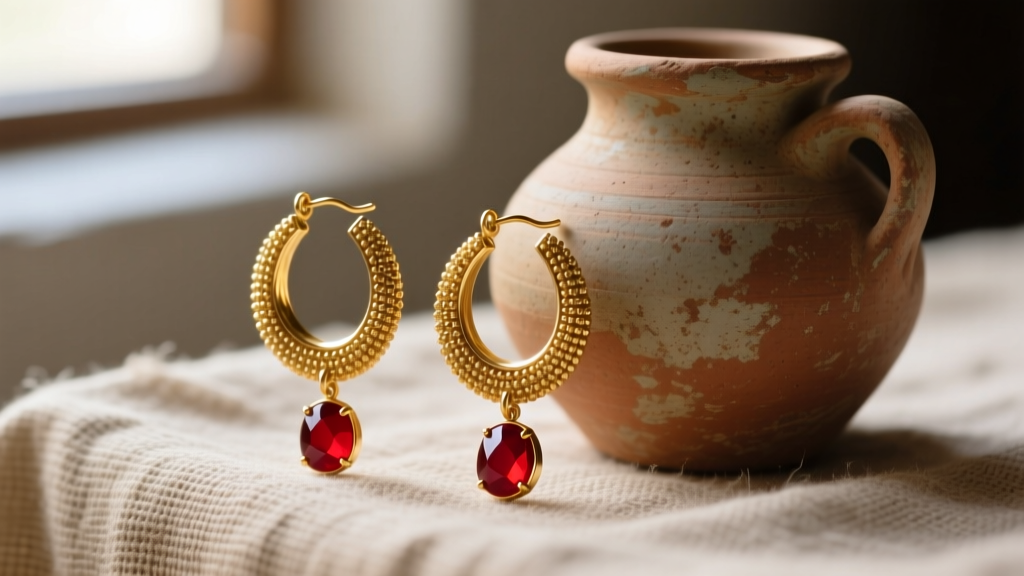
During the patriarchal and monarchic periods of ancient Israel, jewelry was crafted primarily from high-karat gold (often 22k or 24k), electrum, and silver. Gemstones were not faceted as they are today; instead, they were polished into cabochons or carved into beads. Carnelian, lapis lazuli, turquoise, and beryl were highly prized. The Hebrew word often translated as 'earring' or 'nose ring' is nezem, which appears in Genesis 24:47 when Abraham’s servant gifts Rebekah a gold nezem.
Archaeological excavations at sites like Tel Dan and Megiddo have unearthed gold earrings featuring intricate filigree and granulation techniques. However, believers should be mindful of specific motifs. In Judges 8:26, Gideon collects 'gold crescent earrings' from the defeated Midianites. These crescent moon shapes were heavily associated with pagan lunar deities (such as Sin or Isis). Consequently, many modern faith-based shoppers intentionally avoid crescent moon or evil eye motifs, opting instead for geometric shapes, pomegranate clusters (symbolizing fruitfulness and the high priest's garments), or olive branch designs.
The Faith-Based Earring Buying Guide: What to Look For
Translating biblical principles of modesty, ethical stewardship, and historical appreciation into a modern jewelry purchase requires a discerning eye. Here is what to look for when buying earrings that align with your faith.
1. Material Purity and Ethical Sourcing
Proverbs 11:1 reminds us that 'The LORD detests dishonest scales, but accurate weights find favor with him.' This principle of honesty and purity extends to how we source our precious metals and stones. When buying gold earrings, look for solid 14k or 18k gold rather than gold-plated or gold-filled alternatives, which eventually wear away and expose base metals like nickel (a common allergen). Solid gold represents permanence and purity.
Furthermore, ethical sourcing is a modern expression of biblical stewardship. Ensure that any diamonds or gemstones are certified conflict-free. For gold, seek out jewelers who utilize Fairmined or Fairtrade certified gold, ensuring that miners are paid just wages and work in safe conditions. You can verify ethical standards through organizations like the Fairmined Assurance system.
2. Modesty in Scale and Design
Modesty in jewelry is about proportion, context, and avoiding the 'loud' display of wealth that the New Testament epistles warned against. For everyday wear, consider the following sizing guidelines:
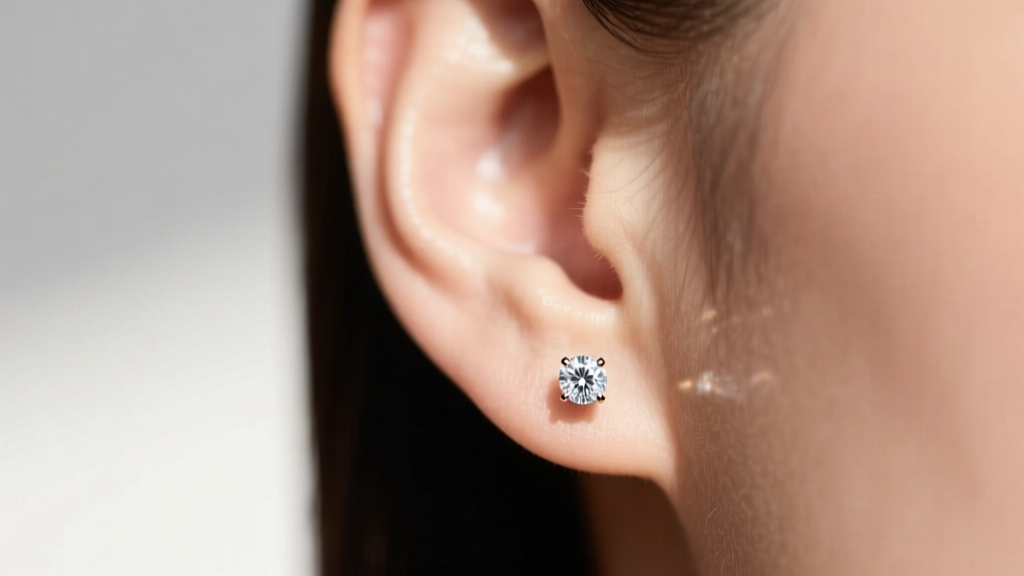
- Studs: Opt for 4mm to 6mm round or bezel-set stones. A 5mm diamond or sapphire stud catches the light beautifully without dominating the face.
- Huggies and Small Hoops: Choose huggies with an outer diameter of 10mm to 14mm. These hug the earlobe closely, providing a polished, elegant look that is appropriate for both church services and professional environments.
- Drop Earrings: If you prefer dangles for evening wear, keep the drop length under 1.5 inches and avoid overly heavy, chandelier-style designs that draw excessive attention.
3. Symbolism to Embrace
Many Christian jewelers craft pieces with subtle, meaningful engravings or shapes. Look for earrings featuring the olive leaf (peace), the wheat stalk (harvest and provision), or subtle cross motifs integrated into the metalwork rather than overt, novelty shapes. For men, simple, unadorned metal bands or small, dark onyx studs in a 16-gauge or 14-gauge thickness offer a masculine, understated aesthetic.
Material & Style Comparison Chart for the Modest Shopper
Use this quick-reference matrix to select the right earring style based on your lifestyle, budget, and modesty preferences.
| Style | Ideal Dimensions | Recommended Material | Best For | Price Range (2026) |
|---|---|---|---|---|
| Bezel-Set Studs | 4mm - 6mm | 14k Solid Gold, Lab-Grown Diamond | Daily wear, church, professional | $150 - $450 |
| Plain Huggies | 10mm - 12mm diameter | 18k Yellow or Rose Gold | Active lifestyles, minimalists | $120 - $300 |
| Pomegranate Drops | 15mm - 20mm drop | Sterling Silver with Garnet | Special occasions, historical themes | $80 - $200 |
| Threader Earrings | 1.5 inch chain drop | 14k Gold, Ethical Pearl | Elegant dinners, modest evening wear | $100 - $250 |
Caring for Your Heirloom and Faith-Based Pieces
Jewelry purchased with intentionality should be treated as an heirloom. Proper care ensures your pieces last for generations, reflecting the biblical value of stewardship.
- Cleaning: Avoid harsh chemical dips. Instead, use a soft-bristled baby toothbrush with warm water and a drop of mild, phosphate-free dish soap. Gently brush the back of the settings where oils accumulate.
- Storage: Store solid gold and gemstone earrings in individual anti-tarnish cloth pouches or a lined wooden box to prevent scratching. Keep them away from direct sunlight and humidity.
- Maintenance: Have a professional jeweler inspect the prongs of your stud earrings once a year to ensure the stones are secure, especially if you wear them daily.
Conclusion
Ultimately, the Bible does not condemn the wearing of earrings; rather, it elevates the condition of the heart above outward adornment. By focusing on modesty, ethical sourcing, and historical mindfulness, you can curate a jewelry collection that is both beautiful and deeply aligned with your faith. Whether you choose a simple pair of 5mm ethically sourced diamond studs or historically inspired gold granulated hoops, let your jewelry be a quiet reflection of inner grace and thoughtful stewardship.


