Expert Care and Cleaning Tips for Lapis Dangle Earrings
Learn how to safely clean, store, and maintain lapis dangle earrings. Protect the porous stone and delicate dangle hardware with our expert guide.

The Unique Vulnerabilities of Lapis Lazuli and Dangle Hardware
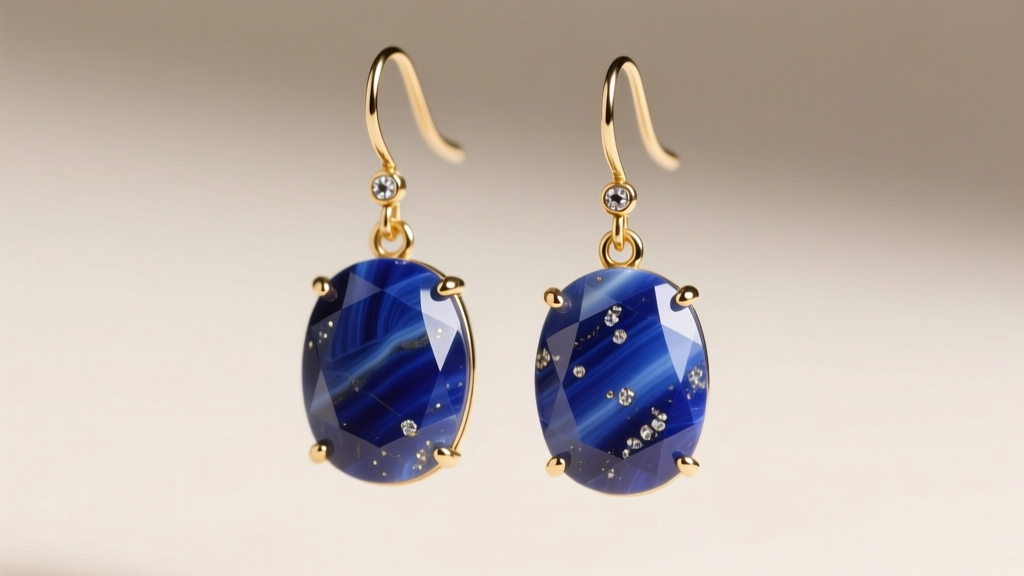
Lapis dangle earrings are a striking addition to any jewelry collection, offering a rich, celestial blue that catches the eye with every movement. However, combining a highly sensitive gemstone with the mechanical complexities of a dangle setting creates a unique maintenance challenge. To properly care for these pieces, you must understand the mineralogy of lapis lazuli and the physical stress placed on dangle hardware.
Unlike single-crystal gemstones like diamonds or sapphires, lapis lazuli is a composite rock. It is primarily made of lazurite (which provides the blue color), calcite (white streaks), and pyrite (gold flecks). According to the Gemological Institute of America (GIA), lapis registers between 5 and 6 on the Mohs hardness scale, making it highly susceptible to scratching. More importantly, the calcite inclusions are sensitive to acids, and the pyrite inclusions are iron sulfide. When exposed to prolonged moisture, pyrite can oxidize, leading to microscopic rust that stains the stone from the inside out.
Furthermore, dangle earrings are subject to the 'pendulum effect.' Every step you take creates kinetic energy that swings the stone, placing repetitive micro-tension on the jump rings, ear wires, and the stone's bezel or glue setting. This combination of material fragility and mechanical stress requires a highly specific, disciplined approach to cleaning and maintenance.
Step-by-Step Cleaning Protocol for Lapis Stones
Never soak lapis lazuli in water, and never use commercial jewelry dips. Many lapis stones on the market are treated with colorless wax or resin to improve their polish and seal the porous surface. Harsh chemicals or prolonged water exposure will strip this treatment, leaving the stone dull and vulnerable to staining. Follow this strict, low-moisture cleaning protocol.
Tools You Will Need
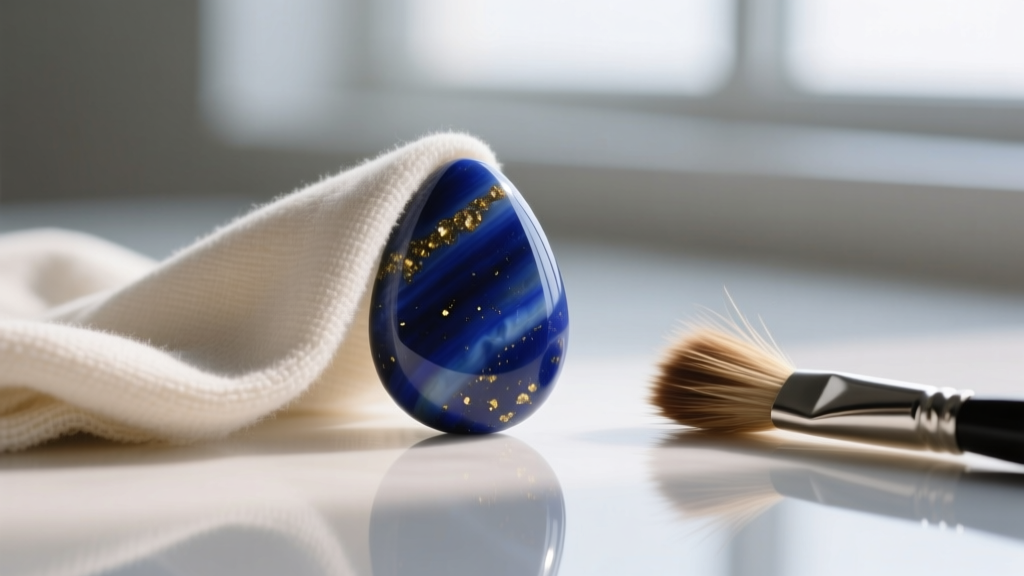
- Soft horsehair detailing brush (or a clean, ultra-soft makeup brush)
- Lint-free microfiber polishing cloth
- Distilled water (only for spot cleaning)
- Mild, phosphate-free liquid soap
- Cotton swabs
Phase 1: The Dry-Brush Method
Before introducing any moisture, remove surface dust and skin oils. Hold the earring by the ear wire or the metal cap—never squeeze the lapis stone itself, as body heat and pressure can transfer oils into the porous surface. Gently sweep the horsehair brush across the stone in one direction to dislodge debris trapped in the bezel setting or any natural crevices of the stone.
Phase 2: The Damp-Wipe Method (For Stubborn Grime)
If dry brushing is insufficient, use a barely damp cloth. Mix a single drop of phosphate-free soap into a bowl of distilled water. Dip a corner of your microfiber cloth into the solution and wring it out until it is almost completely dry. Gently wipe the surface of the lapis stone. Do not rub in circles, as trapped dust particles can act like sandpaper and create micro-scratches on the 5.5 Mohs surface. Wipe in straight, linear strokes. Immediately follow up with a dry section of the microfiber cloth to buff away any residual moisture.
Maintaining the Dangle Hardware and Ear Wires
The hardware on dangle earrings requires just as much attention as the gemstone. The connection points are the most common failure areas for lost stones.
Checking Jump Rings and Connectors
Dangle earrings typically connect the ear wire to the stone via a small metal loop or jump ring (usually 3mm or 4mm in diameter). The swinging motion of the earring can slowly twist an open jump ring apart over time. Inspect these connection points monthly under a magnifying loupe. If you see a gap, use two pairs of flat-nose jewelry pliers to twist the ring closed. Never pull the ends apart laterally; always twist them in opposing directions to maintain the structural integrity of the metal.
Ear Wire Tension and Hygiene
Most lapis dangles utilize 20-gauge or 22-gauge French hooks or leverback closures. These thin wires are prone to bending and work-hardening. If a French hook loses its curve, gently reshape it using nylon-jaw pliers to avoid marring the metal. To clean the ear wires without risking chemical transfer to the lapis stone, dip a cotton swab in isopropyl alcohol and carefully swab only the metal wire. This removes sebum and bacteria, preventing ear lobe irritation, without risking the porous stone.
Chemicals and Environments to Strictly Avoid
Because of its composite nature and common wax treatments, lapis lazuli is highly reactive. The Jewelers of America advises against using any mechanical or chemical cleaning systems on porous gemstones. Refer to the table below to understand exactly what to keep away from your earrings.
| Substance / Method | Effect on Lapis Lazuli | Effect on Dangle Hardware |
|---|---|---|
| Ultrasonic Cleaners | Catastrophic. Vibrations can shatter the stone or shake it loose from its bezel. Heat melts wax treatments. | Can loosen glued settings and weaken soldered joints. |
| Steam Cleaners | Forces moisture into microscopic pores, causing pyrite inclusions to rust and calcite to degrade. | Safe for most metals, but will ruin the gemstone. |
| Hairspray & Perfume | Alcohol and aerosols strip the protective wax coating, leaving a dull, cloudy film that is hard to remove. | Accelerates tarnishing on sterling silver components. |
| Ammonia & Chlorine | Chemically reacts with calcite, causing permanent etching and white spotting on the surface. | Chlorine causes structural embrittlement in gold alloys. |
Proper Storage to Prevent Scratches and Tangles
Storing lapis dangle earrings requires mitigating both physical abrasion and chemical tarnishing. Because lapis is relatively soft, storing it in a communal jewelry box where it can rub against diamonds, sapphires, or even metal chains will result in severe surface scratching.
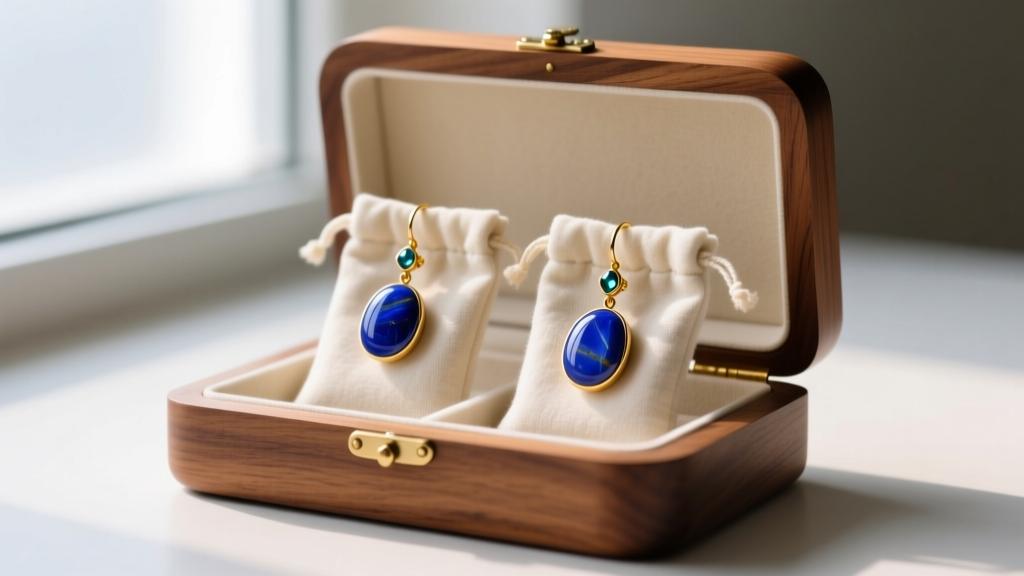
- Individual Pouches: Store each pair in its own anti-tarnish flannel pouch or a soft cotton bag. This prevents the metal ear wires from tangling with the dangle chains and protects the stone from dust.
- Anti-Tarnish Strips: If your dangle hardware is sterling silver, place a 3M anti-tarnish strip inside the storage pouch to absorb airborne sulfur compounds that cause silver to blacken.
- Hanging vs. Laying Flat: If you use a jewelry tree, ensure the earrings hang freely without touching other pieces. If laying them flat in a drawer, ensure the ear wires are tucked neatly so the weight of the stone does not bend the wire over time.
When to Seek Professional Jeweler Intervention
While routine cleaning and hardware checks can be done at home, certain maintenance tasks require a professional bench jeweler. If your lapis stone begins to look chalky, dull, or lighter in color, the factory wax or oil treatment has likely degraded. A jeweler can safely clean the stone and apply a professional-grade microcrystalline wax to restore its luster and seal the pores.
Expert Tip: Never attempt to re-glue a loose lapis stone yourself using cyanoacrylate (Super Glue). The glue can seep into the porous stone, creating a permanent, cloudy white stain that even a professional cannot remove. If the stone wobbles in its bezel, stop wearing the earring immediately and take it to a jeweler for a mechanical bezel push.
By respecting the mineralogical limits of lapis lazuli and staying vigilant about the mechanical wear on dangle hardware, you can ensure your earrings remain vibrant, secure, and stunning for decades.


