How to Fix & Clean Effy Emerald Earrings: A Troubleshooting Guide
Troubleshoot common issues with Effy emerald earrings. Learn expert cleaning methods, prong repair tips, and how to prevent chipping or losing your gems.

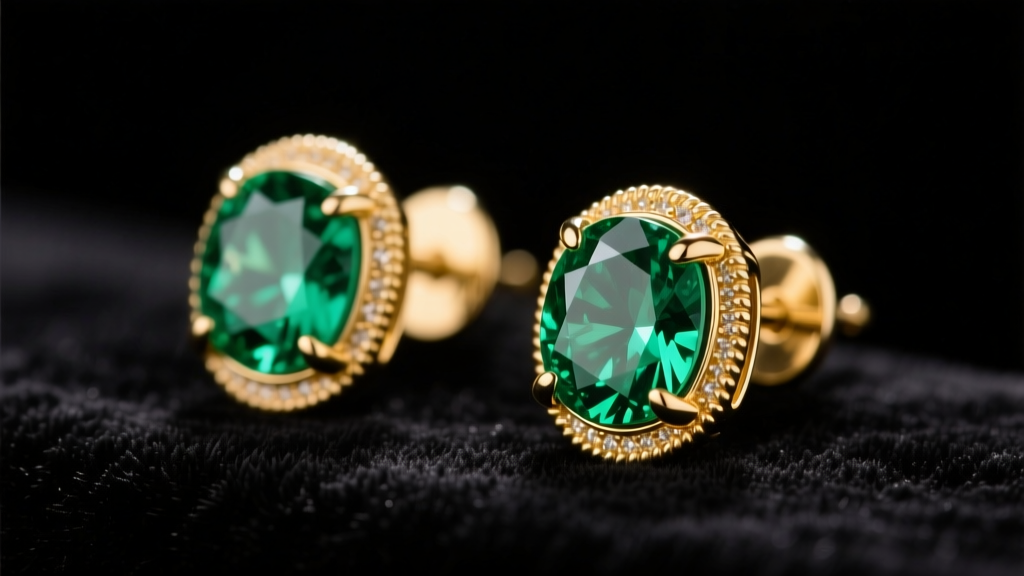
The Unique Vulnerabilities of Effy Emerald Earrings
Effy Jewelry has built a formidable reputation for vibrant, accessible gemstone jewelry, with their emerald collections being a standout for those seeking rich, verdant hues. However, owning natural emeralds comes with a distinct set of gemological challenges. Unlike diamonds or sapphires, emeralds possess a Mohs hardness of 7.5 to 8 but suffer from poor toughness due to their natural internal inclusions, known in the trade as jardin. When you combine this inherent brittleness with the mechanical stresses of daily earring wear, troubleshooting becomes an essential skill for the owner.
As of 2026, the majority of commercial emeralds, including those set in Effy earrings, undergo clarity enhancement. This typically involves fracture-filling with cedar oil or synthetic resins (like Opticon) to mask internal fissures and improve color saturation. While this makes the stones beautiful, it fundamentally alters how you must clean, store, and repair them. This guide provides a masterclass in troubleshooting the most common issues associated with Effy emerald earrings, from sudden cloudiness to prong failure.
Troubleshooting Cloudiness: Safe Cleaning Protocols
The most frequent complaint from emerald earring owners is a sudden loss of brilliance, where the stone appears cloudy, milky, or heavily fractured. This is almost always the result of improper cleaning methods that have stripped the stone of its clarity-enhancing oils.
The "No-Ultrasound" Rule
Never place your Effy emerald earrings in an ultrasonic cleaner. The high-frequency vibrations, combined with the heat generated by the cavitation process, will boil the cedar oil or resin out of the emerald's micro-fissures. Once the filler is expelled, the stone will instantly look opaque and heavily included. Similarly, steam cleaners will cause thermal shock, potentially shattering the stone along its natural cleavage planes.
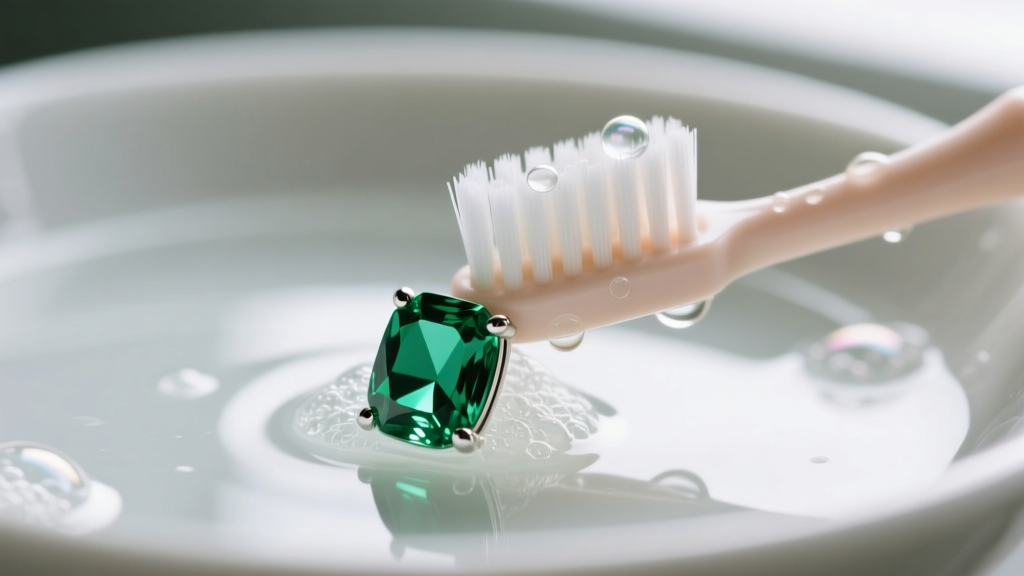
The Expert Cleaning Recipe
To safely remove skin oils, lotion buildup, and environmental dust from your earrings without damaging the gold settings or the emerald filler, follow this protocol recommended by the Gemological Institute of America (GIA):
- Step 1: Mix one cup of distilled water (tap water contains chlorine and hard minerals that can dull 14k gold) with two drops of pH-neutral dish soap.
- Step 2: Submerge the earrings for exactly 3 to 5 minutes. Do not soak overnight.
- Step 3: Using an extra-soft infant toothbrush, gently sweep the bristles across the back of the setting (the pavilion) where grease accumulates. Avoid aggressive scrubbing on the emerald's table (top facet).
- Step 4: Rinse briefly under a gentle stream of lukewarm distilled water.
- Step 5: Pat dry with a lint-free microfiber cloth. Allow them to air dry completely before storing to prevent moisture from tarnishing the alloy metals in the gold.
Prong Wear and Snagging: Securing the Settings
Effy typically utilizes 14k gold for their earring settings. 14k gold (58.5% pure gold alloyed with copper, zinc, or silver) offers excellent durability, but the tiny prongs holding the emerald are still subject to mechanical wear. If your earring frequently snags on silk blouses, sweaters, or your hair, a prong has lifted.
| Prong Issue | Visual Symptom | Troubleshooting Step |
|---|---|---|
| Lifted Prong | Snags on fabric; visible gap between metal and gemstone girdle. | Stop wearing immediately. Use a 10x triplet loupe to inspect. A jeweler must burnish the prong back down. |
| Worn Prong Head | Prong looks flat or thin at the top; stone rattles slightly. | Requires a "prong re-tipping" where new gold solder is added to rebuild the metal mass. |
| Gallery Wire Fatigue | The metal basket beneath the stone shows micro-cracks. | Requires partial or full setting replacement to prevent total stone loss. |
Pro Tip: Purchase a 10x triplet loupe (costing around $15-$30) and inspect the prongs of your Effy earrings every three months. Look for the metal to be tightly wrapping over the edge (girdle) of the emerald with no visible light gaps.
Preventing Emerald Chipping and "Jardin" Fractures
Because emeralds are heavily included, a drop onto a hard surface like a bathroom tile can easily cause the stone to cleave or chip at the girdle (the outer edge). Effy often employs halo settings (surrounding the emerald with microscopic diamonds) or bezel settings in their drop earrings specifically to protect this vulnerable girdle edge.

What to Do If Your Emerald Chips
If you suffer a chip, do not attempt to smooth it yourself. Take the earring to a certified gemologist. Depending on the severity of the chip, you have two options:
- Recutting: If the stone is large enough (typically over 1.5 carats), a lapidary can recut the emerald to remove the chip. This will result in a smaller stone and will require the 14k gold setting to be resized or rebuilt.
- Replacement: For smaller Effy stud earrings, recutting is rarely economically viable. You will need to source a matched replacement stone. Check your jewelry insurance policy, as standard homeowner's policies often have low sub-limits for individual gemstones unless explicitly scheduled.
Earring Back Security: Stop Losing Your Effy Studs
Losing an earring is a devastating and entirely preventable failure mode. Standard Effy stud earrings come with 14k gold "butterfly" or friction backs. These rely on the tension of the metal scrolls gripping the earring post, which is typically 0.8mm to 0.9mm in gauge. Over 12 to 18 months of daily wear, the metal scrolls fatigue, and the tension drops, allowing the earring to slide off unnoticed.
To troubleshoot this, abandon standard friction backs for daily wear. According to security guidelines from Jewelers of America, upgrading your earring backs is the single most effective way to prevent loss. Consider these alternatives:
- Silicone O-Rings / Stoppers: These provide immense friction against the metal post and are virtually impossible to dislodge accidentally. They are inexpensive and universally fit standard 0.8mm posts.
- Locking Lever-Backs: If your Effy earrings are dangles or drops with a wire loop, ensure the lever-back mechanism clicks audibly. If the wire is bent, a jeweler can adjust the tension in seconds.
- Safety Chains: For high-value drop earrings, have a jeweler solder a microscopic 14k gold safety chain that connects the earring back to the post, ensuring that even if the back fails, the earring remains tethered to your lobe.
When to Seek Professional Jeweler Intervention
While home maintenance is crucial, certain troubleshooting scenarios require a professional bench jeweler. If your emerald develops a white, cloudy web inside the stone (indicating resin desiccation), a jeweler can perform a professional "re-oiling" or resin infusion under a vacuum chamber to restore the stone's clarity. Furthermore, if the earring post itself becomes bent or snaps—a common issue if you sleep in your studs—the post must be laser-welded back onto the setting to ensure structural integrity without applying heat directly to the emerald. By combining vigilant home care with strategic professional maintenance, your Effy emerald earrings will retain their brilliance and security for decades.


