Best Back Earring Lock Materials Compared for Security and Comfort
Discover the best back earring lock materials for your piercings. We compare silicone, titanium, gold, and steel for security, comfort, and allergy safety.

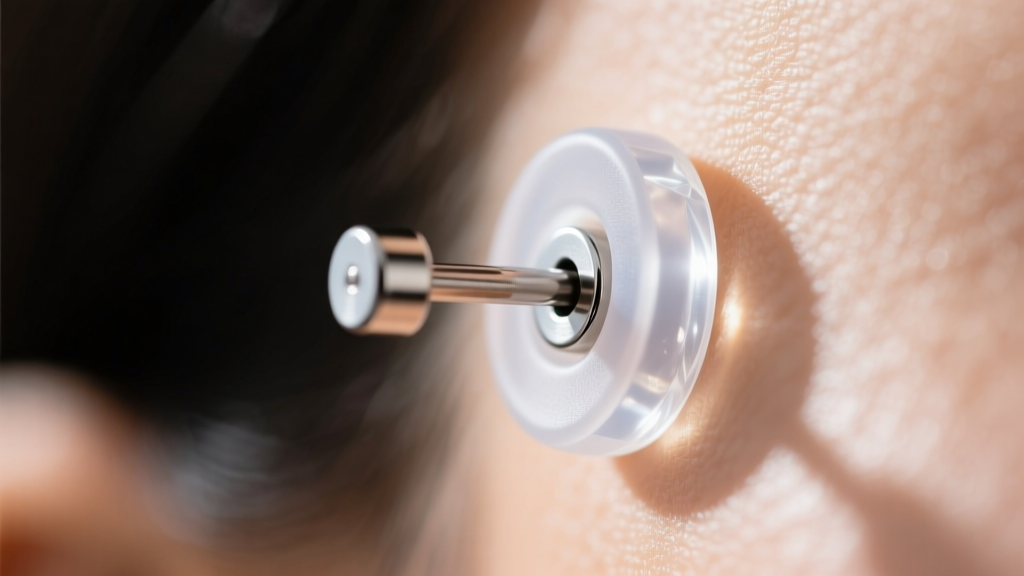
Why the Back Earring Lock Material Dictates Piercing Health
When investing in fine jewelry, collectors and enthusiasts often obsess over the carat weight of a diamond or the purity of a gold hoop. Yet, the structural integrity and dermatological safety of your piercing frequently rely on a component that costs pennies and hides behind the earlobe: the back earring lock. A poorly chosen backing can lead to lost heirloom earrings, chronic contact dermatitis, and even embedding in fresh cartilage piercings.
The skin behind the ear is highly concentrated with sebaceous glands. This environment produces sebum, sweat, and dead skin cells, creating a harsh micro-climate that degrades inferior materials rapidly. In this comprehensive material comparison, we analyze the metallurgical and polymer properties of the most common back earring lock options available today, evaluating them on grip strength, biocompatibility, and long-term durability.
The Material Breakdown: Friction, Grip, and Biocompatibility
Medical-Grade Silicone (O-Rings and Bullet Clutches)
Silicone backings have surged in popularity due to their high friction coefficient and soft, flexible nature. Manufactured from medical-grade elastomers, these locks typically feature a Shore A durometer hardness rating between 40 and 50, making them soft enough to conform to the earring post but firm enough to resist accidental pulls.
- Grip Mechanism: Pure friction. The elastomer compresses around the post, creating a vacuum-like seal.
- Biocompatibility: Excellent for short-term wear. Silicone is hypoallergenic and contains no heavy metals.
- The Catch: Silicone is inherently microporous. Over time, it absorbs sebum and harbors bacteria, leading to a distinct odor and eventual material degradation. Furthermore, exposure to UV light and alcohol-based cleaners causes the polymer chains to break down, resulting in a brittle back earring lock that can snap unexpectedly.
Implant-Grade Titanium (ASTM F136)
For fresh piercings and individuals with severe metal sensitivities, implant-grade titanium is the undisputed gold standard. Specifically, you want to look for Ti6Al4V ELI (Extra Low Interstitial) certified to ASTM F136 standards. Unlike commercial-grade titanium, this alloy is completely free of nickel and features a highly polished, mirror-finish surface that prevents bacterial adhesion.
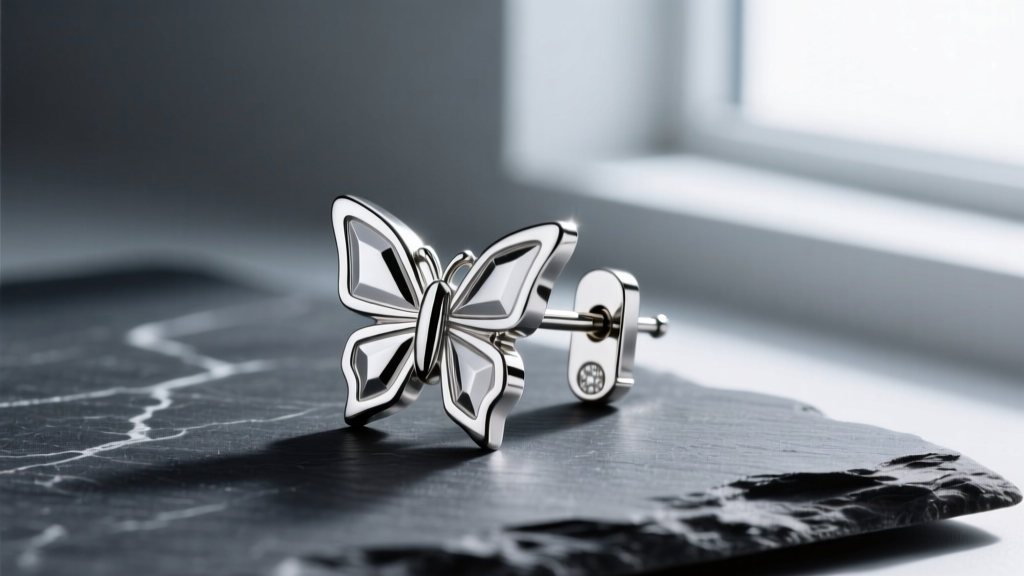
Titanium butterfly clutches or flat-disc labret backs offer exceptional security. The metal retains its tension indefinitely, meaning a titanium back earring lock will not suffer from the metal fatigue that plagues cheaper alternatives. While the initial cost is higher (typically $3 to $8 per backing), the lifespan is effectively infinite with proper care.
14K and 18K Solid Gold (Screw Backs and Push Backs)
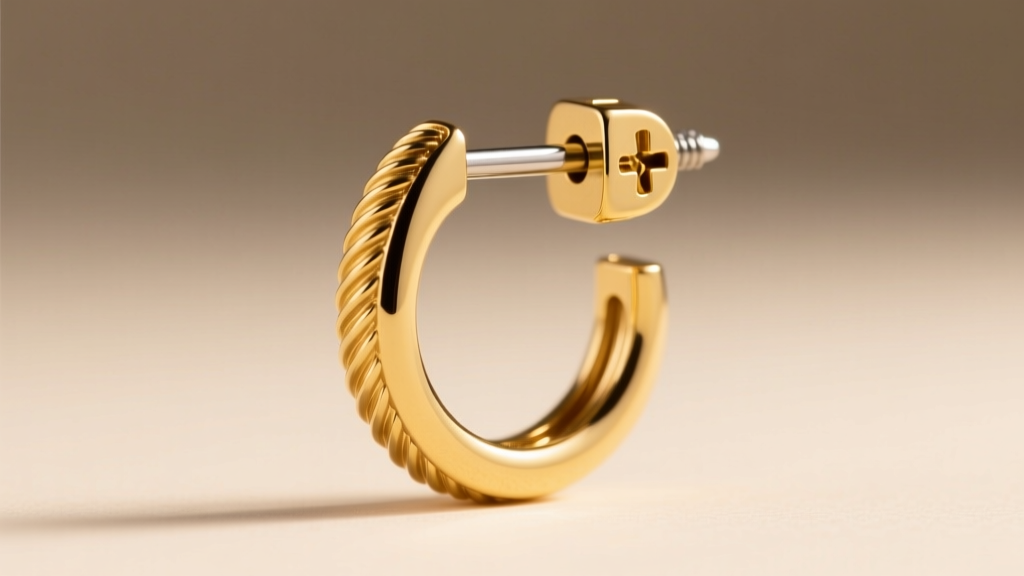
Gold is a remarkably soft, malleable metal. Because 24K gold is too soft for jewelry mechanics, it is alloyed with copper, silver, and zinc to create 14K (58.5% gold) and 18K (75% gold) variations. When used for a back earring lock, gold is almost exclusively fashioned into threaded screw backs to compensate for its lack of natural friction.
A properly machined 14K gold screw back earring lock provides unparalleled security for heavy diamond studs, but the internal threads are susceptible to stripping if cross-threaded during application. Always align the threads gently before twisting.
While highly biocompatible, lower-karat gold (10K or 14K) can occasionally contain trace nickel depending on the manufacturer's specific alloy recipe, which can trigger reactions in hyper-sensitive individuals.
Surgical Stainless Steel (316L and 316LVM)
Surgical steel is the most ubiquitous and economical material used for butterfly friction backs. The 316LVM (Vacuum Melted) designation indicates a manufacturing process that traps impurities and inclusions within the metal matrix, resulting in a smoother surface. However, 316L steel contains between 8% and 10% nickel to achieve its corrosion resistance.
According to the DermNet NZ clinical database, prolonged skin contact with nickel-releasing alloys is the leading cause of allergic contact dermatitis. Because a steel back earring lock sits flush against the skin and traps sweat, it frequently exceeds the European Nickel Directive's safe release limit of 0.5 µg/cm²/week, making it a poor choice for sensitive ears.
Material Comparison Matrix: Grip Strength vs. Allergy Risk
To help you make an informed decision, we have synthesized the performance metrics of each material into a comparative matrix. This data reflects standard 20-gauge to 18-gauge earring posts.
| Material | Lock Style | Grip Strength | Allergy Risk | Avg. Lifespan | Price Range |
|---|---|---|---|---|---|
| Medical Silicone | O-Ring / Bullet | Very High (Friction) | None | 3 - 6 Months | $0.10 - $0.50 |
| ASTM F136 Titanium | Labret / Butterfly | High (Tension/Thread) | None | Lifetime | $3.00 - $8.00 |
| 14K / 18K Gold | Screw Back | Maximum (Threaded) | Low (Alloy dependent) | Lifetime | $15.00 - $45.00 |
| 316LVM Steel | Butterfly Clutch | Moderate (Tension) | High (Nickel content) | 1 - 2 Years | $0.05 - $0.20 |
Failure Modes: How Different Locks Degrade Over Time
Understanding how a back earring lock fails is critical for preventing the loss of valuable jewelry. The Association of Professional Piercers (APP) frequently documents jewelry loss due to mechanical failure of the backing. Here are the primary failure modes by material:
- Silicone Tearing: The most common failure point for silicone O-rings is the central puncture hole. Repeated insertion of a sharp or burred earring post micro-tears the elastomer. Eventually, the hole stretches beyond the post's diameter, and the lock slides off without resistance.
- Metal Fatigue in Butterfly Clutches: Traditional steel and low-grade gold butterfly backs rely on the tension of the two folded metal "wings." Over years of removal and reapplication, the metal undergoes work hardening and eventually loses its spring tension, resulting in a loose fit that easily falls off.
- Thread Stripping in Gold and Steel: Screw backs are highly secure, but if debris (like dead skin or dried sebum) becomes trapped in the threads, forcing the back earring lock to twist can strip the soft gold threads, rendering the lock permanently useless.
Expert Recommendations by Piercing Type
The ideal backing changes depending on the anatomy of the piercing and the weight of the jewelry being worn. Based on clinical observations and dermatological studies on contact dermatitis, we recommend the following pairings:
For Fresh Lobe and Cartilage Piercings
Always utilize an implant-grade titanium flat-back labret. The flat disc prevents the backing from embedding into swollen tissue, and the internal threading ensures the post remains perfectly smooth as it passes through the healing fistula. Avoid silicone and steel entirely during the first 6 to 12 months of healing.
For Heavy Diamond Studs and Gemstones
Opt for 14K or 18K gold threaded screw backs or specialized locking ear nuts (like the La Poussiere brand). The mechanical thread completely eliminates the risk of friction failure, ensuring that a $5,000 diamond remains securely attached to your earlobe even if snagged on a sweater or hairbrush.
For Active Lifestyles and Sports
If you frequently lose earrings during workouts or sleep, silicone bullet clutches or titanium locking O-rings are your best defense. The high friction coefficient of silicone grips the post tightly, while the soft material won't dig into your neck or scalp when lying on a pillow. Just remember to replace silicone backs every few months to maintain hygiene and structural integrity.
Conclusion
The back earring lock is the unsung hero of your jewelry collection. By upgrading from standard surgical steel butterfly clutches to implant-grade titanium, precision-machined gold screw backs, or fresh medical-grade silicone, you drastically reduce the risk of losing cherished pieces and eliminate the hidden triggers for contact dermatitis. Treat your backing with the same material scrutiny as the front of your earring, and your piercings will remain secure, healthy, and comfortable for a lifetime.


