Dumbo Earrings: Metallurgy & Mechanics of 3D Charms
Explore the technical construction of Dumbo earrings, from lost-wax casting and vitreous enamel to gauge sizing and weight distribution for 3D charms.

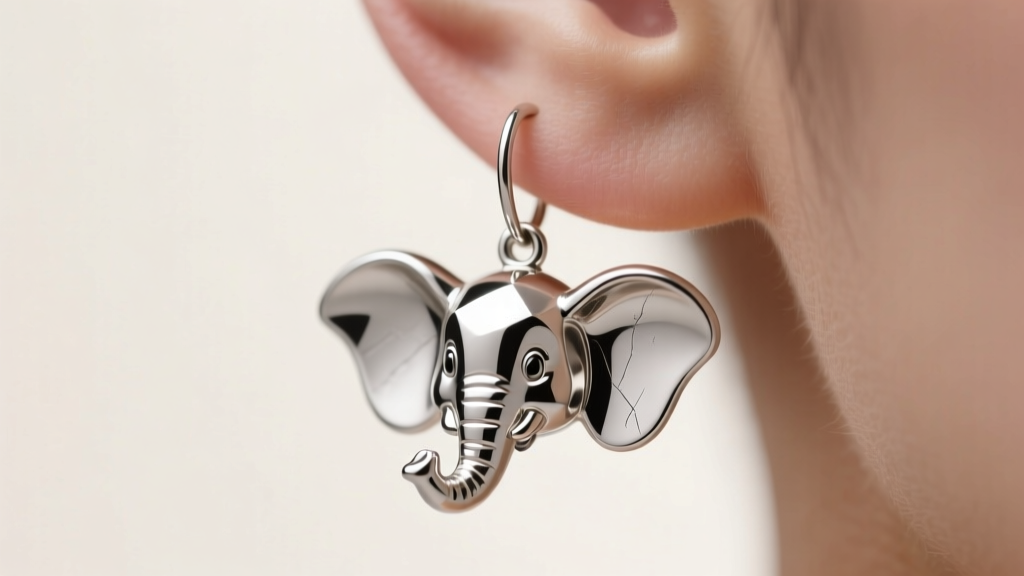
When collectors and jewelry enthusiasts discuss character or animal motif jewelry, the conversation rarely touches on the complex engineering required to make these pieces functional. Dumbo earrings—ranging from officially licensed Disney fine jewelry to artisan-crafted 3D elephant drops—are a masterclass in micro-sculpting, weight distribution, and material science. As we navigate the 2026 jewelry landscape, where consumers demand both nostalgic aesthetics and heirloom-grade durability, understanding the technical anatomy of these 3D charms is essential for both jewelers and informed buyers.
The Metallurgy of 3D Micro-Sculpting
The creation of a high-quality 3D Dumbo earring begins long before the metal is poured. It starts with the master model, typically milled from high-resolution CAD wax or 3D printed in castable resin. The primary challenge in casting a 3D elephant motif is managing the varying thicknesses of the design. The elephant’s large, sweeping ears and delicate trunk present extreme contrasts in mass, which directly impacts how the metal cools and shrinks.
Lost-Wax Casting and Shrinkage Rates
Most premium Dumbo earrings are produced via lost-wax investment casting. According to metallurgical standards outlined by suppliers like Rio Grande, 925 sterling silver shrinks by approximately 1.5% during the cooling phase, while 14k yellow gold shrinks closer to 1.25%. If the CAD designer does not account for this volumetric shrinkage, the final cast will suffer from dimensional inaccuracies, particularly in the intricate facial wrinkles and toenail details that define the character's likeness.
Sprue Placement and Porosity Prevention
Porosity is the enemy of 3D charm casting. When molten silver or gold is injected into the flask, it must flow evenly and cool uniformly. If the sprue (the channel through which metal enters the mold) is attached to a thin area like the tip of the trunk or the edge of the ear, that section will freeze prematurely, trapping gases and creating internal voids. Expert casters attach the sprue to the thickest part of the charm—usually the back of the head or the base of the collar—ensuring directional solidification and a dense, porosity-free final product.
Enameling Techniques: Cold Resin vs. Vitreous Glass
Color is what brings a Dumbo earring to life, particularly the iconic circus collar or the vibrant lining of the elephant's ears. The method used to apply this color drastically dictates the piece's longevity, UV resistance, and overall value.
The Limitations of Cold Enamel
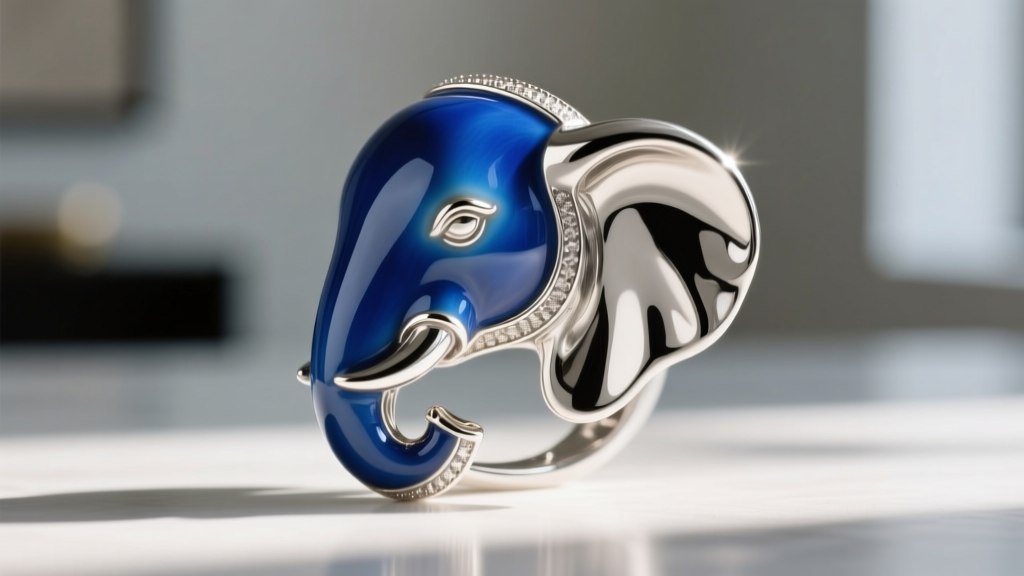
Mass-market licensed character earrings frequently utilize cold enamel, which is essentially a pigmented epoxy resin. While it allows for precise, multi-colored application without the need for kiln firing, cold enamel is fundamentally a plastic. It registers a mere 2 to 3 on the Mohs hardness scale, making it highly susceptible to micro-scratches. Furthermore, prolonged exposure to UV light and the natural acidity of human sweat can cause the resin to yellow or delaminate from the metal recesses over a period of three to five years.
The Superiority of Vitreous Enamel
For heirloom-quality Dumbo earrings, master jewelers turn to vitreous enamel. As documented by the Enamel Arts Foundation, vitreous enameling involves fusing finely ground glass powder to a metal substrate at temperatures between 1400°F and 1500°F. The result is a surface with a Mohs hardness of 6 to 7—comparable to quartz. Vitreous enamel will not yellow, is impervious to sweat and cosmetics, and possesses a deep, refractive luster that cold resin simply cannot replicate. The champlevé technique, where pockets are carved into the silver and filled with glass, is the gold standard for high-end animal motif jewelry.
Structural Mechanics: Managing Lobe Droop and Shear Stress
The most overlooked aspect of 3D drop earrings is the physics of how they interact with the human earlobe. A solid cast sterling silver Dumbo head can easily weigh between 4 and 7 grams. When suspended from a standard earring post, this weight creates a pendulum effect, generating significant shear stress on the fistula (the piercing hole).
Post Gauge and the Lever Effect
Standard fashion earrings utilize a 20-gauge (0.81mm) post. However, a 6-gram 3D charm acting as a lever will quickly bend a 20g wire, causing the earring to sit at an awkward angle and potentially tearing the earlobe tissue over time. For heavy 3D charms, structural integrity demands an 18-gauge (1.02mm) or even a 16-gauge (1.29mm) post. The Gemological Institute of America (GIA) frequently notes that proper gauge selection is critical for maintaining the structural health of the piercing when wearing statement drops.
Weight-to-Gauge Ratio and Backing Selection
Selecting the correct earring back is just as vital as the post thickness. Standard butterfly friction backs offer insufficient surface area to support a heavy 3D charm, leading to the dreaded 'lobe droop' where the earring points toward the floor.
| Charm Weight | Recommended Post Gauge | Optimal Backing Type | Failure Mode if Ignored |
|---|---|---|---|
| 1 - 3 grams | 20g (0.81mm) | Standard Friction Back | Minor lobe fatigue |
| 3 - 5 grams | 18g (1.02mm) | Silicone O-Ring / Jumbo Back | Post bending, lobe droop |
| 5 - 8+ grams | 16g (1.29mm) | 12mm Jumbo Friction Back | Tissue tearing, post snapping |
Material Degradation and Maintenance
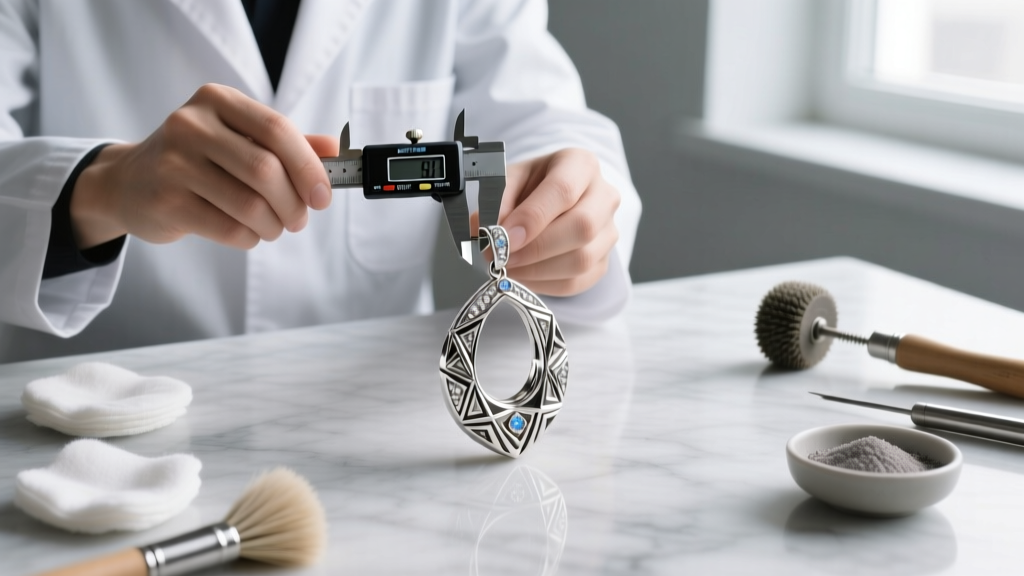
Even the most meticulously engineered Dumbo earrings require specific maintenance protocols to preserve their articulation and finish. The jump ring connecting the 3D charm to the ear wire is a primary failure point. In mass-produced pieces, these jump rings are often left unsoldered to save on manufacturing costs. The constant swinging motion of the elephant charm acts as a file, slowly grinding through the jump ring wire or the loop on the charm itself.
Laser Welding and Articulation Repair
When an unsoldered jump ring fails, traditional torch soldering can damage the heat-sensitive cold enamel or alter the temper of the earring post. Modern jewelers utilize pulse-arc or laser welding to fuse the jump ring shut without transferring ambient heat to the rest of the piece. For collectors of vintage or high-end 2026 artisan drops, ensuring the jump ring is laser-welded closed upon purchase is a proactive measure that guarantees the charm will never detach and fall victim to gravity.
Expert Tip: To maintain the brilliant white luster of rhodium-plated sterling silver Dumbo earrings, avoid ultrasonic cleaners. The high-frequency vibrations can fracture vitreous enamel and loosen micro-pave stones often found in premium character jewelry. Instead, use a mild, non-abrasive liquid soap and a soft-bristled brush to clean the intricate crevices of the 3D cast.
Ultimately, the appeal of Dumbo earrings extends far beyond their nostalgic charm. They represent a convergence of art and engineering, requiring a deep understanding of metallurgy, material science, and biomechanics. By prioritizing proper casting techniques, vitreous enameling, and structurally sound gauge sizing, jewelers can transform a whimsical character into a durable, heirloom-quality piece of wearable art that stands the test of time.


