Big Earrings Round Shapes: A Material & Weight Guide
Discover the best materials for big earrings round shapes. Compare metal densities, wire gauges, and lightweight alternatives for comfortable wear.

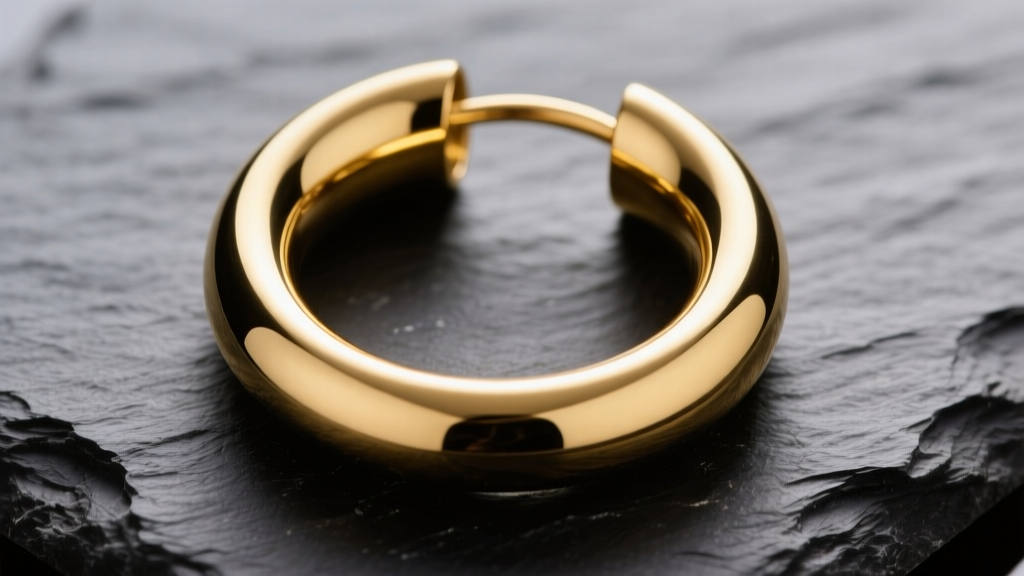
The resurgence of oversized circular jewelry has dominated accessory trends, but many shoppers searching for big earrings round styles overlook the metallurgical realities of wearing them. While a 60mm circular disc or a massive hollow hoop makes a striking visual statement, the physical toll on the earlobe is dictated entirely by material density, structural geometry, and gravity. As we navigate the jewelry landscape in 2026, understanding the intersection of material science and biomechanics is crucial for anyone who loves dramatic, oversized silhouettes without suffering from earlobe fatigue or mechanical ptosis (tissue stretching).
The Physics of Big Earrings Round Silhouettes
When you wear large circular earrings, you are essentially attaching a pendulum to a highly delicate piece of tissue. The human earlobe lacks cartilage, consisting primarily of fibrofatty tissue and collagen. When a heavy round earring swings, it generates kinetic energy and rotational torque. The further the center of mass is from the piercing hole, the greater the leverage exerted on the fistula (the piercing channel).
- Torque Multiplier: A solid 50mm brass hoop exerts significantly more downward sheer force on the lobe than a 20mm stud, even if they weigh the exact same, due to the pendulum swing.
- Snag Hazard: Large round profiles catch on hair, clothing, and masks, transferring sudden, high-impact tension directly to the piercing.
- Tissue Creep: Continuous downward tension causes collagen fibers to slowly elongate over time, a phenomenon known in materials science as 'creep', leading to permanent lobe drooping.
Material Density Comparison Chart
To make informed decisions, you must understand specific gravity (density). The higher the density, the heavier the earring will be at any given volume. Below is a comparative breakdown of common materials used in oversized circular jewelry.
| Material | Density (g/cm³) | Hypoallergenic Rating | Best Application |
|---|---|---|---|
| Acrylic / Resin | 1.18 - 1.20 | High (Biocompatible) | Massive 80mm+ statement discs |
| Implant-Grade Titanium | 4.51 | Exceptional (ASTM F136) | Medium-large hoops, sensitive lobes |
| Sterling Silver (925) | 10.36 | Moderate (Contains Copper) | Textured round drops under 40mm |
| 14k Yellow Gold | 13.00 - 14.00 | High (Nickel-Free Alloys) | Hollow-forged tubing, luxury hoops |
| Niobium | 8.57 | Exceptional (Elemental) | Anodized colorful round wire hoops |
| Solid Brass / Bronze | 8.40 - 8.80 | Poor (High Allergy Risk) | Coated fashion pieces, short wear |
For a comprehensive understanding of how alloy mixtures affect skin sensitivities, the Gemological Institute of America (GIA) provides excellent resources on jewelry metal compositions and their long-term wearability.
Metallurgical Deep Dive: Which Metals Survive the Swing?
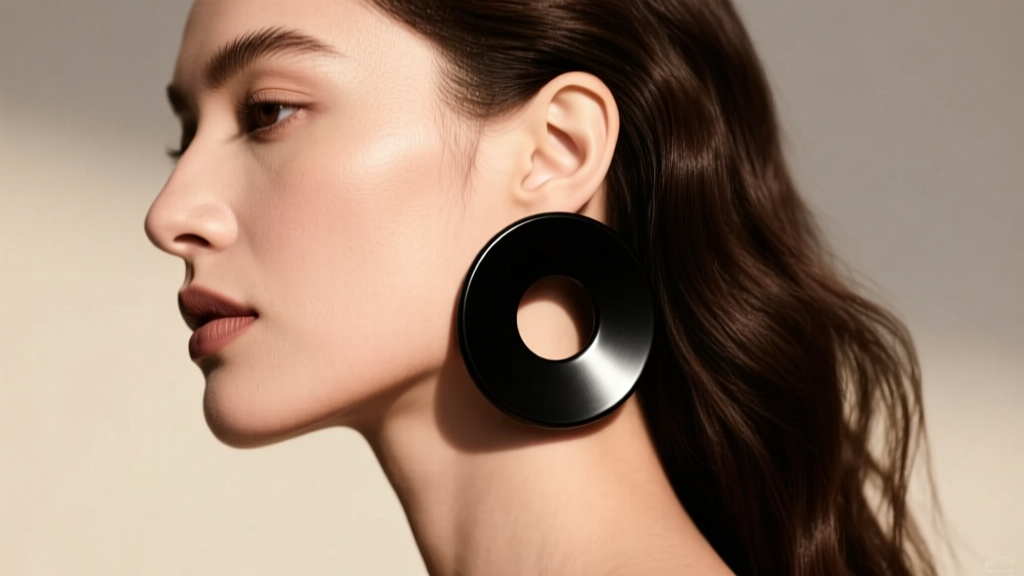
Implant-Grade Titanium (ASTM F136)
Titanium is the undisputed champion for sensitive ears, but its true value in large round earrings lies in its strength-to-weight ratio. At 4.51 g/cm³, it is nearly 45% lighter than steel or silver. More importantly, titanium possesses high tensile strength, meaning a thin 18-gauge titanium wire can support a 40mm round disc without bending out of shape. Always verify that the titanium is certified to ASTM F136 or ASTM F67 standards, which guarantees it is free of nickel and safe for prolonged tissue contact. The Mayo Clinic heavily recommends elemental metals like titanium to prevent contact dermatitis in jewelry wearers.
Niobium: The Anodized Alternative
Niobium is slightly denser than titanium but remains a premier choice for large hoops. Because it is a highly reactive elemental metal, it can be anodized using electricity to create vibrant, permanent colors (like deep purples, teals, and golds) without using surface paints or platings that can chip off into the piercing. For big earrings round wire designs, niobium's 'dead soft' malleability allows jewelers to craft perfectly circular, seamless continuous rings that are gentle on the fistula.
The 14k vs. 18k Gold Dilemma
While 18k gold is purer and more valuable, it is physically softer and heavier than 14k gold. For oversized solid gold drops, 18k is a poor choice; the weight will drag the lobe, and the soft hooks will easily warp. 14k gold, alloyed with silver, copper, or zinc, offers superior structural rigidity. However, for large hoops, the best practice is hollow-forged tubing. This manufacturing technique creates a thick-walled, seamless tube that looks like a massive solid gold hoop but weighs a fraction of the amount, preserving both your earlobes and the structural integrity of the clasp.
Structural Integrity: Wire Gauges and Clasp Mechanics
The point of failure in heavy circular earrings is rarely the decorative element; it is almost always the wire passing through the ear. Standard ear piercings are done at 20-gauge (0.81mm) or 18-gauge (1.02mm).
- 18-Gauge (1.02mm): Suitable for lightweight acrylic or titanium rounds up to 45mm in diameter. Anything heavier will act like a cheese wire, slowly slicing through the bottom of the piercing.
- 16-Gauge (1.29mm): The ideal sweet spot for medium-weight silver or gold hoops (45mm - 60mm). It provides enough rigidity to hold a circular shape without requiring you to stretch your piercing.
- 14-Gauge (1.63mm): Necessary for heavy, solid metal rounds exceeding 60mm. Note that wearing 14g wire in a standard 18g piercing will cause discomfort and may slowly stretch the hole over time.
Furthermore, avoid standard butterfly push-backs for heavy round earrings. The narrow surface area concentrates pressure, leading to necrosis or sore spots. Opt for Omega backs or flat silicone disc clutches that distribute the weight across a wider surface area of the posterior earlobe.
Lightweight Alternatives for Oversized Rounds
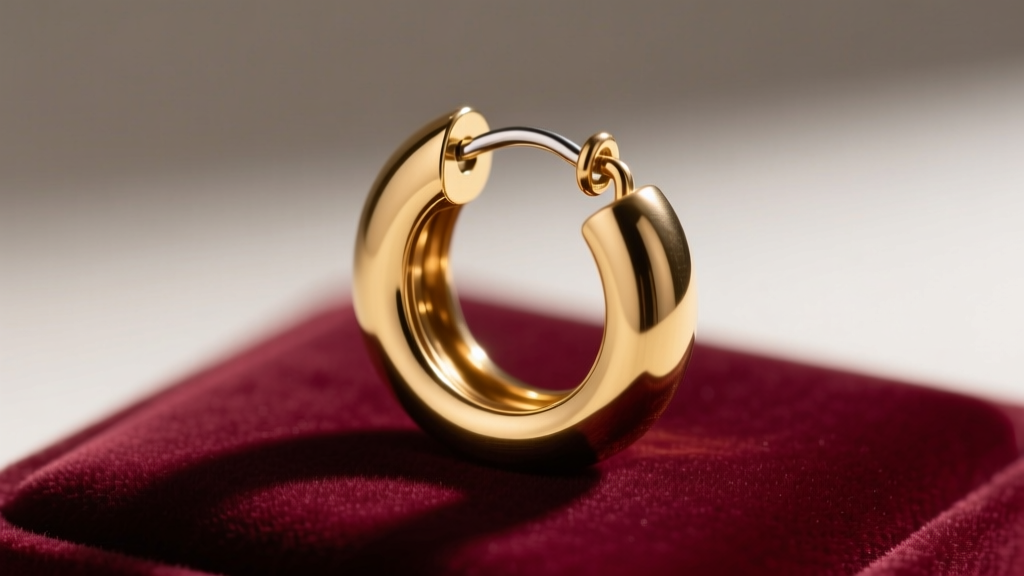
If you desire the visual impact of 80mm+ circular earrings, traditional metals become biomechanically unfeasible for all-day wear. In 2026, advanced polymers and composite materials offer brilliant solutions:
- Cellulose Acetate: Derived from wood pulp, this bio-plastic is hypoallergenic, incredibly lightweight, and can be polished to a high gloss or tortoiseshell finish. It is the industry standard for oversized luxury fashion hoops.
- Carbon Fiber: For a modern, industrial aesthetic, carbon fiber sheets can be laser-cut into massive geometric rounds. It boasts a tensile strength higher than steel while remaining lighter than aluminum.
- Corian or Solid Surface Acrylics: Often used in high-end kitchen countertops, these materials can be machined into perfectly smooth, thick, matte-finish round drops that are entirely non-porous and safe for the skin.
Preventing Earlobe Elongation and Tearing
'The key to preserving earlobe integrity when wearing heavy statement pieces is not just the material you choose, but the duration of wear and the support systems you employ. Treat heavy jewelry like high heels: stunning for an event, but detrimental for a marathon.'
— Dr. Aris Thorne, Cosmetic Dermatologist & Jewelry Biomechanics Researcher
To safely enjoy big earrings round styles without permanent damage, implement the following protocol:
- Use Silicone Support Patches: Adhesive silicone discs (like EarLobe Lifters) stick to the back of the earlobe and the earring post, distributing the pendulum weight across a 15mm radius rather than a 1mm puncture point.
- The 4-Hour Rule: Limit the wear of solid metal hoops larger than 50mm to four hours. Switch to lightweight studs or titanium huggies for the remainder of the day to allow collagen fibers to retract.
- Avoid Sleep and Exercise: Never sleep in large round earrings. The lateral pressure against a pillow can easily snap the post or tear the lobe. Similarly, the kinetic bouncing during exercise multiplies the gravitational force on the tissue.
- Nickel Vigilance: Heavy earrings cause micro-abrasions in the fistula. If your jewelry contains hidden nickel (common in cheap brass or white gold alloys), these micro-tears will rapidly accelerate an allergic reaction. Always demand nickel-free certifications from your jeweler.
By respecting the physics of large jewelry and selecting materials based on density and tensile strength rather than just aesthetics, you can confidently wear dramatic, oversized circular designs while keeping your earlobes healthy, comfortable, and intact for decades to come.


