Cuff Chain Earrings Buying Guide: Sizing, Metals & Care
Discover how to choose the perfect cuff chain earrings. Our expert buying guide covers metal grades, chain durability, adjustability, and pierced options.

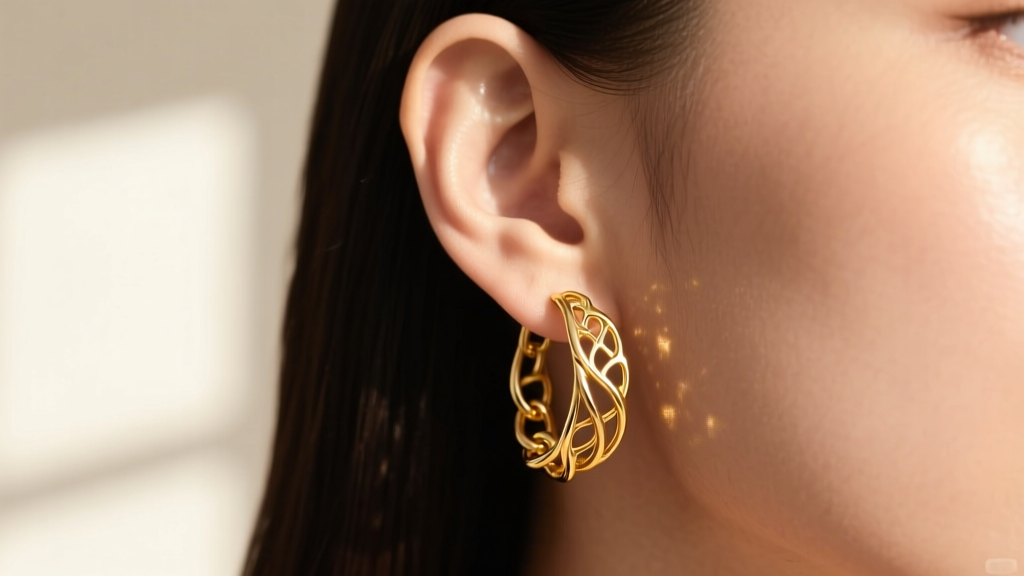
Cuff chain earrings have evolved from a niche alternative trend into a staple of modern fine jewelry. By bridging the gap between a lobe piercing and a cartilage cuff, these pieces create an intricate, multi-piercing illusion with minimal commitment. However, the structural complexity of connecting a flexible chain to a tension-based cuff introduces unique challenges regarding durability, fit, and metal fatigue. Whether you are shopping for everyday wear or a statement piece, understanding the mechanics of cuff chain earrings is essential to avoid lost jewelry and snapped chains.
The Anatomy of Cuff Chain Earrings: Pierced vs. Non-Pierced
Before evaluating materials, you must determine the anchor mechanism. Cuff chain earrings typically consist of three parts: the lobe anchor, the tethering chain, and the cartilage cuff. The lobe anchor dictates the overall security of the piece.
- Pierced Lobe Anchors (Studs or Hooks): These offer maximum security. A standard 20-gauge or 18-gauge post with a secure butterfly back or screw-back ensures the chain's weight won't pull the earring out. Fishhook anchors are popular for dangle styles but can slip if the chain catches on clothing.
- Non-Pierced Lobe Anchors (Clip-ons or Magnetic): While accessible, these are inherently less secure. The added weight and kinetic movement of the chain often compromise the clip-on's grip, leading to a higher loss rate. If you must opt for non-pierced, look for padded screw-back clip-ons that allow you to manually adjust the tension to your lobe thickness.
Choosing the Right Metal Grade for Longevity
The metal used in cuff chain earrings must balance malleability (for the adjustable cuff) with tensile strength (for the chain). According to the FTC Jewelry Guides, understanding metal stamps and alloy compositions is critical for avoiding skin reactions and premature wear.
Hypoallergenic Options & Gauge Specifics
For those with sensitive skin or those wearing the cuff over a healing cartilage piercing, metal purity is non-negotiable.
- ASTM F136 Implant-Grade Titanium: The gold standard for biocompatibility. Titanium cuffs are incredibly lightweight, reducing the drag on the chain. However, titanium has low malleability; it is difficult to adjust at home without specialized tools and risks snapping if bent repeatedly.
- 14k Solid Gold: The optimal choice for daily wear cuff chain earrings. The alloy mix (typically copper and silver) provides enough structural integrity for the chain links while allowing the cuff to be gently adjusted to the helix.
- 18k Solid Gold: Softer and more prone to micro-scratches. The tension point where the cuff grips the ear can warp over time, requiring occasional professional re-tightening.
- Sterling Silver (925): A budget-friendly option, but highly susceptible to tarnish from skin oils and environmental sulfur. Ensure the silver is rhodium-plated to increase surface hardness and delay oxidation.
Expert Insight: Never buy gold-plated or gold vermeil cuff chain earrings for the cartilage cuff portion. The constant friction and pressure of the cuff against the ear's ridges will wear through the microscopic plating layer within weeks, exposing the base metal and causing contact dermatitis.
Chain Styles and Failure Modes: What Actually Breaks?
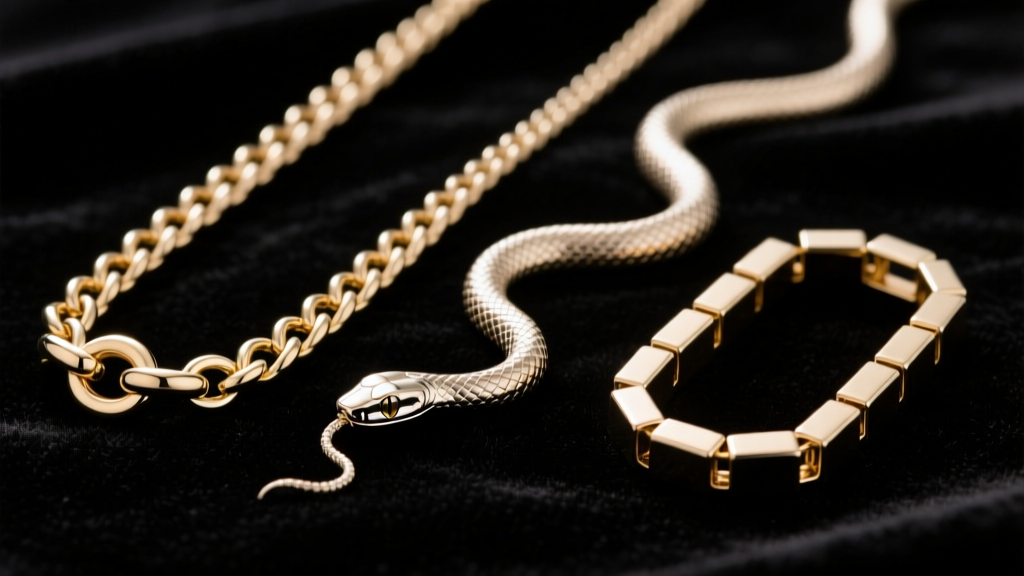
The tethering chain is the most vulnerable component of cuff chain earrings. Hair snagging, sweater pulls, and sleeping in the earrings create lateral stress that can easily snap delicate links. Choosing the right chain weave is a matter of structural engineering, not just aesthetics.
| Chain Type | Durability Rating | Tangling Risk | Best Use Case |
|---|---|---|---|
| Cable Chain | Moderate | High | Lightweight cuffs; occasional wear. |
| Rolo Chain | High | Low | Everyday wear; excellent link interlocking. |
| Box Chain | Very High | Very Low | Heavy cuffs; maximum structural integrity. |
| Snake Chain | Low | Extreme | Avoid. Snags on hair and kinks permanently. |
As noted by the Association of Professional Piercers, jewelry mechanics must account for the body's natural movements. Box and Rolo chains distribute tension evenly across multiple interlocking planes, whereas Snake chains rely on a tight, continuous coil that easily dents and separates when pulled laterally.
The Adjustability Factor: Getting the Tension Right
The most common reason buyers abandon cuff chain earrings is poor fit. The cartilage cuff must grip the helix or anti-helix securely without cutting off circulation or causing pressure necrosis.
Wire Gauge and Tension Memory
The thickness of the wire used to form the cuff dictates its "tension memory"—its ability to spring back to its original shape after being opened or closed.
- 22-Gauge (0.64mm): Too thin. Easily bent with bare fingers, but lacks the memory to hold onto the ear during movement. High slip rate.
- 20-Gauge (0.81mm): The industry sweet spot. Pliable enough for minor at-home adjustments but rigid enough to maintain a secure grip on the cartilage ridge.
- 18-Gauge (1.02mm) and thicker: Highly secure but difficult to adjust without nylon-jaw pliers. Bending 18g gold or titanium with bare hands often results in an uneven, warped cuff.
When trying on cuff chain earrings, the cuff should sit on the thinnest part of the outer helix ridge. If your cartilage is particularly thick or flat, look for cuffs with a "C-curve" design rather than a tight "U-curve," as the wider opening accommodates diverse ear topographies without requiring excessive bending.
Pricing Tiers: What to Expect in 2026
The market for cuff chain earrings is segmented by material quality and manufacturing precision. Understanding these tiers prevents overpaying for fashion jewelry disguised as fine jewelry.
- Fashion Tier ($25 - $60): Typically brass or copper base metals with flash plating. Chains are often hollow-core cable weaves. Expect a lifespan of 3 to 6 months before plating wears off or chains snap at the jump rings.
- Bridge Tier ($80 - $180): Solid sterling silver or heavy gold vermeil. Features soldered jump rings (a critical durability upgrade) and 20-gauge adjustable cuffs. Ideal for trend-focused buyers who want seasonal rotation.
- Fine Jewelry Tier ($250 - $800+): Solid 14k or 18k gold, or platinum. Chains are laser-welded at the stress points, and cuffs are cast with ergonomic, ear-specific contours. These pieces are designed for lifelong daily wear.
Expert Maintenance & Storage Framework
Because cuff chain earrings combine rigid and flexible components, improper storage is the leading cause of damage. Never toss them loosely into a jewelry box where the chain can wrap around other pieces and stretch the jump rings.
The Zip-and-Secure Method: Before storing, always fasten the lobe anchor (if it's a hook) to the cuff itself, creating a closed loop. Place the earring inside a small, anti-tarnish ziplock bag, pressing the air out before sealing. This prevents the chain from tangling and limits oxygen exposure, drastically slowing the oxidation process for silver and low-karat gold alloys. Avoid ultrasonic cleaners for any cuff chain earring featuring tension-set gemstones, as the high-frequency vibrations can loosen the stones from the cuff's grip.


