Earring Magic Fixes for Drooping Lobes and Heavy Studs
Discover earring magic troubleshooting tips to fix drooping lobes, support heavy studs, and prevent ear fatigue with invisible lifters and silicone backs.

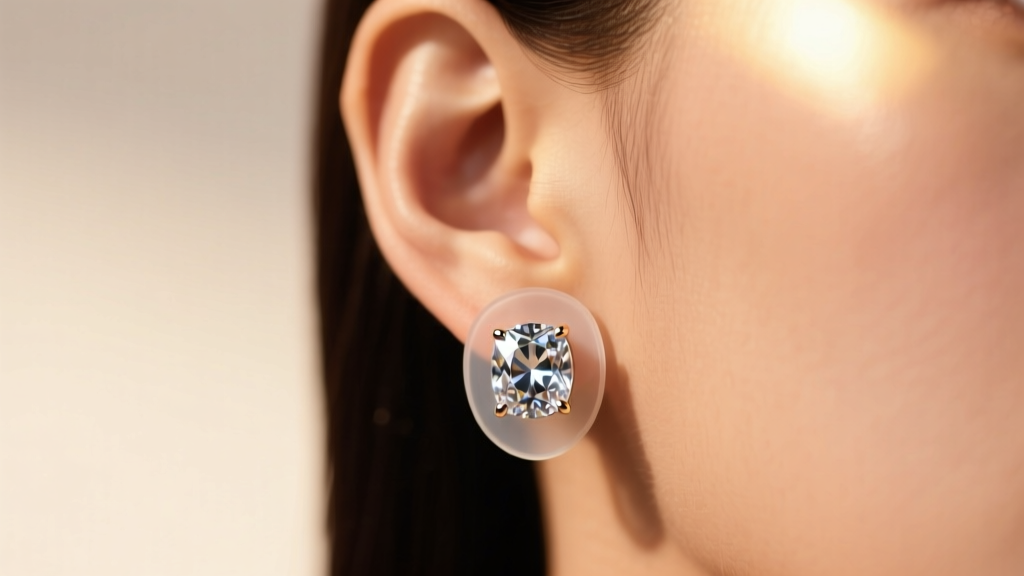
The Biomechanics of Earlobe Droop: Why Heavy Earrings Fail
Every jewelry wearer has experienced the frustration of a beautiful, heavy earring that refuses to sit flush against the face. Instead of pointing straight out, the decorative face tilts downward, hiding the gemstone or design while placing uncomfortable tension on the piercing fistula. To troubleshoot this, we must first understand the physics of earlobe droop.
The human earlobe varies in thickness, typically ranging from 2mm to 6mm. When you insert a standard 20-gauge (0.81mm) or 18-gauge (1.02mm) post, the lobe acts as a fulcrum. If the center of mass of the earring's decorative face extends too far beyond the anterior surface of the lobe, gravity takes over. Generally, any earring weighing more than 4 grams or featuring a top-heavy design exceeding 15mm in diameter will overcome the natural structural integrity of an average earlobe. The result is a forward tilt that not only ruins the aesthetic profile but can also lead to micro-tears in the fistula tract over time, accelerating lobe stretching.
This is where the concept of "earring magic" enters the troubleshooting toolkit. Rather than abandoning heavy statement pieces or oversized diamond studs, structural supports can artificially widen the fulcrum, redistributing the weight across a broader surface area of the posterior lobe.
What is "Earring Magic"? Decoding Invisible Supports
The term "earring magic" is frequently used to describe a category of invisible earring lifters, support patches, and stabilizer discs designed to keep heavy earrings upright. While originally popularized by specific trademarked brands, the category now encompasses several distinct material solutions. Understanding the differences is critical for matching the right support to your specific jewelry failure mode.
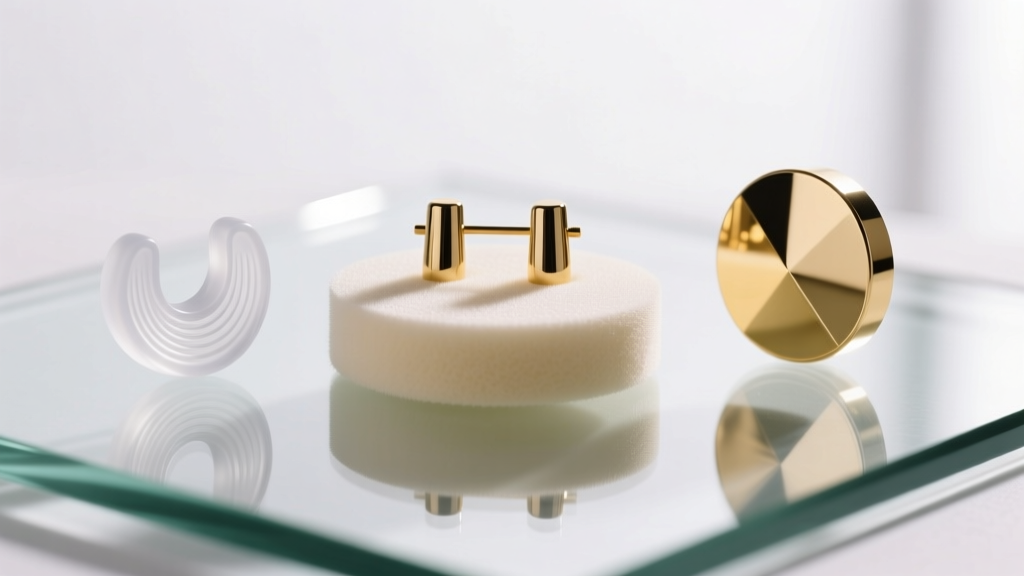
Polyurethane Foam Patches
These are soft, squishy, round pads with a pre-punched center hole and a medical-grade acrylic adhesive backing. They are ideal for moderately heavy studs (4g to 8g). The foam compresses against the back of the earlobe, creating a wide, cushioned base that prevents the earring back from digging into the skin. However, foam is porous and can trap sebum and skincare residues, requiring replacement every 1 to 2 days.
Medical-Grade Silicone Teardrops
Silicone lifters are rigid yet flexible teardrop-shaped pieces that slide onto the post behind the lobe. Unlike foam patches, they usually lack adhesive; instead, they rely on the compression of the earring backing (like a friction push-back or screw-back) against the broad tail of the teardrop to create upward leverage. Silicone offers superior sheer strength and is non-porous, making it the best choice for heavy chandelier drops or oversized hoops weighing 8g to 15g.
Rigid Acrylic and Metallic Stabilizer Discs
For extreme weight or vintage pieces with thick posts, rigid discs (often made of surgical steel or hard acrylic) provide a non-compressible barrier. These are essential when a foam patch would simply bottom out under the weight of a 20g+ statement piece.
Troubleshooting Guide: Matching the Fix to the Earring Type
Applying the wrong type of earring magic can result in adhesive failure or post tearing. Use the following matrix to diagnose your earring type and select the correct intervention.
| Earring Style | Average Weight | Standard Post Gauge | Recommended Earring Magic Solution | Max Wear Time |
|---|---|---|---|---|
| Large Diamond Studs (1.5ct+) | 3g - 6g | 18G (1.02mm) | Polyurethane Foam Patches | 48 Hours |
| Heavy Chandelier Drops | 8g - 15g | 16G (1.29mm) | Silicone Teardrop Lifters | 12 Hours |
| Oversized Huggies/Hoops | 10g - 20g | 14G - 12G | Rigid Metallic Stabilizer Discs | 8 Hours |
| Vintage Clip-ons (Converted) | 12g+ | Variable (often 16G) | Foam Patch + Omega Back Conversion | 6 Hours |
Note: If your earring post is 16-gauge or thicker, standard foam patches may tear when forced onto the post. Always widen the pre-punched hole using a sterile 18-gauge needle before application to preserve the adhesive matrix.
Step-by-Step Application for Maximum Lift
The most common point of failure with adhesive earring magic is improper skin preparation. The posterior earlobe is rich in sebaceous glands. Furthermore, residual skincare products—particularly hyaluronic acid serums, heavy ceramides, and silicone-based primers—create a microscopic slip plane that destroys acrylic adhesive bonds within minutes.
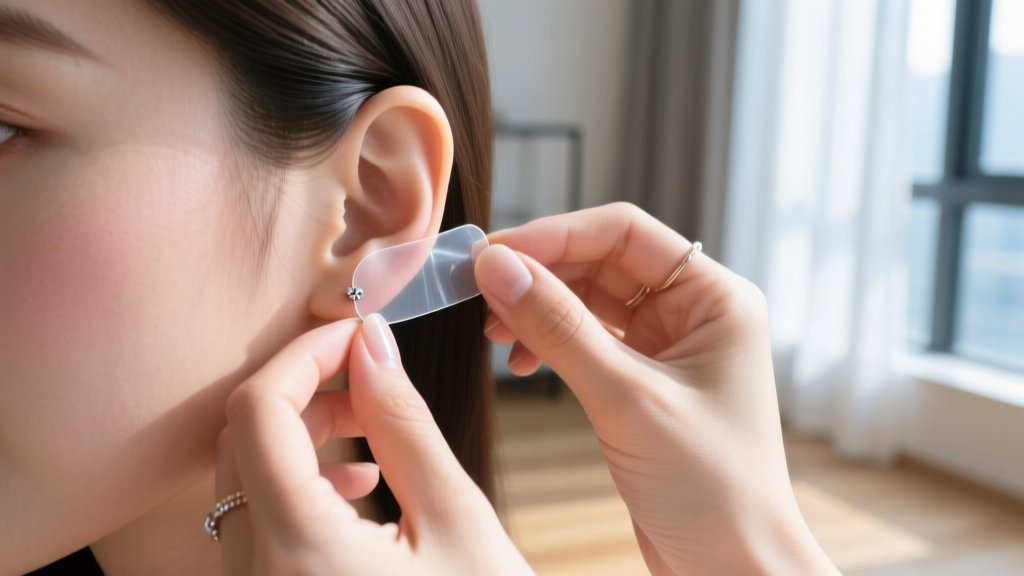
The Preparation Protocol
- Degrease the Lobe: Wipe the back of the earlobe thoroughly with a cotton swab soaked in 70% isopropyl alcohol. Avoid 90%+ concentrations, as they evaporate too quickly to break down lipid barriers effectively.
- Dry Completely: Allow the alcohol to flash off for 30 seconds. The skin must be completely dry and cool to the touch.
- Peel and Position: Peel the patch from its backing using tweezers to avoid transferring oils from your fingertips to the adhesive.
- The Angle Trick: Do not place the patch perfectly centered behind the fistula. Position it slightly higher (about 1mm above the piercing hole). When you push the earring post through and secure the backing, this offset creates an upward vector of tension, actively pulling the heavy decorative face flush against the front of the lobe.
When Earring Magic Isn't Enough: Structural Modifications
There are scenarios where topical earring magic patches simply cannot overcome the physics of a compromised earlobe. If your fistula has experienced a micro-blowout or stretching from years of heavy jewelry, the hole itself may be elongated (oval-shaped rather than circular). In these cases, the post will slide downward through the stretched tissue, rendering external patches useless.
When troubleshooting this failure mode, you must look to structural jewelry modifications:
- Omega-Back Conversions: A bench jeweler can remove standard friction posts and solder an Omega-back or clip-back mechanism. These feature a wide, curved wire that grips the entire posterior base of the earlobe, distributing weight across an inch of tissue rather than a single millimeter of fistula.
- Post Soldering and Jacket Additions: For heavy studs, a jeweler can solder a wider "plate" or "jacket" directly to the posterior base of the post. This permanently increases the surface area of the fulcrum without relying on disposable adhesives.
- French Wire Reinforcement: If heavy drop earrings on French wires pull the lobe forward, adding a clear silicone ear-wire hook cover increases the friction against the cartilage ridge, anchoring the earring higher on the ear and relieving lobe tension.
Maintenance and Skin Sensitivity Troubleshooting
While earring magic solves structural drooping, it introduces a new variable: prolonged skin contact with adhesives and synthetic polymers. According to dermatological guidelines on contact dermatitis, repeated exposure to acrylic adhesives can trigger allergic contact dermatitis in sensitive individuals, presenting as localized erythema, pruritus (itching), and micro-blistering behind the lobe.
If you experience itching or redness within 12 hours of applying an adhesive patch, discontinue use immediately. The Cleveland Clinic notes that barrier creams can sometimes mitigate mild irritation, but applying creams defeats the adhesive purpose. Instead, switch to non-adhesive silicone teardrop lifters, which rely purely on mechanical compression and are inherently hypoallergenic.
Safe Adhesive Removal
Never peel earring magic patches off dry skin, as this can cause mechanical stripping of the stratum corneum (the outermost skin layer). To safely remove stubborn adhesive residue, saturate a cotton pad with an oil-based cleanser or pure jojoba oil. Press it against the back of the lobe for 45 seconds to dissolve the acrylic bond, then gently slide the patch off. Follow up with a mild, fragrance-free cleanser to remove the oil before your next application.
Final Thoughts on Earlobe Engineering
Troubleshooting heavy earrings requires moving beyond aesthetic preferences and treating the earlobe as a structural engineering challenge. By understanding the biomechanics of weight distribution, selecting the correct material grade of earring magic, and adhering to strict skin-preparation protocols, you can comfortably wear substantial, high-carat, and oversized statement pieces without compromising the long-term health of your piercings. Whether you opt for disposable polyurethane foam or invest in permanent jeweler-led Omega conversions, the right support mechanism ensures your jewelry sits exactly as the designer intended.


