The Ultimate Earrings Blue Gemstone Guide for Beginners
Discover the ultimate beginner guide to earrings blue gemstones. Compare sapphire, topaz, and lapis lazuli with expert metal pairing and gauge tips.

Why Blue is the Ultimate Starter Color for Earrings
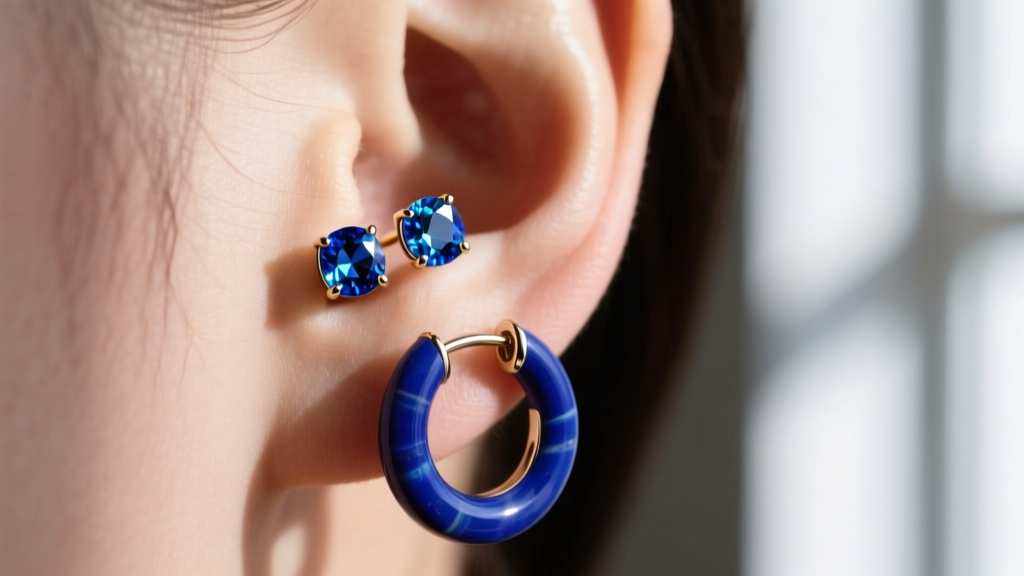
When building your first curated ear or upgrading from basic silver balls, color selection is your most impactful decision. If your recent search history has been dominated by earrings blue aesthetics, you are tapping into one of the most versatile color families in fine jewelry. Blue sits directly opposite orange and peach on the color wheel. This means that for individuals with warm skin undertones, blue gemstones provide a striking, high-contrast pop that brightens the complexion. For those with cool undertones, blue harmonizes seamlessly, offering a cohesive, icy elegance.
However, not all blue jewelry is created equal. The market is flooded with everything from $20 dyed howlite studs to $5,000 natural sapphire drops. As a beginner, understanding the material science, durability, and anatomical requirements of blue earrings is critical to avoiding wasted money and irritated piercings. This guide breaks down exactly what you need to know before making your first colored earring purchase.
Decoding Blue Gemstones: Hardness, Price, and Care
The biggest mistake beginners make is treating all gemstones as if they have the same durability. The Mohs scale of mineral hardness dictates how well a stone will resist scratching and chipping, which is vital for earrings that might get bumped or caught on hair.
| Gemstone | Mohs Hardness | Avg. Price Range (Studs) | Porosity & Care Level |
|---|---|---|---|
| Blue Sapphire | 9.0 | $400 - $3,000+ | Non-porous; Excellent for daily wear |
| Swiss/London Blue Topaz | 8.0 | $50 - $250 | Non-porous; Good, but has perfect cleavage (can split if struck hard) |
| Aquamarine | 7.5 - 8.0 | $150 - $600 | Non-porous; Good, but lighter color can show grease |
| Lapis Lazuli | 5.0 - 6.0 | $30 - $120 | Highly porous; Never use ultrasonic cleaners |
| Dyed Howlite | 3.5 | $10 - $40 | Extremely porous; Dye will fade with sweat/perfume |
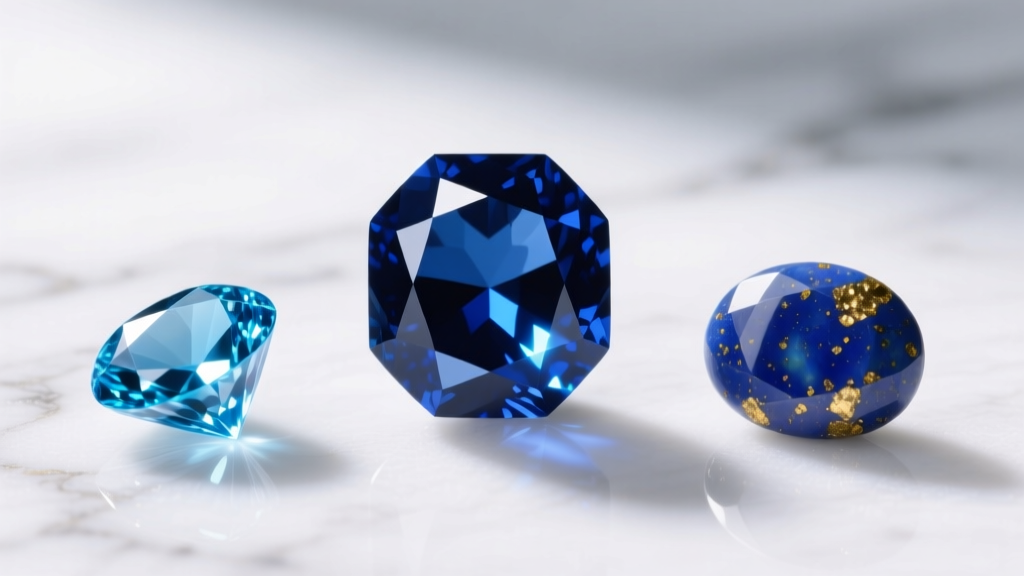
According to the Gemological Institute of America (GIA), stones with a Mohs rating below 7 are highly susceptible to scratching from everyday dust, which contains quartz (Mohs 7). Therefore, if you want blue earrings for 24/7 lobe wear, Sapphire or Blue Topaz are your safest investments. Lapis Lazuli, while breathtaking with its gold pyrite flecks, contains calcite and should only be worn as occasional drop earrings or huggies.
Beyond Stones: Enamel vs. Anodized Titanium
If natural gemstones are outside your budget, or if you need hypoallergenic options for fresh cartilage piercings, you will likely encounter two alternative blue finishes: vitreous enamel and anodized titanium.
Vitreous Enamel
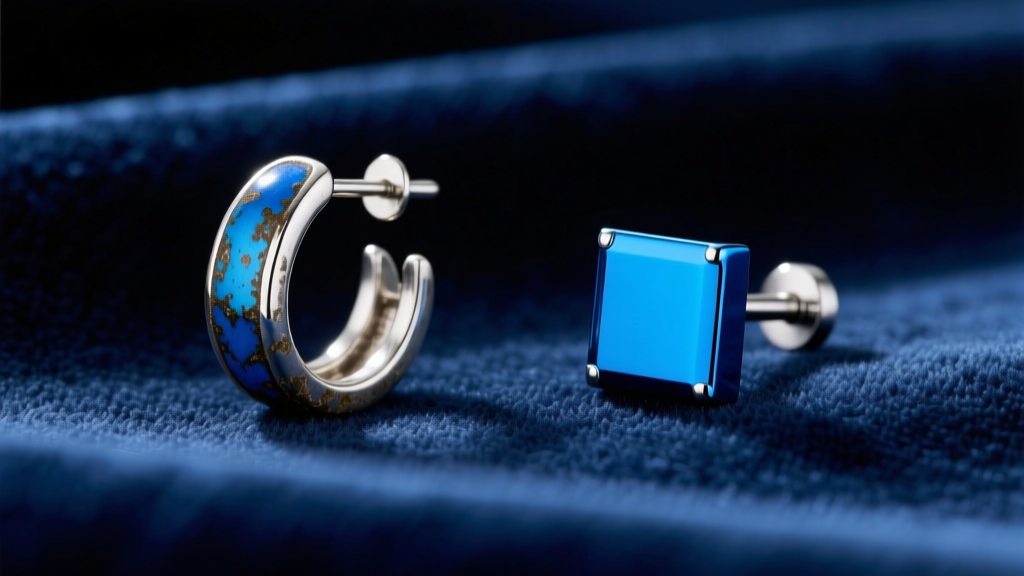
Enamel is essentially powdered glass fused to a metal base (usually sterling silver or gold) at high temperatures. It offers an opaque, vibrant, and uniform blue that gemstones cannot replicate. However, enamel is brittle. Dropping an enamel earring on a tile floor can cause micro-fractures or complete chipping. It is best suited for low-profile studs or the inner hoops of huggie earrings.
Anodized Titanium
For cartilage piercings (like the helix or conch), anodized ASTM F136 titanium is the gold standard. Anodizing is an electrochemical process that alters the oxide layer on the titanium's surface, refracting light to create a brilliant, metallic blue without using any dyes, paints, or coatings. Because the color is a structural property of the metal itself, it will never chip, fade, or cause nickel allergies. Brands like BVLA and NeoMetal specialize in anodized titanium threadless ends that offer a permanent, safe blue hue for healing piercings.
Metal Pairings: Which Base Metal Makes Blue Pop?
The metal surrounding your blue gemstone drastically alters its visual temperature. Here is a quick framework for pairing:
- Yellow Gold (14k or 18k): Creates a regal, high-contrast look. Best paired with deep, opaque blues like Lapis Lazuli or navy Sapphire. The warmth of the gold neutralizes the coolness of the stone.
- White Gold / Platinum: Enhances the icy, crisp nature of light blue stones. Swiss Blue Topaz and Aquamarine set in white gold will look exceptionally bright and modern.
- Rose Gold: Offers a romantic, vintage aesthetic. The coppery pink tones of rose gold play beautifully against the grayish-blue undertones of London Blue Topaz or teal Sapphires.
Sizing, Gauge, and Weight: What Beginners Must Know
Color aside, the physical dimensions of your earrings dictate whether they will be comfortable or cause piercing migration. The Association of Professional Piercers (APP) strictly outlines gauge standards to prevent tissue tearing.
Standard earlobe piercings are typically done at 20-gauge (0.81mm) or 18-gauge (1.02mm). Cartilage piercings are almost universally done at 16-gauge (1.29mm) or 14-gauge (1.60mm) to provide structural stability.
If you are buying blue dangle earrings for your lobes, pay strict attention to the gram weight. A large lapis lazuli teardrop set in heavy sterling silver can easily exceed 8 grams. Wearing heavy drops for more than a few hours will stretch the earlobe tissue, leading to a drooping appearance over time. For heavy blue stones, opt for lever-back closures that distribute weight more evenly, or choose hollowed-out bezel settings to reduce overall mass.
Real-World Troubleshooting: Fading and Skin Sensitivities
Beginners often face two major issues with blue earrings: unexpected color fading and contact dermatitis.
The 'Dyed Stone' Trap
Many entry-level jewelry brands sell 'turquoise' or 'lapis' earrings that are actually dyed howlite or magnesite. You can spot dyed stones by looking closely at the cracks; if the blue color pools deeply in the crevices while the surface looks pale, it is dyed. Exposure to the acids in your sweat, or the alcohol in your perfume, will strip this dye within months, leaving you with a mottled, grayish-white earring. Always ask the retailer if the stone is 'natural, dyed, or simulated' before purchasing.
Nickel Allergies in Silver Alloys
If your earlobes itch and turn red when wearing blue stone earrings, the stone is rarely the culprit. The issue is usually the earring post. Many cheap 'sterling silver' posts are alloyed with nickel or copper instead of pure silver. If you have sensitive skin, ensure the post is explicitly stamped '925' and ideally plated with rhodium, or upgrade to solid 14k gold or implant-grade titanium posts.
Where to Start: Three Beginner-Friendly Blue Builds
Ready to make your first purchase? Here are three foolproof configurations based on your lifestyle and budget:
- The Everyday Minimalist: 18-gauge, 3mm Swiss Blue Topaz bezel-set studs in 14k white gold. (Budget: $120-$180). Perfect for sleeping, showering, and office wear.
- The Cartilage Curator: 16-gauge ASTM F136 titanium threadless labret with an anodized blue opal or blue sapphire end. (Budget: $80-$150). The safest option for healing helix or flat piercings.
- The Weekend Statement: Lapis Lazuli and yellow gold vermeil medium-sized huggie hoops. (Budget: $60-$95). High visual impact for evenings out, but easy to remove before bed to protect the porous stone.
By prioritizing material integrity and anatomical safety over fast-fashion trends, your blue earrings will remain a vibrant, comfortable staple in your jewelry box for years to come.


