Spinelli Kilcollin Earrings: A Technical Deep Dive & Fit Guide
Explore the metallurgy, gauge specs, and lobe mechanics of Spinelli Kilcollin earrings. An expert 2026 guide to their signature linked hoops.

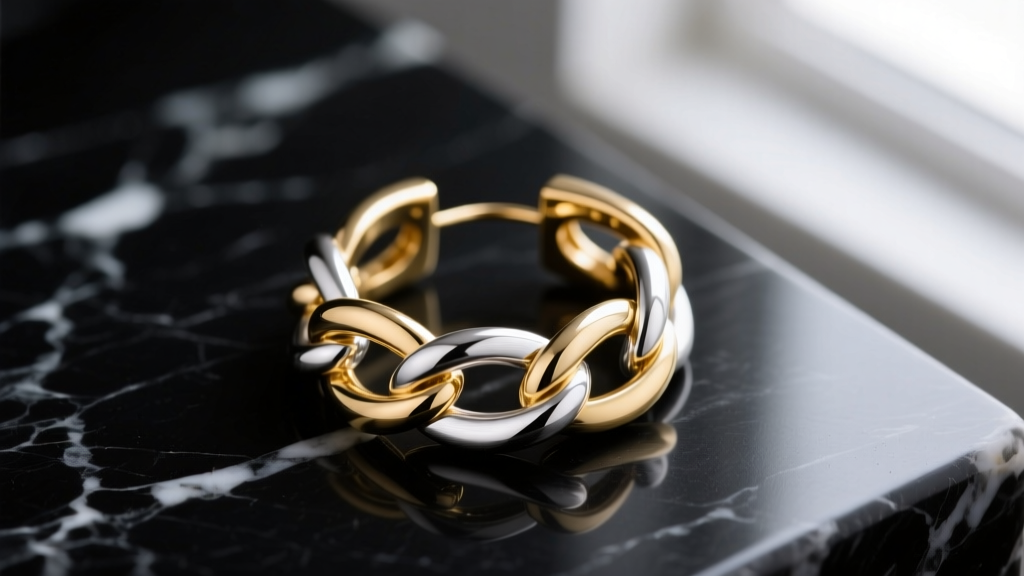
When discussing avant-garde fine jewelry in 2026, few names command the technical respect and aesthetic reverence of Spinelli Kilcollin. While the Los Angeles-based house initially disrupted the luxury market with their signature linked rings, their expansion into ear adornments has created an entirely new category of kinetic jewelry. Spinelli Kilcollin earrings are not merely cast hoops or standard huggies; they are complex, multi-axis mechanical assemblies designed to interact dynamically with human anatomy. For collectors and daily wearers alike, understanding the metallurgy, gauge specifications, and biomechanical advantages of these pieces is essential before making an investment.
The Architecture of Interlocking Micro-Rings
The core of the brand's design language is the interlocking micro-ring. Unlike traditional chainmail or soldered jump rings, each micro-ring in a Spinelli Kilcollin earring is individually formed and seamlessly linked without the use of solder. This requires extreme precision in metallurgical tolerances. If the inner diameter of one ring and the outer cross-section of its neighbor deviate by even 0.05 millimeters, the assembly will either bind (restricting movement) or suffer from excessive friction wear at the contact points.
The brand's master jewelers utilize a proprietary hand-linking technique that ensures a fluid, water-like drape while maintaining structural rigidity against lateral tension. Because there are no soldered joints, the earrings possess a unique kinetic flexibility, allowing them to contour perfectly to the earlobe or helix cartilage without creating rigid pressure points.
Metallurgy & Material Grades: Bi-Metal Construction
The signature aesthetic of Spinelli Kilcollin earrings relies on bi-metal construction—typically alternating 18k yellow or rose gold with 925 sterling silver. From a materials science perspective, combining two dissimilar metals in constant physical contact presents unique galvanic challenges. When exposed to an electrolyte (like human sweat, humidity, or chlorinated water), galvanic corrosion can occur, where the less noble metal (silver) oxidizes at an accelerated rate.
Spinelli Kilcollin mitigates this risk through highly specific alloy formulations and finishing techniques. Their 18k gold is alloyed with trace amounts of palladium or specific copper ratios to increase the Vickers hardness, ensuring the links do not warp under the friction of daily movement. Simultaneously, the sterling silver is treated and high-polished to reduce microscopic surface porosity. This mirror finish minimizes the surface area where moisture can pool, effectively reducing the electrolytic bridge between the gold and silver links. According to GIA Jewelry Care Guidelines, keeping bi-metal jewelry dry and free of chemical salts is the primary defense against galvanic degradation.
Gauge Specifications & Closure Mechanics
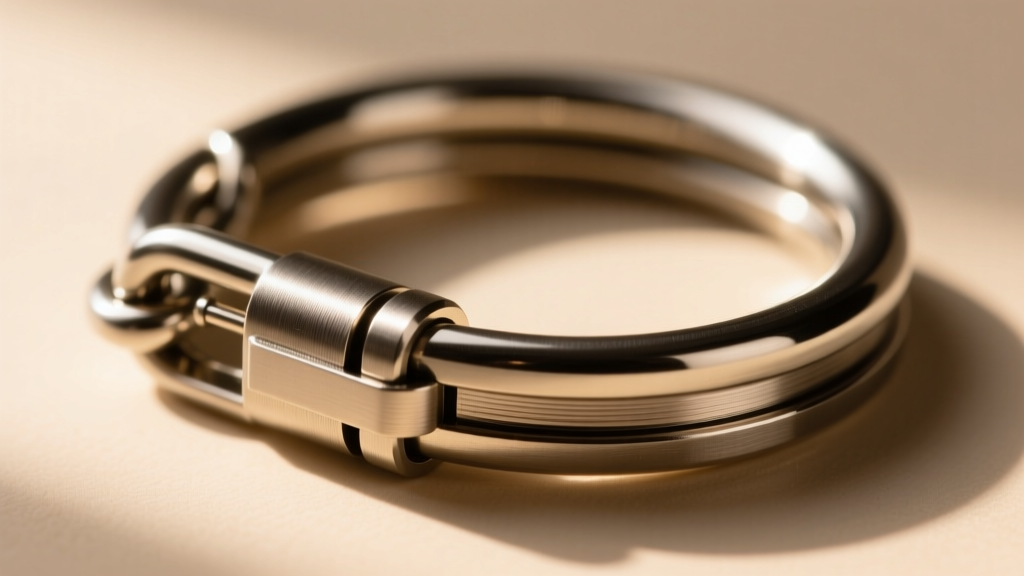
One of the most common questions among fine jewelry enthusiasts concerns the structural integrity of the wire used in linked designs. Spinelli Kilcollin utilizes specific wire gauges depending on the intended anatomical placement and the total weight of the assembly. Below is a technical breakdown of their core earring specifications based on recent 2026 production models.
| Model Style | Wire Gauge | Average Weight (per earring) | Closure Mechanism |
|---|---|---|---|
| 3-Link Huggie | 16g (1.2mm) | 3.8 grams | Hinged Snap Clicker |
| 5-Link Standard Hoop | 14g (1.6mm) | 7.2 grams | Flush-Pin Clicker |
| 7-Link Drop Dangle | 18g (1.0mm) post / 14g links | 11.5 grams | Post & Custom Friction Clutch |
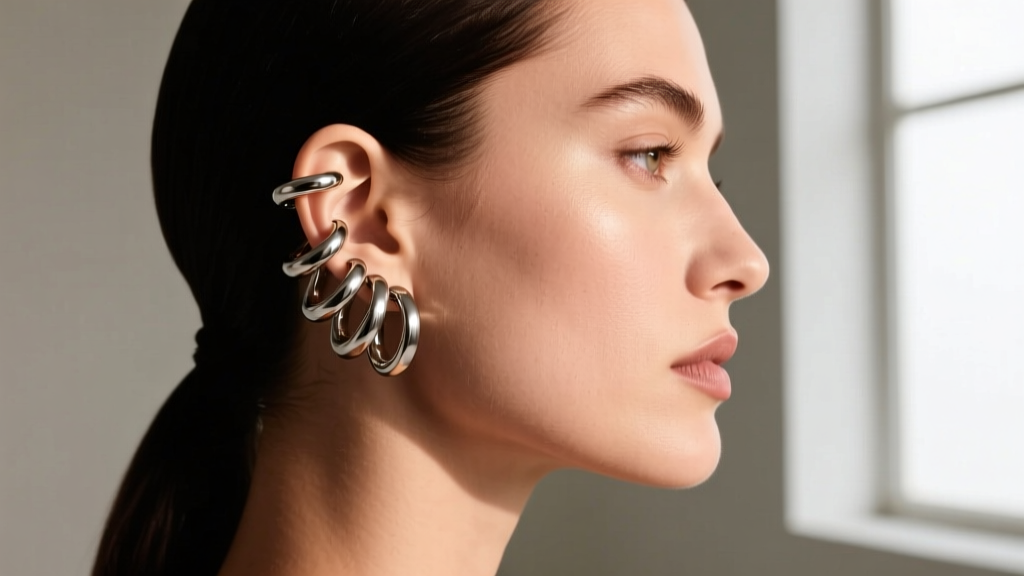
| Helix Ear Cuff (Non-Pierced) | 18g (1.0mm) | 4.5 grams | Tension-Fit Open C-Curve |
The closures on these pieces are engineered to match the fluid aesthetic of the links. The flush-pin clickers, in particular, are machined to ensure the male pin seats perfectly into the female receiver without a visible seam, preventing hair or fabric from snagging on the earring.
Lobe Biomechanics & Cartilage Fit
Solid cast hoops of equivalent volume often suffer from a high center of gravity, causing them to pull aggressively on the earlobe's fistula. This can lead to lobe fatigue, stretching, or even tearing over years of wear. Spinelli Kilcollin earrings, by virtue of their segmented link architecture, exhibit exceptional kinetic energy dissipation.
As the wearer moves, the micro-rings articulate independently, distributing the gravitational load across a wider, more flexible vector. This makes a 12-gram, 7-link SK hoop significantly more comfortable over an 8-hour wear period than a solid 12-gram cast hoop, which acts as a rigid pendulum. For cartilage piercings, such as the helix or conch, the flexible nature of the links allows the earring to absorb impact rather than transferring blunt force directly to the healing or sensitive piercing channel.
Troubleshooting Common Wear Issues
While the engineering is robust, linked jewelry requires an understanding of its mechanical limits. The primary failure mode in interlocking jewelry is friction-induced thinning at the contact points. If you notice a single link becoming slightly oval-shaped or bent, do not attempt to bend it back into place. The 18k gold and work-hardened sterling silver used by Spinelli Kilcollin are highly resistant to deformation, meaning that applying reverse-torque bending will likely cause the metal to snap or micro-fracture. The brand's official repair protocol involves replacing the individual micro-ring entirely to maintain the structural integrity of the chain.
Maintenance Protocols for Bi-Metal Jewelry
Caring for bi-metal linked jewelry requires abandoning standard ultrasonic cleaners. The high-frequency cavitation of an ultrasonic bath can force microscopic abrasive particles and chemical residues into the articulation joints of the links, accelerating internal friction wear and potentially dulling the interior polish that prevents galvanic corrosion.
- Daily Care: Wipe with a dry, untreated microfiber cloth after wearing to remove skin oils and environmental salts.
- Deep Cleaning: Use a soft-bristled baby toothbrush with a pH-neutral, non-abrasive surfactant (like diluted baby shampoo) and lukewarm water. Rinse thoroughly and dry immediately with compressed air or a lint-free cloth.
- Polishing: Use a specialized bi-metal polishing cloth that contains mild, non-corrosive micro-abrasives. Avoid silver-dip liquids entirely, as they will strip the intentional patina or oxidized accents on certain SK collections.
"The beauty of a linked micro-ring earring lies in its movement. Proper maintenance isn't just about keeping the metal shiny; it's about preserving the microscopic tolerances of the joints so the earring continues to drape like liquid metal."
Pricing & Investment Value in 2026
As of 2026, the pricing for Spinelli Kilcollin earrings reflects both the raw material costs and the intensive labor required for hand-linking. Entry-level 3-link studs and small huggies generally start around the $650 to $850 mark. Mid-tier 5-link hoops and ear cuffs typically range from $1,200 to $1,800. For complex, multi-layered auriculate ear cuffs and heavy 7-link drop earrings, prices frequently exceed $3,200 due to the significant gold weight and the hours of bench time required to assemble and polish each individual link.
For buyers seeking a blend of architectural innovation, everyday wearability, and distinct metallurgical craftsmanship, Spinelli Kilcollin earrings remain a benchmark in contemporary fine jewelry. By understanding the technical nuances of their construction, collectors can ensure their pieces remain pristine, functional, and visually striking for decades.


