Long Cross Earrings: 2026 Budget & Value Assessment Guide
Discover the true cost of long cross earrings in 2026. We analyze material tiers, hardware durability, and weight distribution to help you find real value.

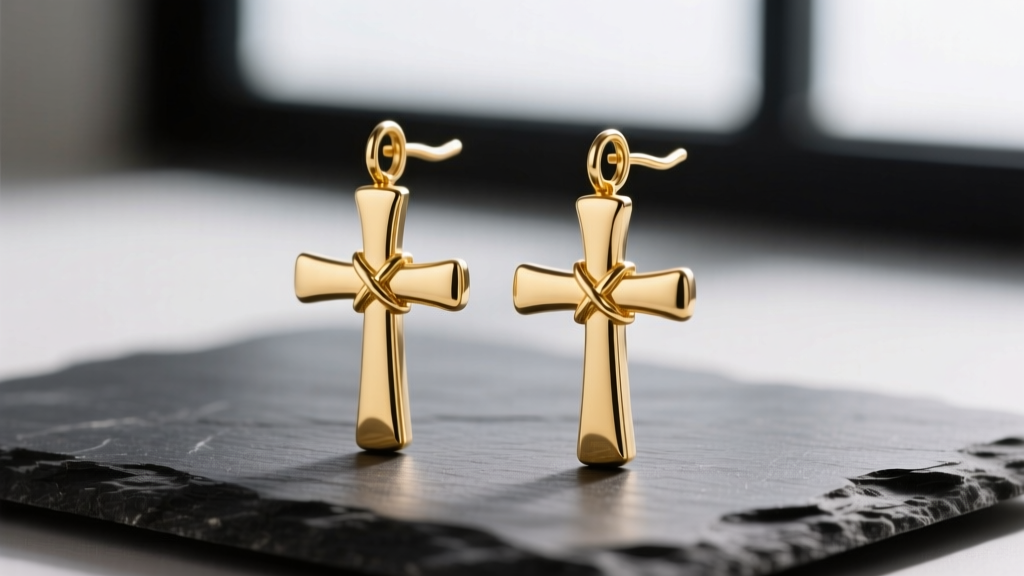
The market for long cross earrings has exploded, bridging the gap between edgy streetwear and refined fine jewelry. However, as you scroll through digital storefronts in 2026, you will encounter a massive price disparity. A pair of long cross dangles can cost anywhere from $12 at a fast-fashion retailer to over $1,200 at a heritage jeweler. For the savvy buyer, the challenge is not just finding a design you love, but determining where the actual value lies. Are you paying for precious metals, or simply a brand markup on plated brass?
This budget and value assessment breaks down the metallurgy, hardware engineering, and hidden costs of long cross earrings, giving you a precise framework to evaluate your next purchase.
The Physics of Dangles: Why Weight Dictates Value
When assessing long cross earrings, most buyers focus solely on aesthetics. From an engineering standpoint, however, you must consider the lever effect. A cross earring that drops 2.5 inches below the earlobe acts as a lever. Every time you turn your head, the momentum of the dangle exerts disproportionate torque on your earlobe fistula (the piercing hole).
Cheap manufacturers ignore this physics reality, resulting in two major failure modes:
- Wire Bending: Budget earrings typically use 22-gauge (0.64mm) or thin 20-gauge (0.81mm) ear wires. Under the weight of a heavy metal cross, these wires bend out of shape within weeks, ruining the structural integrity of the earring.
- Lobe Tearing: Heavy base metals like zinc alloy or thick 316L stainless steel pull the earlobe downward, causing micro-tears in the tissue and eventual stretching of the piercing.
Value Insight: True value in long dangles requires an 18-gauge (1.02mm) or thick 20-gauge ear wire made from a metal with high tensile strength, such as solid 14k gold or work-hardened sterling silver. If a retailer does not list the wire gauge, assume it is a fragile 22-gauge.
Material Tiers and 2026 Pricing Breakdown
To accurately assess value, you must understand what you are actually buying. The Federal Trade Commission (FTC) Jewelry Guides strictly regulate how metals can be marketed, yet misleading terms still flood the market. Here is the definitive pricing and value matrix for long cross earrings this year.
| Material Grade | 2026 Price Range | Longevity & Wear | Value Verdict |
|---|---|---|---|
| Zinc Alloy / Brass (Flash Plated) | $10 - $25 | 1-3 months before chipping/tarnishing | Poor. High risk of contact dermatitis. |
| 316L Surgical Stainless Steel | $20 - $45 | Years, but very heavy on the lobe | Fair. Good for budget, but watch the weight. |
| 925 Sterling Silver | $45 - $110 | Lifetime, but requires polishing | Excellent. Best balance of cost and precious metal value. |
| 14k Gold Vermeil | $85 - $180 | 1-3 years with careful wear | Good. Must be 2.5 microns thick over silver to be legal vermeil. |
| 14k Solid Gold | $350 - $900+ | Generational heirloom quality | Premium. High upfront cost, zero degradation. |
Hardware and Failure Points: Where Cheap Earrings Break
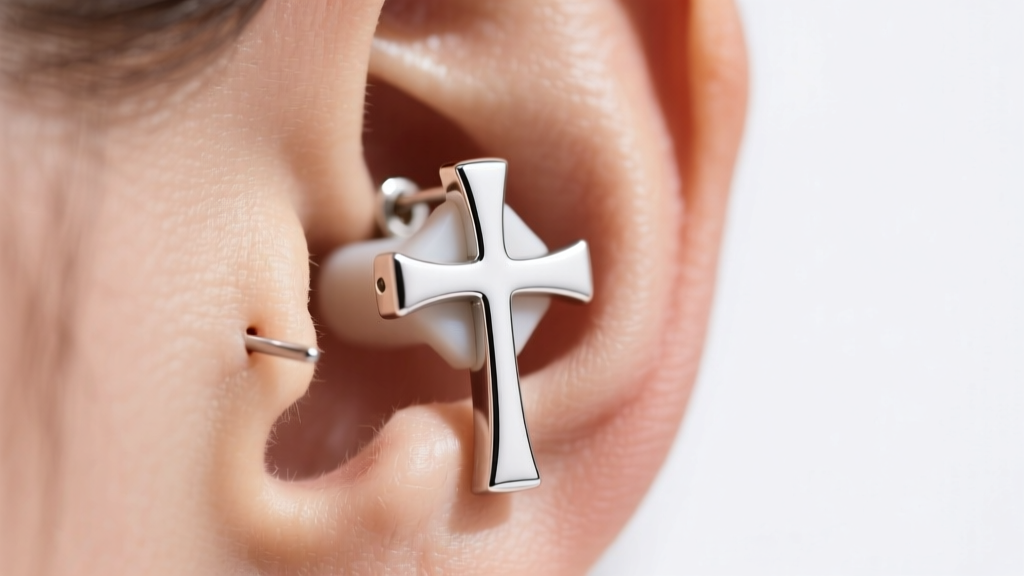
The most common point of catastrophic failure in long cross earrings is the jump ring—the tiny metal loop connecting the top of the cross to the ear wire. In mass-produced earrings, this joint is often machine-stamped rather than properly soldered. Over time, the friction of the jump ring rubbing against the ear wire acts like a saw, eventually slicing through the soft metal and dropping your earring.
When evaluating a pair of long crosses, look closely at the connection point. High-value pieces will feature a closed, soldered jump ring or a seamless integrated hinge. According to the Gemological Institute of America (GIA), proper soldering in precious metals requires precise temperature control to avoid weakening the surrounding alloy. If you see a visible seam or gap in the jump ring of a $100+ earring, it is a manufacturing defect that will lead to loss.
The Earlobe Health Factor: Hidden Costs of Heavy Crosses
Budgeting for long cross earrings must also include the hidden cost of earlobe maintenance. Wearing heavy, elongated crosses for an 8-hour workday can cause the piercing channel to migrate or stretch. Dermatologists and professional piercers consistently warn against wearing heavy dangles daily without support.
If you opt for heavier materials like solid gold or thick stainless steel to ensure durability, you must factor in the cost of silicone earring support discs (often called earlobe patches or O-rings). These cost about $8 to $15 for a multi-pack and sit behind the earlobe, distributing the weight of the earring across a wider surface area. A $500 pair of solid gold long cross earrings is a poor investment if they permanently stretch your piercing because you refused to use a $10 silicone support disc.

How to Inspect Long Cross Earrings for True Value
Whether you are shopping online or inspecting a piece in a boutique, use this expert checklist to verify that the price tag matches the craftsmanship:
- Check the Hallmarks: Look for '925' for sterling silver or '14K'/'585' for solid gold. Beware of stamps like '18K HGE' (Heavy Gold Electroplate), which is merely a thick layer of gold over a worthless base metal core.
- Test the Wire Tempering: Gently try to bend the ear wire. Sterling silver and solid gold should offer firm resistance. If it bends like a paperclip, it has not been work-hardened and will fail under the weight of the cross.
- Examine the Stone Settings: If the cross features pave diamonds or CZ stones, use a loupe. Glued-in stones are a hallmark of cheap manufacturing and will fall out when exposed to humidity or skin oils. True value requires prong or bead settings.
- Verify the Vermeil Thickness: If buying gold vermeil, the retailer must explicitly state the micron thickness. The US legal minimum is 2.5 microns of gold over a sterling silver base. Anything less is standard gold plating and will wear through to the silver within months of daily friction.
Final Verdict: What Should You Actually Spend?
Your budget should be directly tied to your intended wear schedule. If you are buying long cross earrings for occasional evening wear or seasonal styling, a $60 to $90 pair of 925 sterling silver crosses offers the best value. Sterling silver is lightweight enough to protect your earlobes, hypoallergenic, and holds intrinsic scrap value.
If you intend to wear them as a daily signature piece, skip the vermeil and plated brass entirely. The friction from hair, clothing, and skincare products will strip the plating within a year. In this scenario, investing $400 to $600 in 14k solid gold is the only financially sound decision, as it eliminates replacement costs and maintains its material value indefinitely. True value in jewelry is not about finding the lowest price; it is about paying for engineering and metallurgy that respects both your body and your wallet.


