Magnetic Earring Men: 2026 Style Trends & Fit Guide
Discover 2026 trends for magnetic earring men. Explore neodymium magnet grades, styling matrices, and premium non-pierced options for modern menswear.

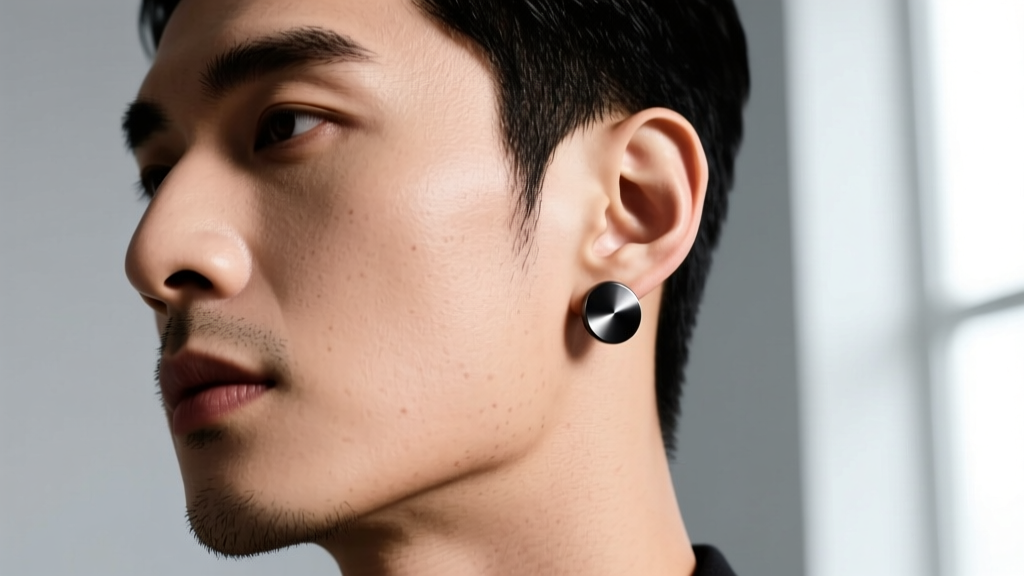
The Evolution of Non-Pierced Menswear
For decades, the phrase "magnetic earring men" conjured images of flimsy, easily lost novelty items from mall kiosks. However, as we navigate the 2026 menswear landscape, non-pierced ear accessories have undergone a radical technological and aesthetic renaissance. Driven by a cultural shift toward commitment-free styling and workplace adaptability, magnetic earrings have graduated from gimmicks to legitimate staples in the modern man's accessory rotation. According to Vogue's recent menswear accessory reports, the demand for high-end, non-pierced jewelry has surged by over 40% since 2024, fueled by advancements in micro-magnetism and skin-safe metallurgy.
Today’s magnetic earrings are engineered for the rigors of daily life. They cater to men who want the edge of a cartilage cuff or the subtlety of a minimalist stud without the permanence of a needle, the healing downtime, or the risk of workplace policy violations. But not all magnetic earrings are created equal. Understanding the material science and style frameworks behind these pieces is the difference between a secure, stylish fit and a lost accessory.
The Science of the Hold: Neodymium Grades & Friction Pads
The primary failure point of early magnetic earrings was a fundamental misunderstanding of physics. Jewelers focused on pull force (the strength required to pull the magnets directly apart) while ignoring shear force (the downward sliding motion caused by gravity, talking, and chewing). In 2026, premium brands solve this using high-grade neodymium magnets paired with micro-textured silicone friction pads.
Magnet Grading Explained
Neodymium magnets are graded by their maximum energy product, measured in Mega-Gauss Oersteds (MGOe). When shopping for a magnetic earring, men should look for specific grades based on the jewelry's weight:
- N35 - N40: Standard grade. Suitable only for ultra-lightweight studs (under 1.5 grams). Prone to slipping during heavy physical activity.
- N42 - N45: The 2026 industry standard for mid-weight huggies and small hoops (1.5 to 3.5 grams). Offers an optimal balance of magnetic strength and compact size.
- N50 - N52: The highest commercial grade. Required for heavy, structural ear cuffs or oxidized silver statement pieces (4+ grams). Note: N52 magnets are brittle and require robust housing.
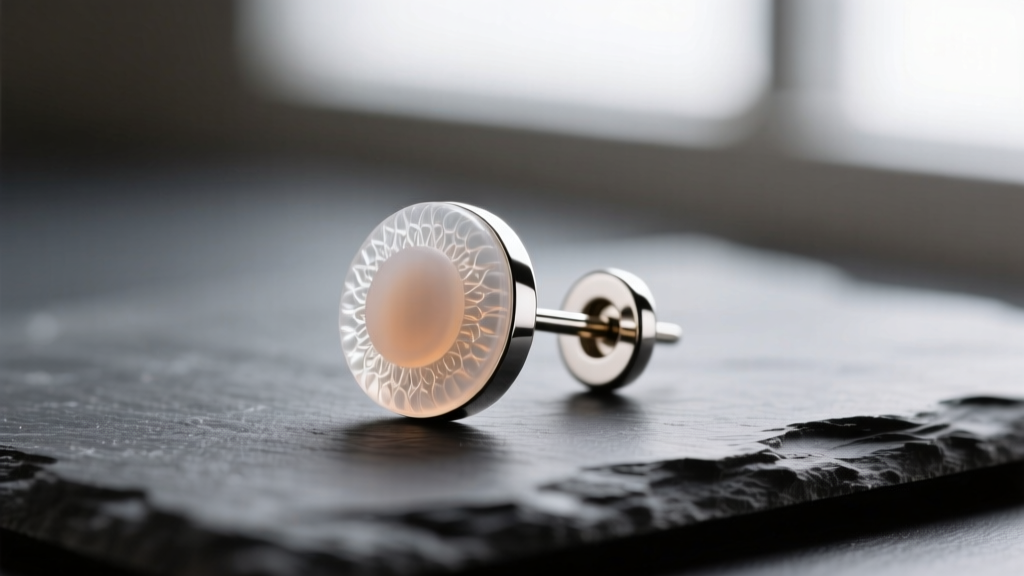
Furthermore, the magnet housing matters. Direct skin contact with raw neodymium (which contains nickel) can cause severe contact dermatitis. Reputable manufacturers encapsulate these magnets in 316L surgical steel or Grade 23 Titanium (Ti-6Al-4V), adhering strictly to GIA's guidelines on metal allergies and nickel-release limits.
2026 Style Matrix: Aesthetics, Weight, and Face Shapes
Selecting the right magnetic earring isn't just about the magnet; it's about proportion and facial geometry. Heavier earrings require stronger magnets, which means thicker backings that can look clunky on smaller earlobes. Below is our 2026 styling matrix to help you match the hardware to your anatomy.
| Face Shape | Recommended Style | Max Weight Limit | Required Magnet Grade | Best Material Finish |
|---|---|---|---|---|
| Square / Angular | Soft Huggies / Curved Cuffs | 3.5 grams | N45 | Brushed Titanium |
| Round | Geometric Studs / Drop Dangles | 2.0 grams | N42 | Matte Black PVD |
| Oval | Minimalist Hoops / Bar Magnets | 4.0 grams | N50 | Polished 316L Steel |
| Heart / Diamond | Small Cluster Studs / Ear Crawlers | 2.5 grams | N42 | Oxidized Sterling Silver |
Troubleshooting: Why Magnetic Earrings Slip (And How to Fix It)
Even with N52 magnets, men frequently report magnetic earrings sliding off. This is rarely a failure of the magnet itself, but rather a failure of the surface interface. The human earlobe produces natural sebum (oils) and sweat, which acts as a lubricant, drastically reducing the coefficient of friction between the metal and the skin.
"The secret to a secure magnetic hold in 2026 isn't just a stronger magnet—it's the integration of medical-grade, micro-textured silicone pads that grip the skin's natural topography, converting shear force into manageable friction." — Journal of Modern Accessory Engineering
Pro-Troubleshooting Steps:
- Degrease the Lobe: Before applying the earring, wipe the front and back of your earlobe with an alcohol prep pad to remove natural oils.
- Check the Silicone Pad: Ensure the backing features a textured silicone pad. Smooth metal-on-skin will always fail under shear force.
- Avoid Heavy Overcoats: Thick winter beanies or tight hoodie strings create friction against the outer magnet, pulling it out of alignment. Opt for structured cuffs that sit flush against the cartilage when wearing headgear.
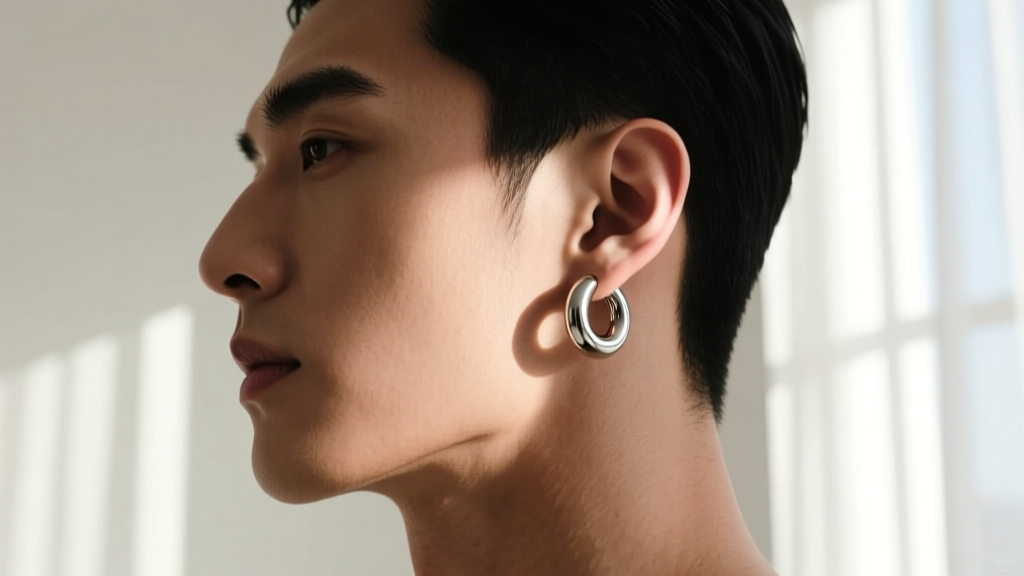
Market Tiers: What You Should Actually Pay
The market for men's magnetic earrings has stratified into distinct tiers. Understanding these tiers prevents you from overpaying for novelty items or underpaying for skin-irritating alloys.
Tier 1: The Novelty Bin ($5 - $15)
Typically found on mass-market e-commerce sites. These use weak ferrite or low-grade N35 neodymium magnets encased in unverified alloys. They are prone to rusting, causing green skin discoloration, and will inevitably fall off during a commute. Verdict: Avoid entirely.
Tier 2: The Mid-Market Standard ($35 - $85)
The sweet spot for daily wear. Brands in this tier use 316L surgical steel, N42 magnets, and basic silicone friction pads. Designs usually include classic 6mm dome studs, simple 10mm huggies, and minimalist magnetic barbells. Verdict: Excellent for everyday office and casual wear.
Tier 3: Designer & Artisan Engineering ($120 - $350+)
High-end streetwear and luxury jewelers have entered the non-pierced space. These pieces feature PVD (Physical Vapor Deposition) coatings for scratch-resistant matte black or 18k gold finishes, custom-molded ergonomic backings that contour to the specific curve of the lobe, and N50+ magnets. Verdict: Worth the investment for statement pieces, evening wear, and those with severe metal sensitivities.
Final Thoughts on the Magnetic Revolution
The stigma surrounding non-pierced jewelry for men has officially evaporated. In 2026, a well-engineered magnetic earring is indistinguishable from a pierced counterpart, offering the flexibility to change your aesthetic from a boardroom-appropriate titanium stud to an evening-ready oxidized silver cuff in seconds. By prioritizing neodymium grades, demanding silicone friction interfaces, and selecting styles that complement your facial geometry, you can confidently embrace the magnetic revolution without ever losing your edge—or your earring.


