The Ultimate Care Guide for Earrings Long Silver Styles
Discover expert cleaning, maintenance, and storage tips for earrings long silver styles. Prevent tarnish, untangle chains, and protect delicate wires.

The Unique Vulnerabilities of Long Silver Earrings
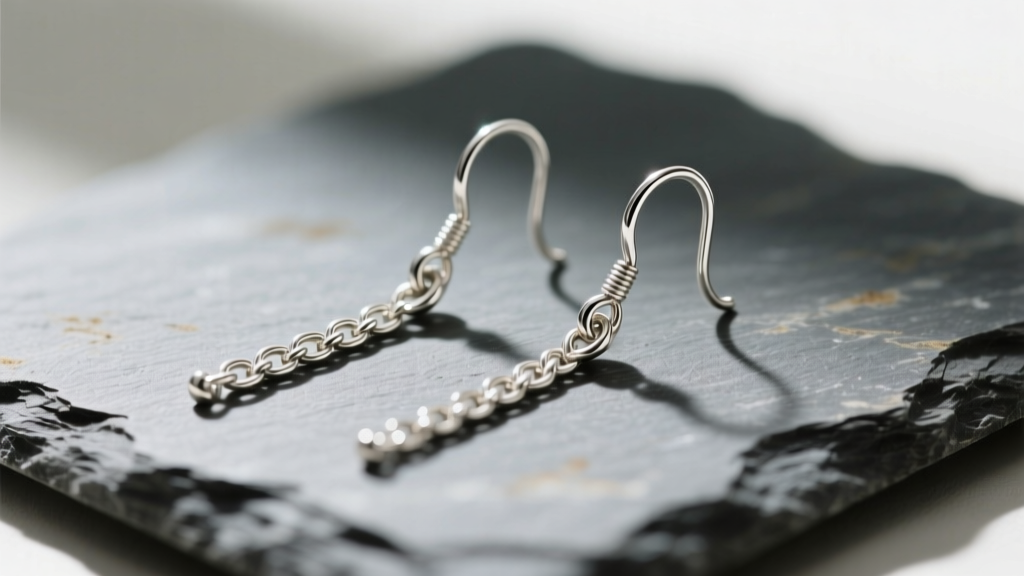
When managing a jewelry collection, earrings long silver styles—such as chandeliers, threaders, and dramatic dangles—present a unique set of maintenance challenges. Unlike standard studs or huggies, long drop earrings possess a high surface-area-to-weight ratio. This means they are exposed to more airborne sulfur and humidity, accelerating the oxidation process. Furthermore, the kinetic energy generated by walking and head movements places continuous mechanical stress on the topmost wire loops and clasps.
As of 2026, jewelers and conservators emphasize that treating long silver drops with the same generic methods used for heavy silver bangles or rings is a recipe for disaster. Delicate cable chains can easily micro-knot, and the weight of the drop can warp standard ear wires. To maintain the structural integrity and brilliant luster of your long silver pieces, you must adopt a specialized, multi-tiered care protocol.
Decoding Silver Alloys: .925 Sterling vs. Argentium
Before applying any cleaning agents, you must identify the specific silver alloy of your earrings. The vast majority of silver jewelry is .925 sterling, but an increasing number of high-end designers are utilizing Argentium silver for long, intricate drops due to its superior tarnish resistance.
| Property | .925 Sterling Silver | .935 Argentium Silver |
|---|---|---|
| Composition | 92.5% Silver, 7.5% Copper | 93.5% Silver, Copper, Germanium |
| Tarnish Resistance | Moderate (Copper reacts with sulfur) | Exceptional (Germanium forms a protective oxide layer) |
| Cost Factor | Baseline Market Price | Typically 10-15% higher than Sterling |
| Cleaning Frequency | Every 4-6 weeks if worn daily | Every 3-6 months |
| Polishing Risk | Low, but over-polishing removes silver | High, abrasive polishing destroys the germanium layer |
According to the Victoria and Albert Museum's conservation guidelines, abrasive polishing pastes should generally be avoided on intricate silver filigree, as the residue becomes trapped in the crevices and hardens, dulling the piece over time. This is especially true for the complex wirework found in long silver chandelier earrings.
Step-by-Step Deep Cleaning Protocol
The cleaning method you choose must be dictated by the presence of gemstones. Long silver earrings frequently incorporate beads, teardrops, or dangling crystals, which dictate the chemical safety of your cleaning bath.
The Electrochemical Bath (For Plain Silver & Glass/Crystal Drops)
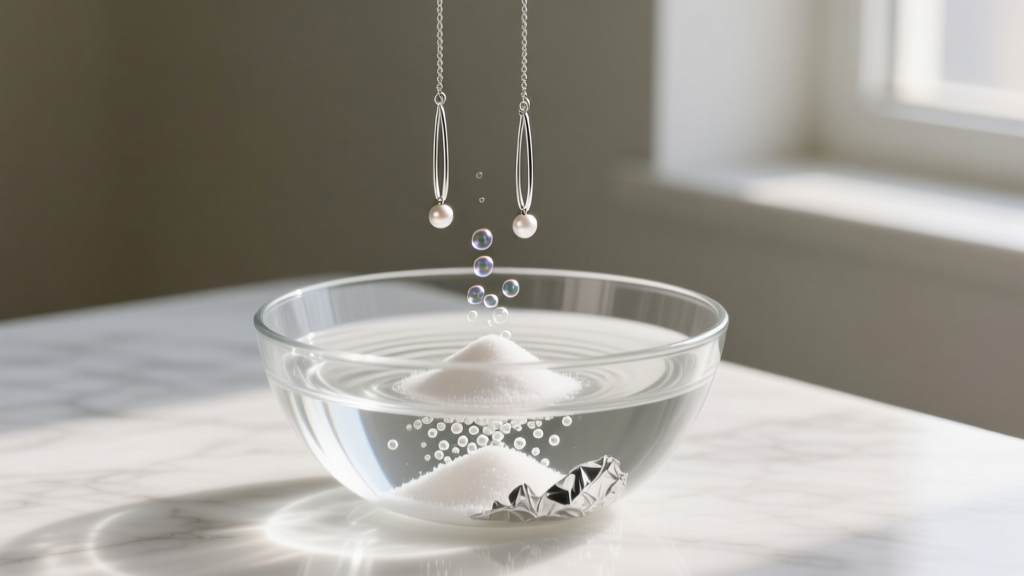
If your long silver earrings feature only metal, glass, or hard crystalline gems (like cubic zirconia or diamond), the ion-exchange method is the safest and most effective way to remove heavy black silver sulfide tarnish without scrubbing.
- Line a glass or ceramic bowl with aluminum foil, shiny side up.
- Place the earrings on the foil, ensuring the silver directly touches the aluminum.
- Sprinkle 1 tablespoon of baking soda and a pinch of non-iodized salt over the jewelry.
- Pour boiling water into the bowl until the earrings are fully submerged. You will see tiny bubbles and smell a faint sulfur odor.
- Leave for exactly 3 to 5 minutes. Remove with wooden or plastic tongs (never metal, which can scratch the silver).
- Rinse thoroughly in distilled water and pat dry with a microfiber cloth.
Warning: Never use this method if your earrings feature pearls, opals, turquoise, or malachite. The heat and alkalinity will permanently destroy porous organic gems.
The Mild Surfactant Method (For Gemstone-Accented Drops)
For long silver earrings adorned with delicate gemstones, rely on a gentle surfactant. The Gemological Institute of America (GIA) gem care protocols strongly advise against ultrasonic cleaners for long drop earrings. The high-frequency vibrations can shatter included stones, fracture delicate glass beads, and shake loose the epoxy adhesives commonly used in drop-earring assembly.
Instead, mix a few drops of phosphate-free, mild dish soap (like Dawn) into a bowl of lukewarm distilled water. Use a baby hairbrush or an ultra-soft makeup brush to gently sweep the suds over the silver chains and gemstone settings. Rinse under a gentle stream of lukewarm water, ensuring the stopper is securely in the drain. Dry immediately with a lint-free cloth, using a hairdryer on the 'cool' setting to blast moisture out of the tiny chain links.
Mechanical Maintenance: Wire, Clasps, and Chains
Cleaning is only half the battle. The physical hardware of earrings long silver styles requires routine mechanical troubleshooting to prevent loss and breakage.
Reshaping Warped Fishhooks
Long dangles are heavy. Over time, the 20-gauge or 22-gauge wire of a standard fishhook ear wire will pull forward, warping the loop and compromising the structural tension. To fix this, do not use standard metal jewelry pliers, which will leave deep gouges in the soft silver. Invest in a pair of nylon-jaw pliers. Gently grip the base of the ear wire and apply light, incremental pressure to bend the wire back to its original 45-degree forward angle.
Untangling Micro-Knots in Delicate Chains
Threader earrings and chain-based dangles are notorious for forming microscopic knots. When this happens, do not pull. Lay the tangled silver chain flat on a white ceramic tile or a piece of glass. Apply a tiny drop of mineral oil or baby oil directly to the knot. Using the eye-end of a fine sewing needle, gently work the center of the knot loose. The oil reduces friction, while the glass surface provides a hard, non-porous backdrop that prevents the chain from catching on fabric fibers.
Leverback Spring Maintenance
Leverback clasps are highly recommended for heavy long silver earrings because they secure the piercing completely. However, the tiny spring mechanism can become clogged with skin oils, dead cells, and lotion, causing the lever to stick open. Use a can of compressed air to blow out the hinge. If the lever remains stiff, gently scrub the hinge seam with a fiberglass scratch pen or a soft toothbrush dipped in isopropyl alcohol to dissolve the sebum buildup.
Strategic Storage Solutions to Prevent Warping
How you store your long silver earrings is just as critical as how you clean them. Tossing long drops into a standard jewelry box guarantees three things: tangled chains, crushed gemstones, and accelerated tarnishing due to trapped ambient humidity.
Expert Storage Rule: Long silver earrings must be stored vertically. Hanging storage prevents the chains from folding over themselves and keeps the ear wires from bearing the dead weight of the drops, which causes permanent bending.
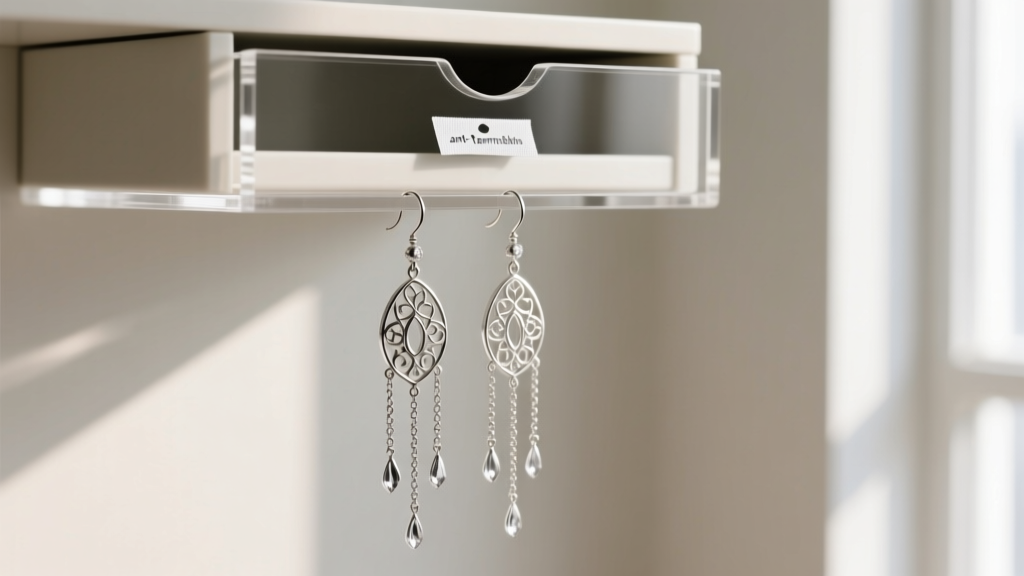
For optimal preservation, utilize a multi-tiered acrylic hanging organizer or a felt jewelry roll designed specifically for dangles. Crucially, you must introduce an active tarnish-inhibiting agent into the storage environment. 3M Anti-Tarnish Strips or Pacific Silvercloth tabs are essential. These materials contain zinc or silver particles that act as sacrificial metals, absorbing airborne hydrogen sulfide before it can reach your earrings. Replace these strips every 6 to 12 months, or when they turn dark brown or black.
Summary Checklist for Long Silver Earring Care
- Identify the Alloy: Confirm if your pieces are .925 Sterling or Argentium before selecting a cleaning method.
- Protect the Gems: Use the electrochemical foil bath only for plain metal or hard crystals; use mild surfactants for porous stones.
- Bypass Ultrasonics: Never subject long, glued, or beaded drops to ultrasonic vibrations.
- Maintain the Hardware: Use nylon-jaw pliers to reshape heavy ear wires and mineral oil to untangle delicate chains.
- Store Vertically: Hang long earrings in a low-humidity environment with active anti-tarnish strips to preserve wire integrity and prevent oxidation.
By treating your earrings long silver pieces with this level of specialized care, you ensure that the delicate wirework remains structurally sound, the chains remain fluid, and the silver retains its brilliant, reflective luster for decades to come.


