How to Clean and Maintain Fake Hoop Earrings Safely
Learn how to safely clean and maintain fake hoop earrings, from non-pierced clip-on mechanisms to gold-plated costume hoops, without ruining finishes.

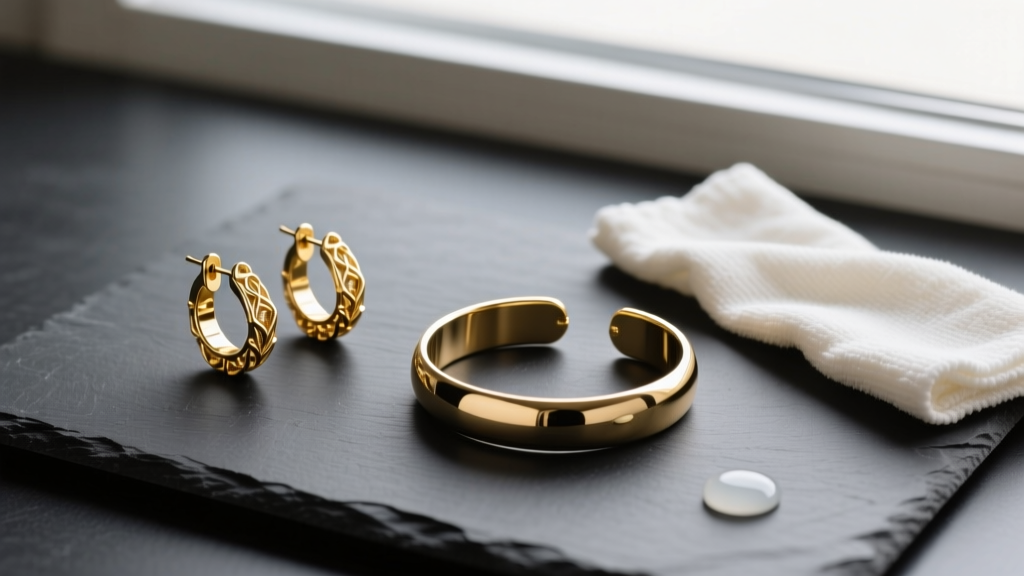
Understanding 'Fake' Hoop Earrings: Materials and Mechanisms
In the jewelry community, the term 'fake hoop earrings' generally refers to two distinct categories: non-pierced alternatives (such as clip-ons, magnetic hoops, and spring-loaded ear cuffs) that mimic the look of a traditional piercing, and costume or fashion hoops made from plated base metals rather than solid precious metals. Caring for these pieces requires a dual-pronged approach. You must protect the delicate exterior plating from chemical degradation while simultaneously maintaining the mechanical integrity of the non-pierced clasps.
Unlike solid 14k or 18k gold hoops, which can withstand rigorous ultrasonic cleaning and harsh polishing compounds, fake hoop earrings are highly vulnerable to cavitation and abrasion. According to the Federal Trade Commission's Jewelry Guides, gold-plated jewelry features a microscopic layer of gold—often less than 2.5 microns thick—applied over a brass or copper base. Aggressive cleaning will strip this layer, exposing the base metal and leading to rapid tarnishing and potential skin irritation.
The Science of Cleaning Plated and PVD Finishes
Modern fake hoop earrings typically utilize either traditional electroplating or Physical Vapor Deposition (PVD) coating. PVD is a vacuum-deposition process that creates a much harder, more durable finish than electroplating, but it still requires gentle care. The primary enemy of both finishes is the lactic acid, sebum, and environmental sulfur found in daily wear.
The Distilled Water and pH-Neutral Soap Method
Never use tap water to soak your plated hoops. Tap water contains chlorine and trace minerals that can cause micro-oxidation on exposed brass bases. Instead, follow this exact protocol:
- Prepare the Solution: Mix one cup of distilled water with two drops of a pH-neutral, lotion-free dish soap (such as original blue Dawn).
- Soak Briefly: Submerge the hoops for no more than three minutes. Prolonged exposure to water can weaken the adhesive bonds in magnetic hoops and cause the internal springs of clip-ons to rust.
- Agitate Gently: Use an extra-soft baby toothbrush (with 0.15mm bristles) to lightly sweep the crevices of the hoop and the clasp mechanism. Do not scrub the plated surface directly.
- Rinse and Dry: Rinse under a gentle stream of distilled water, then immediately pat dry with a lint-free microfiber cloth. Allow them to air-dry completely on a paper towel for 15 minutes before storage.
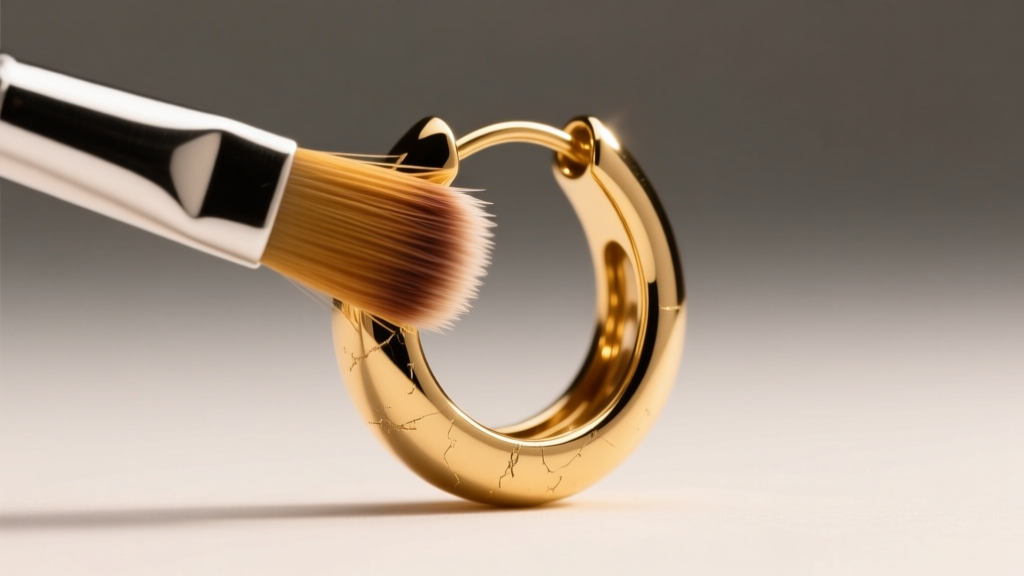
Maintaining Non-Pierced Mechanisms
The mechanical components of fake hoop earrings are just as important as their aesthetic finish. A non-pierced hoop that loses its tension or magnetic grip is unwearable. Below is a breakdown of how to maintain the three most common non-pierced mechanisms.
1. Paddle-Back and Screw-Back Clip-Ons
Clip-on hoops rely on a metal bridge that applies pressure to the earlobe. Over time, metal fatigue causes this bridge to widen, resulting in a loose fit. To restore tension, use nylon-jaw pliers to gently squeeze the bridge inward by 1 to 2 millimeters. Never use standard steel jewelry pliers, as they will permanently mar the plated finish. For screw-back variants, apply a microscopic drop of synthetic watch oil to the threads every six months to prevent stripping.
2. Magnetic Hoops
Magnetic hoops use N42 to N52 grade neodymium magnets encased in a metal housing. These magnets are incredibly strong but highly brittle. Furthermore, the nickel-copper-nickel plating on the raw magnet can corrode if exposed to sweat. Wipe the magnetic contact points with a cotton swab dipped in 70% isopropyl alcohol once a week to remove skin oils. Avoid getting the alcohol on the exterior gold or silver plating, as it can degrade certain cheap lacquer topcoats.
3. Spring-Loaded Ear Cuffs (Hoop Style)
These cuffs feature an internal steel spring wrapped in a plated brass tube. Moisture is the enemy here. If water enters the microscopic seam of the cuff, the internal spring will rust and seize. Never submerge spring cuffs; only clean them with a slightly damp microfiber cloth.
| Mechanism Type | Primary Vulnerability | Maintenance Action | Frequency |
|---|---|---|---|
| Paddle-Back Clip-On | Metal fatigue / Loss of tension | Gently compress bridge with nylon-jaw pliers | Every 3-6 months |
| Screw-Back Clip-On | Thread stripping / Friction | Apply synthetic watch oil to threads | Bi-annually |
| Magnetic Hoops | Sebum buildup / Magnet corrosion | Wipe contact points with 70% isopropyl alcohol | Weekly |
| Spring Cuff Hoops | Internal spring rust / Seizing | Surface wipe only; never submerge in liquid | After every wear |
Storage Chemistry: Preventing Tarnish and Tension Loss
How you store your fake hoop earrings directly dictates their lifespan. Base metals like brass and copper are highly reactive to sulfur and humidity. When the microscopic pores in gold or silver plating allow sulfur gas to reach the base metal, it creates copper sulfide, which manifests as a dark, irreversible tarnish that blisters the plating from underneath.
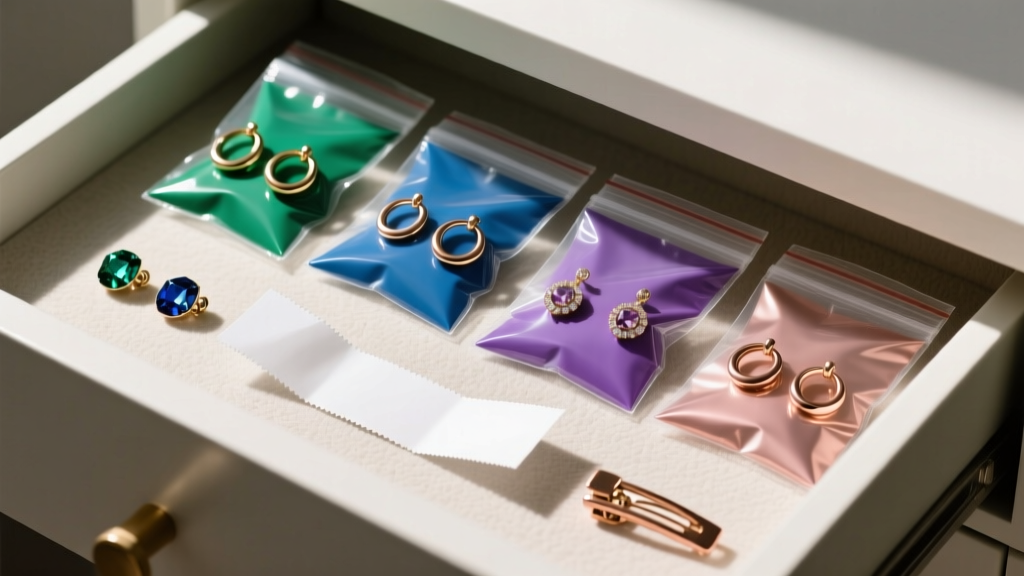
To prevent this, store each pair of fake hoops in individual polyethylene (PE) zip bags. Avoid polyvinyl chloride (PVC) bags or cheap plastic organizers, as PVC off-gasses sulfur compounds and plasticizers that will aggressively tarnish and degrade costume jewelry. Place a 3M anti-tarnish strip inside each bag; these strips contain chemically treated silica that absorbs and neutralizes hydrogen sulfide gas in the enclosed environment. Store the bags in a cool, dark drawer, away from direct sunlight and bathroom humidity.
Troubleshooting Common Issues
The 'Green Earlobe' Phenomenon
If your clip-on or magnetic fake hoops are leaving green or black marks on your skin, you are experiencing a chemical reaction between the copper in the base metal and the acidic pH of your sweat. This is not necessarily a sign of poor hygiene, but rather a basic oxidation process. To solve this without ruining the earrings, paint the interior contact points (the paddle or the magnetic backing) with a thin layer of polyurethane-based jewelry sealant or clear nail polish. This creates an impermeable barrier between the copper and your skin. Reapply every few months as the sealant wears down from friction.
Loose or Falling Magnets
In lower-quality magnetic hoops, the neodymium magnet is held in place by a weak factory adhesive. If a magnet falls out, do not use super glue (cyanoacrylate), which becomes brittle and can fog the surrounding metal with white residue. Instead, clean the cavity with alcohol, let it dry, and re-seat the magnet using a flexible, industrial-strength adhesive like E6000. Allow it to cure for 24 hours before wearing.
Preventing Contact Dermatitis
Many fake hoop earrings contain nickel in their base alloys or plating baths. The American Academy of Dermatology notes that nickel allergy is one of the most common causes of allergic contact dermatitis. If you experience redness, itching, or blistering where the clip or magnet touches your ear, discontinue use immediately. For future purchases, look specifically for fake hoops labeled as 'surgical steel base' or 'titanium base' with PVD coating, which are vastly more biocompatible than standard brass alloys.
Conclusion
Maintaining fake hoop earrings requires a delicate balance of chemical awareness and mechanical care. By avoiding ultrasonic cleaners, utilizing distilled water and pH-neutral soaps, and properly maintaining the tension of clip-on bridges and the integrity of neodymium magnets, you can extend the life of your non-pierced and costume hoops by years. Proper storage in polyethylene bags with anti-tarnish strips is the final, crucial step in ensuring your fake hoops remain as vibrant and secure as the day you bought them. For more in-depth guides on jewelry metallurgy and care, consult the Gemological Institute of America (GIA) resources on safe jewelry maintenance.


