Maomao Earrings Materials: PVD Steel vs Solid Gold
Discover the exact metallurgy of Maomao earrings. We compare 316L PVD steel, titanium, and solid gold for sensitive ears and daily wear.

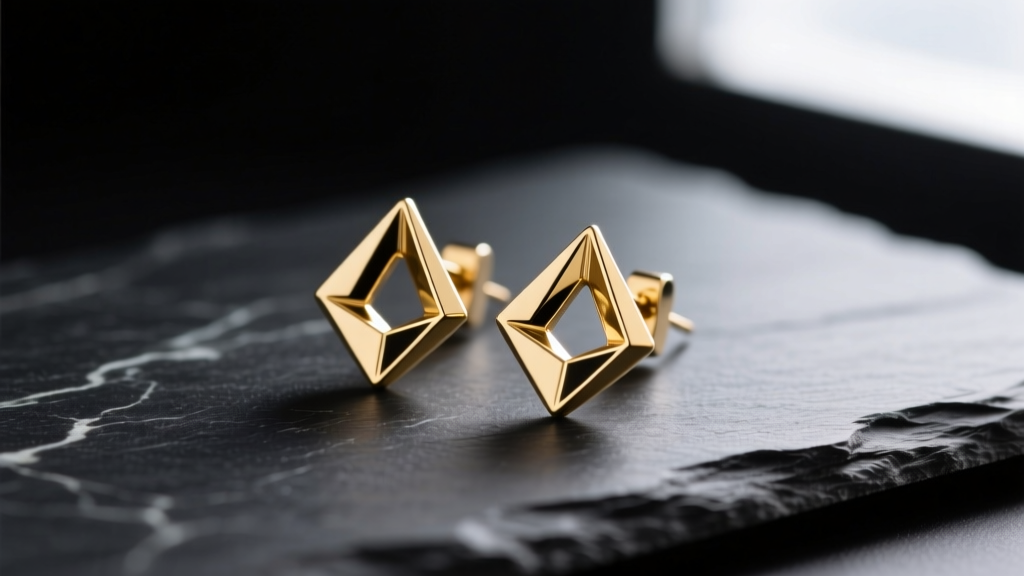
The Metallurgy of Maomao Earrings: What Are You Actually Wearing?
Maomao earrings have taken the jewelry market by storm, celebrated for their sleek, architectural, and minimalist aesthetic. However, beneath the viral appeal lies a complex metallurgical profile that every wearer needs to understand. Unlike traditional fine jewelry crafted from solid 14k gold or platinum, the core of most Maomao designs relies on 316L surgical stainless steel, finished with a Physical Vapor Deposition (PVD) coating. Understanding the material properties of these earrings is critical, especially for those with sensitive skin, fresh piercings, or metal allergies. In this comprehensive guide, we deconstruct the exact material composition of Maomao earrings and compare them against traditional fine metals to help you make an informed decision for your ear curation.
The Core Alloy: 316L Stainless Steel Deconstructed
To evaluate Maomao earrings, we must first look at the base metal. 316L stainless steel is an austenitic chromium-nickel-molybdenum alloy. The 'L' stands for low carbon, which minimizes carbide precipitation during welding and ensures superior corrosion resistance. But what does this mean for your earlobes?
The Nickel Factor and Hypoallergenic Claims
316L steel typically contains between 8% and 10.5% nickel. Nickel is the most common cause of allergic contact dermatitis in jewelry wearers. According to the American Academy of Dermatology, prolonged exposure to nickel-bearing alloys can trigger severe localized immune responses, resulting in itching, redness, and blistering. Therefore, bare 316L steel is not inherently hypoallergenic. The 'surgical' designation refers to its use in medical tools and temporary implants, not necessarily its safety for permanent, 24/7 wear in unhealed piercings.
The Role of Molybdenum in Sweat Resistance
Where 316L shines is its inclusion of 2% to 3% molybdenum. This specific element drastically increases the alloy's resistance to pitting corrosion from chlorides. Human sweat contains sodium chloride; cheaper alloys like 304 stainless steel or brass will quickly oxidize and turn your skin green when exposed to daily perspiration. The molybdenum in Maomao's 316L base ensures the structural integrity of the earring post remains intact, even in high-humidity environments or during workouts.
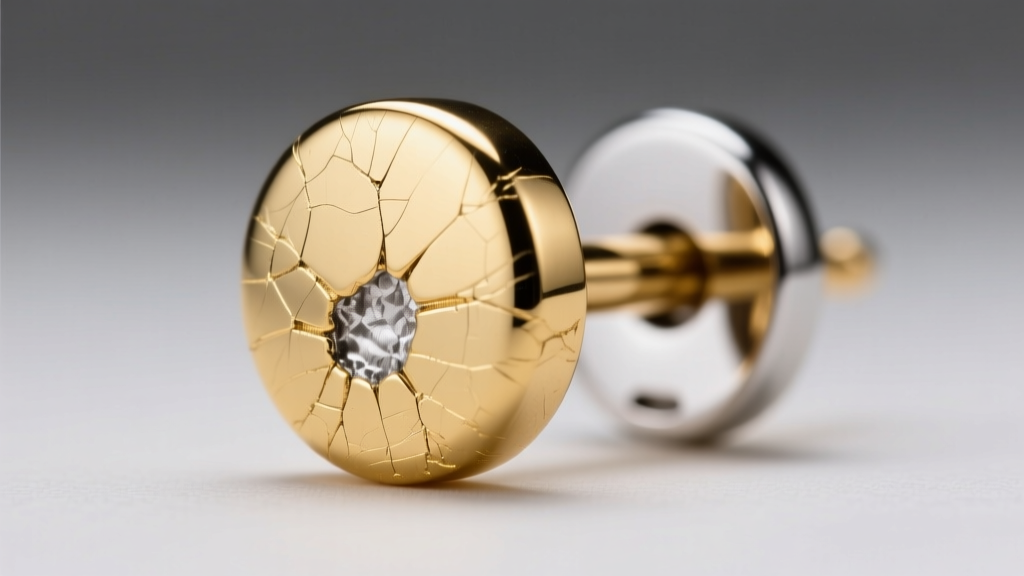
The PVD Coating: Molecular Bonding vs. Electroplating
Because the 316L base contains nickel, Maomao utilizes Physical Vapor Deposition (PVD) to seal the metal and provide a luxurious gold or rose-gold finish. PVD is a vacuum-coating process where titanium nitride or zirconium nitride is vaporized and bonded to the steel at a molecular level.
- Hardness: PVD coatings boast a Vickers Hardness (HV) of over 2,000, making them up to four times harder than traditional electroplating. This resists scratching from daily handling.
- Thickness: A standard PVD layer on premium fashion jewelry ranges from 0.1 to 0.5 microns. While thin, its density prevents moisture from reaching the nickel-bearing steel beneath.
- Failure Modes: PVD does not peel or flake like electroplating. Instead, it fails through micro-abrasions. Over 12 to 24 months of continuous wear, friction from hair, towels, and butterfly earring backs slowly wears through the 0.3-micron barrier, eventually exposing the nickel alloy to your skin.
Material Comparison: Maomao PVD vs. Fine Jewelry Alternatives
How does the Maomao material stack up against traditional fine jewelry options? The table below breaks down the critical properties for ear wear.
| Material | Nickel Content | Corrosion Resistance | Avg. Price Range | Best Use Case |
|---|---|---|---|---|
| Maomao 316L PVD Steel | 8-10% (Sealed) | High (Molybdenum) | $15 - $45 | Fully healed lobes, daily fashion wear |
| ASTM F136 Titanium | 0% | Extreme | $30 - $80 | Fresh piercings, severe metal allergies |
| 14k Solid Gold | 0-5% (Alloy dependent) | Moderate (Can tarnish) | $150 - $400+ | Lifetime wear, heirloom pieces |
| 925 Sterling Silver | 0% (Contains 7.5% Copper) | Low (Oxidizes easily) | $40 - $120 | Occasional wear, dry environments |
For individuals with known nickel allergies, the Association of Professional Piercers strongly recommends sticking to ASTM F136 implant-grade titanium or high-karat solid gold, as PVD coatings on steel are considered a temporary barrier rather than a permanent biological safeguard.
Gauge Sizing and Tissue Mechanics
Material is only half the equation; the physical dimensions of the earring post dictate how your tissue responds. Maomao earrings predominantly feature 20-gauge (0.81mm) or 18-gauge (1.02mm) posts, which align with standard commercial lobe piercing sizes.
The Cheese-Cutter Effect in Cartilage
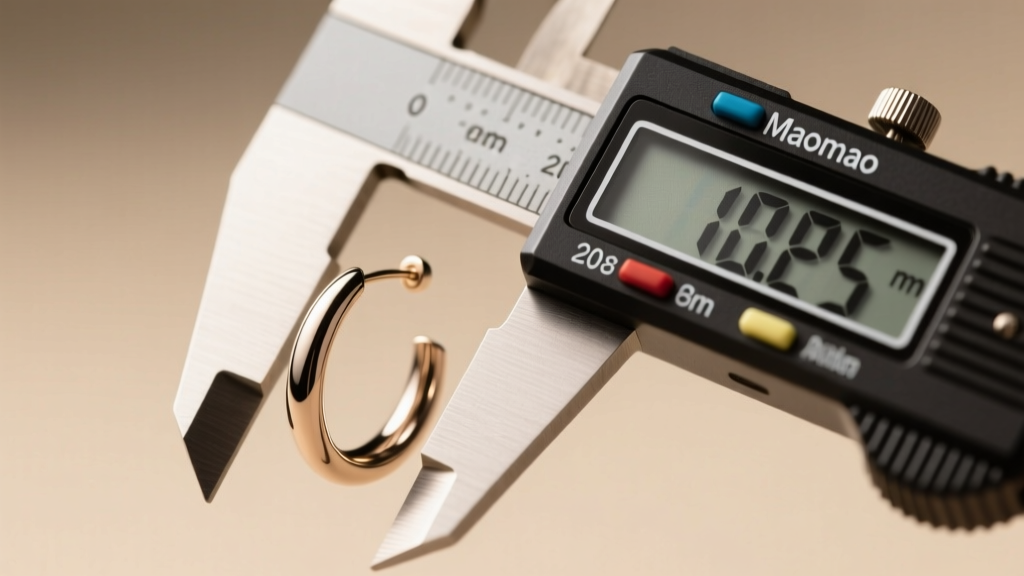
If you are considering Maomao hoops or huggies for upper cartilage piercings (like the helix or forward helix), you must be cautious of the 'cheese-cutter effect.' Cartilage tissue is dense and rigid. A 20-gauge wire under the tension of a hoop can slowly slice through the fistula (the piercing channel) over time, leading to migration or rejection. Professional piercers generally mandate a minimum of 16-gauge (1.2mm) or 14-gauge (1.6mm) for cartilage hoops to distribute the mechanical load safely. Always verify the exact gauge of a Maomao design before inserting it into a cartilage piercing.
Maintenance Protocol: Extending the Life of PVD Steel
To maximize the lifespan of the PVD coating on your Maomao earrings and delay the exposure of the base steel, implement the following care protocol:
- Avoid Ultrasonic Cleaners: High-frequency cavitation can create microscopic fractures in the PVD layer, accelerating wear.
- Neutralize Acids: Perfumes, hairsprays, and acidic skincare products (like glycolic acid) can degrade the coating. Always put your earrings in after your beauty routine has dried.
- Friction Reduction: Swap out standard butterfly friction backs for silicone O-rings or flat-back labret studs if the design permits. Metal-on-metal friction from traditional backs is the primary cause of post degradation.
- Storage: Store pieces individually in microfiber pouches. Tossing PVD steel into a communal jewelry box guarantees micro-scratches from harder gemstones or solid gold pieces.
Final Verdict: Who Should Wear Maomao Earrings?
Maomao earrings represent a triumph of accessible, trend-forward design backed by robust, if not perfect, metallurgy. The 316L steel core provides excellent structural durability and sweat resistance, while the PVD coating offers a highly scratch-resistant, luxurious finish that outperforms cheap electroplated alternatives by years. For individuals with fully healed piercings and no severe nickel sensitivities, Maomao earrings are an exceptional, cost-effective choice for daily wear. However, those with hyper-sensitive skin, unhealed piercings, or a desire for a lifetime heirloom piece should invest in solid 14k gold or implant-grade titanium alternatives. By understanding the exact properties of the metals touching your skin, you can curate an ear stack that is as biologically safe as it is visually striking.


