The Ultimate Cleaning Guide for Maple Leaf Earrings
Discover expert cleaning tips for maple leaf earrings. Learn to safely remove tarnish, clean intricate veins, and protect delicate enamel finishes.

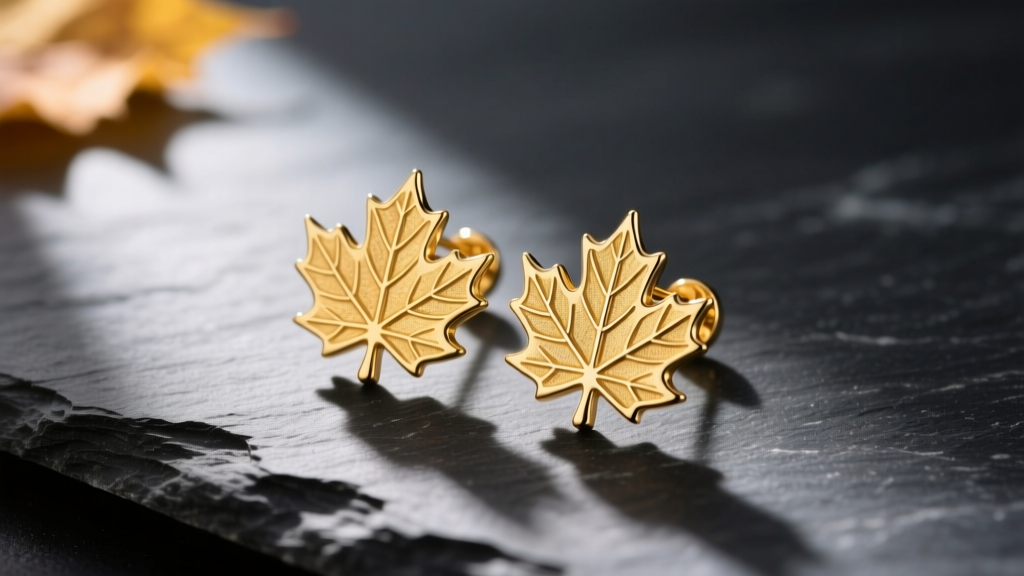
Maple leaf earrings are a staple of botanical jewelry, celebrated for their intricate serrated edges, high-relief veins, and seasonal charm. However, the very details that make these earrings visually striking also make them notoriously difficult to maintain. The deep crevices of a botanical leaf design act as magnets for sebum, dead skin cells, aerosolized cosmetics, and environmental pollutants. When left uncleaned, this buildup not only dulls the metal's luster but can also accelerate localized corrosion and degrade delicate gemstone or enamel accents.
This comprehensive maintenance guide provides actionable, material-specific protocols to safely clean, polish, and store your maple leaf earrings without compromising their structural integrity or artistic finishes.
The Unique Maintenance Challenges of Botanical Jewelry
Unlike smooth dome studs or simple hoops, maple leaf earrings feature complex topography. The recessed veins and serrated margins trap debris that a standard jewelry wipe cannot reach. Furthermore, the "stem" of the maple leaf often serves as the structural anchor or the earring post itself. Standard posts are typically crafted in 20-gauge (0.81mm) or 18-gauge (1.02mm) wire. Aggressive scrubbing or improper handling during the cleaning process can easily bend these delicate posts, ruining the earring's alignment and making it painful to wear.
"The most common casualty in botanical jewelry cleaning is the earring post. When scrubbing the intricate veins of a maple leaf, the lateral pressure applied often bends a 20-gauge post beyond repair. Always hold the earring by the post or the thickest part of the stem, not the delicate leaf edges, to distribute the mechanical stress."
Material-Specific Cleaning Protocols
The cleaning method you choose must be dictated by the metal and any secondary materials used in the design. According to the Gemological Institute of America (GIA), treating all jewelry with a single, universal cleaning solution is a primary cause of irreversible damage.
Sterling Silver & Intentional Oxidation
Many artisan maple leaf designs utilize sterling silver with intentional oxidation (blackening) in the recessed veins to create visual contrast and depth. Never use commercial silver dips (which contain thiourea) on these pieces. These chemical baths will strip the intentional antiquing, leaving the earring flat, lifeless, and uniformly bright. Instead, rely on a mild dish soap and warm water soak, using a wooden toothpick to gently dislodge debris from the darkened veins without removing the patina.
Solid Gold (14k & 18k) & Gold Vermeil
Solid 14k and 18k gold maple leaf earrings are highly resistant to tarnish but are prone to scratching due to gold's inherent softness. Gold vermeil (a minimum of 2.5 microns of gold over a sterling silver base) requires even greater care. Avoid abrasive polishing pastes or stiff-bristled brushes, as these will wear through the gold layer, exposing the silver beneath and leading to rapid, uneven tarnishing.
Enamel and Gemstone Accents (Amber, Citrine)
Autumn-themed maple leaf earrings frequently feature plique-à-jour or champlevé enamel in reds, oranges, and yellows, alongside amber or citrine cabochons. Enamel is essentially fused glass and is highly susceptible to thermal shock and high-frequency vibrations. Amber is an organic, porous gemstone that can be dissolved or clouded by alcohol, perfume, and harsh detergents. According to Jewelry Wise, organic gems and enamel require strictly damp-cloth cleaning methods, completely avoiding liquid soaks.
Step-by-Step Deep Cleaning Routine
For standard solid metal maple leaf earrings (without porous gems or enamel), follow this meticulous four-step deep cleaning routine to restore their original brilliance.
- The Dry Pre-Clean: Before introducing moisture, use a wooden toothpick or a soft interdental brush to gently scrape out dry, compacted debris from the deepest veins of the leaf. This prevents the debris from turning into a muddy paste when wet.
- The Soak: Prepare a solution of lukewarm distilled water and a few drops of ammonia-free, mild dish soap (such as Dawn). Submerge the earrings for exactly 5 to 7 minutes. Do not exceed 10 minutes, especially if the earrings have glued-in gemstone accents, as prolonged soaking can degrade jewelry adhesives.
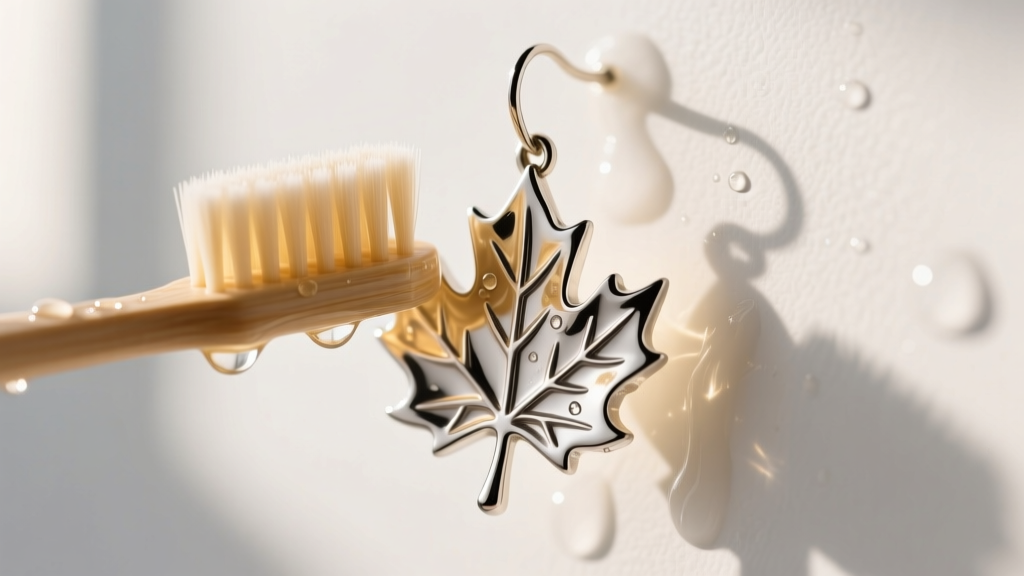
- The Agitation: Using an ultra-soft baby toothbrush, gently brush the surface of the leaf. Critical technique: Brush in the direction of the leaf's natural veins, moving from the stem outward to the serrated edges. This pushes debris out of the channels rather than packing it deeper.
- The Rinse & Dry: Rinse thoroughly under lukewarm distilled water (tap water can leave hard water spots or chlorine residue). Pat dry with a lint-free microfiber cloth, and use a hairdryer on the "cool" setting to blow moisture out of the microscopic crevices.
Cleaning Agent Compatibility Chart
Use the following table to verify your cleaning agents before applying them to your specific pair of maple leaf earrings.
| Material | Safe Cleaners | Unsafe Cleaners | Drying Method |
|---|---|---|---|
| Sterling Silver (Oxidized) | Mild soap, wooden toothpick | Silver dip, baking soda paste, bleach | Microfiber cloth, cool air |
| 14k / 18k Solid Gold | Mild soap, warm water soak | Chlorine, abrasive polishing pastes | Air dry or microfiber |
| Gold Vermeil | Damp soapy cloth only | Prolonged soaking, ultrasonic cleaners | Pat dry immediately |
| Enamel / Amber / Pearls | Damp microfiber cloth only | Ultrasonic, steam, alcohol, soap soaks | Pat dry immediately |
What to Avoid: Common Mistakes That Ruin Leaf Earrings
Even well-intentioned cleaning can destroy delicate botanical jewelry if you rely on the wrong technology or techniques.
The Ultrasonic Cleaner Trap
Ultrasonic cleaners operate using high-frequency sound waves (typically around 40,000 Hz) to create microscopic cavitation bubbles that blast away dirt. While excellent for plain diamond studs, this violent cavitation can cause micro-fractures in enamel, shatter amber, and shake loose pave-set stones often found in premium maple leaf designs. Furthermore, if your leaf earrings feature friction-fit push-backs, the vibrations can loosen the internal mechanism.
The Steam Cleaner Hazard
Steam cleaners blast pressurized, high-temperature vapor to remove grease. However, sudden thermal expansion can crack citrine or amber accents. More importantly, the intense heat will melt the cyanoacrylate or epoxy adhesives used to secure gemstones and enamel inlays, causing the decorative elements to fall out entirely.
Using Tissue Paper or Paper Towels
Never dry or polish high-shine gold or silver maple leaf earrings with tissue paper, paper towels, or cotton balls. These paper products contain wood pulp fibers that act as microscopic abrasives, leaving a web of fine scratches across the polished surfaces of the leaf. Always use a dedicated jewelry microfiber cloth or a 100% unbleached cotton flannel.
Proper Storage to Prevent Warping and Tarnish
Proper maintenance extends far beyond the cleaning process; how you store your maple leaf earrings dictates how often they will need deep cleaning in the first place.
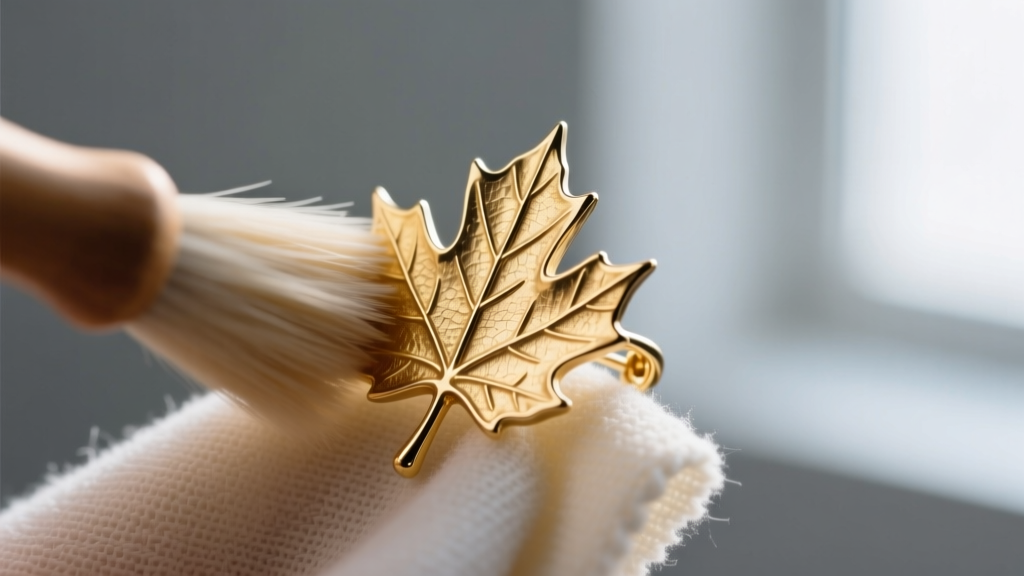
1. Isolate the Stems: Because the serrated edges of one maple leaf can easily scratch the high-polish face of another, never store multiple pairs loosely in a communal jewelry box. Store each pair in its own soft, anti-tarnish flannel pouch or a sealed polyethylene ziplock bag.
2. Utilize Anti-Tarnish Strips: For sterling silver leaf earrings, place a 3M anti-tarnish strip inside the storage pouch. These strips absorb airborne sulfur compounds and hydrogen sulfide, which are the primary catalysts for silver sulfide (tarnish) formation. Replace these strips every 6 months for optimal efficacy.
3. Keep Away from UV and Humidity: If your maple leaf earrings feature autumn-colored gemstones like citrine or smoky quartz, prolonged exposure to direct sunlight can cause the UV radiation to alter the crystal lattice, leading to permanent color fading. Store your botanical jewelry in a dark, climate-controlled drawer, away from the humidity of the bathroom, which accelerates both metal oxidation and adhesive degradation.
By respecting the unique structural and material properties of your maple leaf earrings, you ensure that their intricate autumnal beauty remains pristine, wearable, and structurally sound for generations.


