How to Choose and Maintain Martini Setting Earrings
Learn how to select, style, and securely maintain martini setting earrings. Expert tips on prong care, cleaning, and backing types for daily wear.

The Anatomy of a Martini Setting
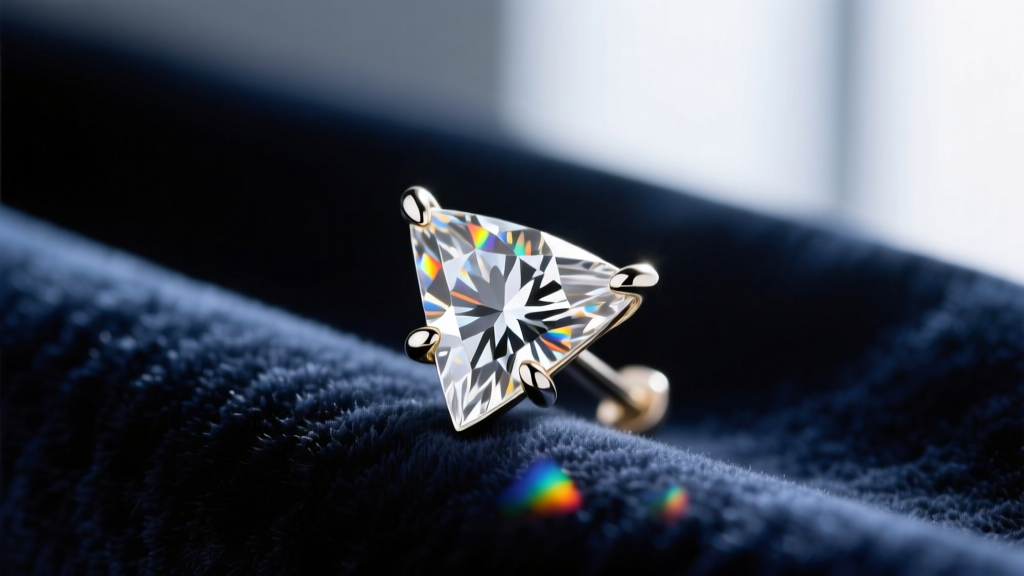
Martini setting earrings are a staple in fine jewelry, revered for their ability to maximize a gemstone's light return. Unlike traditional four-prong basket settings, the martini design utilizes three prongs that extend from a single base, resembling the stem and bowl of a martini glass. This minimalist metal footprint exposes more of the diamond's crown and pavilion, allowing ambient light to enter from multiple angles. According to the Gemological Institute of America (GIA), minimizing metal obstruction is one of the most effective ways to enhance a diamond's brilliance and fire.
Why the 3-Prong Design Matters for Earlobes
While a three-prong setting offers superior optical benefits, it fundamentally alters the structural physics of the earring. In a four-prong setting, each prong bears 25% of the retention stress. In a martini setting, each prong must bear 33.3%. Consequently, the prongs on a martini setting must be cast or forged slightly thicker to compensate for this increased load. Furthermore, the high-profile "V" shape of the basket raises the center of gravity, pushing the gemstone further away from the earlobe. This elevation is what causes the infamous "earring droop" if the post and backing are not correctly matched to the carat weight.
Step-by-Step: How to Select the Perfect Pair
Choosing the right martini setting earrings requires looking beyond the 4Cs of the center stone. You must evaluate the structural integrity of the mounting. Follow this framework to ensure your earrings sit flush and secure against the ear.
1. Match the Post Gauge to the Carat Weight
The most common failure mode for martini studs is a bent post. A standard 20-gauge (0.81mm) post will easily bend under the weight of a 1.50-carat martini head, causing the earring to point downward. Use the chart below to select the correct structural foundation.
| Carat Total Weight (CTW) | Recommended Post Gauge | Ideal Backing Type | Minimum Prong Thickness |
|---|---|---|---|
| 0.25 - 0.50 ct | 20G (0.81mm) | Standard Friction / Silicone | 0.35mm |
| 0.75 - 1.00 ct | 18G (1.02mm) | La Pousette / Screw Back | 0.45mm |
| 1.50 - 2.00+ ct | 16G (1.29mm) | Heavy Screw Back / Jumbo | 0.60mm+ |
2. Evaluate the Base and Culet Clearance
Turn the earring sideways. The bottom of the martini "stem" (the base where the three prongs meet the post) should be smooth and rounded. If the base is sharp or pointed, it will dig into the side of your neck or catch on collars. Some premium jewelers offer a "flat-back" or "button-back" martini design, where a small disc of metal caps the base, distributing the weight evenly across the back of the earlobe and eliminating the poke hazard.
How to Prevent Drooping and Snagging
The elevated profile of martini setting earrings makes them prone to two specific issues: drooping (tilting forward) and snagging on hair or textiles. Here is how to engineer your way out of both problems.
Upgrading Your Earring Backings
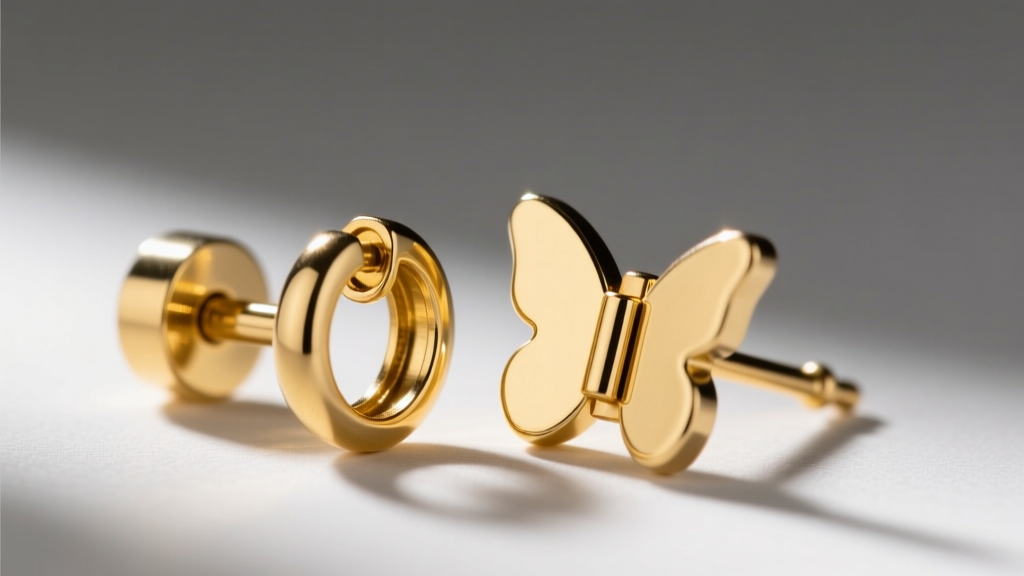
Standard "butterfly" friction backs rely on a small groove in the earring post to stay in place. They are insufficient for martini settings over 0.75 CTW because the heavy top-heavy basket pulls the post downward, sliding the backing off the groove. To fix this, upgrade to one of the following:
- La Pousette Backs: These feature a spring-loaded locking mechanism that snaps securely over a grooved post. They cost between $40 and $85 per pair in 14k or 18k gold but provide unparalleled security for heavy martinis.
- Screw Backs: The post is threaded, and the backing screws on. While highly secure, they can be tedious to put on and require careful alignment to avoid cross-threading the gold.
- Silicone Comfort Discs: A budget-friendly fix. Placing a flat silicone disc between the earlobe and the friction backing adds surface area, reducing droop and preventing the sharp martini base from poking your skin.
Managing the Snag Factor
The three prongs of a martini setting form sharp "V" angles that act like tiny hooks. To minimize snagging on sweaters and hair:
- Ensure the prong tips are "tipped" or polished completely round by a jeweler.
- Avoid wearing martini studs while sleeping; the pressure can bend a prong outward, creating a permanent snag hazard.
- Opt for a bezel setting if your lifestyle involves frequent athletic wear or coarse fabrics.
Step-by-Step Cleaning and Prong Maintenance
Because martini settings use less metal, any buildup of lotion, sebum, or soap at the base of the prongs is highly visible and can dull the stone's brilliance. The Jewelers of America recommends regular at-home maintenance to preserve both the optical and structural integrity of fine jewelry.
The Weekly Cleaning Protocol
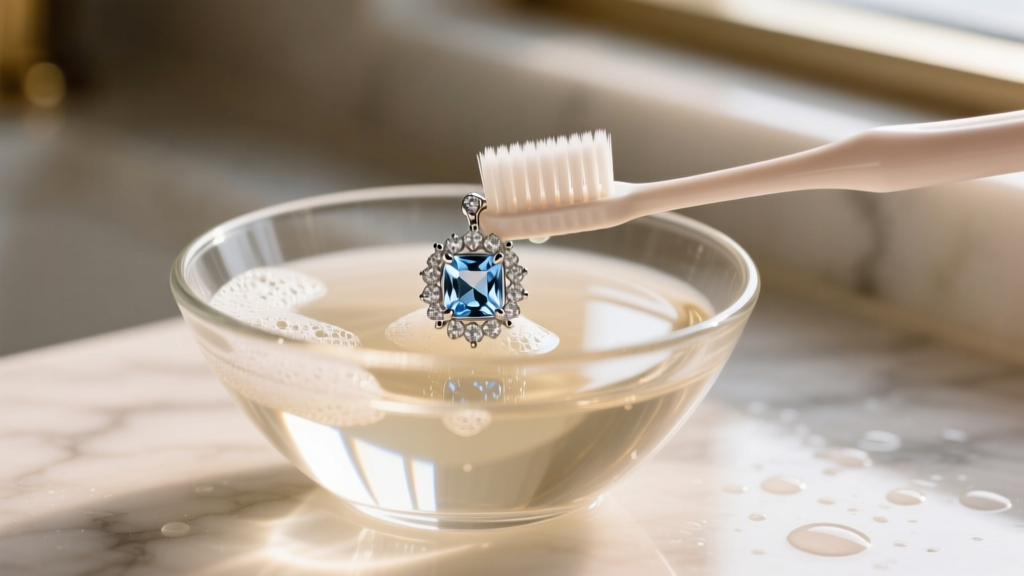
- Prepare the Solution: Mix a few drops of mild, ammonia-free dish soap into a bowl of warm (not hot) distilled water.
- Soak: Drop the earrings into the solution for 10 to 15 minutes to loosen oils trapped in the martini basket's crevices.
- Agitate: Using a brand-new, ultra-soft baby toothbrush, gently brush the underside of the setting (the pavilion) and the exact points where the three prongs meet the gemstone's girdle.
- Rinse and Dry: Rinse under a gentle stream of lukewarm water. Always do this over a plugged sink or a strainer. Pat dry with a lint-free microfiber cloth.
CRITICAL WARNING: Never place fracture-filled, clarity-enhanced, or emerald-set martini earrings in an ultrasonic cleaner. The high-frequency vibrations can shatter treated stones or shake loose the delicate three-prong tension. Stick to manual cleaning for anything other than untreated diamonds or sapphires.
Troubleshooting Common Martini Setting Issues
Even with meticulous care, martini setting earrings endure significant mechanical stress. Here is how to diagnose and resolve the most common structural failures.
Issue: The Stone Spins or Rattles
Diagnosis: One or more prongs have lifted away from the gemstone's girdle. Because there are only three prongs, if even one lifts by a fraction of a millimeter, the stone loses its tri-point tension lock.
Solution: Stop wearing the earring immediately. Place it in a soft pouch and take it to a bench jeweler for a "prong re-tipping and tightening." This typically costs $25 to $50 and takes less than 20 minutes.
Issue: The White Gold Prongs Look Yellow or Dull
Diagnosis: The rhodium plating on the white gold prongs has worn off, revealing the natural pale-yellow alloy underneath. This is common on the high-friction points of the prong tips.
Solution: Have the earrings professionally polished and re-rhodium plated. To extend the life of the plating, remove your earrings before showering, as hard water and sulfates accelerate rhodium degradation.
Issue: The Post is Bent at a 15-Degree Angle
Diagnosis: The post gauge is too thin for the carat weight, or the earring was subjected to lateral pressure (e.g., sleeping in them or pulling a sweater over the head).
Solution: A jeweler can easily straighten a solid gold post using a nylon-jawed plier. However, if the post is hollow-tube or heavily work-hardened, it may snap during straightening. In this case, request a "post replacement" and upgrade to a thicker 16-gauge or 18-gauge post to prevent recurrence.
By understanding the unique physics of the three-prong basket and pairing it with the correct post gauge and locking backing, your martini setting earrings will remain a secure, brilliant, and droop-free staple in your daily rotation. For more deep-dives into diamond optics and setting durability, consult the GIA's comprehensive diamond care archives.


