The Ultimate Material Guide for One Earring on a Guy
Discover the best hypoallergenic metals for wearing one earring on a guy daily. Compare titanium, gold, and steel for lasting comfort and style.


The Enduring Appeal of the Single Earring
The single earring on a man has transcended its rebellious 1980s and 1990s roots to become a definitive staple of modern minimalist menswear. Whether it is a subtle diamond stud, a sleek black titanium bar, or a micro-huggie, wearing one earring on a guy is a deliberate style choice that balances edge with sophistication. However, because a single daily-wear earring is rarely removed—surviving through intense workouts, hot showers, and restless sleep—the material properties are not merely an aesthetic preference. They are a biological necessity. Choosing the wrong metal can lead to contact dermatitis, localized infections, and permanent tissue damage. This comprehensive guide breaks down the exact metallurgical properties you need to consider before committing to a permanent daily accessory.
The Biomechanical Demands of a Man's Daily Wear
Men's skin physiology differs slightly from women's, often featuring thicker dermal layers and higher sebum production, particularly around the scalp and ears. When an earring remains in the lobe 24/7, it creates a micro-environment where sweat, dead skin cells, and sebum accumulate against the metal. If the alloy contains reactive elements, this warm, moist environment accelerates ion leaching, triggering immune responses.
The Cheese-Cutter Effect and Gauge Sizing
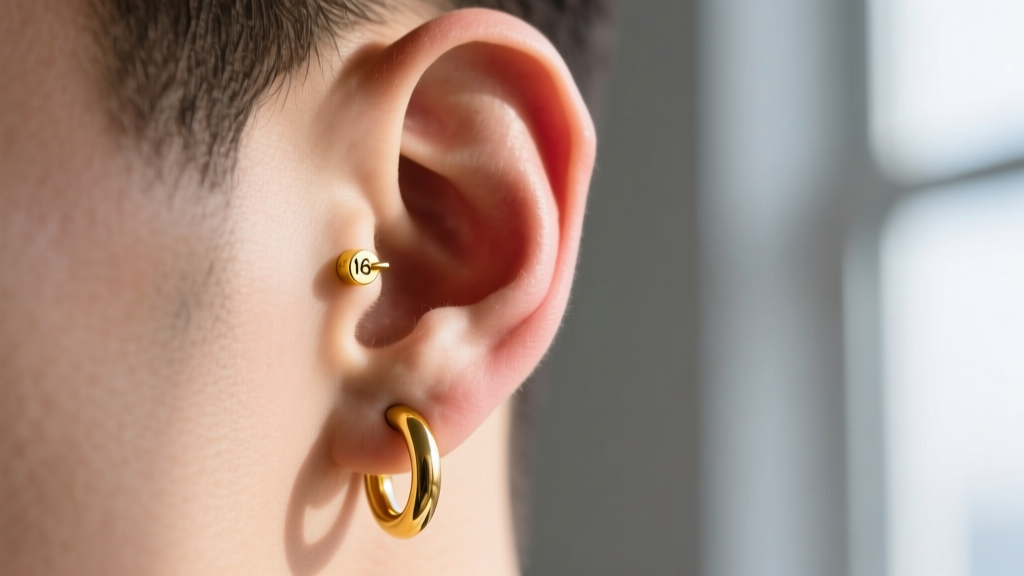
One of the most common mistakes men make when selecting a single daily earring is choosing a wire that is too thin. Standard fashion earrings often use 22-gauge or 20-gauge wires. If a man snags a 22-gauge wire hoop on a towel, a hoodie drawstring, or a gym bag, the thin wire can easily slice through the earlobe tissue—a traumatic phenomenon known in the body modification community as the 'cheese-cutter effect'. For a permanent daily piece, a 16-gauge (1.2mm) or 14-gauge (1.6mm) post is highly recommended. This thickness provides the structural integrity needed to withstand accidental snags while distributing weight evenly across the piercing fistula.
Tier 1: The Implant-Grade Champions
If you are looking for a metal you can insert and forget, implant-grade materials are the undisputed gold standard for biocompatibility.
ASTM F136 Titanium
Not all titanium is created equal. Commercial 'pure' titanium can still contain trace impurities. The only specification you should look for is ASTM F136 implant-grade titanium. This specific alloy (Ti-6Al-4V ELI) is completely nickel-free and is the exact same metal used in orthopedic joint replacements and pacemaker casings. According to the Association of Professional Piercers, ASTM F136 titanium is entirely inert in the human body, meaning it will not oxidize, tarnish, or react with acidic sweat. Brands like Anatometal and Industrial Strength offer ASTM F136 pieces with mirror-finish polishing that prevents microscopic scratches where bacteria could hide. Expect to pay between $40 and $90 for a high-quality titanium labret stud or seamless ring.
Niobium
Niobium is a soft, highly malleable elemental metal that is also completely nickel-free. Its unique advantage for men's jewelry is its ability to be anodized. By running an electrical current through the metal in an electrolyte bath, the surface oxidizes to create vibrant, permanent colors without using dyes or platings. A black-anodized niobium O-ring or captive bead ring is a phenomenal, low-profile choice for a guy wanting a dark, industrial aesthetic without the risks of black-plated steel, which inevitably chips and flakes over time.
Tier 2: The Precious Standards (Gold & Platinum)
For those who prefer the warmth and prestige of precious metals, gold and platinum offer excellent longevity, provided you understand their alloy compositions.
14k and 18k Gold
24k gold is too soft for daily wear; it will bend and warp under the pressure of sleeping on it. Therefore, gold must be alloyed. 14k and 18k gold offer the perfect balance of durability and precious metal content. However, the alloy mix is critical. White gold is often alloyed with nickel to achieve its silver color, which is a massive red flag for sensitive ears. Always seek out nickel-free white gold (usually alloyed with palladium) or stick to classic yellow and rose gold. High-end manufacturers like BVLA and Maria Tash use proprietary nickel-free alloys that are safe for long-term wear. Pricing for a single 14k gold stud or huggie typically ranges from $150 to $400, depending on gemstone additions.
Platinum 950
Platinum is incredibly dense, heavy, and naturally white, requiring no rhodium plating like white gold. A Platinum 950 (95% pure platinum) earring is practically indestructible in a daily-wear scenario. It will develop a soft patina over time rather than scratching away, and it is entirely hypoallergenic. The primary drawback is the cost; a simple platinum seamless ring or stud will easily start at $300 and can exceed $800 for diamond-set pieces.
Tier 3: The Budget Traps to Avoid
When buying a single earring, avoiding cheap metals is just as important as choosing the right one.
- Surgical Steel (316L): Despite the medical-sounding name, 316L stainless steel contains 8% to 10% nickel. The Mayo Clinic notes that prolonged exposure to nickel leaching from jewelry is the leading cause of contact dermatitis. While some men can tolerate 316L in fully healed piercings, it is a gamble for a 24/7 piece exposed to shower heat and sweat.
- Sterling Silver (925): Silver reacts aggressively with sulfur in the air and the natural salts in human sweat, creating black silver sulfide tarnish. This tarnish can permanently stain the skin inside the piercing fistula (a condition known as localized argyria) and cause chronic irritation.
- 10k Gold: At only 41.7% pure gold, the remaining 58.3% of a 10k gold earring is made of base metals, frequently including high amounts of nickel and copper. It is highly prone to causing allergic reactions and rapid oxidation.
Material Comparison Matrix for Men's Daily Earrings
| Material | Nickel-Free? | Tarnish Resistant? | Ideal Gauge | Price Range |
|---|---|---|---|---|
| ASTM F136 Titanium | Yes | Yes | 16G - 14G | $40 - $90 |
| Niobium | Yes | Yes | 16G - 14G | $30 - $75 |
| 14k/18k Gold (Nickel-Free) | Yes | Yes | 18G - 16G | $150 - $400 |
| Platinum 950 | Yes | Yes (Patina) | 18G - 16G | $300 - $800+ |
| 316L Surgical Steel | No (8-10%) | Moderate | 16G - 14G | $15 - $30 |
The Hidden Danger: Earring Backs and Threading
The material of the post is only half the battle; the mechanism that holds it in place is equally critical for a guy wearing one earring continuously. The standard 'butterfly clutch' back found on most mall-kiosk earrings is a trap for sebum and dead skin. The tight pressure against the back of the earlobe restricts blood flow, leading to pressure necrosis and chronic swelling.
The Flat-Back Labret Solution
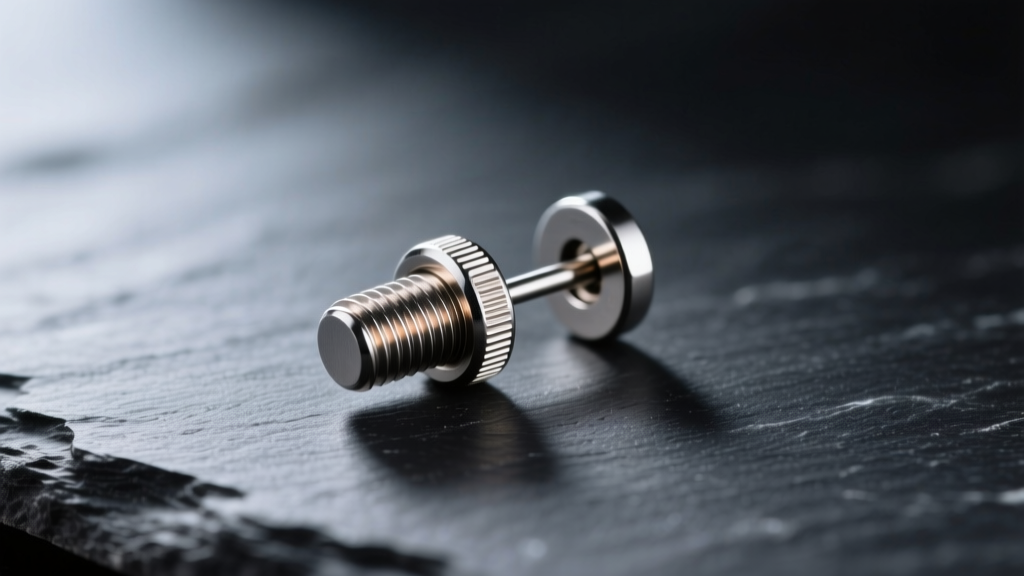
For a permanent daily stud, the flat-back labret post is the ultimate choice. A flat titanium disc rests flush against the back of the earlobe, distributing pressure evenly and allowing the skin to breathe. Furthermore, you must prioritize internal threading or push-pin (threadless) mechanisms. Externally threaded posts feature screw threads on the post itself, which tear through the delicate fistula tissue every time the earring is inserted or removed. Internally threaded posts have a smooth shaft that glides through the piercing, preserving the tissue integrity over years of wear.
'The hardware you choose for a permanent daily piece should be treated like a medical implant. If you wouldn't accept it inside your body from a surgeon, you shouldn't wear it through your earlobe for 16 hours a day.' — Professional Piercing Standard Guidelines
Final Verdict: Selecting Your Signature Piece
Wearing one earring on a guy is a powerful, understated style statement, but it demands a commitment to quality metallurgy. If your priority is absolute biocompatibility, dark aesthetics, and budget-friendly durability, an anodized niobium or black PVD-coated ASTM F136 titanium piece is unbeatable. If you prefer the classic prestige of fine jewelry, invest in a solid 14k or 18k nickel-free gold flat-back labret or a 16-gauge seamless huggie hoop. By prioritizing implant-grade materials, correct gauge thickness, and ergonomic flat-back designs, your single daily earring will remain a comfortable, irritation-free extension of your personal style for decades to come.


