Earring in Left Ear for Men: Style Troubleshooting & Healing Guide
Discover the truth behind the earring in left ear for men. Troubleshoot healing issues, choose the right gauge, and master modern styling.
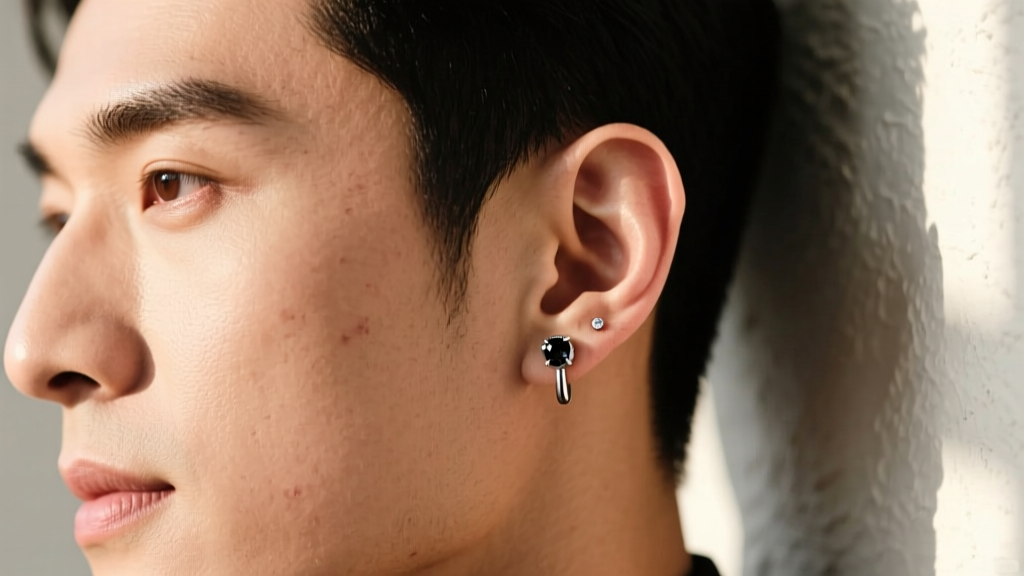

Deciding to get an earring in left ear for men is no longer the cultural minefield it was in the 1980s, but it still presents a unique set of practical, anatomical, and stylistic challenges. Whether you are navigating outdated workplace stigmas, struggling to sleep on a fresh piercing, or trying to figure out why your new stud keeps causing irritation bumps, troubleshooting the male ear piercing experience requires specific, actionable knowledge. In this comprehensive 2026 guide, we bypass the generic advice and dive deep into the exact material grades, gauge sizes, and anatomical fixes you need to maintain a flawless, comfortable, and sharp-looking left ear piercing.
The Cultural Baggage: Troubleshooting the 'Left Ear' Myth
Historically, the 'left ear only' rule was tied to outdated subcultural codes from the late 20th century. Today, an earring in left ear for men is entirely mainstream, worn by everyone from corporate executives to professional athletes. However, if you are entering a highly conservative corporate environment and still face unsolicited comments, the best troubleshooting strategy is sartorial elevation. A cheap, poorly finished mall-kiosk earring draws negative attention. Conversely, a high-polish, bezel-set 14k solid gold or matte-black PVD-coated titanium stud reads as intentional, high-end grooming. By upgrading your jewelry quality, you shift the narrative from 'rebellious' to 'refined,' effectively neutralizing outdated biases.
Troubleshooting Fresh Piercings: The Sleeping Problem
The number one cause of delayed healing and irritation bumps for men getting a single left ear pierced is sleep friction. Men statistically tend to toss and turn more aggressively, and if you are a natural left-side sleeper, your fresh fistula (the piercing tunnel) will endure hours of crushing pressure against a cotton pillowcase. This pressure forces the jewelry at an angle, leading to hypertrophic scarring—those annoying, fleshy bumps that form right next to the exit hole.

The Travel Pillow Protocol
To troubleshoot this, purchase a standard U-shaped neck travel pillow. When you sleep, place your left ear directly in the hollow center of the 'U'. This completely suspends the earlobe in the air, eliminating all contact pressure while keeping your head supported. According to the Association of Professional Piercers (APP), eliminating physical trauma is the single most effective way to prevent irritation bumps and ensure the fistula matures correctly over the 6-to-8-week initial healing window.
Material & Gauge Troubleshooting for Active Men
Many men experience chronic redness, flaking, or itching, falsely assuming their body is 'rejecting' the earring. In 90% of cases, this is a contact allergy to nickel leaching from low-grade 'surgical steel.' Furthermore, wearing heavy hoops on a thin wire can cause the dreaded 'cheese-cutter effect,' where the jewelry slowly migrates and tears through the bottom of the earlobe.
Expert Rule of Thumb: Never wear a hoop or dangle heavier than 3 grams on an 18-gauge (1.0mm) wire. The surface area is too small, and the tension will permanently stretch your piercing hole. Always opt for 16-gauge (1.2mm) or 14-gauge (1.6mm) for structural integrity.
Material Troubleshooting Matrix
| Lifestyle Factor | The Problem | The Troubleshooting Fix (Material) |
|---|---|---|
| Daily Gym / Sweating | Salt and friction cause porous metals to corrode and harbor bacteria. | Implant-Grade Titanium (ASTM F136): Non-porous, completely nickel-free, and impervious to sweat. |
| Swimming / Ocean | Chlorine and saltwater degrade plated metals, exposing base alloys. | Solid 14k or 18k Gold: Must be solid, not plated. Withstands harsh water chemistry without oxidizing. |
| Heavy Lifting / Contact Sports | Snagging leads to blown-out lobes or torn tissue. | Hinged Segment Rings (14g): Snug fit with no dangling parts to catch on equipment or collars. |
Sizing and Proportion: Fixing the 'Invisible' or 'Distracting' Earring
Men's facial geometry typically features stronger, more angular jawlines and broader necks than women. A standard 3mm women's diamond stud often looks like a tiny, misplaced speck on a man's earlobe, while an overly long dangle earring can clash with a masculine aesthetic unless carefully styled.

The Millimeter Decision Framework
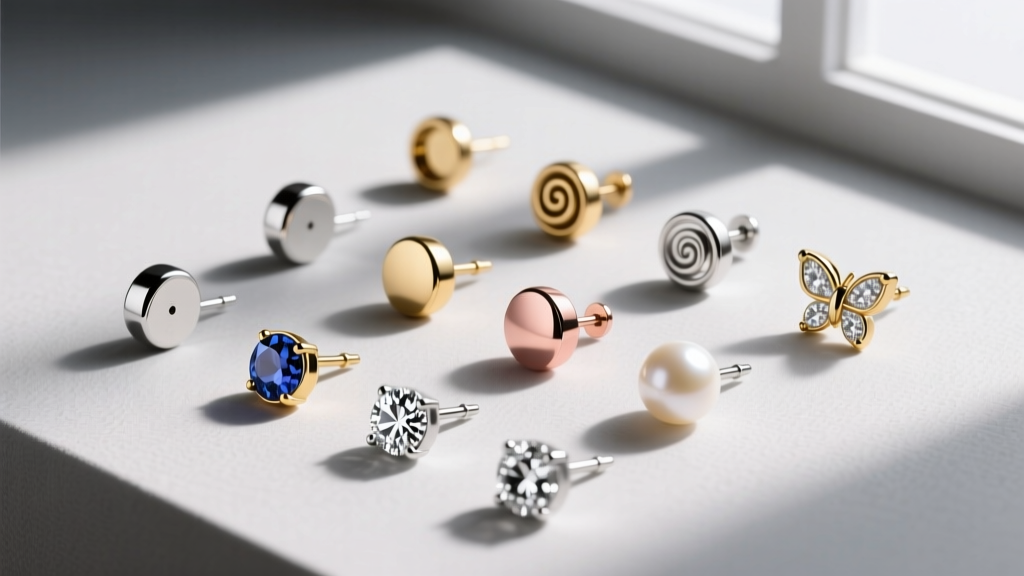
- 3mm - 4mm (The Subtle Accent): Best for men with smaller earlobes or those in ultra-conservative offices who want a barely-there glint of metal. Works best in high-polish white gold or platinum to catch the light.
- 5mm - 6mm (The Masculine Sweet Spot): The ideal troubleshooting size for the average male earlobe. A 5mm matte black onyx or a brushed titanium disc provides enough visual weight to balance a strong jawline without looking ostentatious.
- 7mm - 9mm (The Statement Piece): Reserved for men with larger earlobes or those leaning into streetwear and high-fashion aesthetics. If choosing this size, avoid round brilliants; opt for geometric shapes like hexagons or square bezels to maintain a structured, masculine edge.
Post Length and Threading: The Hidden Culprits of Discomfort
If your earring feels like it's constantly poking the side of your neck, or if the backing digs painfully into the back of your lobe, you are dealing with incorrect post lengths and poor threading. The Mayo Clinic notes that improperly fitted jewelry can cause localized contact dermatitis and chronic tissue compression.
Troubleshooting the Bar Length
Standard earring posts are often manufactured at 3/8" (9.5mm) to accommodate a wide variety of earlobe thicknesses. However, the average male earlobe is thinner than 4mm. A post that is too long will droop, causing the earring head to tilt forward awkwardly. The Fix: Visit a professional piercer and request a post downsizing to 1/4" (6mm) or 5/16" (8mm). This ensures the backing sits flush against the ear, keeping the stud perfectly perpendicular to the ground.
Internal vs. External Threading
If you are using screw-on backs, check the threading. 'Externally threaded' jewelry (where the screw ridges are on the post itself) acts like a tiny file, tearing through the delicate healed cells of your fistula every time you insert it. Always upgrade to internally threaded or threadless (push-pin) jewelry, where the post is completely smooth, ensuring a painless, damage-free insertion every single time.
Summary: Your Left Ear Maintenance Checklist
Sporting an earring in left ear for men is an exercise in intentional grooming. By abandoning cheap surgical steel in favor of ASTM F136 titanium, utilizing the travel pillow trick to protect your healing fistula, and selecting a 5mm to 6mm geometric stud that complements your jawline, you eliminate 99% of the problems men face with ear jewelry. Treat your piercing with the same respect as a high-end timepiece, and it will serve as a permanent, hassle-free upgrade to your personal style.