Top Metals for Earrings on a Guy: A Material Guide
Discover the best metals for earrings on a guy. Compare titanium, gold, and steel for durability, skin safety, and style in our expert material guide.


The Biomechanics and Chemistry of Men's Piercings
When evaluating the best materials for earrings on a guy, we must look far beyond basic aesthetics. Men's skin and lifestyle factors introduce unique variables that dictate how jewelry metals perform over time. Biologically, men tend to have higher sebum production and a slightly more acidic sweat pH compared to women. This chemical environment can rapidly accelerate the tarnishing and degradation of reactive metals like sterling silver or brass, leading to localized contact dermatitis or permanent discoloration of the fistula (the piercing channel).
Furthermore, lifestyle considerations are paramount. Whether you are lifting heavy weights, wearing protective helmets on a construction site, or simply maintaining an active daily routine, your jewelry is subjected to micro-abrasions and blunt force impacts. Choosing the wrong metal doesn't just ruin the jewelry; it can cause micro-tears in the ear tissue, leading to irritation bumps and prolonged healing times. To make an informed decision, we must analyze the metallurgical properties, biocompatibility, and structural integrity of the most common metals used in men's body jewelry.
Tier 1: The Biocompatible Standards
For fresh piercings, sensitive skin, or high-impact lifestyles, the metals in this tier represent the absolute pinnacle of safety and durability. These materials are entirely inert when interacting with human tissue.
Implant-Grade Titanium (ASTM F136)
Not all titanium is created equal. The Association of Professional Piercers (APP) strictly recommends Titanium 6Al-4V ELI (Extra Low Interstitial), which complies with the ASTM F136 standard for surgical implants. Unlike commercially pure (CP) titanium, F136 contains aluminum and vanadium, which drastically increases its tensile strength and Vickers Hardness (HV). This makes it highly resistant to bending and scratching. Additionally, F136 titanium is completely non-magnetic, meaning it will not interfere with MRI machines, and it is entirely nickel-free. A unique property of titanium is its ability to be anodized; by applying specific voltages, the oxide layer on the surface thickens, refracting light to create vibrant, permanent colors without the use of toxic paints or dyes.
Niobium
Niobium is a highly malleable, hypoallergenic transition metal that shares titanium's inert properties. Because it is softer than titanium, it is rarely used for straight barbells or labret studs, as they could bend under pressure. However, niobium is the undisputed champion for seamless hoops and huggies. Its malleability allows piercers to bend and shape the rings for a custom fit without the metal snapping or losing its structural memory. Like titanium, niobium can be anodized or heat-treated to achieve a permanent, deep black finish that is incredibly popular in men's minimalist jewelry.
Tier 2: Precious Metals and Alloys
While precious metals offer unmatched prestige and aesthetic warmth, they require a nuanced understanding of alloy compositions to ensure they are safe and durable enough for daily wear.
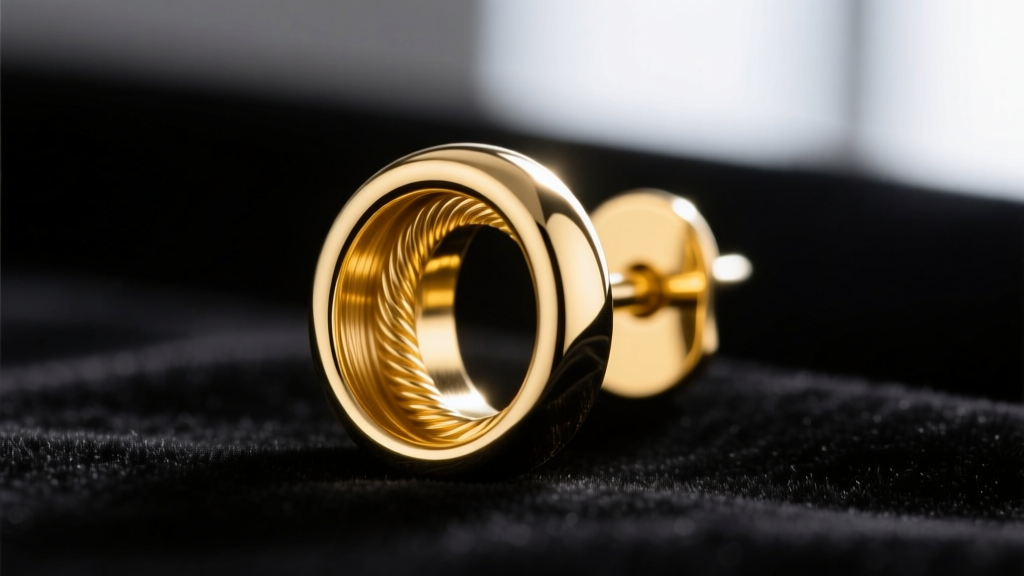
14k vs. 18k Solid Gold
Pure 24k gold is far too soft for body jewelry; it will warp and scratch within days. Therefore, gold must be alloyed with other metals. 18k gold (75% pure gold) offers a rich color but remains relatively soft, making it prone to deep scratching for men who work with their hands or frequent the gym. 14k gold (58.3% pure gold) is significantly harder and more scratch-resistant, making it the superior choice for an active lifestyle.
Crucial Warning: If you prefer white gold, you must verify the alloy composition. Many commercial white gold earrings are alloyed with nickel to achieve a silver color, which is a primary trigger for severe allergic reactions. Always seek out 'nickel-free' white gold, which is alloyed with palladium instead.
316L Surgical Stainless Steel
Often marketed as 'hypoallergenic,' 316L surgical steel is actually an alloy that contains between 8% and 12% nickel. While the nickel is bound within the steel's crystalline structure, the American Academy of Dermatology notes that prolonged exposure to sweat and friction can cause nickel ions to leach out, triggering contact dermatitis in sensitized individuals. 316L steel is perfectly acceptable for fully healed, non-sensitive lobes, but it should never be used for fresh piercings or cartilage work.
Comprehensive Metal Comparison Matrix
| Metal Grade | Nickel Content | Vickers Hardness (HV) | Best Application | Avg. Price Range |
|---|---|---|---|---|
| ASTM F136 Titanium | 0% (None) | ~330 HV | Fresh piercings, active lifestyles, sensitive skin | $35 - $90 |
| Niobium | 0% (None) | ~130 HV | Seamless hoops, huggies, cartilage rings | $25 - $60 |
| 14k Solid Gold | Varies (Seek Palladium alloy) | ~140 HV | Healed lobes, luxury everyday wear | $120 - $400+ |
| 316L Surgical Steel | 8% - 12% | ~180 HV | Healed standard lobe piercings on a budget | $10 - $30 |
Threading Mechanics and Gauge Sizing
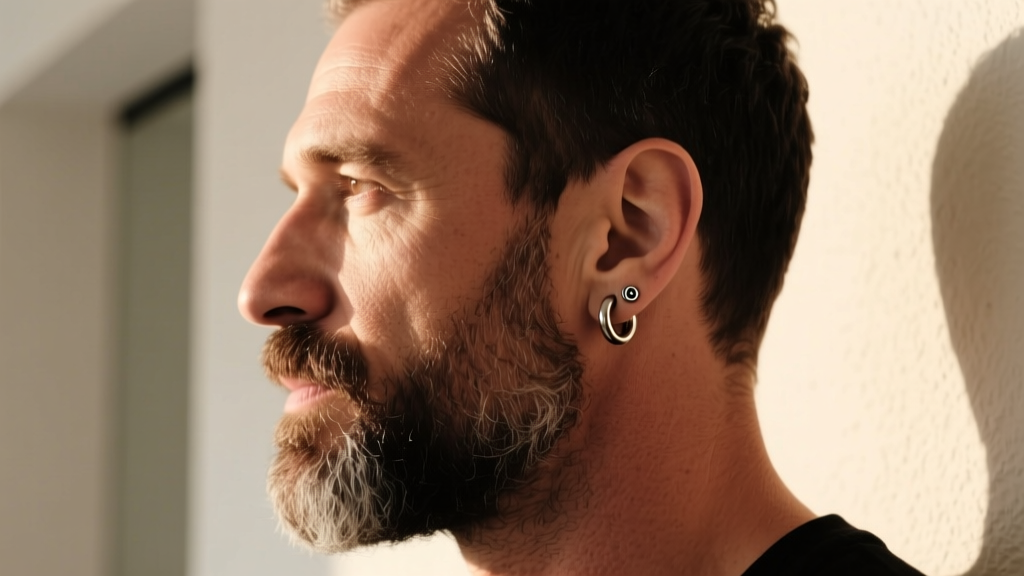
The metal is only half the equation; how the jewelry is engineered to pass through your tissue is equally critical. When shopping for earrings on a guy, especially for threaded barbells or labret studs, you must understand the mechanics of threading.
- Externally Threaded: The screw threads are cut into the post that passes through the ear. This is a major failure mode. The sharp, jagged threads act like a cheese wire, tearing the delicate fistula tissue every time the jewelry is inserted or removed.
- Internally Threaded: The threads are cut into the decorative end piece, while the post remains perfectly smooth. This allows the jewelry to glide through the piercing without causing micro-trauma.
- Threadless (Press-Fit): Utilizing a slight bend in the pin to create tension against the inside of the hollow post. This is currently the gold standard for high-end men's jewelry, offering the most secure fit without any threading at all.
Regarding gauge (thickness), standard men's lobe piercings are typically performed at 18g (1.02mm) or 16g (1.29mm). Cartilage piercings like the helix or tragus are almost universally 16g. Avoid 20g (0.81mm) jewelry for primary piercings, as the thin wire can create a 'cheese-cutter effect' if the earring is accidentally snagged on clothing or gym equipment.
Final Verdict: Matching Metal to Your Lifestyle
Choosing the right earrings on a guy ultimately comes down to aligning material science with your daily routine. If you are getting a new piercing, work in a physically demanding environment, or have a history of metal sensitivities, ASTM F136 Implant-Grade Titanium is the only logical choice. For those seeking a premium, luxury aesthetic in fully healed lobes, 14k solid gold provides the perfect balance of prestige and scratch resistance. Avoid surgical steel if you sweat heavily or have reactive skin, and always prioritize internal threading or threadless designs to protect your tissue integrity. By respecting the metallurgy behind the jewelry, you ensure your piercings remain healthy, comfortable, and sharp for decades.


