Material Guide: Choosing the Best Metal for Martini Stud Earrings
Compare platinum, 14k, and 18k gold for martini stud earrings. Learn how metal hardness, prong thickness, and base design affect durability.

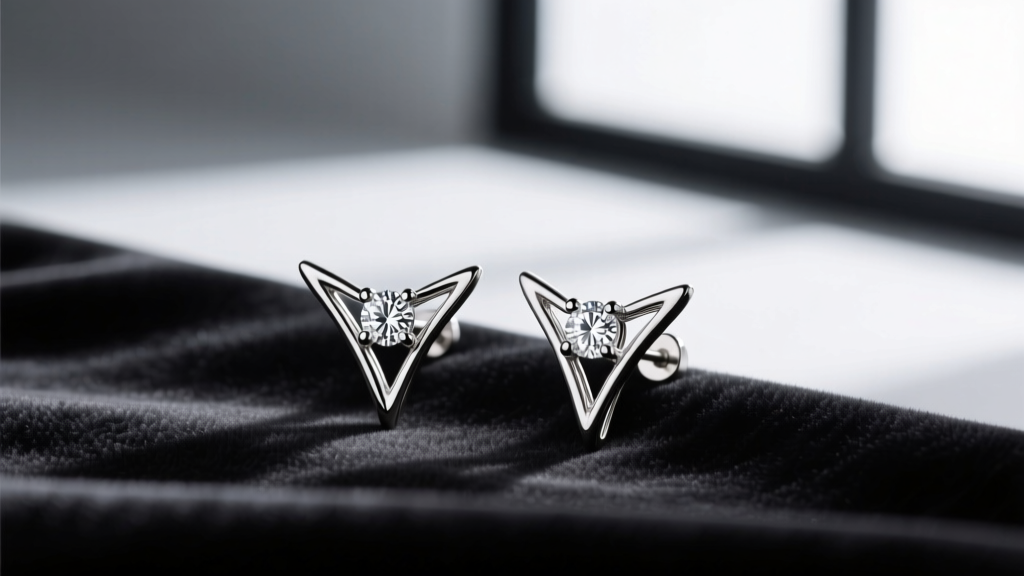
The Anatomy of a Martini Stud Setting
The martini stud earring is a masterclass in minimalist jewelry design. Unlike traditional basket settings that enclose the gemstone in a solid metal cup, the martini setting utilizes a V-shaped or Y-shaped wire structure that cradles the stone, allowing maximum light exposure from the sides and bottom. This optical advantage makes diamonds and colored gemstones appear significantly more brilliant. However, this structural elegance introduces a critical vulnerability: the entire weight and leverage of the gemstone are concentrated on a single, narrow metal stem.
Because of this unique load-bearing architecture, the metallurgical properties of the chosen metal are not just a matter of color or prestige—they are the sole determinants of the earring's lifespan. A metal that is too soft will result in bent prongs and a warped V-stem, while a metal that is too brittle risks catastrophic snapping at the junction where the stem meets the base. According to the GIA Gem Encyclopedia, the longevity of any prong setting is directly tied to the alloy's yield strength and work-hardening characteristics, but this is magnified tenfold in the cantilevered design of a martini stud.
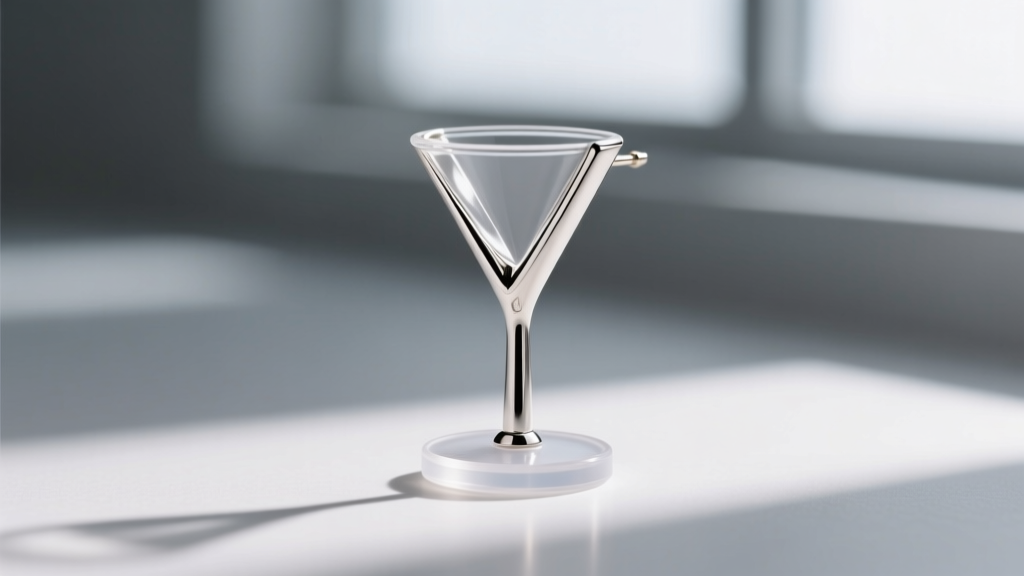
Metal Hardness vs. Yield Strength: The Core Comparison
A common misconception in jewelry buying is equating scratch resistance (hardness) with structural durability (yield strength). When evaluating materials for martini stud earrings, we must look at the Vickers Hardness (HV) scale alongside the metal's malleability and tensile strength. The V-stem of a martini earring acts as a lever; when snagged on hair or clothing, the metal must either absorb the shock by bending slightly or resist it entirely without fracturing.
| Metal Alloy | Vickers Hardness (HV) | Yield Strength | Failure Mode | Ideal Gemstone Weight |
|---|---|---|---|---|
| Platinum (Pt950/Ru) | ~135 HV | Very High | Bending (rarely snaps) | 1.0ct - 3.0ct+ |
| 14k White Gold (Pd) | ~155 HV | Moderate | Prong snapping if snagged | 0.5ct - 1.5ct |
| 18k Yellow Gold | ~125 HV | Low to Moderate | Stem warping / Prong wear | 0.25ct - 1.0ct |
| Implant-Grade Titanium | ~350 HV | Extremely High | Virtually indestructible | Any weight (limited by design) |
Platinum (Pt950/Ruthenium): The Heavyweight Champion
Platinum remains the undisputed king of high-carat martini settings. While its Vickers hardness is lower than 14k gold (meaning it will develop a patina and scratch more easily), its yield strength is exceptional. When subjected to lateral force, platinum displaces rather than fractures. If a platinum martini stem is bent, a jeweler can easily bend it back into perfect alignment without compromising the metal's integrity. Furthermore, platinum prongs do not suffer from the microscopic stress fractures that gold alloys develop over years of repeated micro-bending. For martini studs holding diamonds over 1.5 carats, platinum is a non-negotiable requirement for long-term security.
14k vs. 18k Gold: The Rigidity Trade-off
Gold alloys present a fascinating metallurgical trade-off. 14k white gold (alloyed with palladium or nickel) is harder and more rigid than 18k gold. This rigidity keeps the martini stem perfectly straight under the weight of medium-sized stones (0.50ct to 1.00ct). However, this hardness comes at the cost of brittleness. If a 14k white gold martini stem is bent back and forth to adjust the angle, it will eventually experience metal fatigue and snap. Conversely, 18k yellow gold is highly malleable and luxurious, but its lower hardness means the prongs will wear down faster, and the V-stem requires a thicker gauge to prevent sagging under heavier stones.
The Manufacturing Factor: Cast vs. Die-Struck
As of 2026, the method used to form the martini setting is just as critical as the material itself. The vast majority of commercial martini studs are produced via lost-wax casting. While casting allows for intricate designs, it inherently introduces microscopic gas porosity—tiny air bubbles trapped inside the metal as it cools. According to manufacturing standards outlined by the Society of Manufacturing Engineers, porosity in cast jewelry can reduce the tensile strength of a narrow component like a martini stem by up to 30%. If a porous cast stem is subjected to a sudden snag, it will snap cleanly at the V-junction.
For superior durability, seek out die-struck or forged martini settings. Die-striking involves stamping the metal under immense hydraulic pressure, which compresses the alloy's grain structure, eliminating porosity and increasing the metal's density and tensile strength. A die-struck 14k white gold martini stem is significantly more resilient than its cast counterpart, making it a safer choice for everyday wear.
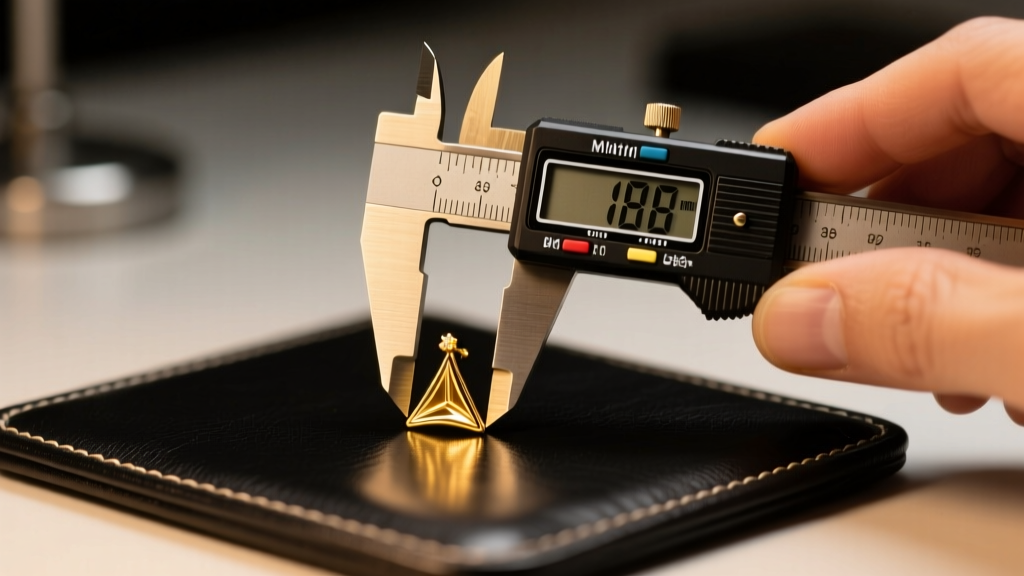
The 'Hair-Snag' Factor and Base Design
The base of the martini earring—the flat or slightly domed plate that rests against the earlobe—plays a crucial role in both comfort and structural integrity. A poorly designed base acts as a fulcrum, amplifying the leverage applied to the V-stem when the earring is bumped.
- Base Diameter: The base should be between 3.5mm and 4.5mm in diameter. Anything smaller concentrates pressure on the earlobe, causing pain and increasing the risk of the stem bending at the solder joint.
- Solder Joint Integrity: The point where the V-stem meets the base is the highest stress point. High-end jewelers use laser welding to fuse these components, which creates a deeper, more uniform penetration than traditional torch soldering, preventing the dreaded 'stem separation' failure mode.
- Edge Finishing: The edges of the base plate must be perfectly rounded and polished. Sharp, cast edges will micro-abrade the skin of the earlobe over time, leading to contact dermatitis that is often misdiagnosed as a metal allergy.
Hypoallergenic Properties and Long-Term Wear
Because the stem and base of a martini earring are in constant, high-friction contact with the sensitive skin of the earlobe, the metal's biocompatibility is paramount. White gold alloys containing nickel are a primary culprit for allergic contact dermatitis. Even if the white gold is alloyed with palladium (which is hypoallergenic), it is almost always plated with rhodium to achieve a bright white finish.
Expert Insight: Rhodium plating on the post and base of a white gold martini earring typically wears off within 6 to 12 months due to the friction of insertion and removal. Once the rhodium is gone, the underlying alloy is exposed to sweat and skin oils, which can trigger reactions in sensitive individuals and cause the metal to tarnish. Platinum and implant-grade titanium (Ti-6Al-4V ELI) do not require plating and remain completely inert against the skin indefinitely.
Actionable Buying Framework: What to Ask the Jeweler
When purchasing martini stud earrings, do not rely solely on the carat weight and color of the gemstone. Use this specific checklist to evaluate the structural viability of the setting:
- Demand Prong Dimensions: Ask the jeweler to measure the prongs with digital calipers. The prongs should be a minimum of 0.8mm thick at the base, tapering to no less than 0.6mm at the gemstone's girdle. Anything thinner is a liability.
- Verify the Stem Gauge: The wire used for the V-stem should be at least 1.2mm thick. If it looks like a thin needle, it will inevitably bend.
- Inquire About Manufacturing: Explicitly ask if the setting is cast or die-struck. If it is cast, ask if it has been hot-isostatically pressed (HIP) to eliminate internal porosity.
- Check the Post Thickness: The ear post itself should be 20-gauge (0.81mm) or 18-gauge (1.02mm). Flimsy 22-gauge posts will bend every time you secure the friction back.
Final Verdict: Matching Metal to Gemstone Weight
The perfect material for your martini stud earrings depends entirely on the size of the stone and your lifestyle. For delicate stones under 0.50 carats, 18k yellow gold offers a beautiful, warm contrast and sufficient structural support, provided the prongs are kept thick. For the 0.75ct to 1.50ct range, 14k white gold (palladium alloy) provides the necessary rigidity to keep the stone upright, though you must be mindful of rhodium maintenance. However, for heirloom-quality stones exceeding 1.50 carats, or for individuals who refuse to baby their jewelry, platinum (Pt950) is the only logical choice. Its unmatched yield strength ensures that the elegant V-silhouette of the martini setting will survive decades of daily wear without compromising the security of your gemstone.


