Mexican Earrings: The 2026 Taxco Silver & Obsidian Trends
Discover the 2026 trends in Mexican earrings. We analyze Taxco silver grades, obsidian inlays, and how to style heritage filigree drops.

The Renaissance of Taxco Silver in Modern Ear Curation
The global jewelry market in 2026 has seen a massive resurgence in heritage craftsmanship, with Mexican earrings leading the charge in the statement earring category. Moving away from the mass-produced, lightweight minimalism of the early 2020s, contemporary ear curators are gravitating toward the substantial weight, intricate textures, and historical richness of traditional Taxco silverwork. However, integrating these pieces into a modern ear stack requires a deep understanding of material grades, structural mechanics, and stone preservation.
Understanding Purity: .925 vs. .950 and .980
Taxco, Guerrero, has been the epicenter of Mexican silver jewelry since the 1930s, popularized by figures like William Spratling. While the global standard for sterling silver is .925 (92.5% silver, 7.5% copper), many vintage and high-end contemporary Mexican artisans utilize .950 or even .980 purity. According to The Silver Institute, higher purity silver offers a richer, whiter luster and greater tarnish resistance. However, this comes with a structural trade-off in earring design.
Pure silver (.999) and .980 silver are exceptionally soft. When crafting heavy Mexican drop earrings—which can easily weigh between 25 to 45 grams per ear—using a standard 20-gauge or 18-gauge ear wire in .980 silver will result in immediate structural failure. The wire will bend under the kinetic weight of the drop, risking loss. To combat this, expert Mexican silversmiths anneal the wire to increase tensile strength and utilize thicker 16-gauge or even 14-gauge French wires for heavy statement pieces. When purchasing heavyweight Taxco drops, always check the wire gauge; a thicker, sturdier hook is a hallmark of authentic, functional craftsmanship rather than a design flaw.
Material Spotlight: Obsidian, Jade, and Amethyst Inlays
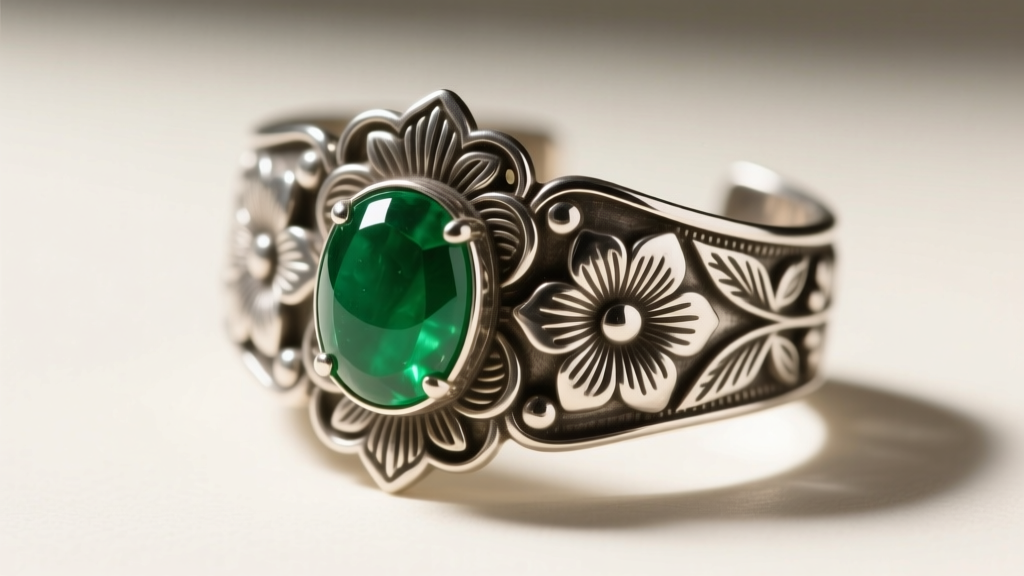
Mexican earrings are rarely just metal; they are a canvas for the country’s rich mineral wealth. In 2026, we are seeing a distinct pivot away from bright, faceted gemstones toward opaque, cabochon-cut native stones that complement the matte and oxidized finishes of repoussé silver.
Rainbow Obsidian (Vidrio Volcánico)
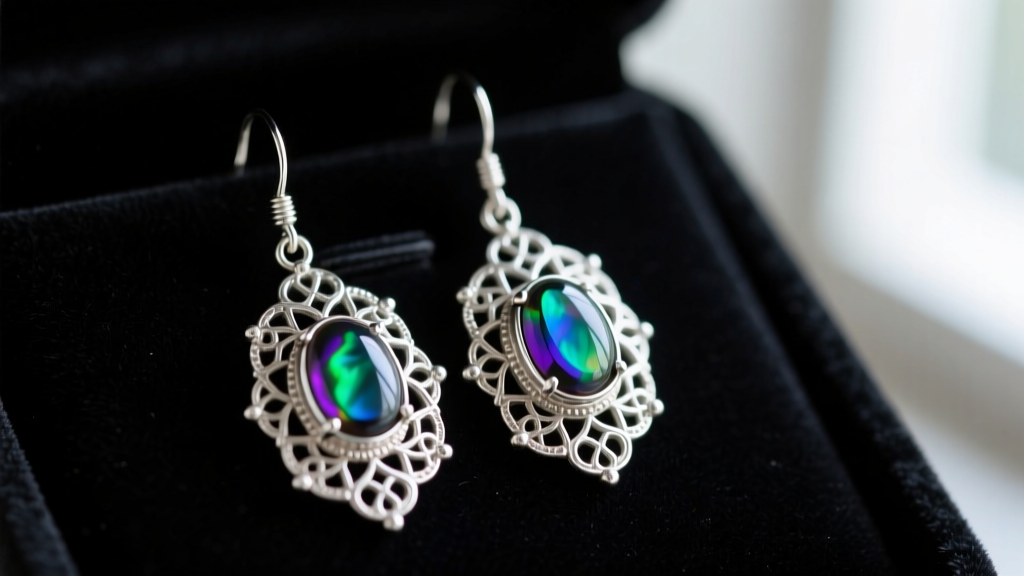
Obsidian is a naturally occurring volcanic glass. While black obsidian is common, Mexican rainbow obsidian features concentric rings of inclusions that create a stunning iridescent sheen under direct light. The Gemological Institute of America (GIA) notes that obsidian has a Mohs hardness of 5 to 5.5, making it relatively soft and prone to scratching. Because of this, authentic Mexican jewelers avoid prong settings for obsidian. Instead, they employ deep, thick bezel settings or flush inlays to protect the stone's edges from impact. If you see a Mexican earring featuring obsidian held by delicate prongs, it is likely a modern, mass-produced imitation rather than traditional Taxco work.
Jadeite and Turquoise
Mexican jadeite, often featuring deep, mottled greens, and Sonoran turquoise are staples in high-end Mexican earrings. Jadeite (Mohs 6.5-7) is much tougher than obsidian and can withstand the tension of intricate silver filigree overlays. When evaluating jade inlays in Mexican earrings, look for a smooth, waxy luster and a seamless transition between the stone and the silver bezel, indicating hand-polished finishing rather than machine casting.
2026 Silhouette Trends: From Filigree Drops to Geometric Huggies
The silhouettes of Mexican earrings have evolved to suit modern face shapes and ear placements. While the classic chandelier drop remains popular, 2026 trends heavily feature adapted heritage techniques in smaller, cartilage-friendly formats.
| Silhouette Trend | Primary Technique | Ideal Face Shape | Avg. Weight (Per Ear) |
|---|---|---|---|
| Oversized Filigree Drops | Wire soldering & filigree | Square & Heart | 20g - 35g |
| Repoussé Ear Cuffs | Repoussé (embossing) | Oval & Round | 8g - 15g |
| Geometric Obsidian Huggies | Bezel inlay & casting | All Face Shapes | 5g - 10g |
| Asymmetrical Dangles | Mixed media (silver & jade) | Diamond & Oblong | 15g - 25g |
The Rise of the Repoussé Ear Cuff
Repoussé is a metalworking technique where silver is hammered from the reverse side to create a raised, sculptural design on the front. In 2026, artisans are applying this ancient technique to non-pierced ear cuffs and helix cuffs. This allows wearers to enjoy the bold, floral, and Aztec-inspired motifs of Mexican jewelry without the commitment of a cartilage piercing or the weight of a traditional lobe drop.
Authenticity and Sourcing: Decoding Mexican Hallmarks
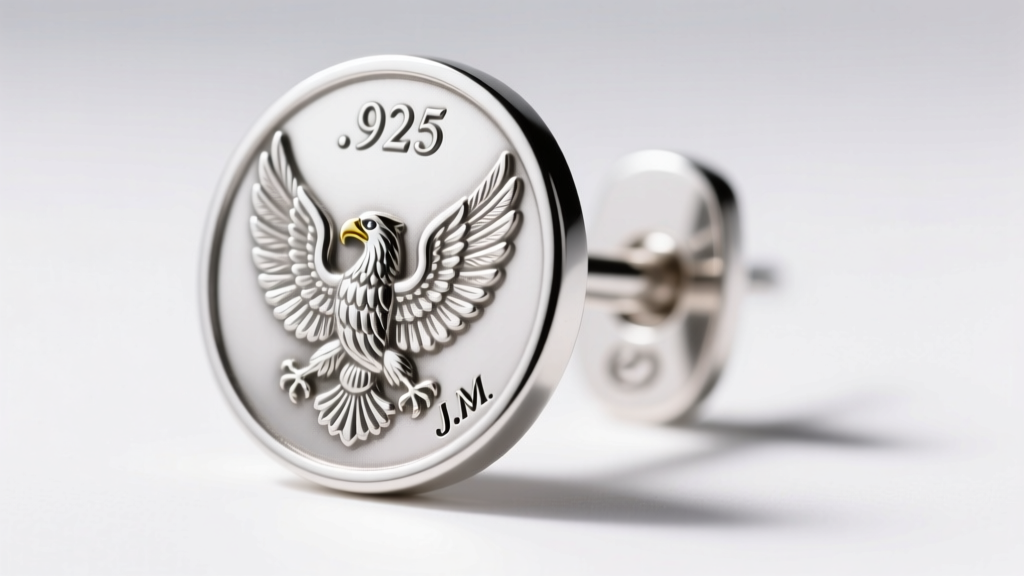
As the demand for Mexican earrings surges, the market has been flooded with cast imitations from overseas. Knowing how to read Mexican silver hallmarks is critical for any serious collector or style enthusiast.
- The Eagle Mark (1948–1979): The Mexican government introduced a stamped eagle mark to guarantee silver purity and origin. The number on the eagle's chest or next to it indicated the specific region or maker.
- The Alphanumeric System (1979–Present): The eagle was replaced by a letter-number system. For example, "TC-123" indicates the piece was made in Taxco (TC) and identifies the specific registered artisan or workshop (123).
- Casting vs. Handwork: Genuine filigree and repoussé will show microscopic tool marks, variations in solder joints, and a distinct warmth to the metal. Cast imitations will look perfectly uniform, lack tension in the wirework, and often have a "pitted" surface under magnification.
Styling Framework: Balancing Statement Mexican Earrings
Styling heavyweight Mexican earrings requires a strategic approach to both wardrobe and earlobe health. Because traditional Taxco drops are front-heavy, they can pull the earlobe forward, creating an unflattering angle and causing physical discomfort over time.
The Silicone Stopper Rule
Never rely on standard metal butterfly backs for Mexican earrings weighing over 15 grams. The small surface area will dig into the back of the earlobe. Instead, use wide, flat silicone earring backs or specialized plastic support discs. These distribute the kinetic weight across a wider surface area of the earlobe, keeping the earring face perfectly upright and preventing lobe stretching.
Neckline and Hair Pairing
Oversized filigree Mexican earrings act as a focal point and demand negative space. Pair them with structured, off-the-shoulder tops, deep V-necks, or halter necklines that expose the collarbone and jawline. Avoid high-neck ruffled blouses or heavy scarves, which will visually compete with the intricate silverwork and risk snagging the delicate wire loops. For hair, a sleek, low chignon or a swept-back updo ensures the oxidized details of the silver catch the light without obstruction.
"True Mexican silver jewelry is not just an accessory; it is wearable sculpture. When you invest in a pair of hand-wrought Taxco earrings, you are wearing generations of metallurgical history. Treat the weight and the patina with respect, and let the pieces command the room."
As we navigate the 2026 jewelry landscape, Mexican earrings stand out as a testament to the enduring appeal of artisanal weight, historical technique, and bold, unapologetic beauty. By understanding the mechanics of the silver and the origins of the stones, you can curate an ear stack that is as structurally sound as it is visually breathtaking.


