Recreating Michelle Choi Earrings: Troubleshooting Lobe Strain
Learn how to style Michelle Choi earrings without lobe strain. Troubleshoot heavy stacks, fix drooping hoops, and protect your piercings with expert tips.

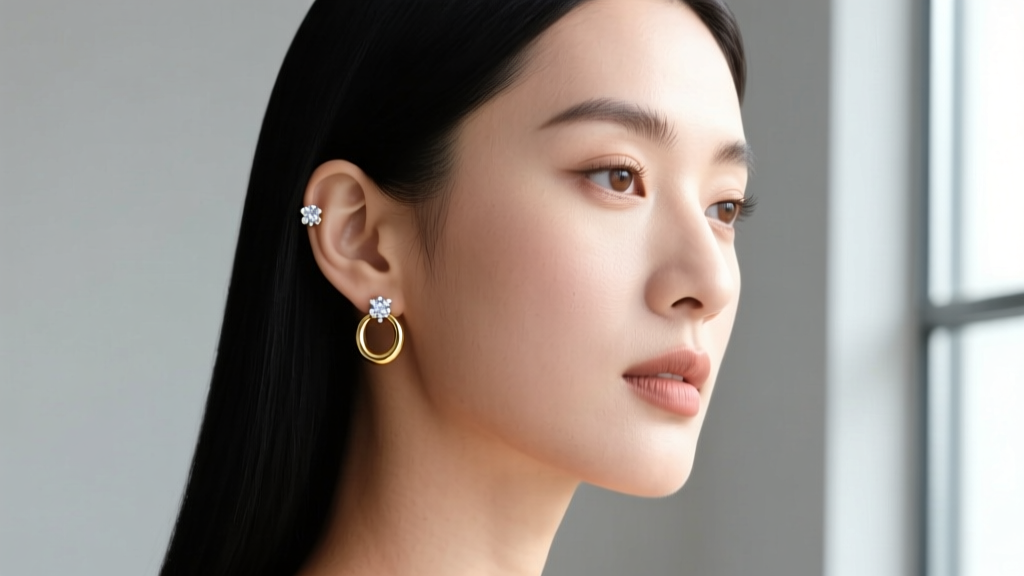
Michelle Choi’s YouTube vlogs and lifestyle content have undeniably shaped the modern minimalist jewelry aesthetic. Her signature look—often featuring a curated mix of medium gold hoops, delicate bezel-set diamond studs, and snug huggies—has inspired thousands to recreate what is widely recognized as the ultimate "clean girl" ear stack. However, as we navigate the minimalist jewelry trends of 2026, a growing number of enthusiasts are reporting a hidden downside to this aesthetic: severe lobe strain, piercing migration, and allergic contact dermatitis.
The problem rarely lies in the aesthetic itself, but rather in the physics of the jewelry being used to replicate it. When followers purchase heavy, low-karat gold-plated dupes or wear their favorite pieces 24/7, the delicate tissues of the earlobe and cartilage suffer. This comprehensive troubleshooting guide will help you achieve the iconic Michelle Choi earrings look while protecting your piercings from irreversible damage.
The Physics of the Minimalist Stack: Why Your Lobes Hurt
To understand why your earlobes feel tender after a day of wearing a stacked minimalist look, we have to look at the biomechanics of a standard piercing. A typical lobe piercing is done at 20-gauge (0.81mm) or 18-gauge (1.02mm). This creates a tiny fistula (the tube of healed tissue) that must support the weight of your jewelry.
Michelle often wears hollow or lightweight 14k gold hoops that weigh less than 1.5 grams. However, many affordable dupes on the market are cast from solid brass or heavy stainless steel and plated in gold. A seemingly identical 15mm hoop made from these denser materials can weigh upwards of 4 to 5 grams. When you combine a heavy hoop in your first lobe piercing with a 2-gram diamond stud in your second lobe piercing, you are applying continuous downward shear force on a 0.81mm channel of tissue.
Over time, this triggers the "cheese-cutter effect." The heavy jewelry slowly migrates downward, stretching the fistula and causing the piercing hole to elongate into a slit. Once this migration occurs, the lobe loses its structural integrity, making it impossible to wear even lightweight studs without them drooping.
Troubleshooting the Drooping Stud and Dragging Hoop
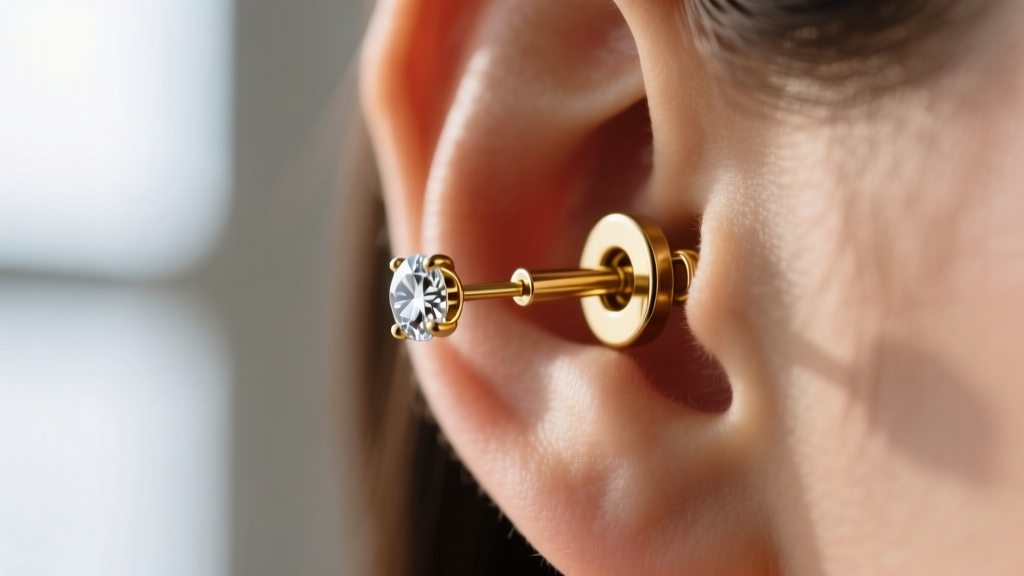
One of the most common complaints when recreating the Michelle Choi earrings aesthetic is the "drooping stud." This happens when the post of the earring is too thin, or the backing provides insufficient surface area to distribute the weight against the back of the earlobe.
The Earring Back Upgrade
Standard butterfly friction backs are the default for most commercial jewelry, but they are fundamentally flawed for stacked ears. The tiny metal loops concentrate pressure onto a 2mm pin, often digging into the skin and failing to keep heavier bezel-set studs upright. To troubleshoot this, you must upgrade your earring backs:
- La Pousette (Push-Pull) Backs: These mechanical backs lock onto the post with a secure clicking mechanism. They feature a wider, flat disc that rests flush against the earlobe, distributing the weight of a 1-carat diamond stud evenly and preventing the forward tilt.
- Threadless Flat-Back Labrets: For second and third lobe piercings, switching to 18-gauge threadless titanium flat-backs eliminates the "poke" of traditional posts and provides a wide, stable base that keeps the decorative end perfectly perpendicular to the ear.
- Screw-Backs: While secure, screw-backs can be difficult to align if you have limited dexterity, but they offer excellent security for medium-sized hoops that tend to spin and drag.
Material Mismatches: Solving Contact Dermatitis in Delicate Stacks
Achieving the Michelle Choi look often requires wearing multiple pieces of jewelry simultaneously. When metal sits against the skin in stacked configurations, it traps sweat, dead skin cells, and cosmetic products. This creates a highly corrosive microenvironment that accelerates metal degradation and triggers allergic contact dermatitis.
According to the American Academy of Dermatology, nickel allergy is the most common cause of allergic contact dermatitis, affecting a significant portion of the population. Many budget-friendly "gold" earrings are actually vermeil (a sterling silver base plated with gold) or gold-plated brass. Sterling silver contains copper and other alloys that oxidize rapidly when trapped in a sweaty ear stack, leading to green skin and severe itching.
Material Troubleshooting Chart
| Material | Composition & Risks | Best Use in a Stack | Nickel Release Risk |
|---|---|---|---|
| Implant-Grade Titanium (ASTM F136) | Biocompatible, zero nickel, highly polished. | Foundational pieces, sleeping jewelry, healing piercings. | None |
| 14k Solid Gold | 58.5% gold. Alloyed with copper/silver/zinc. Durable. | Everyday hoops and huggies. Excellent for the minimalist look. | Low (if nickel-free alloy) |
| 18k Solid Gold | 75% gold. Softer, heavier, richer color. | Special occasion studs. Too soft/heavy for large everyday hoops. | Very Low |
| Gold Vermeil / Plated | Silver or brass base. Plating wears off, exposing reactive alloys. | Avoid for stacked or 24/7 wear. High risk of dermatitis. | High (as plating degrades) |
For a foolproof, irritation-free stack that mimics high-end Korean and Western minimalist aesthetics, build your base with ASTM F136 titanium for any cartilage or upper-lobe piercings, and reserve 14k solid gold for your primary lobe hoops. The Association of Professional Piercers strongly advocates for implant-grade materials to prevent chronic inflammation, which can lead to piercing rejection.
Cartilage and Huggie Rejection: The Hidden Danger of the Slept-In Look
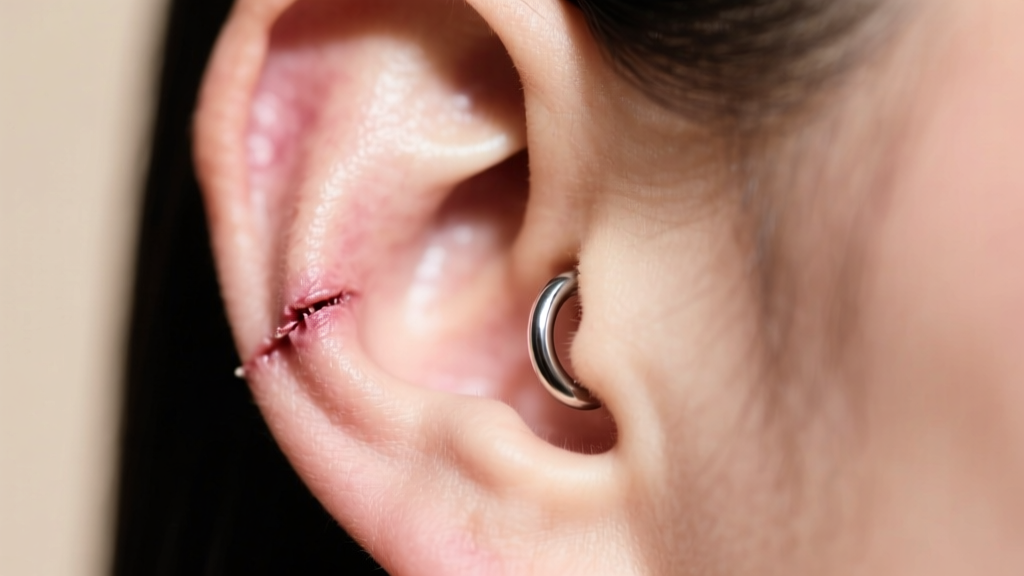
A hallmark of the effortless vlogger aesthetic is the appearance of jewelry that is never taken off. However, sleeping in huggies or small clicker hoops in your helix, flat, or tragus piercings is a primary catalyst for cartilage rejection and embedding.
When you sleep on a huggie hoop, the pressure of your head against the pillow forces the rigid metal ring into the cartilage. Because cartilage lacks the blood supply and elasticity of the earlobe, it cannot stretch to accommodate this pressure. Instead, the tissue swells around the jewelry (embedding), or the body recognizes the constant trauma as a foreign body threat and begins to push the jewelry out (rejection).
"Cartilage piercings require absolute stability to remain healthy. Sleeping in rigid hoops introduces rotational torque and localized pressure that disrupts the fistula, leading to hypertrophic scarring or complete migration." — Professional Piercer Guidelines, 2026
The Troubleshooting Protocol for Cartilage
If you want the look of a snug huggie without the trauma, follow this protocol:
- Switch to Flat-Backs for Sleep: Remove your hoops before bed and insert a threadless 16-gauge titanium flat-back labret with a small, low-profile bezel end. This eliminates all rotational torque.
- Check the Inner Diameter (ID): A common mistake is buying huggies with an ID that is too small (e.g., 6mm for a helix). If the hoop touches the skin on the opposite side of the piercing, it will trap moisture and cause irritation bumps. Ensure at least 1.5mm of clearance between the jewelry and the ear.
- Seamless vs. Clicker: Avoid "endless" or seamless hoops that require you to bend the metal to open and close them. This weakens the structural integrity of the wire and creates micro-abrasions inside the piercing channel. Opt for hinged clickers with a secure closure mechanism.
The Ultimate Weight-Distribution Framework
To successfully pull off the Michelle Choi earrings aesthetic without compromising your tissue health, you must treat your ear stack like an architectural project. Weight must be distributed logically based on the tissue density of the specific piercing site.
- Primary Lobe (Standard Piercing): Can support up to 4-5 grams safely if the gauge is 18G or thicker. Use your lightest, largest hoops here.
- Upper Lobe / Second Piercing: Tissue is slightly thinner. Limit weight to 2-3 grams. Opt for threadless studs or lightweight 10mm huggies.
- Helix / Flat / Conch: Cartilage is brittle and prone to pressure necrosis. Limit weight to under 1.5 grams. Avoid heavy dangles or thick-gauge ornate clickers.
Final Verdict: Curating a Pain-Free Minimalist Stack
Recreating the Michelle Choi earrings look is entirely about the illusion of effortlessness, which requires deliberate, strategic choices behind the scenes. By upgrading to La Pousette or flat-back closures, strictly avoiding gold-plated brass, and respecting the weight limits of your cartilage, you can maintain a stunning, minimalist ear stack that remains healthy and comfortable well into 2026 and beyond. Invest in fewer, higher-quality pieces made from biocompatible materials, and your piercings will reward you with a lifetime of pain-free styling.


